
 admin
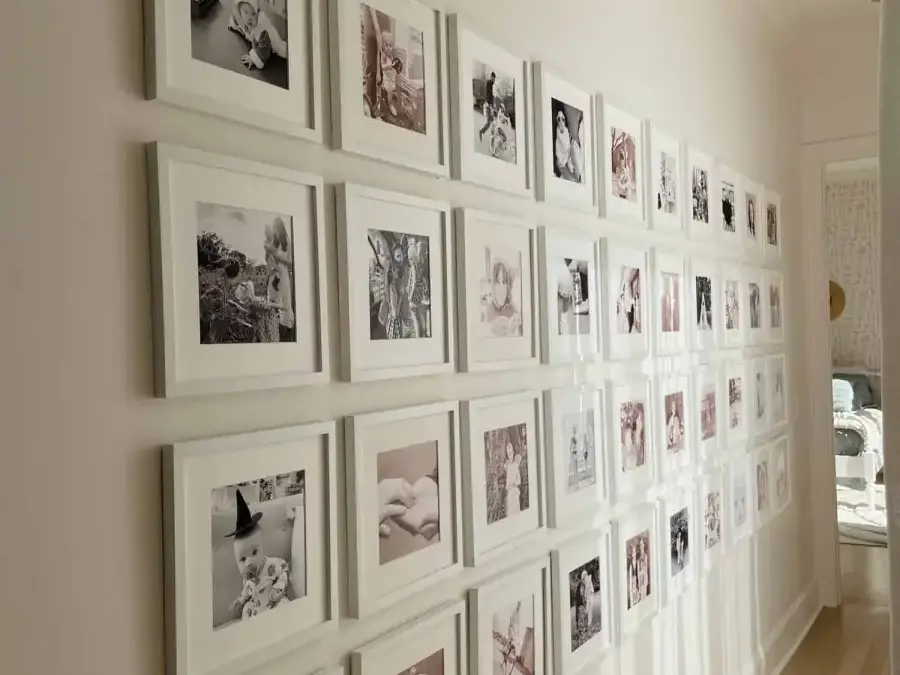
A family gallery wall can turn a long, plain hallway into a meaningful display of memories. This project brings together older family photographs and current pictures in a consistent layout, creating a feature that feels personal without relying on one type of image. The same approach can work in a hallway, stairwell, or another open wall in your home.
This gallery was expanded in a new home using the frames and photographs from an earlier project. The original display was created before the family had children; the updated version combines those older images with photos from a newer stage of life.
Planning a family gallery wall
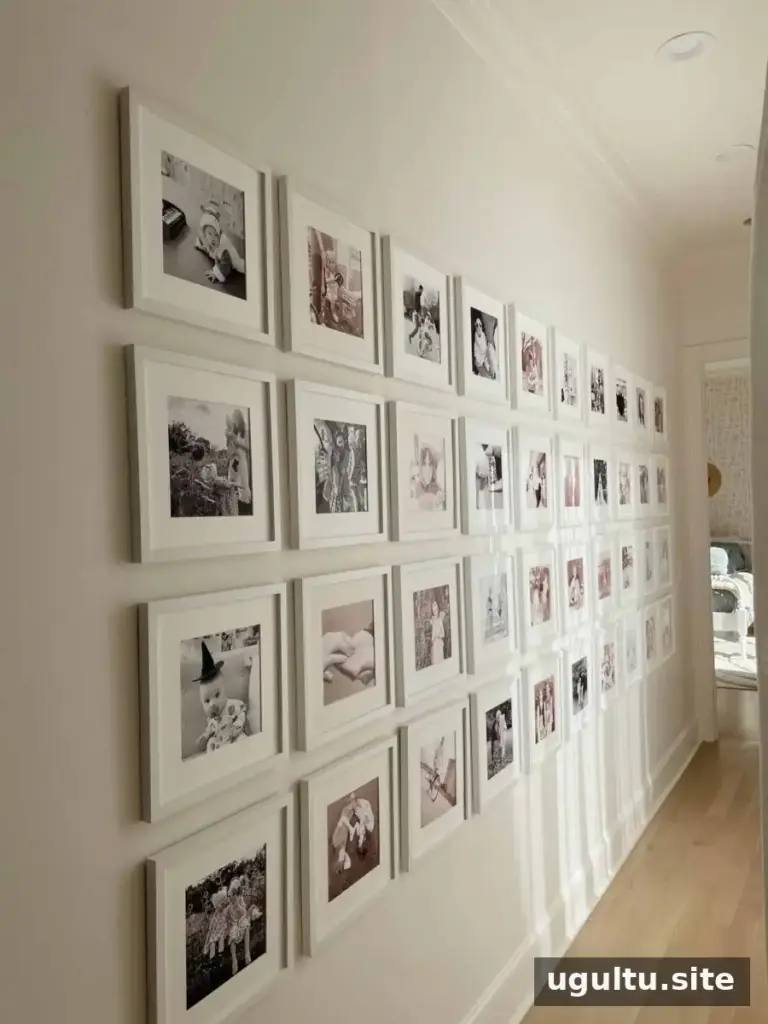
The expanded display is about twice the size of the original. Its orderly look comes from repeating the same frame size and printing every photograph in black and white. A consistent format helps images from different years and cameras feel connected.
For this arrangement, 24 matching frames are set out in four rows of six. Each photograph was resized to 8″ x 8″ to fit the frames. Before hanging a large grid, measure the wall and mark the layout with removable tape or paper templates. This makes it easier to check spacing and alignment before putting holes in the wall.
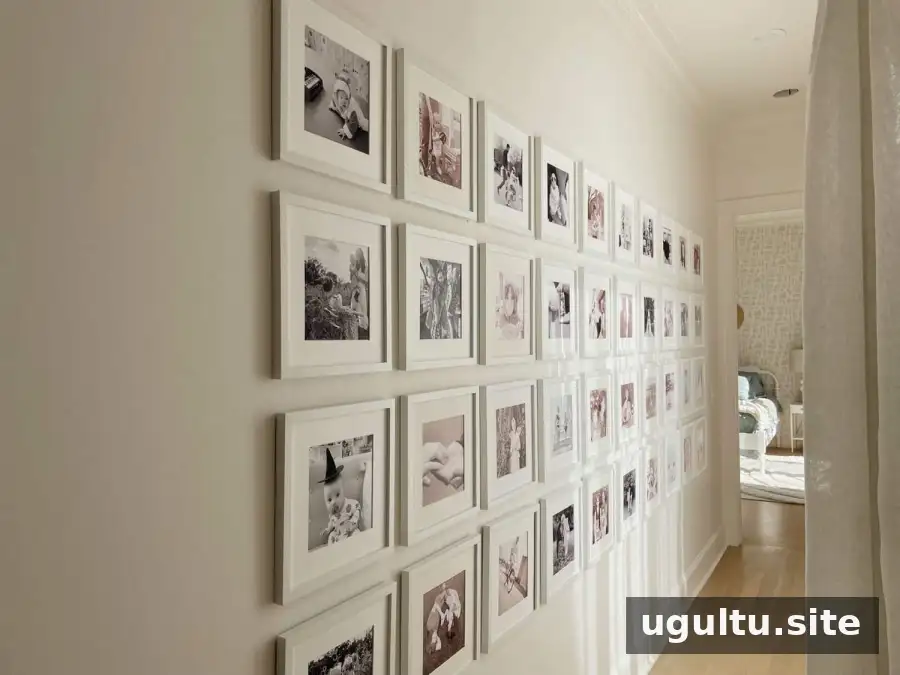
The photographs were printed at home on a photo printer using luster paper, which gives images a subtle sheen. Black-and-white printing is a useful option when the original photos have different colors or lighting: it can make a mixed collection appear more cohesive. Check that each image is cropped to the frame opening before printing, and test one photograph first if you are unsure about contrast or sizing.
The collection includes family memories from the parents’ childhoods, newer photographs, and pictures of the couple as children. Wedding pictures are part of the display, but they sit alongside many other moments, giving the wall a broader view of family history.
Making a hallway feel more welcoming
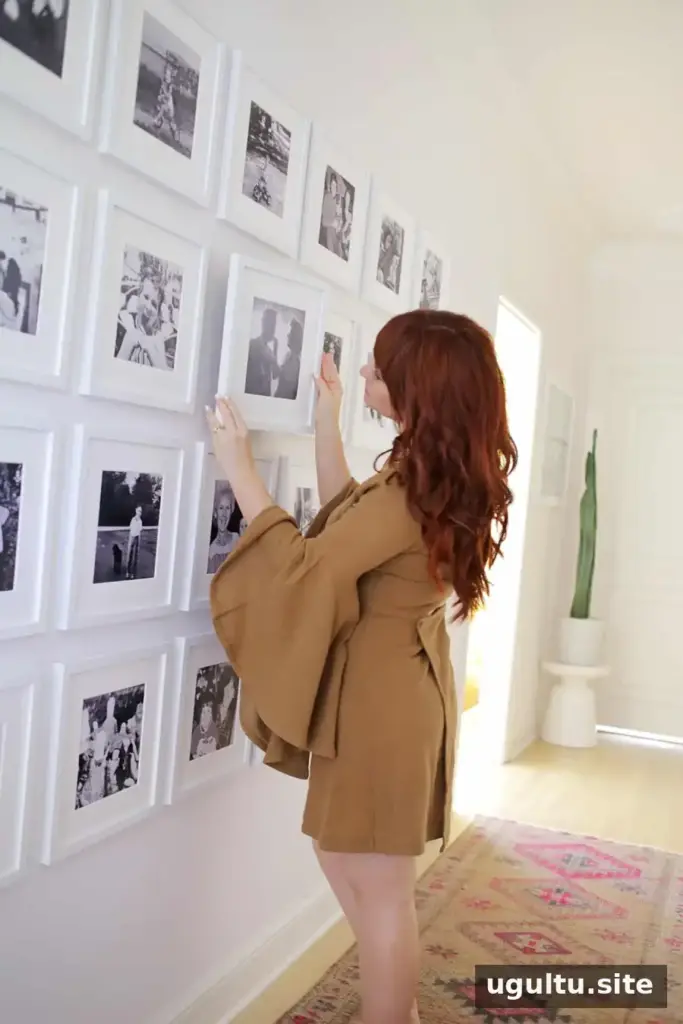
The home’s hallway had previously been covered in blue carpet, with powder-blue walls. It runs through an L-shaped ranch-style layout and connects the bedrooms, bathrooms, and laundry room. A long passage like this can be a practical place for a gallery wall because it offers plenty of display space without taking over a main living area.
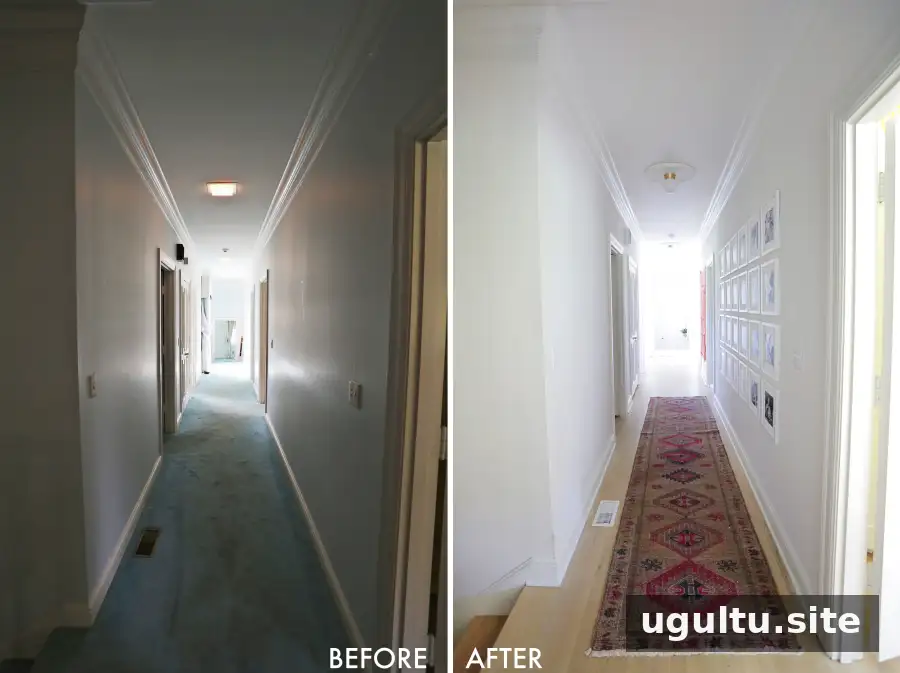
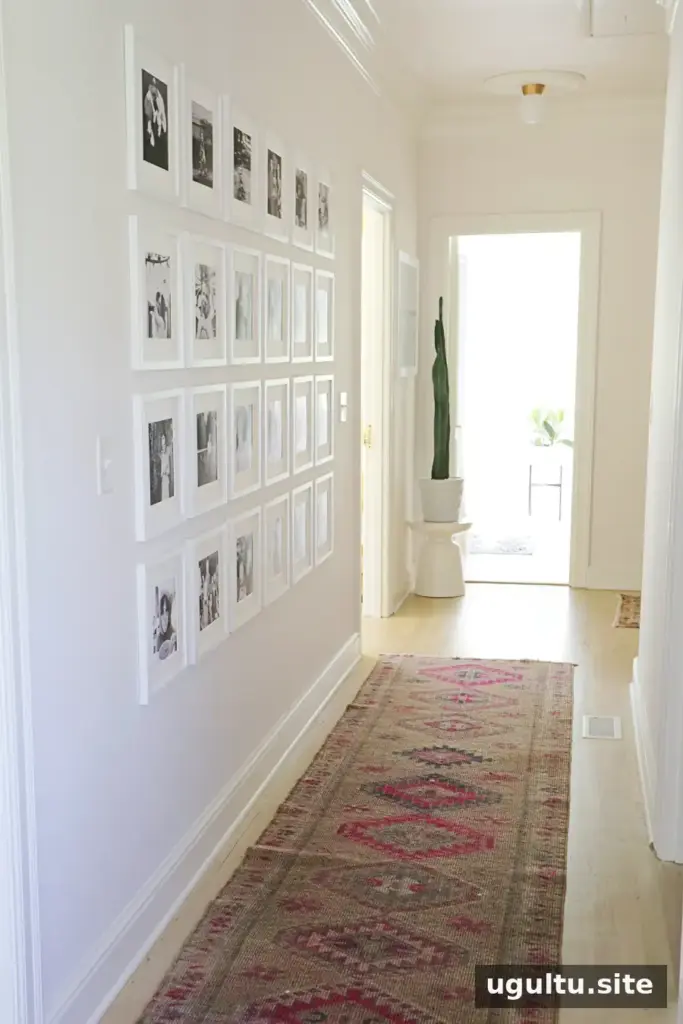
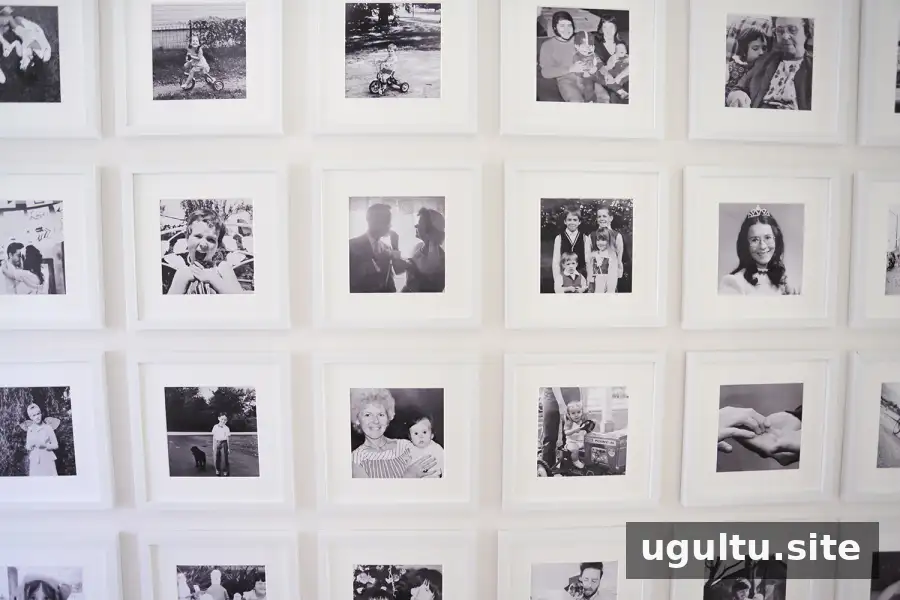
The photographs changed the atmosphere of the hallway by adding warmth and personal detail. For anyone who feels hesitant about displaying family portraits, a mix of candid snapshots, childhood pictures, and milestone photographs can make the collection feel more natural than a wall devoted only to formal portraits.
To keep the display comfortable to view, consider the hallway’s walking path and the height of the frames. Keep frames clear of doors and switches, and use suitable wall fixings for the frame weight and wall material. If the wall is especially long, laying out the full arrangement on the floor first can help confirm the overall proportions.
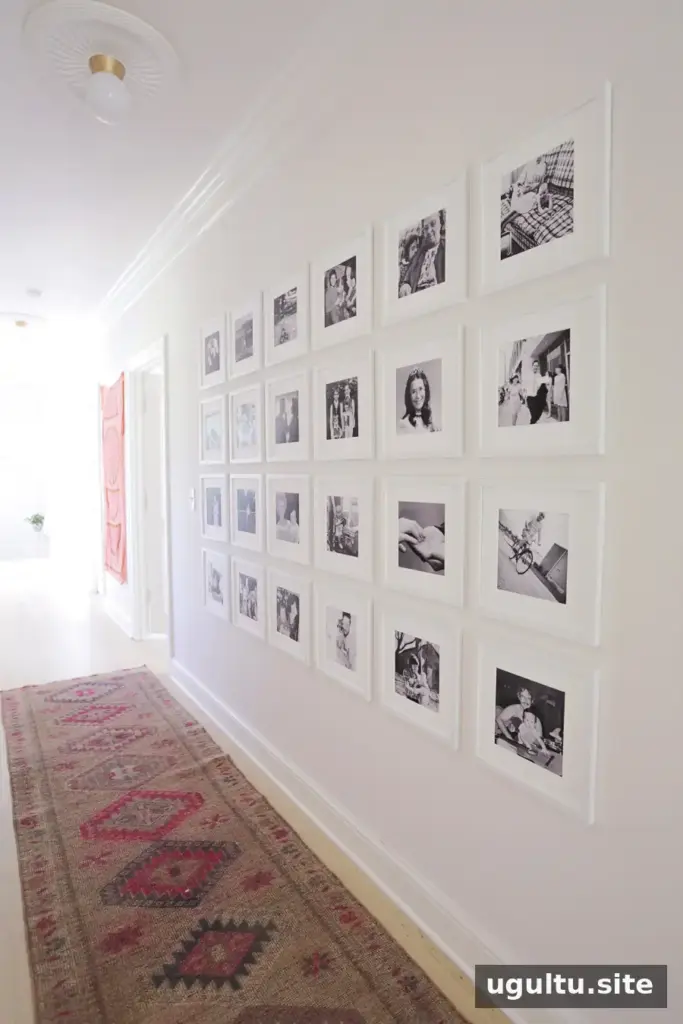
Use the family photographs you already have
Digital photos are easy to leave on phones and computers, while printed pictures can remain stored away for years. Sorting a collection by date, people, or occasion can make it easier to choose images for a display. You do not need to include every photograph; selecting a varied group of meaningful memories helps create a wall that is personal and easy to enjoy.
A family gallery wall is a practical way to bring old and new photographs together in one place. With matching frames, a repeated print style, and a layout measured to suit the wall, the result can turn unused hallway space into a welcoming display of family history. A black-and-white or ombré gallery wall can also offer inspiration for a different look.
— Elsie


