
 admin
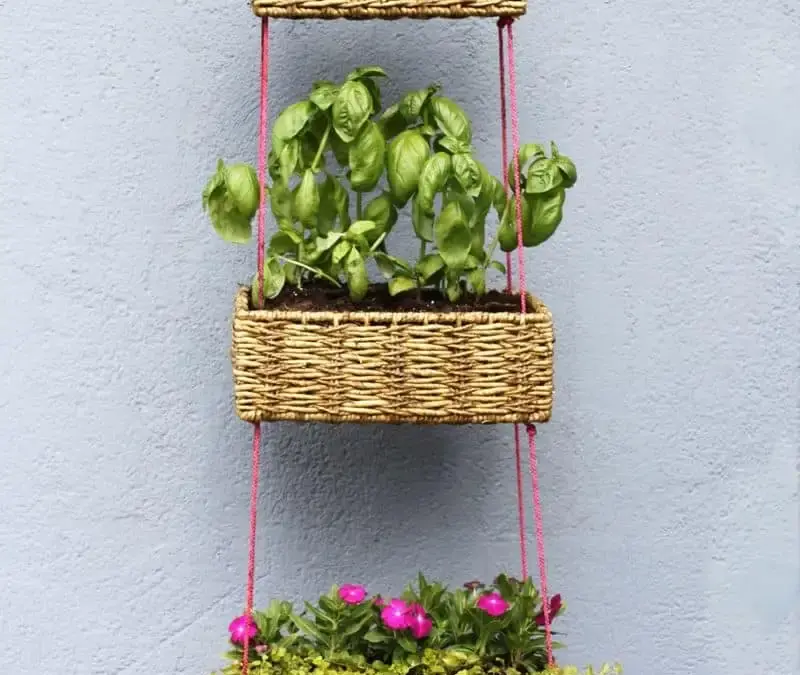
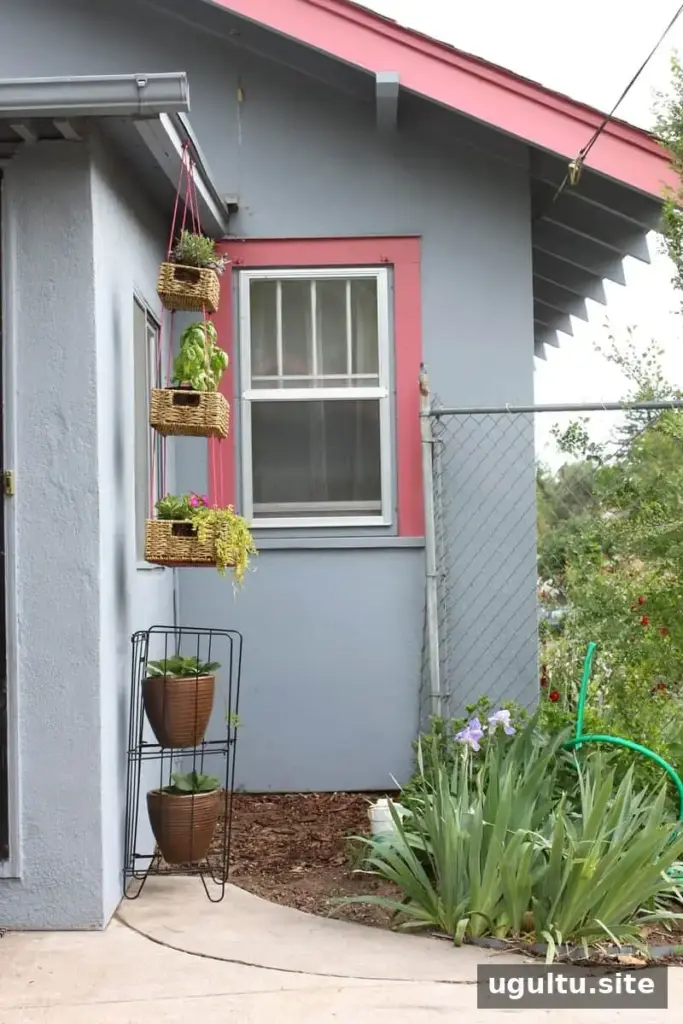
A hanging basket garden is a practical way to grow herbs and flowers when ground-level planting is not an option. It can suit small backyards, patios, and balconies, while keeping plants out of reach of pets and curious children. This simple vertical planter uses three woven baskets and braided rope, with plants selected to suit the light available where you plan to hang it.
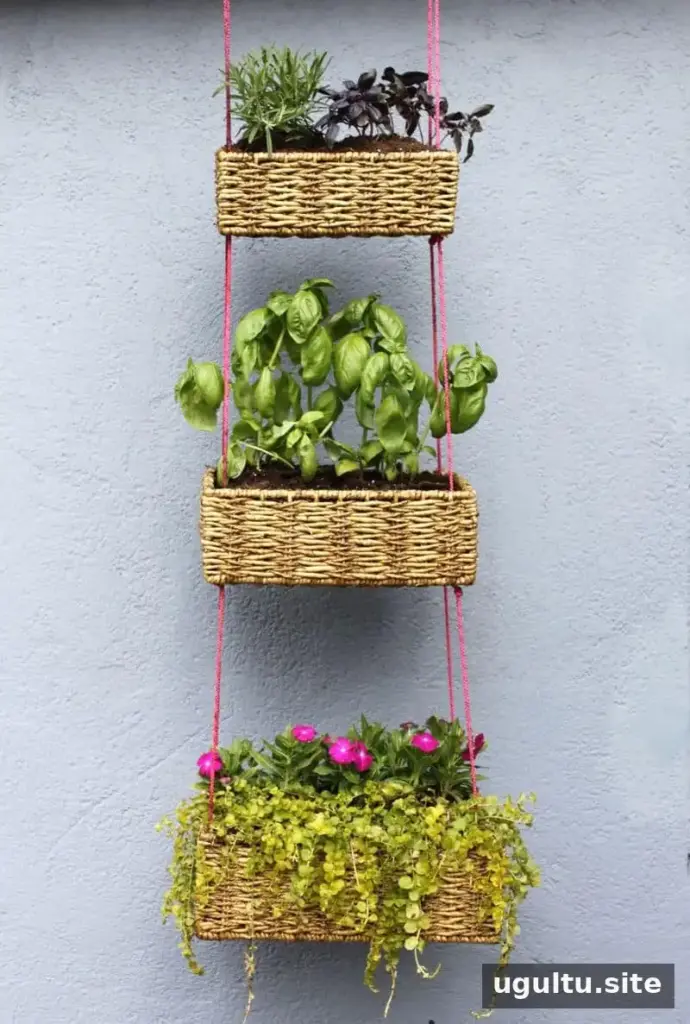
Supplies for a Hanging Basket Garden
Choose baskets and a hanging location with the finished weight in mind. Soil becomes heavier when watered, so use sturdy baskets and make sure the support and screws are suitable for the surface.
- Three sturdy, woven baskets of similar or equal size, preferably rectangular. They need enough depth for planting but should not be so large that the filled baskets become difficult to hang.
- Braided polyester rope.
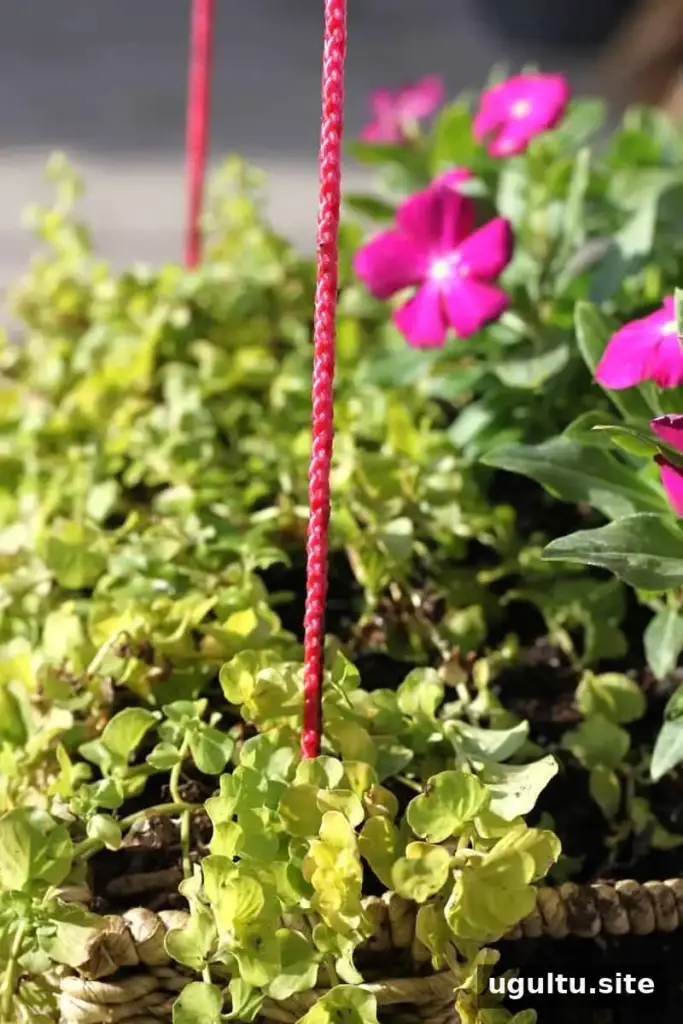
- One or two small bags of potting soil, plus herbs and flowers. Herbs benefit from room to grow; flowers can be fitted between them for added color.
- Scissors and two screws appropriate for the place where the baskets will hang.
How to Assemble and Plant the Baskets
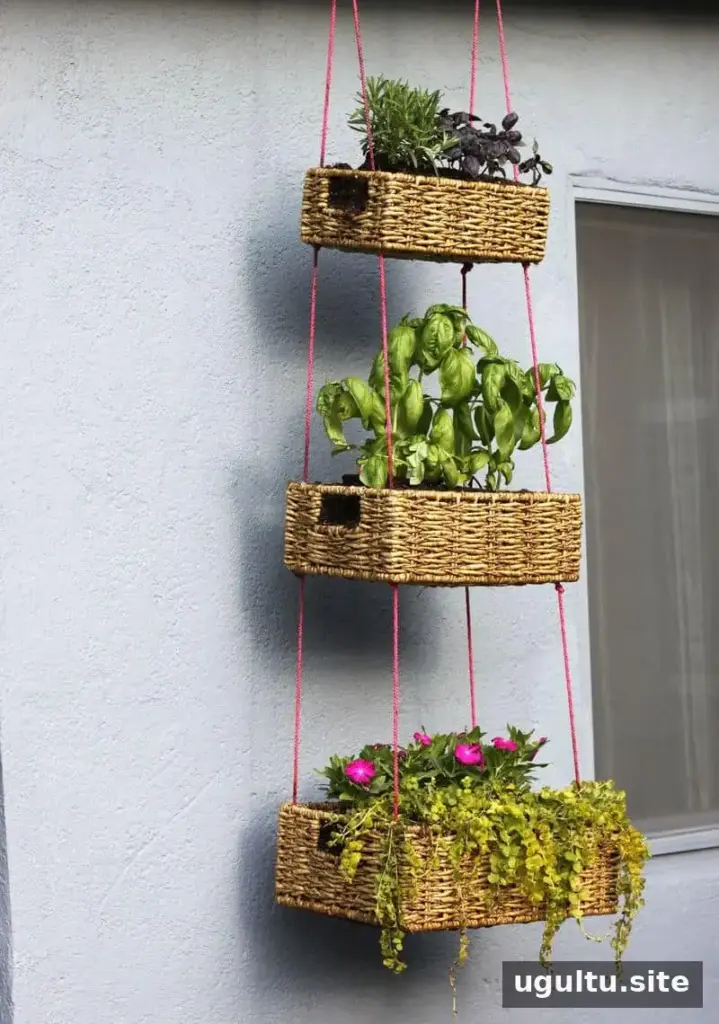
- Arrange the plants in the baskets before planting to check that they fit. Account for the likely height of the tallest plant when deciding how far apart to space the baskets.
- Cut the rope long enough to double it along each side of the basket stack, with an additional 3 ft. as shown by the rope on the right side of the basket.
- Thread one end through a front corner of the top basket, leaving about 3 ft. above it for hanging. Tie a double knot, then thread the rope through a front corner of the second basket. Keep the baskets evenly spaced as you thread and knot the rope. Marking the intended positions with chalk can help. Continue through the front corners of the remaining baskets, then repeat the process at the back corners.
- Repeat on the other side, checking that both sides are level and evenly spaced.
- Hang the empty basket frame temporarily to check its balance, and adjust the rope if needed.
- Place the plants in the baskets once more to confirm their order. Remove them, set the baskets on the ground, add potting soil, and plant them.
- Hang the planted baskets securely and water them.
For easier handling, plant the baskets while they are on the ground rather than trying to fill them while suspended. Before adding soil, make a final check that the rope knots are secure and the baskets sit evenly.
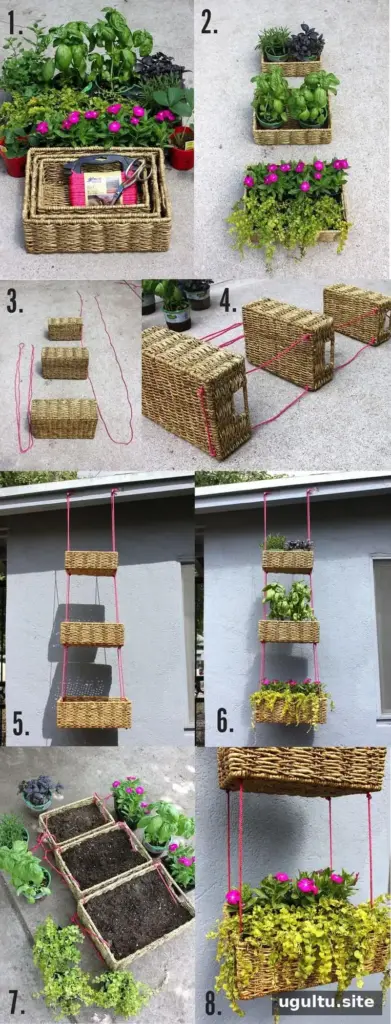
Choose Plants for the Hanging Location
This project can work well for renters, apartment residents, or anyone looking to add greenery without digging into a garden bed. It also raises plants above ground-level disturbances. Choose herbs and flowers with similar sunlight needs, and consider how much direct light the hanging spot receives during the day.
Check each plant’s label for its sun and watering requirements. Water needs can vary by plant and conditions, so inspect the soil regularly instead of relying on a fixed schedule. A hanging planter may dry out differently from a garden bed, particularly in a sunny or breezy spot.
Other Ways to Use a Hanging Basket Garden
The same stacked-basket idea can also help organize lightweight household items. Use it in a studio for craft supplies, in a kitchen for visible fruit and vegetables, or in a bathroom for toilet paper and washcloths. For storage, match the basket contents to the strength of the rope and hanging support, and avoid overloading the structure.
A hanging basket garden makes use of vertical space while keeping planting flexible. With three sturdy baskets, secure rope, and plants suited to the location, it can add practical greenery to a small outdoor area or home. — Rachel


