
 admin
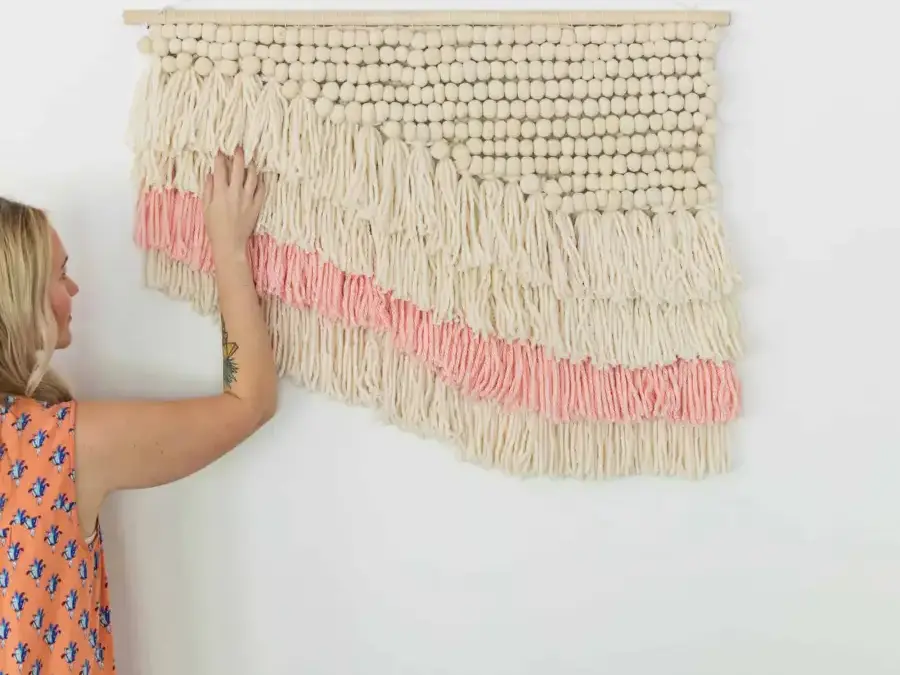
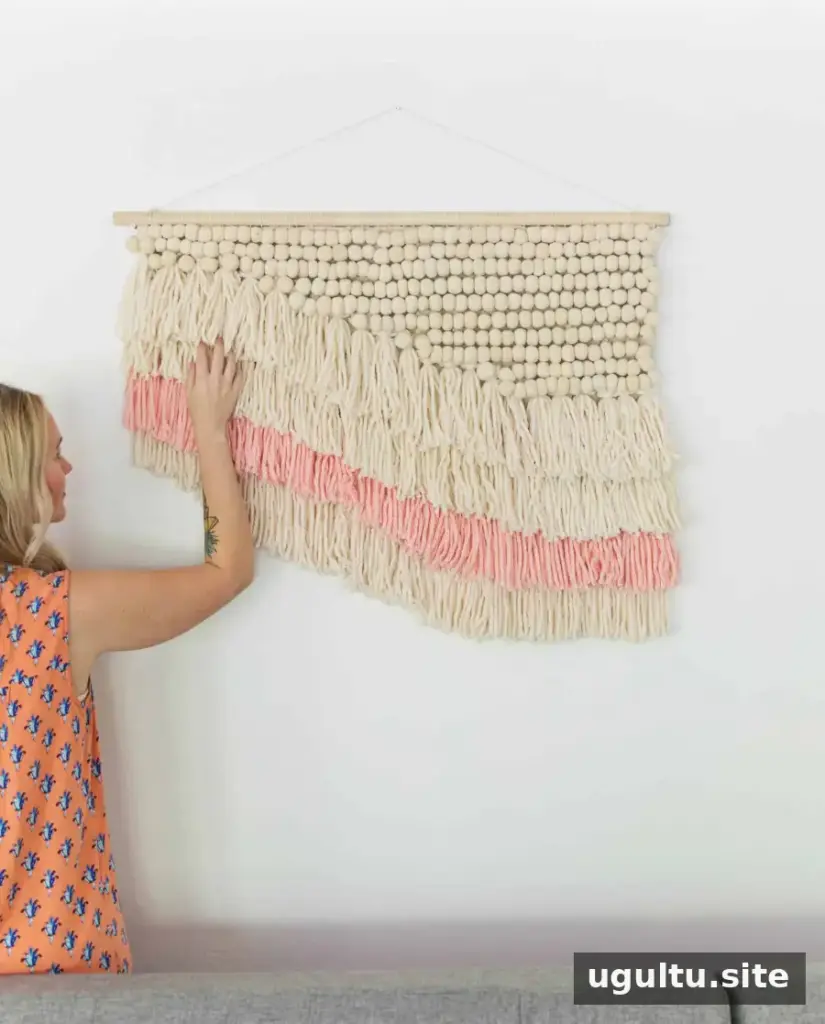
A DIY faux weaving is a simple way to add texture to a blank wall without bringing in bold colors or busy patterns. This easy wall hanging uses a plain rug, yarn tassels and felt balls to create a soft, decorative focal point. The project is approachable for beginners, and much of the preparation can be done in short sessions.
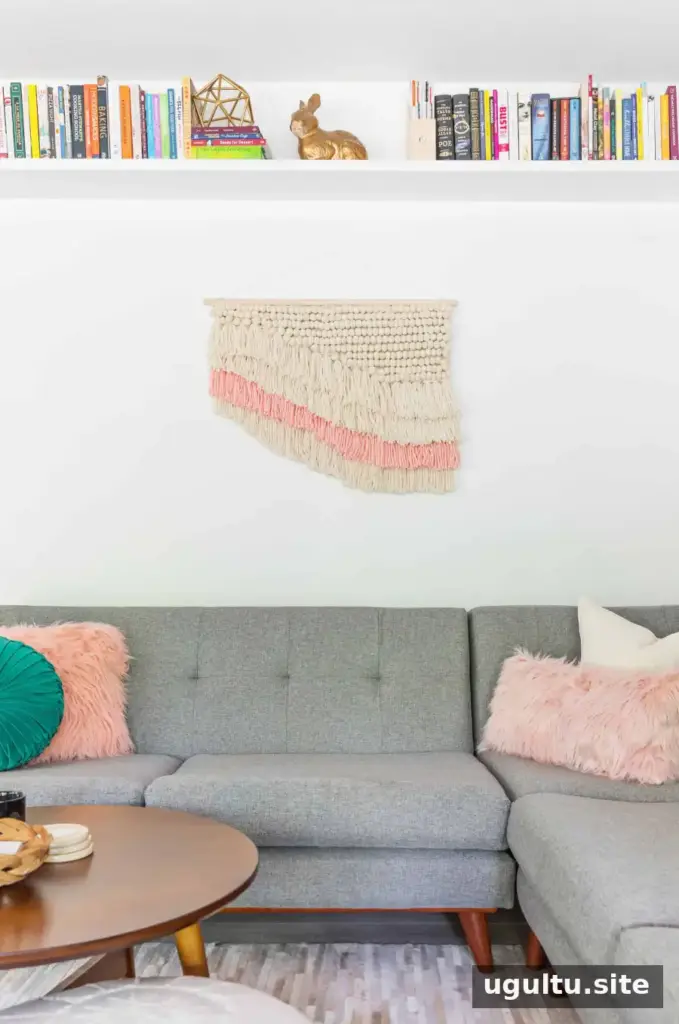
For a room that already has a gallery wall or other visual details, a neutral textile piece can add interest while keeping the overall look balanced. Choose yarn and felt colors that work with your existing decor, and lay the materials out before attaching anything so you can adjust the design.
DIY Faux Weaving Supplies
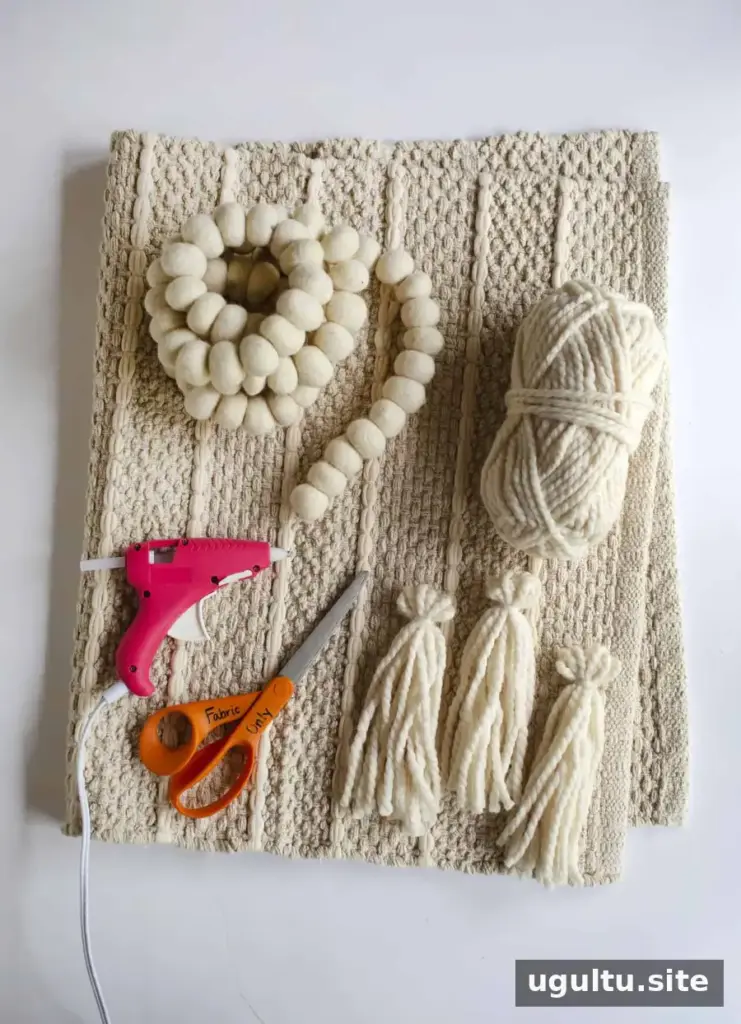
Gather the following materials before starting:
- Yarn for making tassels; three skeins were used for this project: two white and one pink.
- Small felt balls. Three garlands were used here.
- A plain rug.
- A wooden dowel rod.
- Hot glue and a glue gun.
- Wall anchors and paint, or nails if appropriate for the size and weight of your finished piece.
Check your craft supplies before shopping; yarn, felt decorations and tools you already own may cover much of the materials list. Select a rug that is suitable for decorating and light enough to hang securely.
How to Make a DIY Faux Weaving
1. Make the tassels
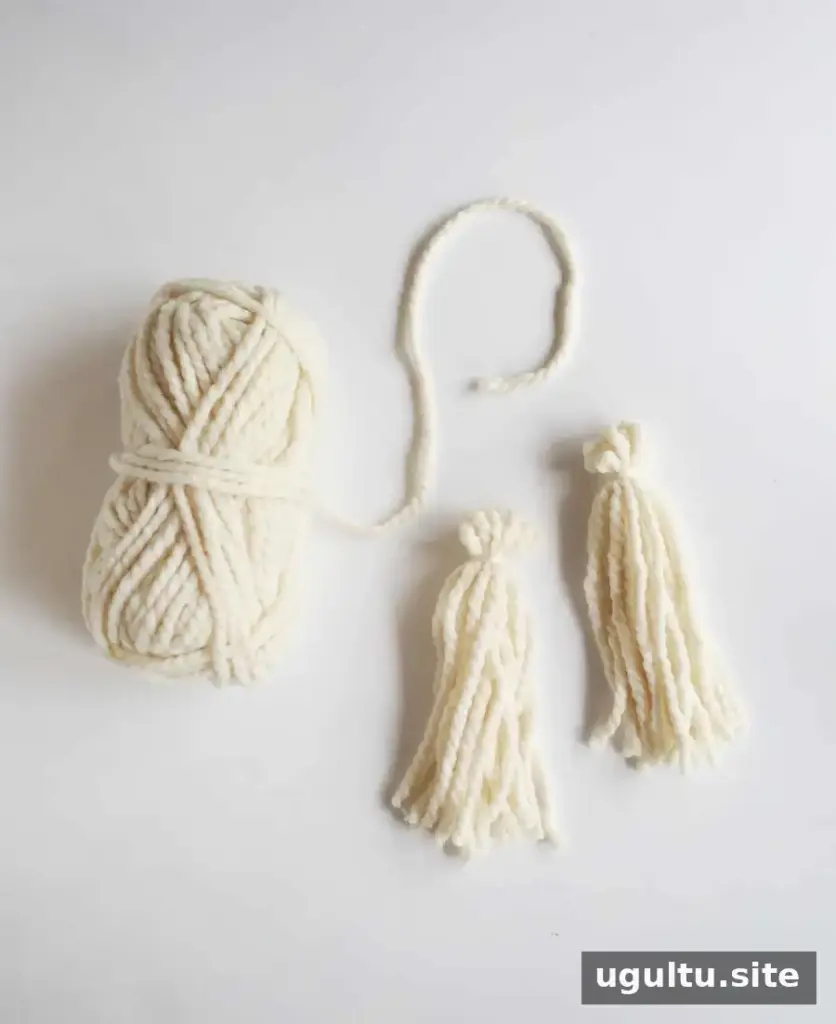
Prepare the tassels first. This is the most time-consuming part, so it can help to work in several short sessions. Keep the finished tassels together and make enough to cover the area you have in mind, while leaving space for the felt balls.
2. Arrange and attach the decorations
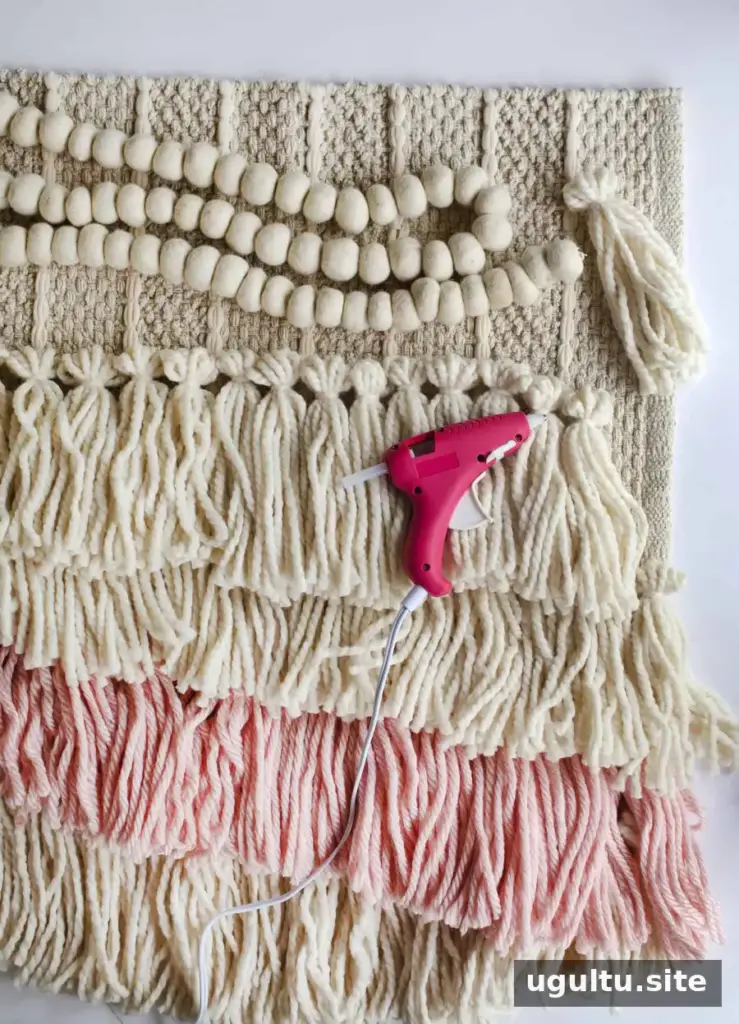
Place the tassels and felt balls on the rug before using glue. Step back and check the spacing, color balance and overall shape. This dry layout makes it easier to spot gaps or crowded areas and to confirm that you have enough decorations. When you are happy with the arrangement, attach the pieces with hot glue, following the glue gun’s safety instructions.
3. Add the dowel
Attach the wooden dowel to the top of the rug using yarn or strong string. Secure it evenly so the hanging is supported across its width. Check that the knots or attachments feel firm before lifting the finished piece.
4. Hang the wall art securely
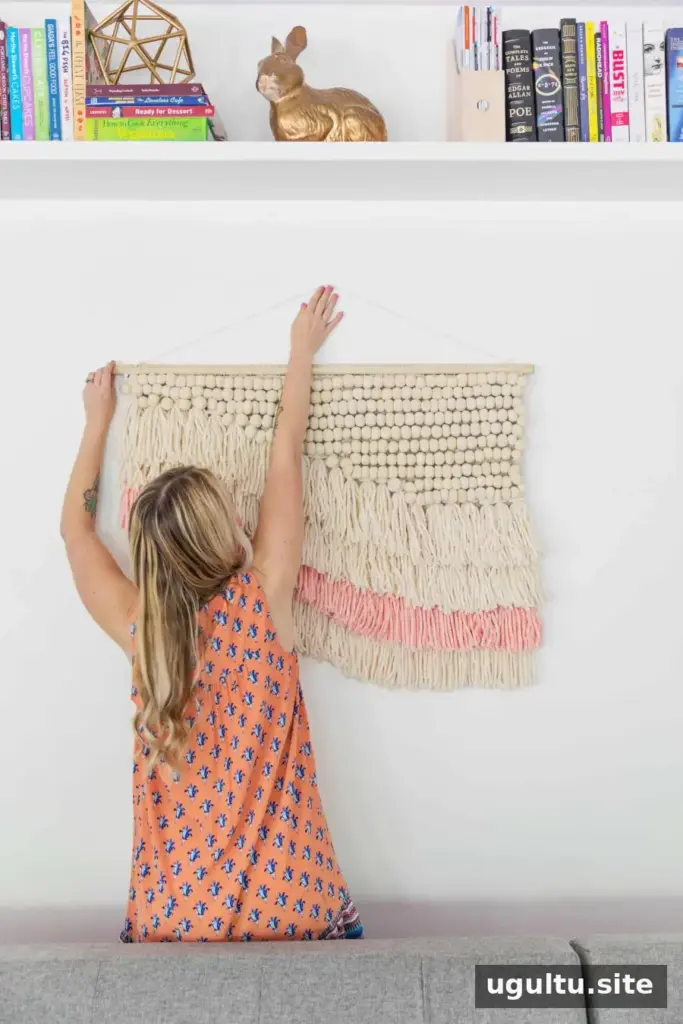
Choose hanging hardware based on the finished piece’s size, weight and wall type. A large or heavy wall hanging may need multiple wall anchors; this project was hung using three. If you use screws, painting their heads to match the wall can make them less noticeable. Follow the hardware instructions and make sure the anchors are appropriate for your wall before hanging the rug.
Finishing Your Faux Weaving
This project offers a way to add handmade texture without actually weaving on a loom. For a quieter look, stick to a limited palette; for more contrast, use a few accent colors while keeping the arrangement balanced. If you want to learn traditional weaving techniques, explore beginner lessons that explain the basic setup and methods.
A DIY faux weaving can be customized to suit the available wall space and the materials on hand. Plan the layout first, attach the decorations carefully and choose secure hardware for the finished piece to create a relaxed, textured addition to your home.


