admin
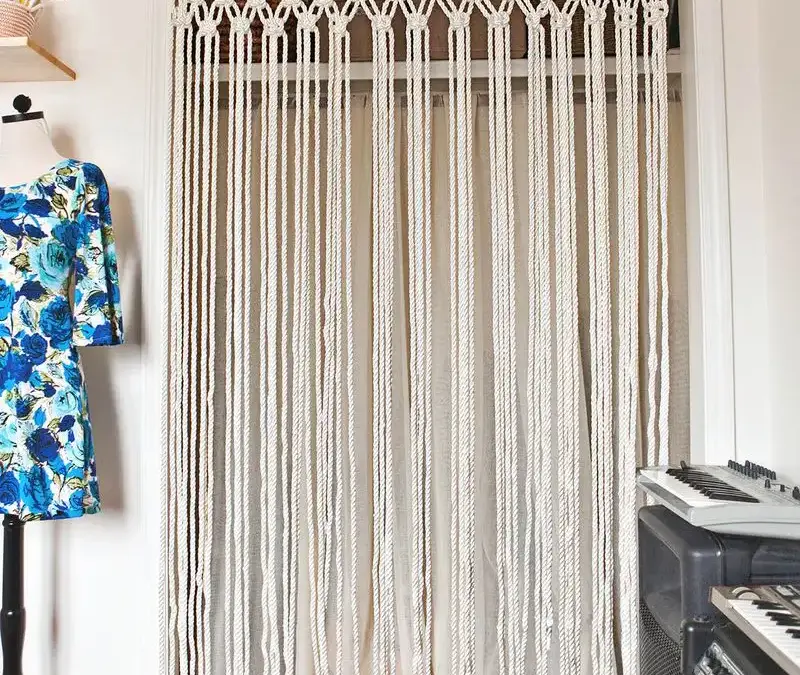
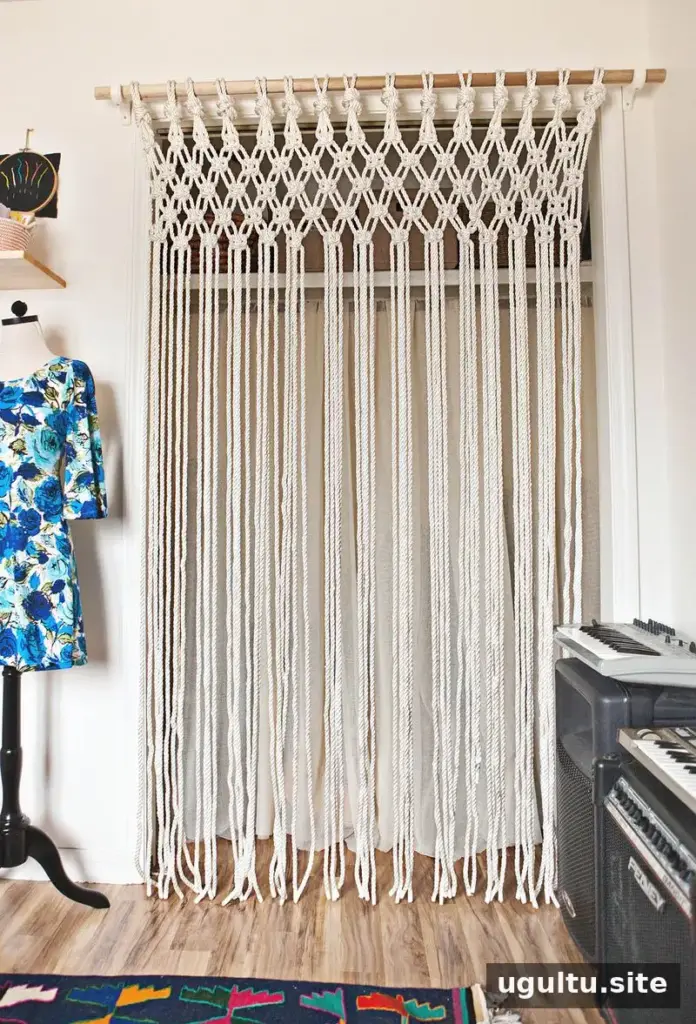
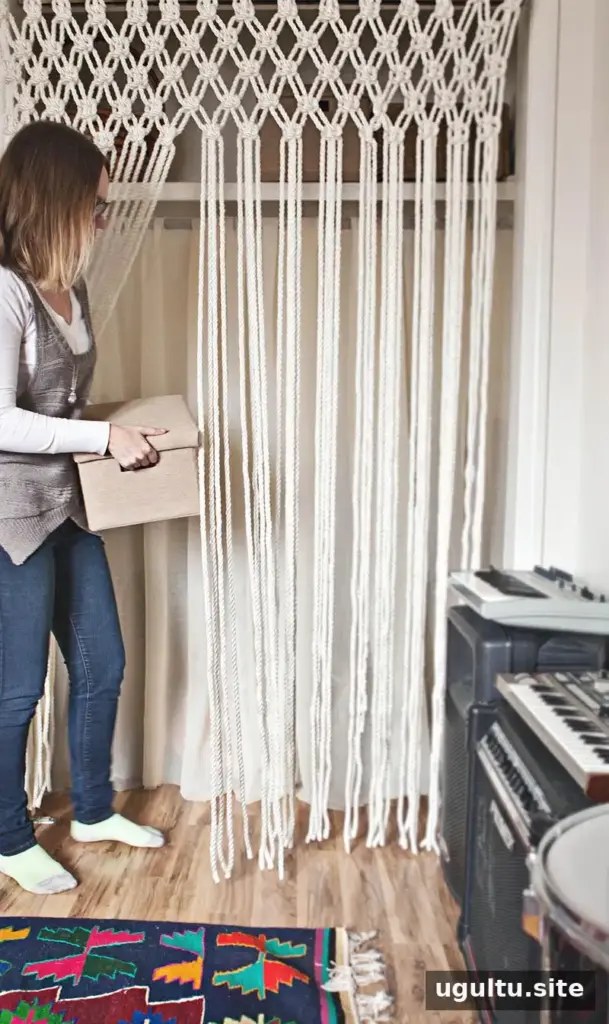
A macrame curtain is a practical way to conceal closet storage while adding texture and a handmade detail to a room. This rope project uses repeating knots to create a decorative panel that can cover a closet, doorway, or large window. The open weave keeps the design visually light, while a separate fabric panel can be added behind it when more coverage is needed.
Why Make a Macrame Curtain?
A curtain can hide everyday items without the bulk or appearance of a sliding closet door. In this project, the goal was a light-colored, textured accent that would make an extra bedroom’s storage area look tidier without competing with the room’s other decor.
Before starting, measure the opening and decide how much width and length you want the finished curtain to cover. The example below is about 6 1/2 feet tall and uses 14 groups of rope.
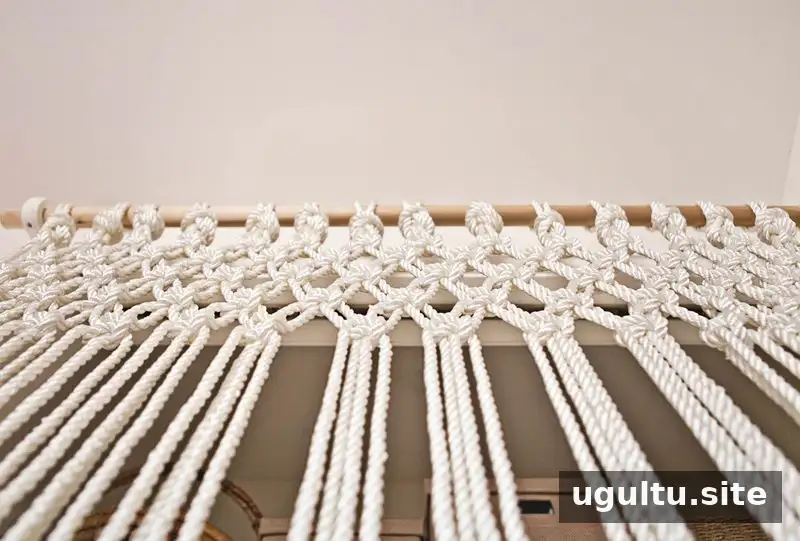
Thin rope creates a soft, textured look. Colorful yarn is useful for practicing the knot pattern because the different strands make it easier to follow their paths.
How to Make a Macrame Curtain
Supplies
- Rope
- Wooden dowel or curtain rod
- Masking tape
- Scissors
- Foam core board and pins for practicing the knots
- A ruler for checking spacing
Practice the basic knot
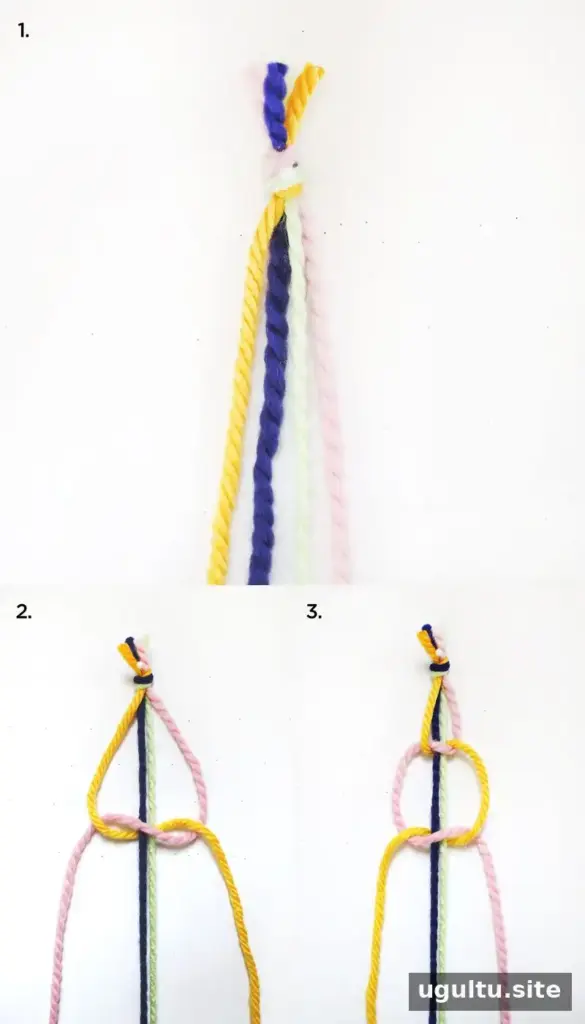
Start with four strands secured to a foam core board. Pin the top knot and the two middle strands near the bottom so they stay in place as you work.
- Pass the outer right strand over the two middle strands and toward the left. Bring the outer left strand underneath the first strand, behind the middle pair, and over the first strand on the right.
- Pull both outer strands to tighten the knot evenly.
- Reverse the movement: pass the new outer left strand over the middle pair. Bring the new outer right strand underneath it, behind the middle strands, and over it on the other side. Tighten the strands to complete the knot.
Keeping the middle strands straight helps the knot sit neatly. Practice the alternating movements with yarn before moving on to thicker rope.
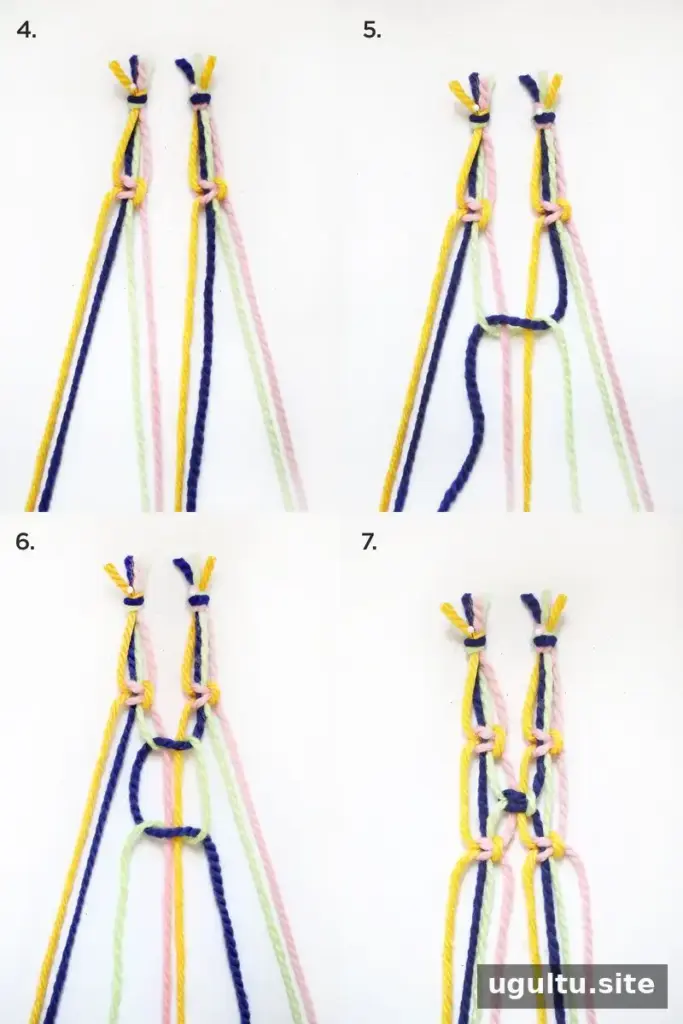
Make a second knot beside the first using another group of four strands. Then take the two rightmost strands from the first group and the two leftmost strands from the second group to form a new group of four. Tie the same alternating knot with this group.
Continue across the row, joining neighboring groups in this way. For the next row, separate the middle strands into pairs and work another knot with each group. Repeat the pattern to create as many rows as you want.
Prepare the rope and build the curtain
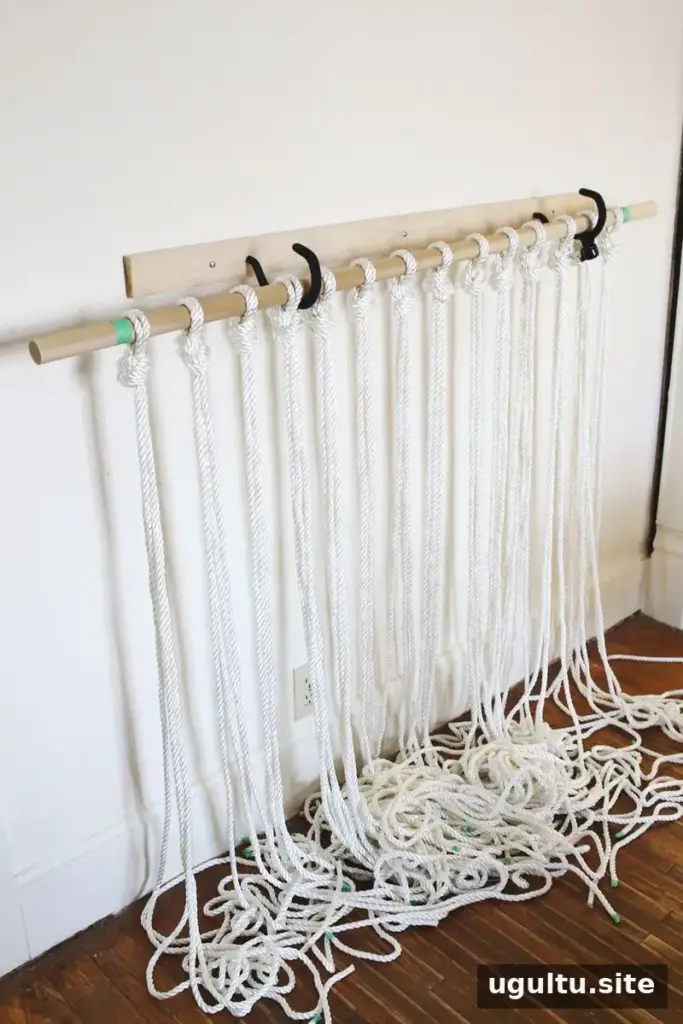
The example uses 14 groups, each made from four strands that are 100 inches long. To form each group, cut two lengths of rope at 200 inches each, fold them at their midpoint over the rod, and tie them in place. This creates four hanging strands per group.
Hang the rod securely at a comfortable working height so the rope can hang freely beneath it. A stable support makes it easier to keep the knots consistent and reduces tangling while you work.
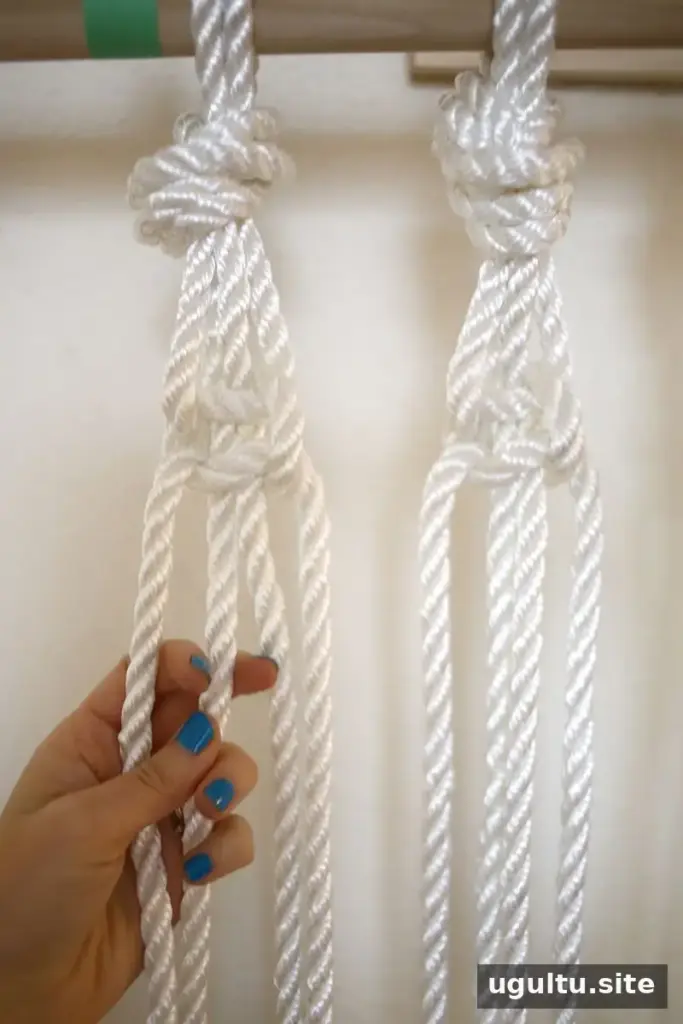
Tie a basic knot near the top of each group. Make the next row of knots beneath and between the first row, then continue alternating the placement as you work down the panel. Step back regularly to check that the rows look even.
Use a ruler to compare the distance between knots and the wooden rod. In this example, five rows of evenly spaced knots were made before the remaining strands were left hanging as the curtain’s fringe. Adjust the number of rows to suit the opening and the look you want.
Trim and hang the finished curtain
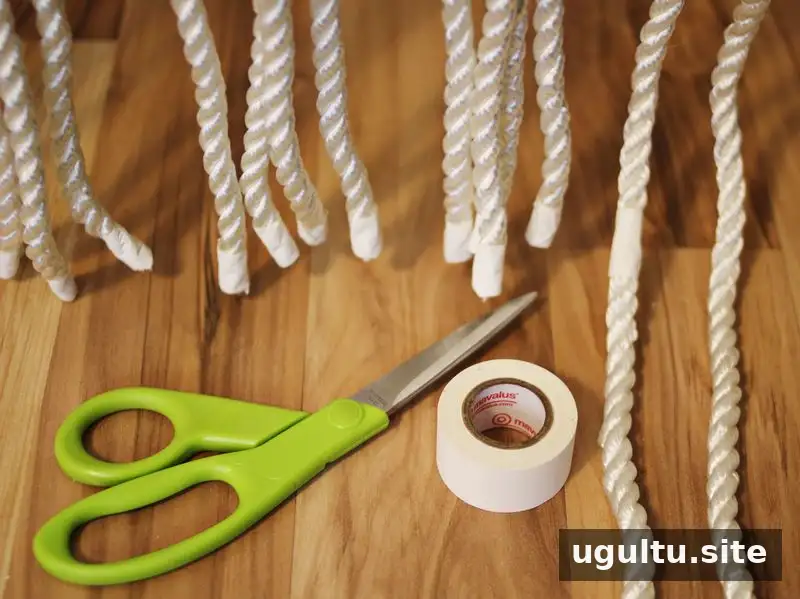
Hang the completed curtain in its intended position before trimming the bottom. Wrap masking tape around the rope where it meets the floor, then cut through the strands while leaving about two-thirds to half of the tape attached to the rope ends. The tape helps limit fraying as you finish the edges.
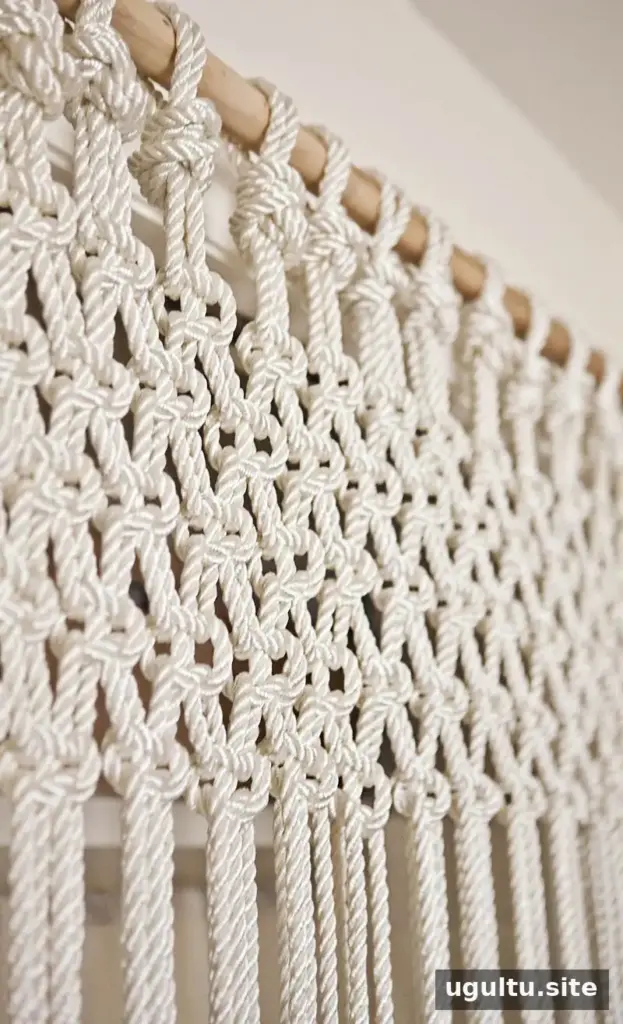
For additional privacy or to hide the contents of a closet more fully, hang a separate off-white fabric panel behind the macrame. The open knots let light and air pass through, so a backing layer can make the curtain more functional without changing its decorative front.
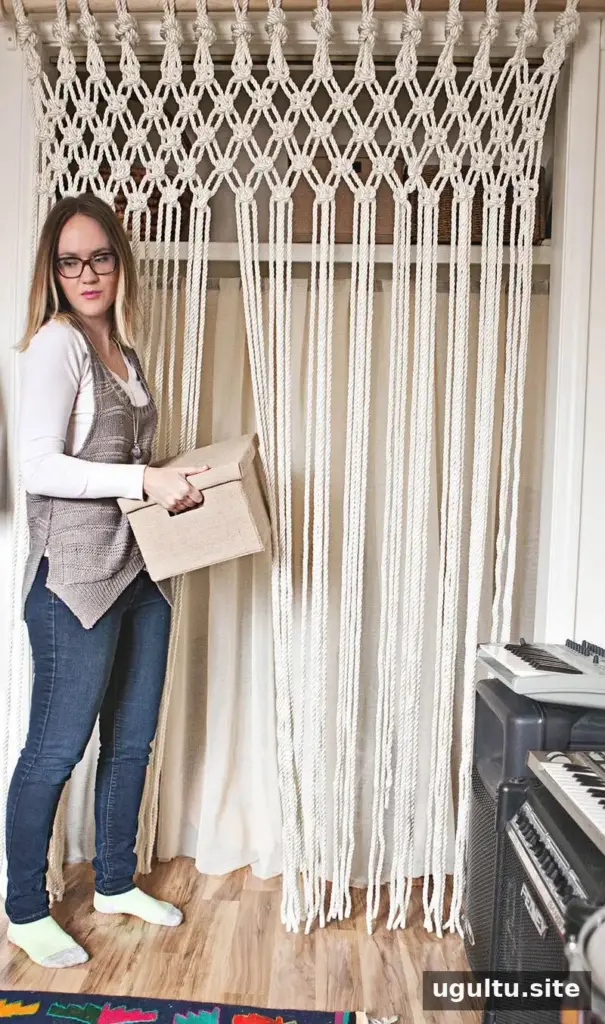
Baskets placed behind the curtain can help organize stored items and make the area easier to maintain. Choose a rope color and backing fabric that work with the room’s existing palette, especially if other furnishings already provide a strong visual focal point.
Rope Estimate and Planning
A past estimate for a closet measuring about 5 feet wide by 6.6 feet tall suggested using around 250 feet of rope, including extra for safety. At the time of that estimate, 1/2-inch by 50-foot nylon twist rope was listed at $34 per package, which would mean about $170 for rope before tax, plus the rod and other supplies. Prices can change, so check current local costs and calculate the quantity from your own measurements before buying.
Macrame Curtain: Final Tips
This macrame curtain design relies on a simple alternating knot repeated in rows. Measure the opening first, secure the rod firmly, and check the spacing as you work. For a tidy result, trim the hanging ends only after the curtain is in place. With a backing fabric for extra coverage, a macrame curtain can provide both a decorative accent and a useful way to conceal storage.