admin
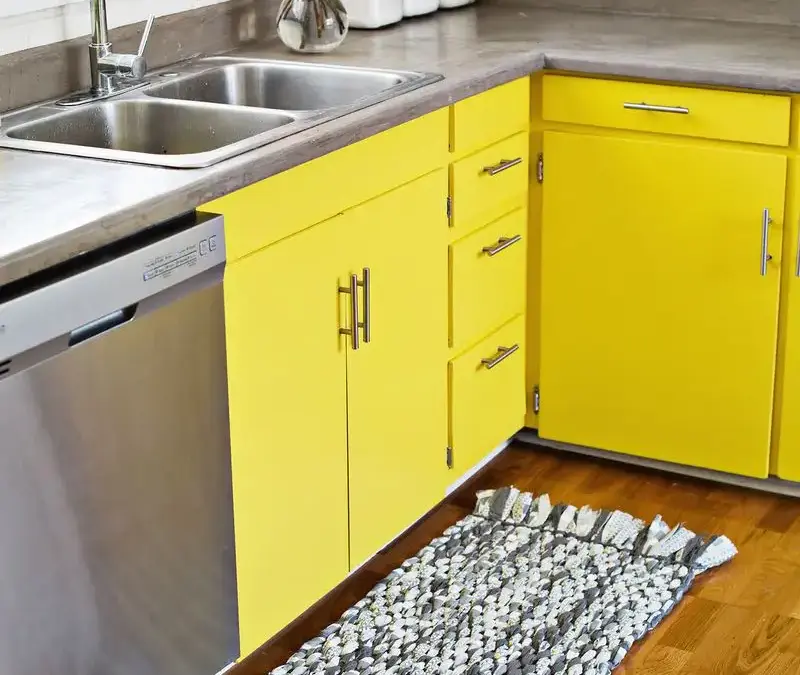
Make a colorful woven rag rug from old cotton bedsheets using a simple cardboard loom. This project uses three king-size flat sheets and basic craft supplies, and you can customize the rug’s colors and finished size to suit your space. The estimated material cost is $25. By Laura.

Supplies for a Woven Rag Rug
Choose sheets in colors or patterns that work well together. Using cotton sheets makes it possible to tear the fabric into strips, while a clear ruler helps keep the cuts consistent.
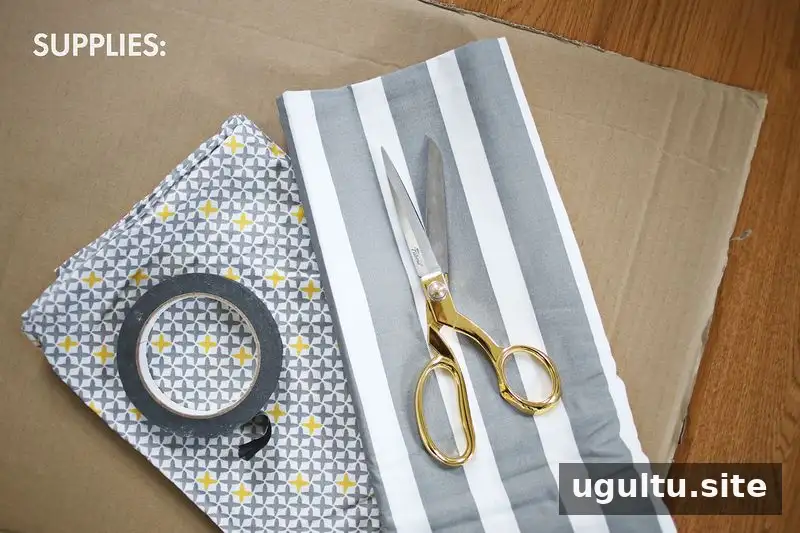
- 3 king-size flat cotton bedsheets
- Cardboard measuring 23 × 43 inches
- Fabric scissors
- Masking tape
- Marker
- Clear ruler
How to Make a Woven Rag Rug
1. Tear the sheets into strips
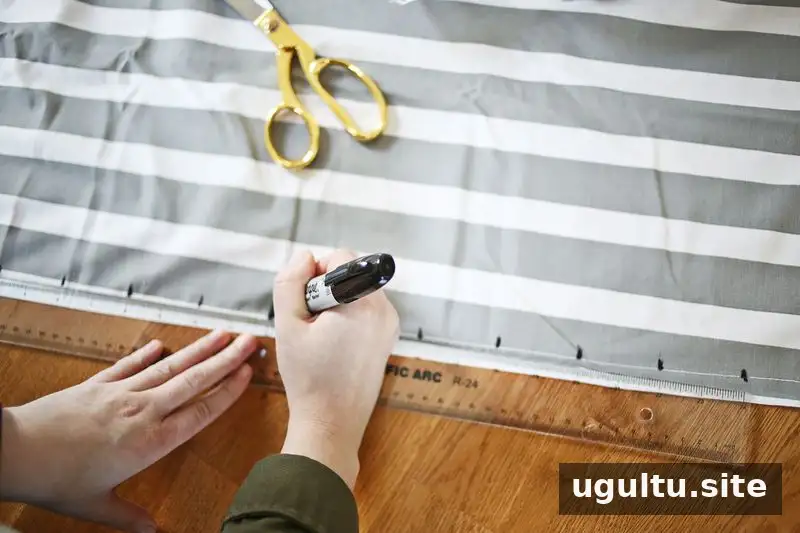
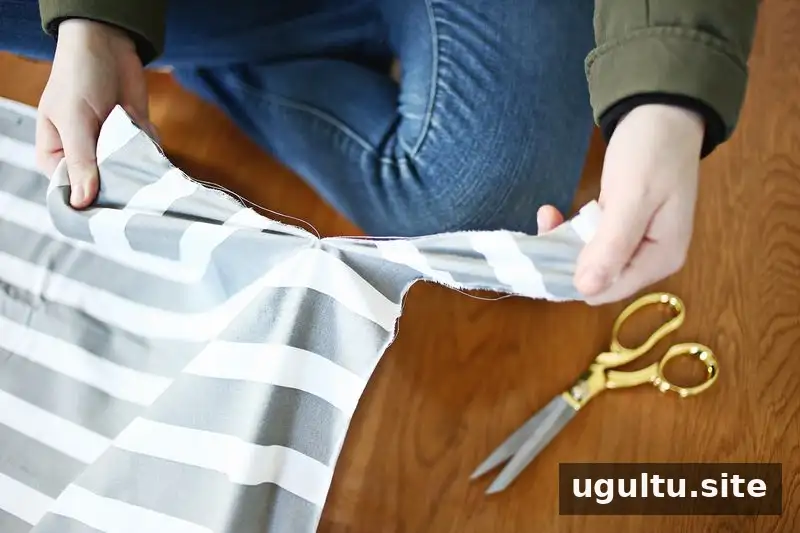
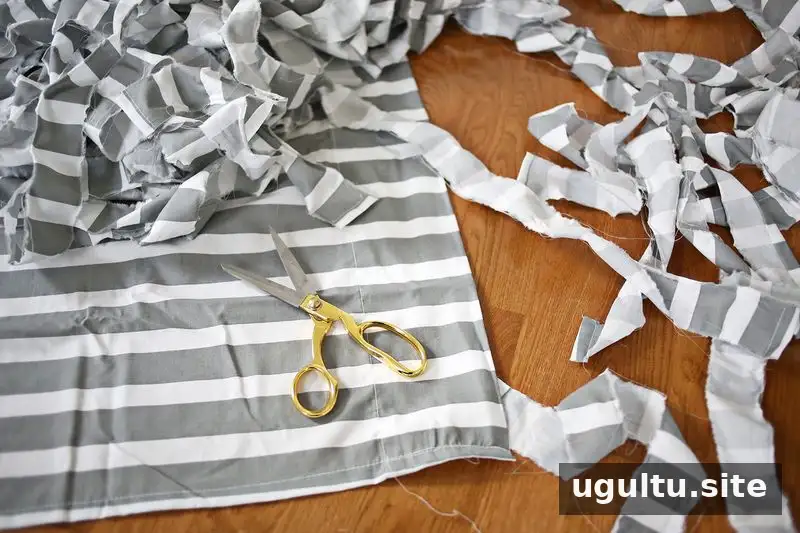
Use a ruler and marker to make marks every 2 inches across the longest side of each sheet. At each mark, make a 2-inch cut with fabric scissors. Starting at the cuts, tear the fabric across the sheet to create long strips. Separate the strips by color and pattern so they are easy to arrange as you work.
Tip: If a strip develops a large clump of loose threads, remove it before placing the fabric on the loom.
2. Prepare the cardboard loom
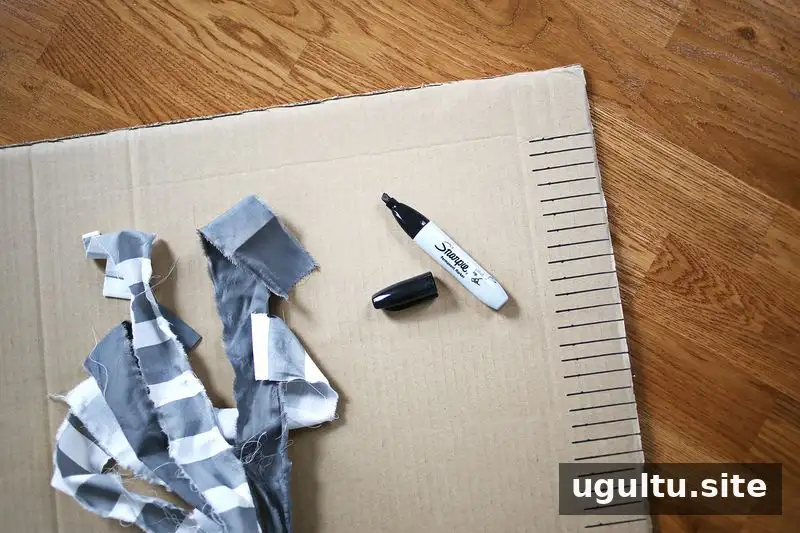
On each short end of the cardboard, begin 2 inches in from both edges. Mark 2-inch-long lines at ½-inch intervals, then cut a 2-inch slot at every mark. These opposing slots will hold the fabric groups in place while you weave.
3. Set up the fabric groups
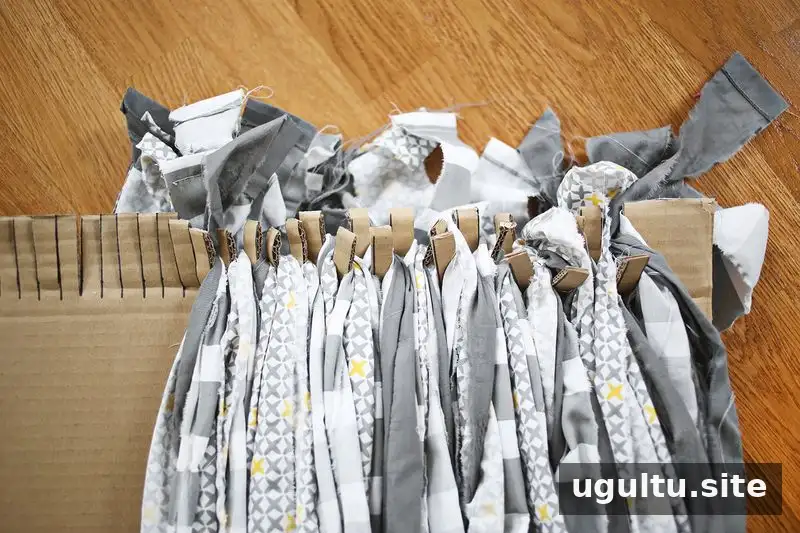
Gather three fabric strips in a combination of colors or patterns and fold the group in half lengthwise. Place one end in the first slot on one side of the cardboard, leaving a few inches hanging over the edge. Put the other end into the corresponding slot on the opposite side. Repeat across the cardboard until the slots are filled.
The loom may feel crowded as you add groups. Keep each group in its matching pair of slots and check that the fabric lies flat before beginning to weave.
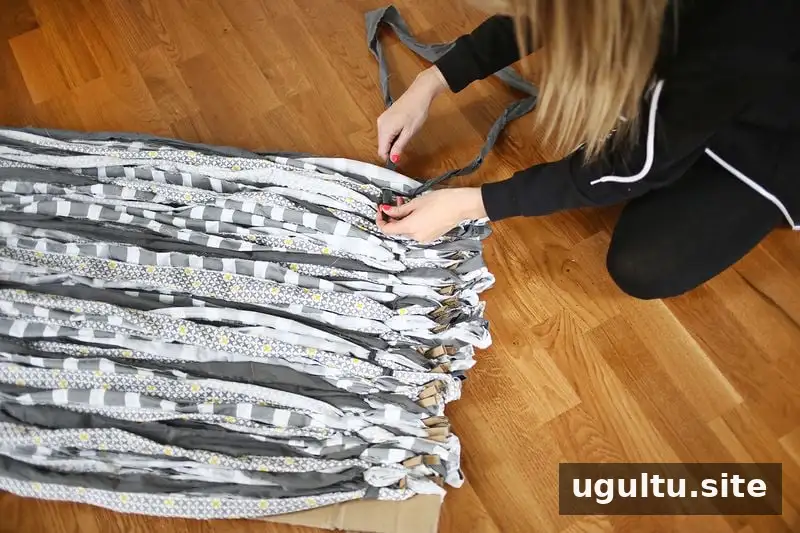
4. Weave the rug
Choose a strip to use as the weaving strip. Wrap masking tape around one end to make it easier to pass through the fabric groups. Starting about 2 inches from the ends of the cardboard slots, weave the strip over and under each group until you reach the other side. Leave a 6-inch tail at the starting point for finishing later.
The first row can be difficult to navigate because the loom is tightly packed. Continue carefully; a few strips caught in the wrong group should not affect the finished rug. At the far side, turn the weaving strip around the last group and weave back in the opposite direction, alternating over and under.
After each row, straighten the woven strip with your fingers and push it close to the previous row. Continue until you are about 2 inches from the slots at the other end. Check the rug’s width as you go, keeping it as even as possible. Adjust the tension at each turn: pulling more firmly makes the weave tighter, while easing the strip helps maintain width.
When a weaving strip runs out, connect another one by cutting a slot in the end of the current strip and the beginning of the new strip. Pull an inch or two of the new strip through the first slot, then pass its tail through the opening in the new strip and pull snug. Repeat this connection whenever you need more length.
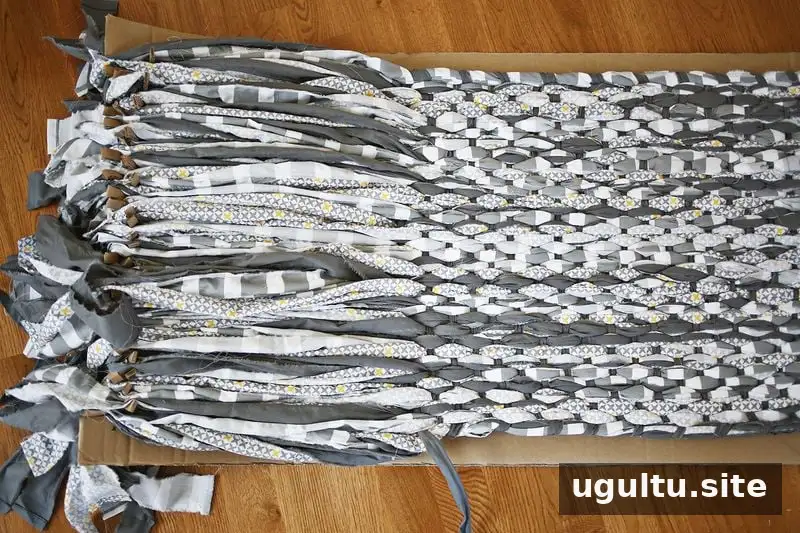

5. Secure the ends
At the end of the weaving, turn around the last group and thread the weaving strip down through the first exposed section of the final row. Pull it snug, then move to the next exposed section and repeat. Continue across the edge and tie the weaving strip to one of the strips in the last group. Finish the opposite end in the same way, extending the starting tail with another strip if needed.
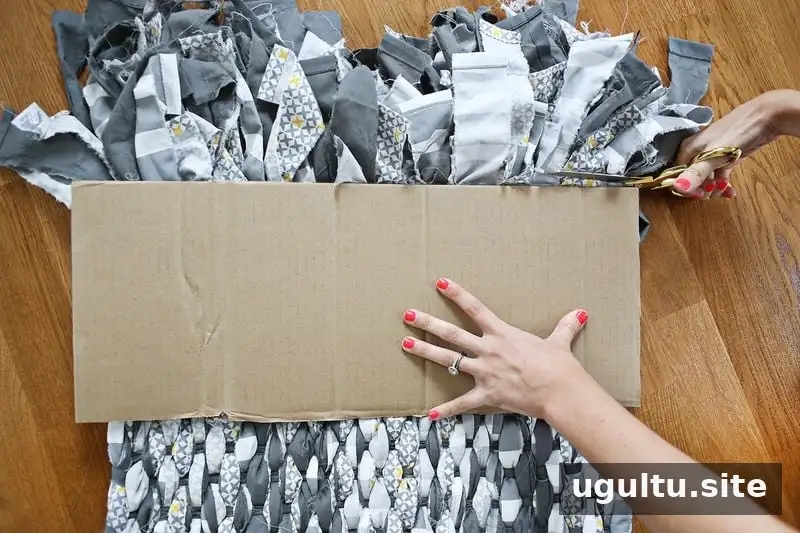
6. Trim and remove the loom
Place a ruler or piece of cardboard inside the edge where you want to trim. Use fabric scissors to cut away excess fabric, taking care not to cut into the woven rug. Once the ends are trimmed, remove the cardboard backing.

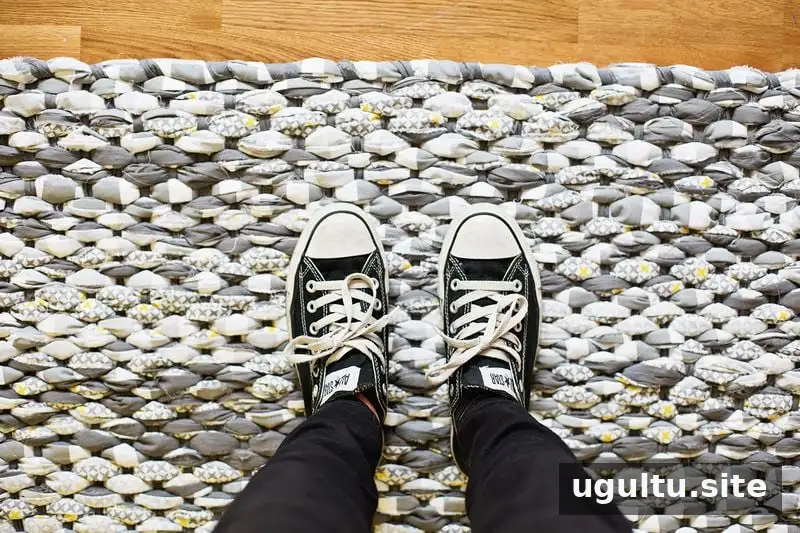
Finishing Tips
Before using your woven rag rug, check that the edge ties are secure and that no long fabric tails remain. Trim loose threads carefully without cutting the woven sections. If you plan to make another rug, varying the color order of the three-strip groups is an easy way to create a different pattern using the same method.

Conclusion
This woven rag rug project turns three old cotton sheets into a practical handmade floor covering. With evenly cut strips, a stable cardboard loom, and consistent weaving tension, you can make a rug in colors and dimensions suited to your space.