
 admin


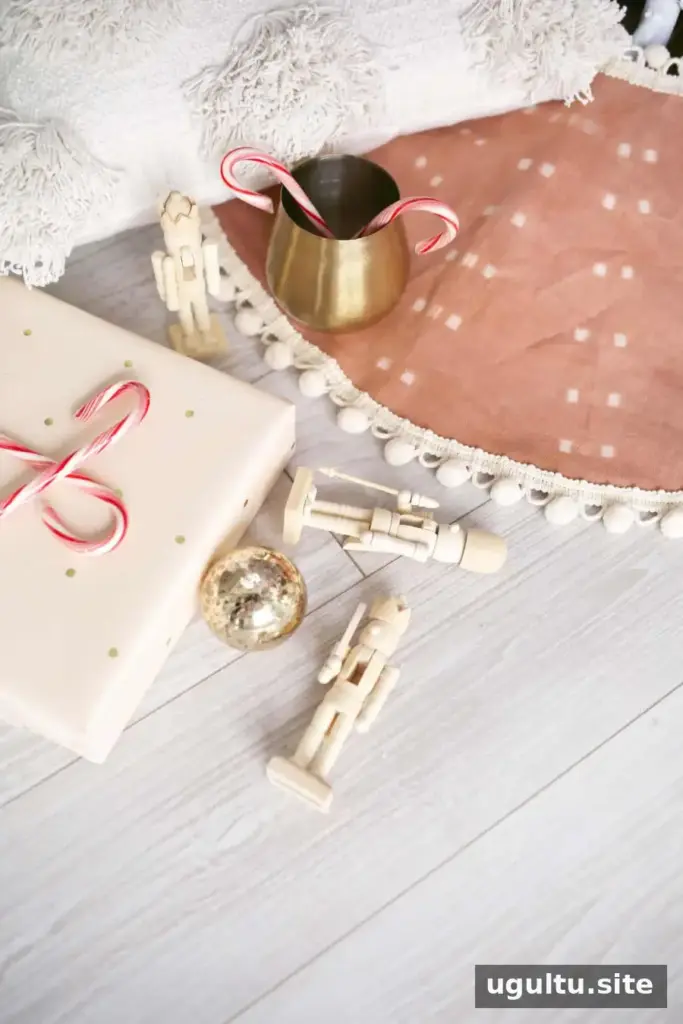
A naturally dyed Christmas tree skirt can bring warm color and a handmade touch to holiday decor. This project uses linen, madder root dye, and a clothespin resist technique to create a pattern in shades ranging from blush pink to mauve and brick red. The finished skirt pairs especially well with white decorations and brass or gold accents.
The same dyeing method can also be adapted for other home textiles, such as pillow covers, stockings, or cloth napkins. Use the steps below to make a skirt sized to suit your tree.
More Christmas Tree Skirt Ideas
- Reversible tree skirt
- No-sew glitter star tree skirt
- Three easy no-sew tree skirts

Materials and Supplies
For the tree skirt
- One yard of wide-bolt, 100% linen
- One yard of wide-bolt felt
- Two yards of white pom-pom trim, optional
- Fabric scissors, straight pins, a sewing machine, and an iron
For dyeing
- 100 wooden clothespins
- 2 tablespoons alum for mordanting
- One 20-quart stainless-steel pot
- A stainless-steel ladle or wooden dowel
- 1/2 to 3 ounces of madder root powder extract, depending on the desired shade
- Access to a stovetop
Safety note: Keep the pot and stirring tool dedicated to dyeing and do not use them for food preparation afterward.
How to Make a Naturally Dyed Christmas Tree Skirt
Prepare the linen and dye bath
Wash the linen in hot water with mild detergent to remove processing oils that may interfere with dye absorption. Use 100% linen rather than a linen-and-polyester blend, since the dyeing results may differ on synthetic fibers.
Before cutting the fabric, fill the stainless-steel pot about three-quarters full with hot water. Place it over medium-high heat and stir in the alum until dissolved. Add madder root extract: use 1/2 ounce for blush pink, 1 1/2 ounces for mauve, or 3 ounces or more for a deeper mauve-to-brick-red shade. Cover the pot and bring the mixture to a simmer, but do not let it boil, as boiling can muddy the color.
Cut and pattern the fabric
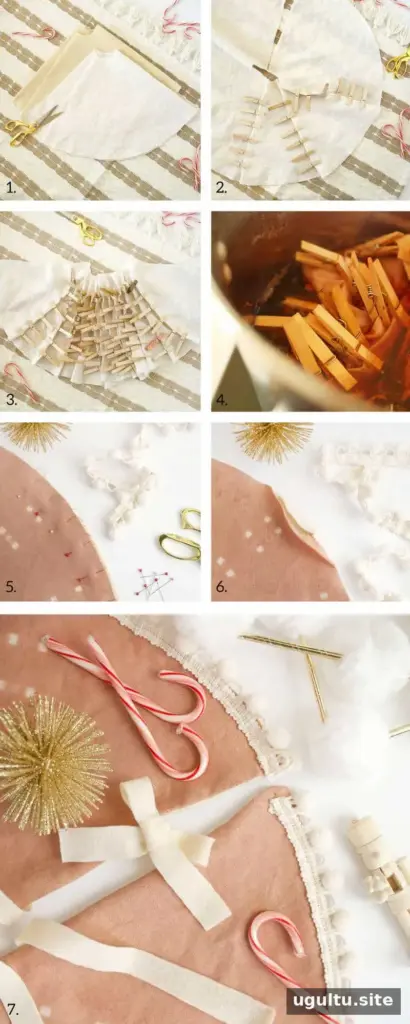
- Cut the skirt pieces. Cut the linen and felt about 1 inch wider than the desired finished size. Fold each piece to help draw a circle, then cut out the circles. Cut a smaller opening in the center for the tree stand and make a straight cut from the outer edge to the center opening on both pieces.
- Make the resist pattern. On the linen, imagine evenly spaced lines radiating from the center like slices of a pizza. Pinch the fabric along each line and secure each pinch with six clothespins. Repeat around the circle. More sections and clothespins create a denser pattern, so keep the spacing consistent for an even effect.
- Dye the linen. Carefully place the linen in the dye bath and stir gently without shifting the clothespins. Leave it in the bath until it reaches the desired shade. The fabric will look slightly lighter once dry. Remove the clothespins, rinse the linen in cold water, and hang it to dry or use a dryer. Iron it flat.
- Sew the layers together. Place the dyed linen and felt together, pin around the outside edge, and sew while leaving about 1/4 inch between the stitching and edge. Leave an opening wide enough to fit your hand so you can turn the skirt right side out.
- Close and finish the skirt. Turn the fabric right side out and press it flat, folding the opening’s raw edges inward. Pin the opening closed. If desired, pin pom-pom trim around the outer edge and sew it in place; trim can also frame the center opening. Hand-stitch leftover felt strips along the straight opening to create ties.
Customize the Size and Finish
Adjust the circle dimensions to fit your tree and the space around its stand. A smaller tree may suit a petite skirt, while a wider tree may need a larger one to keep the proportions balanced. The felt backing also adds structure and helps the linen hold its shape around the stand legs.
Pom-pom trim is optional. For a different look, substitute fringe or leave the edge plain. The felt can also be turned to the front for a simpler appearance.

The finished skirt’s patterned linen adds contrast against a white tree and floor, while warm metallic accents can help balance the soft pink or mauve tones.

Final Tips for Your Naturally Dyed Christmas Tree Skirt
For a successful naturally dyed Christmas tree skirt, start with clean 100% linen, keep the dye bath at a simmer rather than a boil, and allow for a slight color change as the fabric dries. Choose the madder root amount and clothespin spacing to suit your preferred shade and pattern, and adjust the skirt dimensions to your tree. — Rachel


