
 admin
Tanya’s townhouse shows how thoughtful updates, handmade details, and secondhand finds can create a home that feels personal without relying on a large budget. The couple transformed their first home together by improving worn finishes and combining different styles, family artwork, and practical DIY projects.
Townhouse home decor on a modest budget
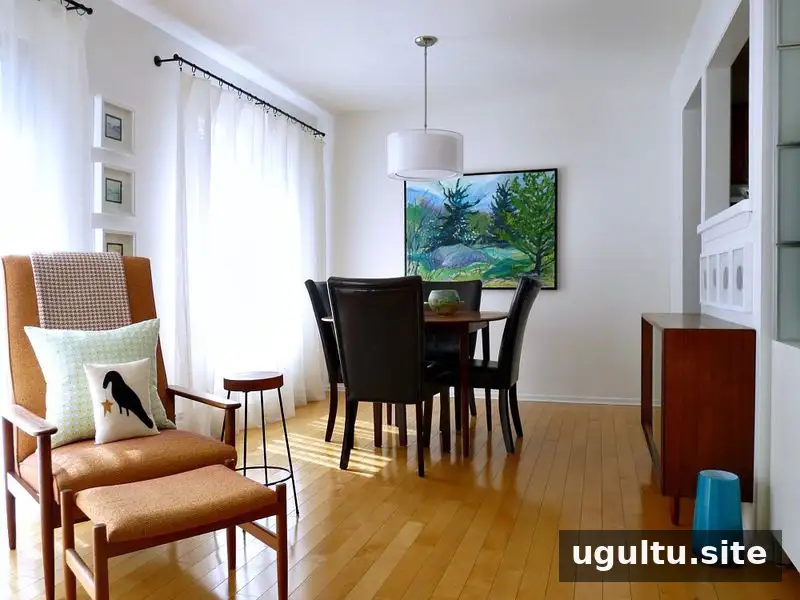
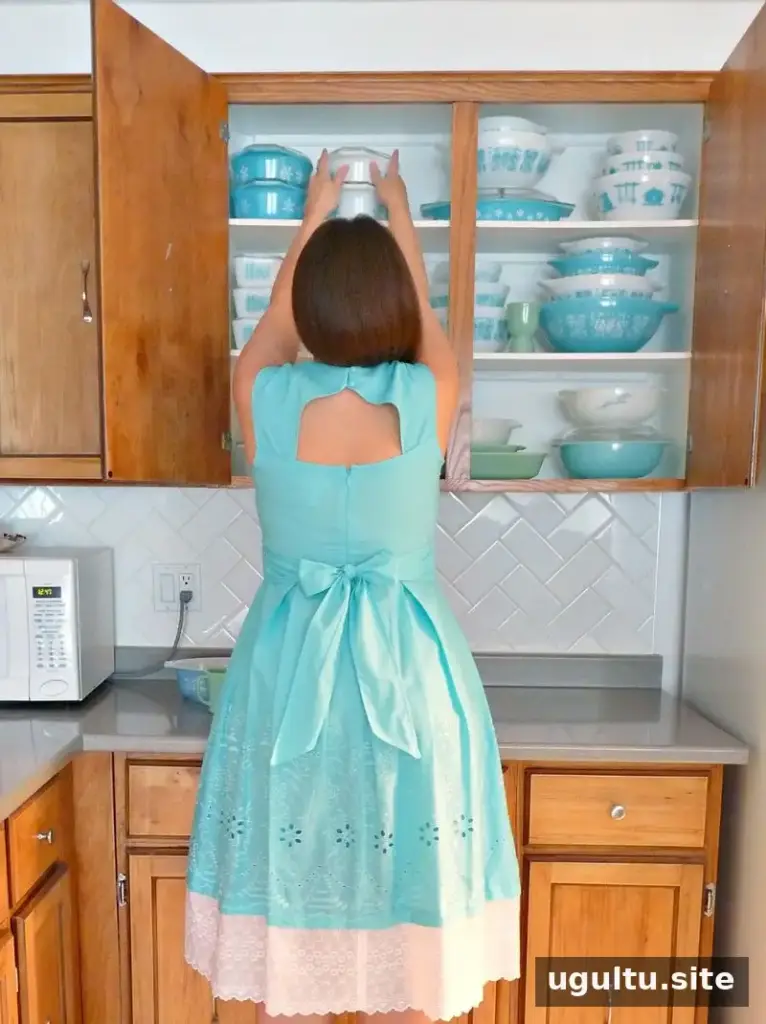
When Tanya and her husband bought the townhouse, it needed work, from its salmon-pink bathroom to stained carpets and general disrepair. They pictured a brighter, more modern interior and gradually made that vision real. Hardwood replaced the carpet, the bathrooms were updated, a herringbone tile backsplash was added in the kitchen, and nearly every wall was painted a crisp gallery white.
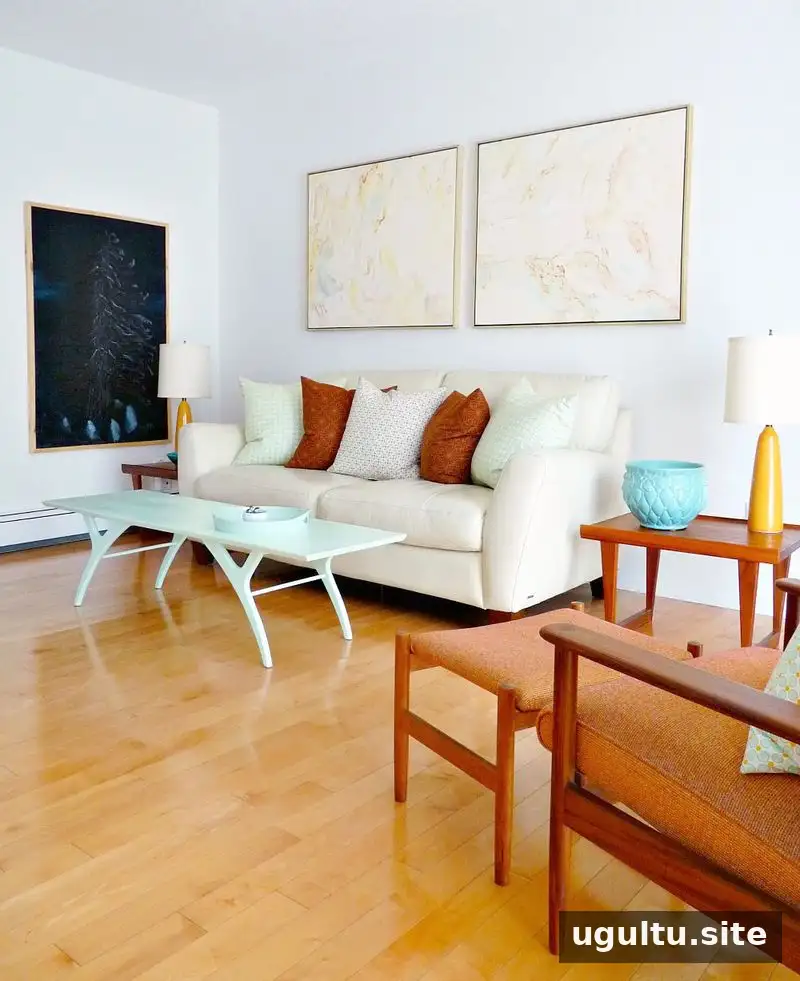
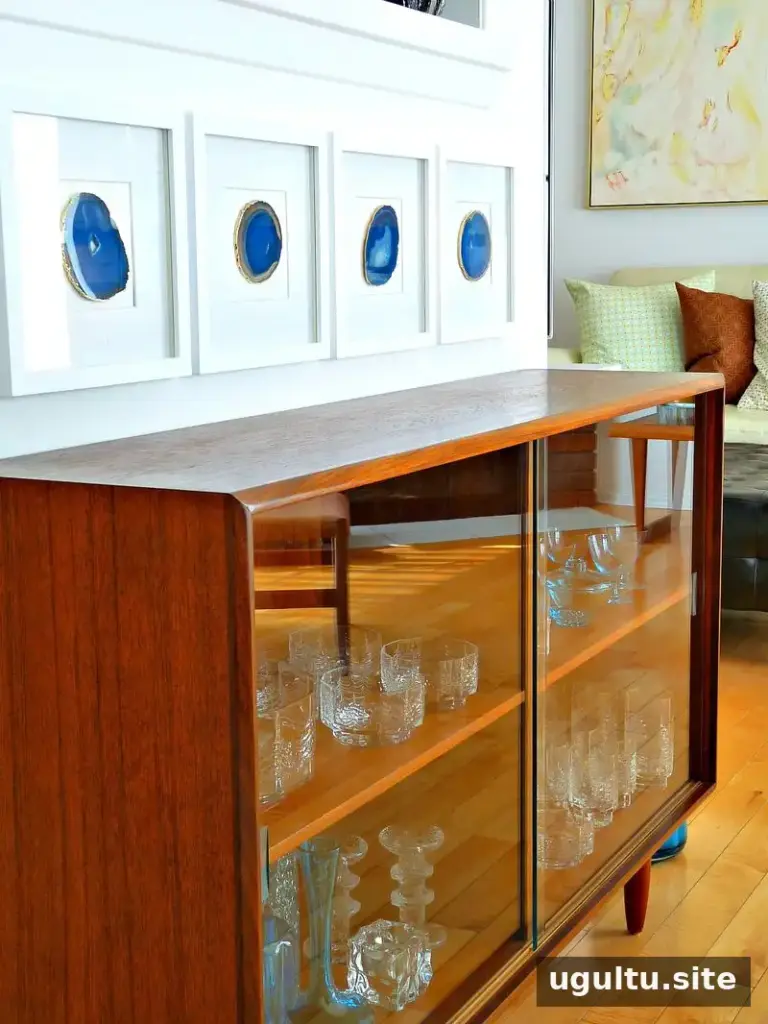
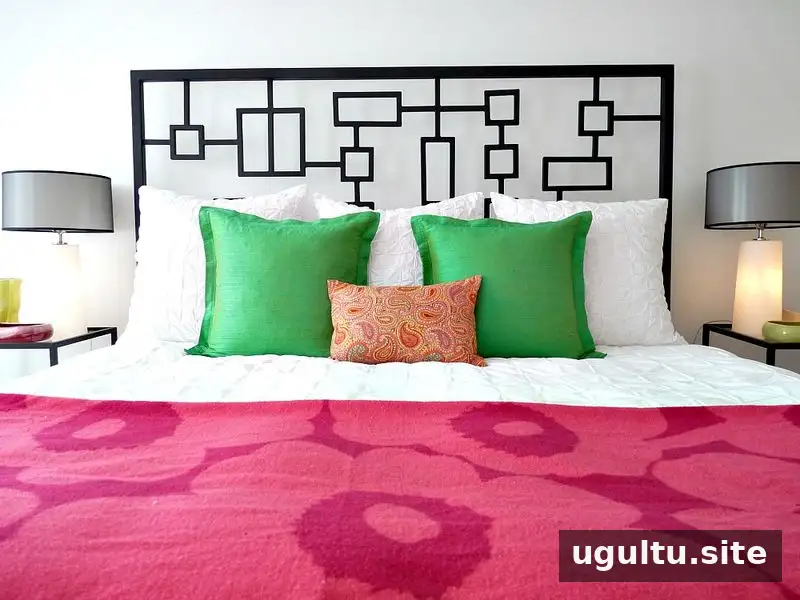
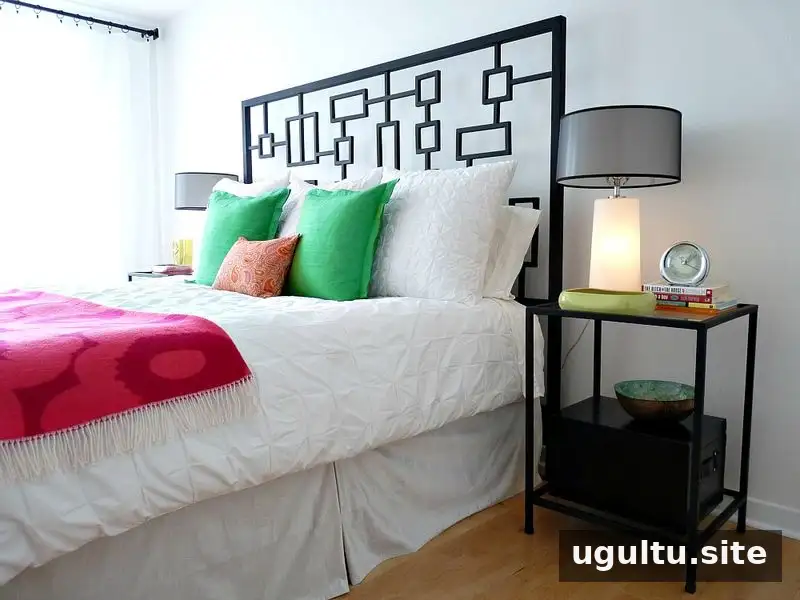
Many of the furnishings and finishing touches were made by hand, including curtains, throw pillows, desks, a headboard, and bedside tables. Other pieces came from affordable sources: a pre-owned cream leather sofa, teak sofa tables bought for $20 at an estate sale, and a collection of vintage glassware gathered largely from thrift stores. Making art and accessories also helped fill empty walls and surfaces. For anyone decorating on a limited budget, combining DIY work with secondhand shopping can make a room feel considered while keeping costs manageable.
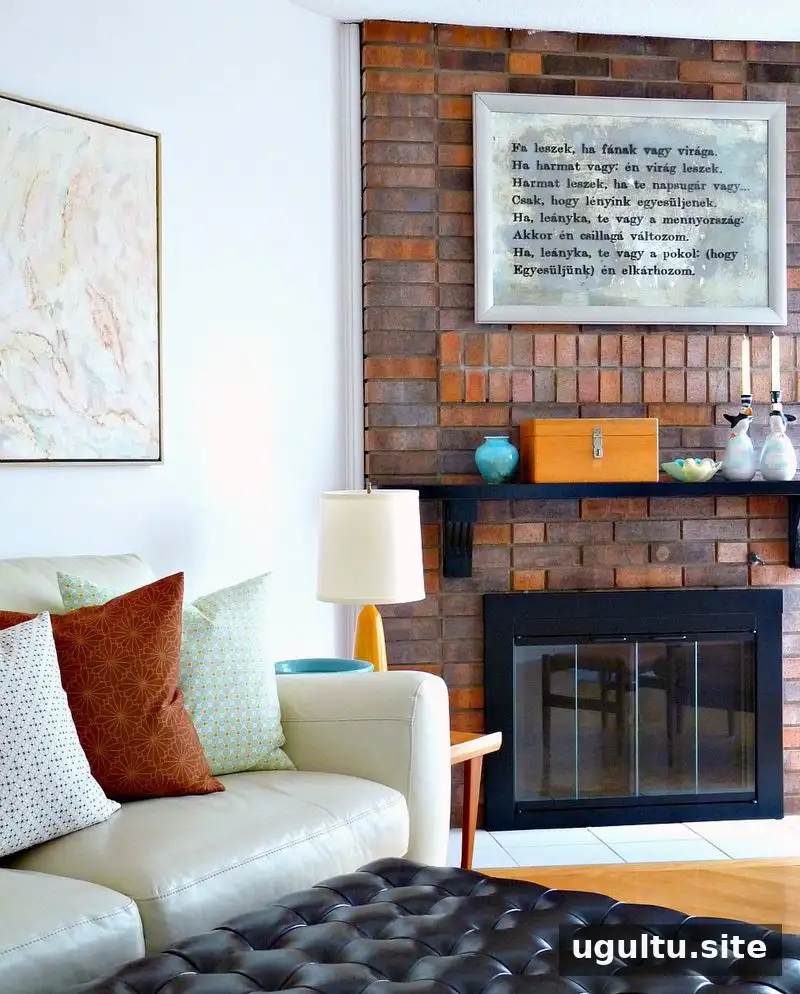
The home balances both partners’ tastes. Tanya favors mid-century furniture, while her husband prefers the wood kitchen cabinets, which she stripped and refinished. Keeping both preferences visible gives the rooms a more individual feel than following one style throughout.
Vintage finds and meaningful artwork
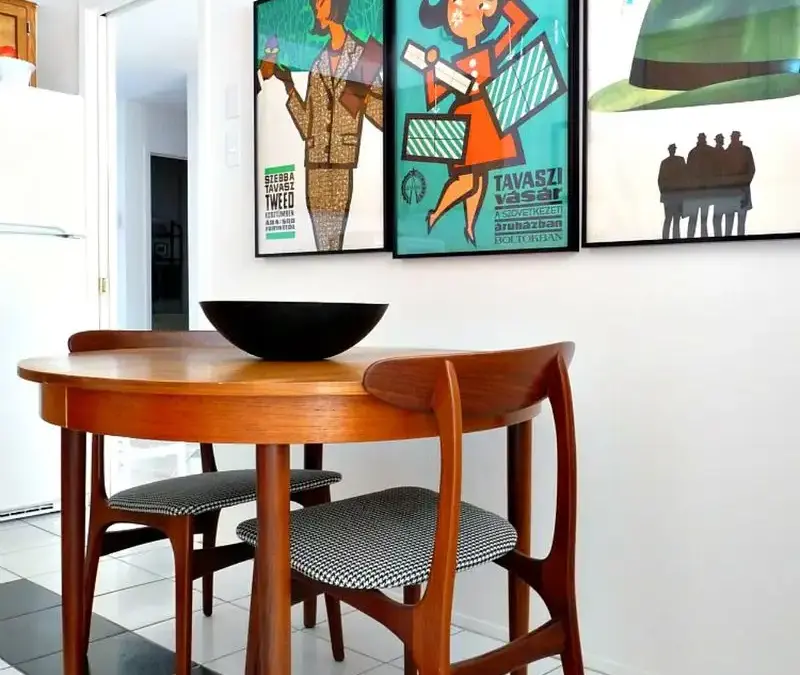
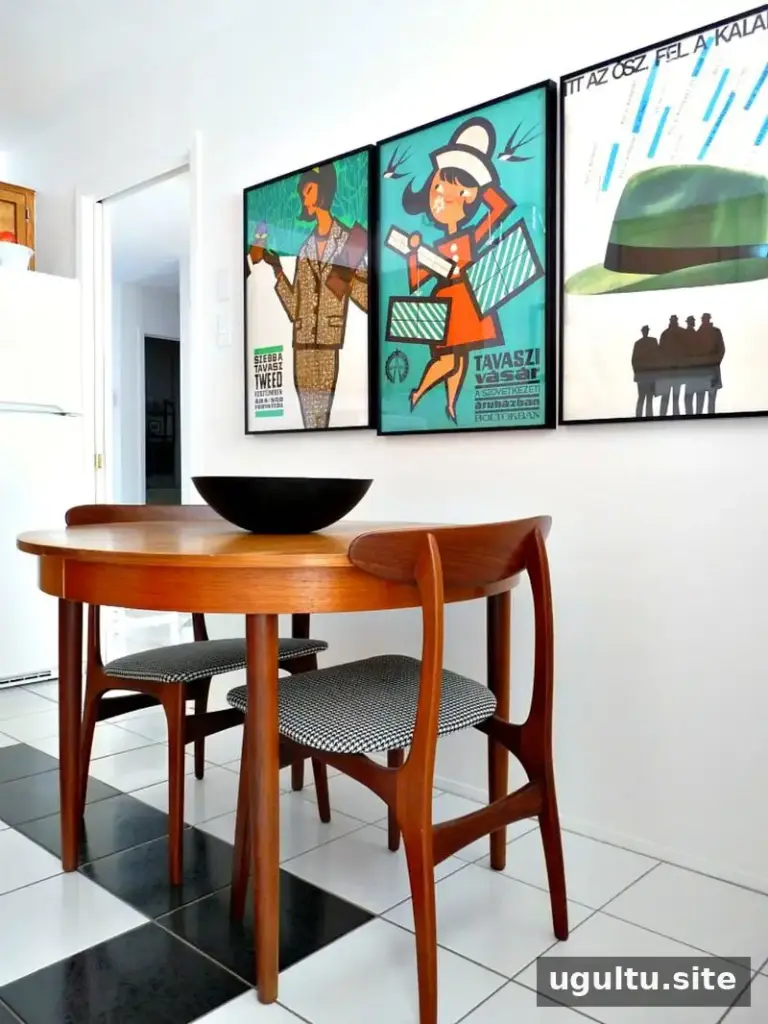
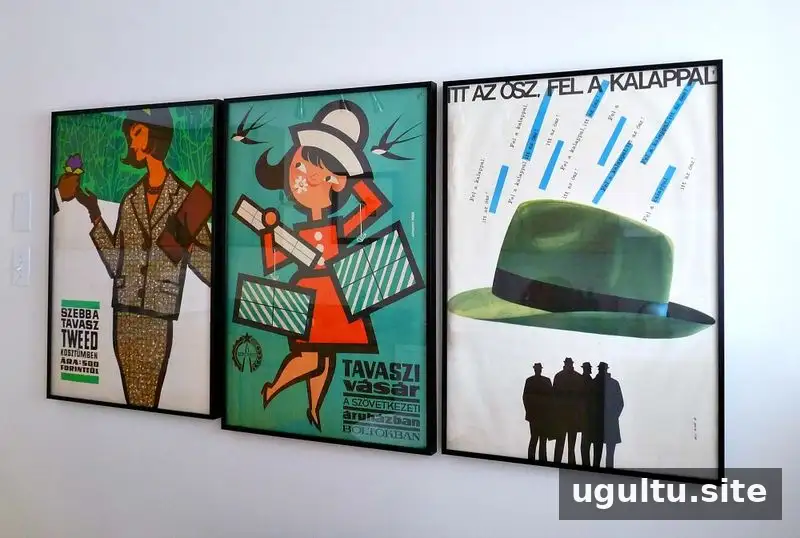
Three 1960s posters in the kitchen are among the home’s most distinctive decorations. Tanya brought them back from Hungary, where she spent four months doing research. The posters were commissioned by the Communist Party to encourage people to shop in nationalized stores. Their history gives the kitchen decor a personal connection as well as a visual point of interest. When displaying vintage items, grouping related pieces together can help them stand out without overwhelming a room.
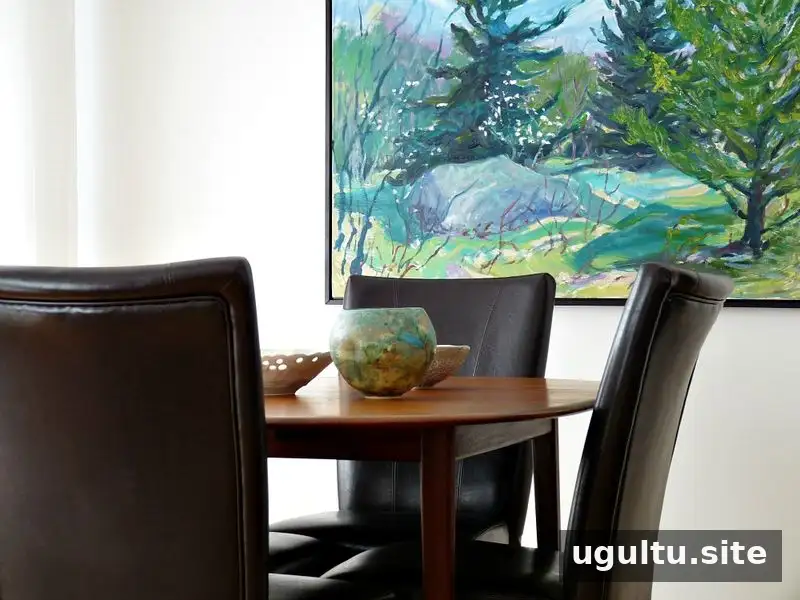
Artwork is another important part of the townhouse. Tanya’s favorite piece is a metal sculpture in her office, made by her grandfather. He also welded the large headboard and bedside tables, which Tanya designed with her mother. Her husband’s favorites include paintings made by his grandfather, displayed in the dining room and above the sofa. The couple values art but has limited funds for buying it, so family-made pieces and creative projects help make the collection feel complete.
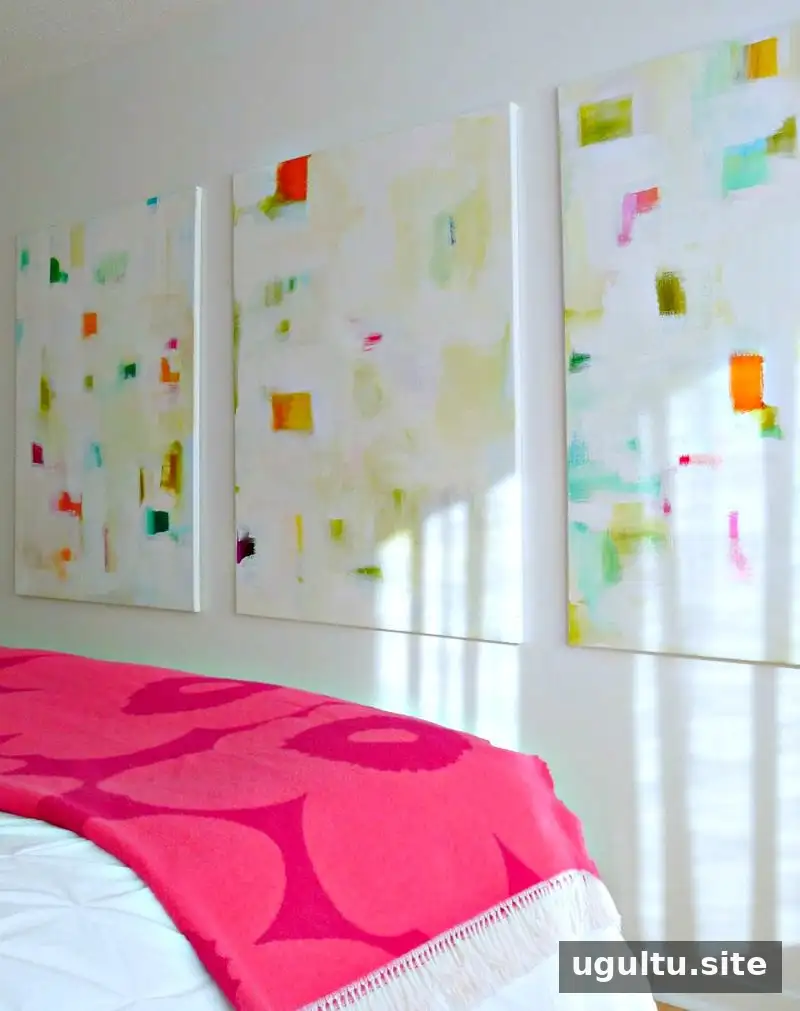
Other handmade details include an old bathroom mirror that was antiqued and decorated with a Hungarian poem, framed agate coasters in the dining room, and an abstract triptych Tanya painted for the bedroom. Repurposing objects or making simple artwork can bring character to a space; choose materials and colors that work with the room’s existing palette.
DIY spaces for work and downtime
Because the couple takes on many DIY projects, a garage was an important feature. They refreshed it with icy blue paint and shelving they built themselves. Their shared interest in making and refinishing things began when they were teenagers, with projects that included refinishing a desk, upholstering a chair, and painting a 1992 Dodge Colt lime green. Today, their projects range from tiling to furniture restoration, and the garage and backyard are frequently used work areas.
Tanya works from home and spends time in an office furnished with a desk made from the base of an old treadle sewing machine. She says she still uses the treadle while thinking, a small detail that makes the workspace especially personal. The living room, meanwhile, is the couple’s most-used room and their favorite place to relax together during movie nights. When planning a home, it helps to consider how each room is actually used, then prioritize storage, seating, and work surfaces accordingly.
What this townhouse teaches about personal style
This townhouse home decor brings together practical renovations, handmade furnishings, meaningful family artwork, and well-chosen secondhand finds. The result reflects both residents rather than a single decorating trend. Start with the changes that will make daily life more comfortable, then add personal pieces over time. A modest budget can still support a distinctive home when existing items are reused, projects are tackled thoughtfully, and each room is designed around the people who live there.
Tanya shares a home shaped by creativity, resourcefulness, and the couple’s shared love of DIY projects.


