
 admin
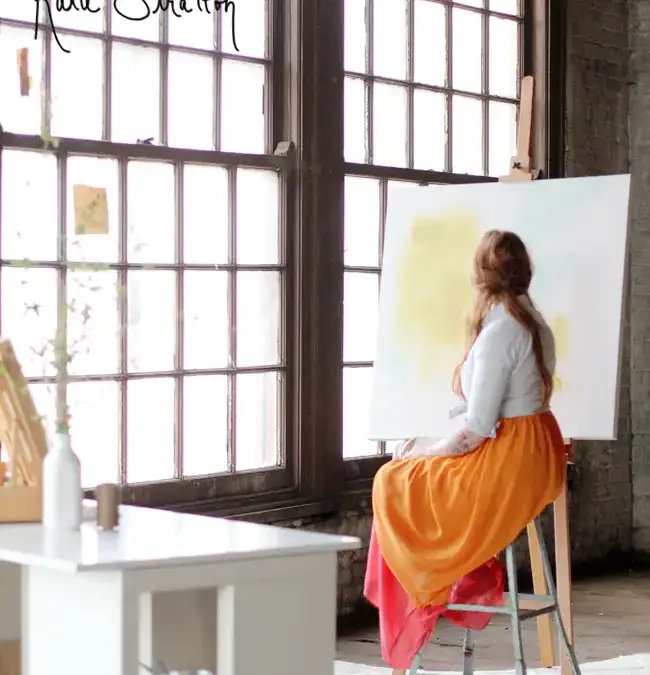
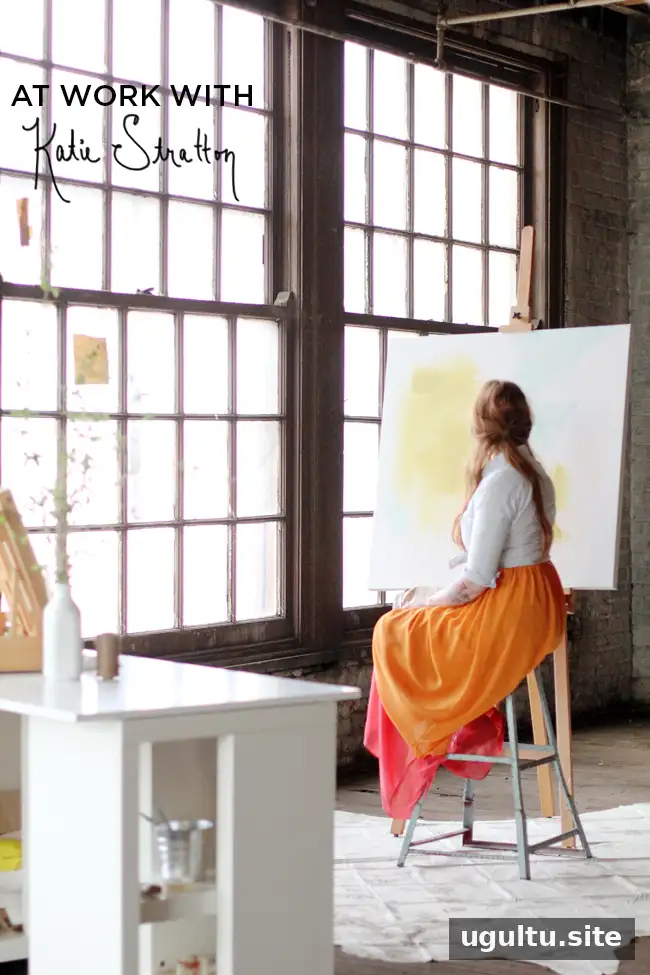
An artist studio workspace can support both focused work and everyday inspiration. Artist and painter Katie Stratton’s loft studio reflects her interest in seasonal colors and offers a dedicated place to create custom paintings and commissioned work. After years of working from home, moving into a shared studio gave her a new setting for her practice.
Katie Stratton’s Artist Studio Workspace
Stratton is a freelance artist whose work is shaped in part by the changing seasons and the colors of Ohio. She creates custom pieces for private clients and takes on magazine assignments. At the time she described the studio, she also hoped to make her work more accessible by offering prints and original paintings online.
A dedicated studio can help establish a clear boundary between home and work. When setting up a similar space, keep regularly used supplies within easy reach and leave enough room to move around safely, especially if children share the studio.
A Typical Day in the Studio
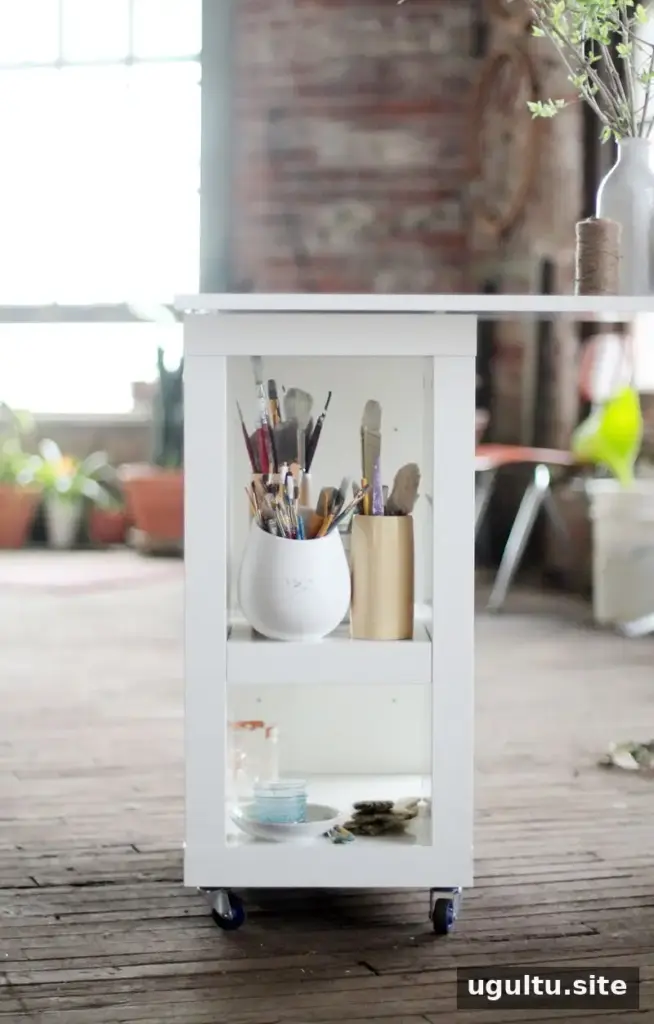
On a typical studio day, Stratton takes her son to school at 8:30 a.m. and then heads downtown with her baby, Phoebe. She transports her art supplies and car seat using a dolly and takes the freight elevator to the third floor.
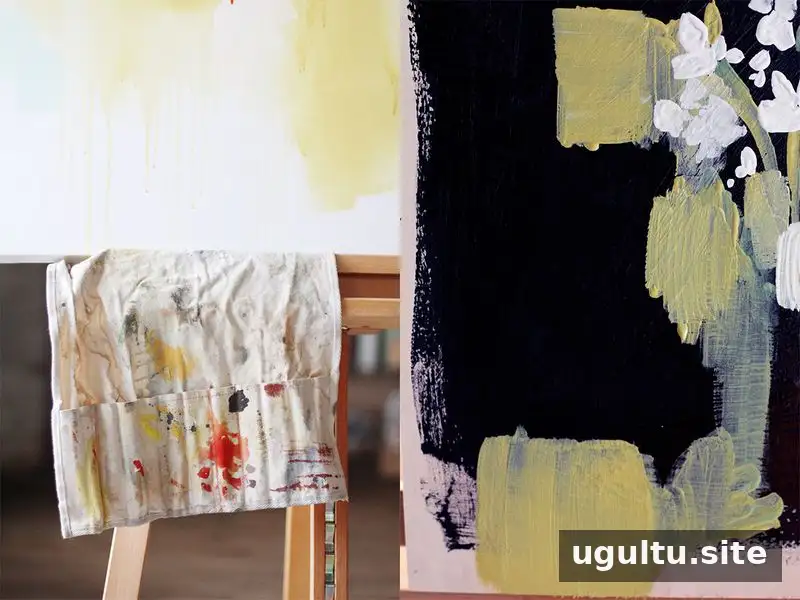
In the loft, Phoebe plays in a playpen or crawls on a blanket while Stratton prepares to paint. For a commissioned piece or magazine assignment, she begins with a defined direction. Other paintings develop more organically, influenced by her mood and the music playing in the studio.
Her workday moves between painting, pausing to think, and caring for her baby. Working with a young child nearby can be challenging, and some days are less productive than others. She makes time for at least one solo studio session each week. For artists balancing caregiving and creative work, planning a regular block of uninterrupted time can make it easier to tackle tasks that need concentration.
Sharing a Creative Studio
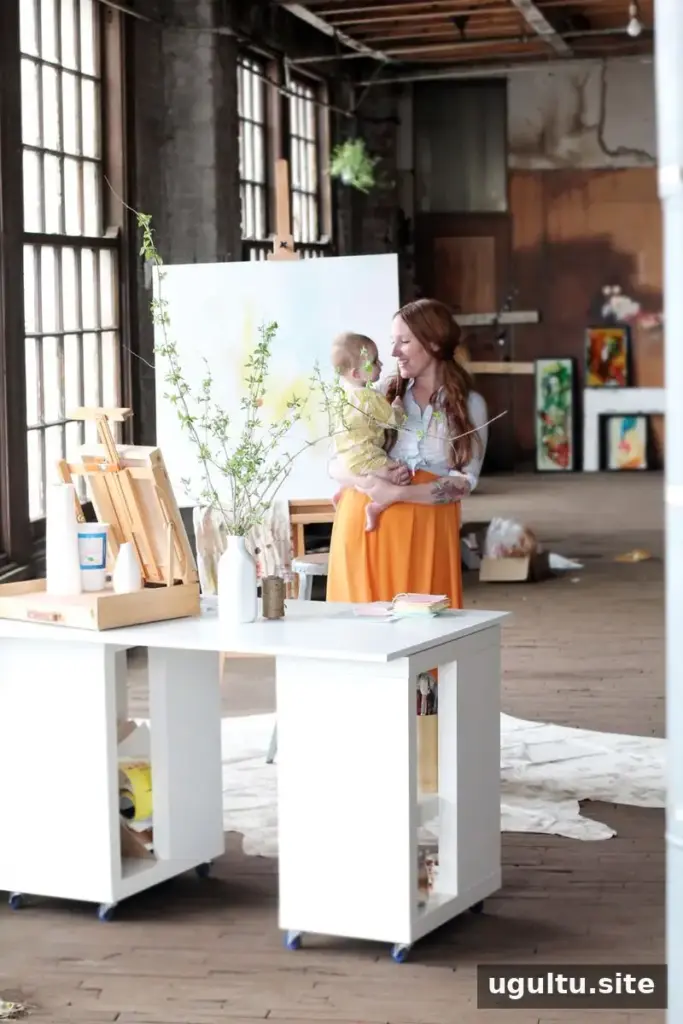
Stratton shares the loft with fellow artist Brooke Medlin. Having another artist nearby gives them a chance to exchange ideas and benefit from each other’s creative energy. The building is also home to photographers and other makers, creating a community of people working in creative fields. A building cat named Spooky is another familiar presence.
Shared studios can offer companionship and fresh perspectives, but it helps to agree on how to organize common areas and store materials. Clear arrangements make it easier for everyone to work comfortably.
A Simple DIY Drop-Cloth Rug
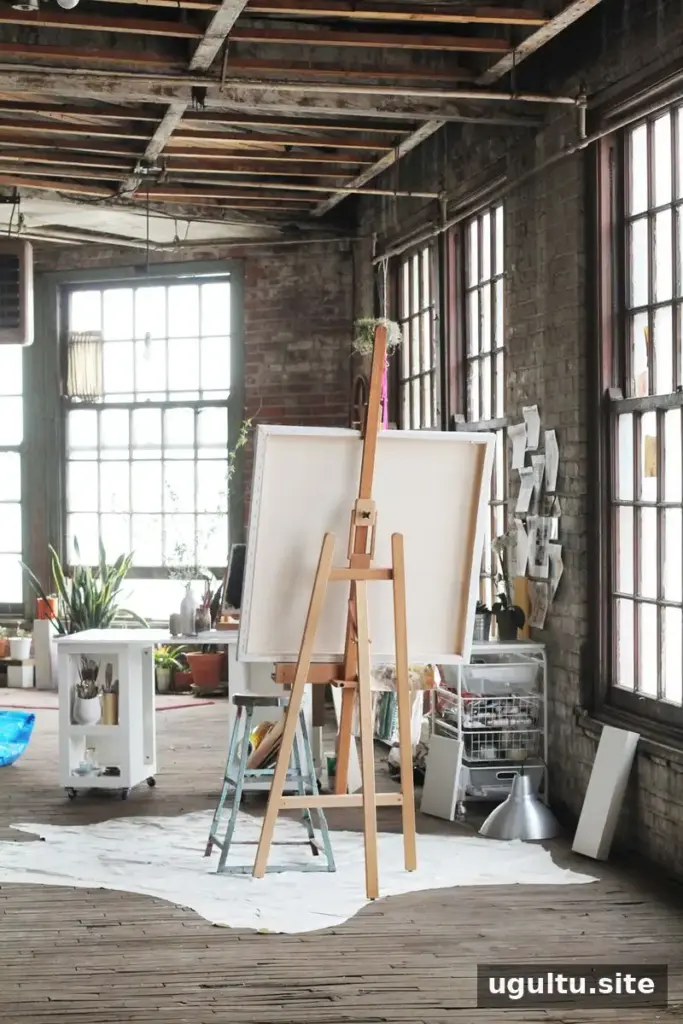
The studio’s old floors are part of its character, but paint and foot traffic can take a toll. To protect them, Stratton made a faux cowhide-style rug from a rubber-backed canvas drop cloth. She used a 9′ x 11′ cloth, traced a hide shape onto it, and cut the outline with scissors.
The rubber backing helps keep the canvas from fraying and helps it grip a bare floor. Before cutting, spread the cloth flat and check that the shape and size suit the area. Use scissors carefully, and make sure the finished rug lies flat to reduce the chance of tripping.
What Makes This Artist Studio Workspace Work
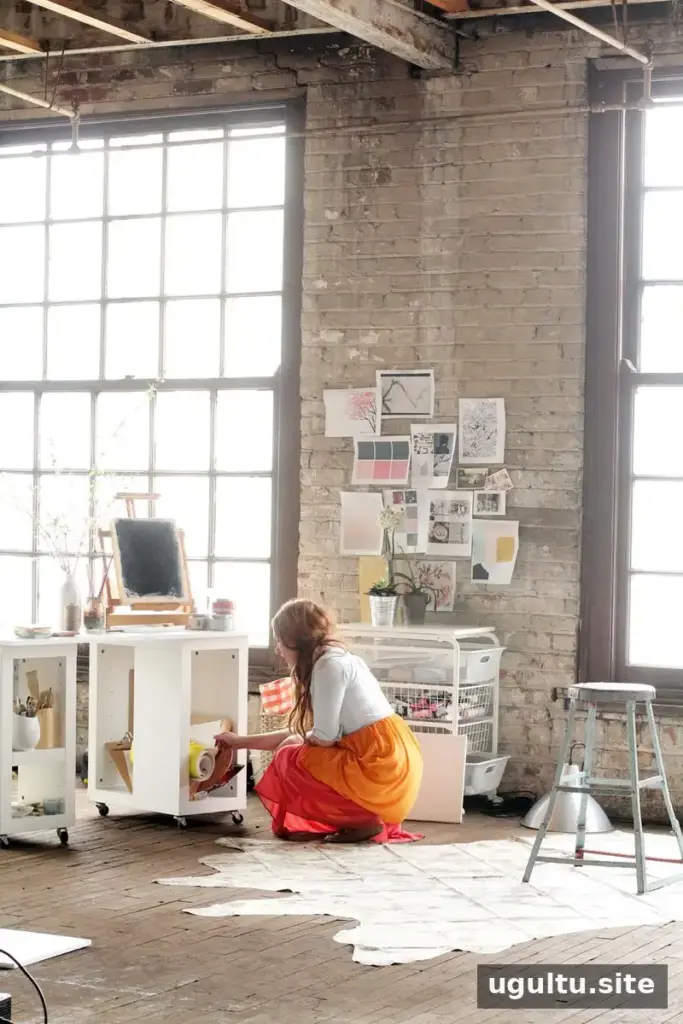
Stratton’s artist studio workspace combines practical routines, room for family life, and the company of other creative people. A dedicated work area, accessible supplies, and occasional uninterrupted time can all help support a sustainable art practice. The handmade floor covering is a simple example of adapting a studio to protect its original features while keeping the space functional.


