
 admin
Once you know how to make a slip knot and foundation chain, learning basic crochet stitches is the next step toward creating crocheted fabric. Single crochet, half double crochet, and slip stitch are useful techniques for many beginner projects, including blankets and scarves. Practising them in short rows will help you recognise each stitch and keep your work consistent.
Basic Crochet Stitches: Single Crochet
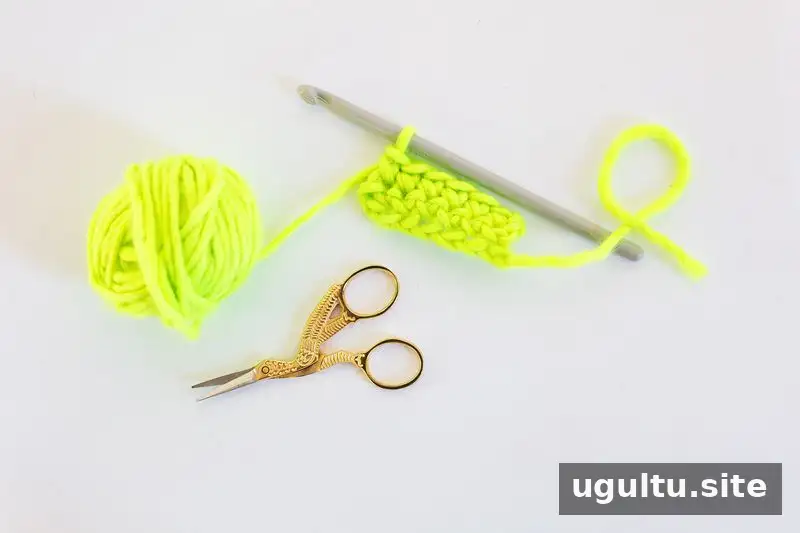
Single crochet (sc) creates a compact fabric and is a helpful stitch to practise when learning to work into a foundation chain. To begin the first row, hold the chain in the hand that is not holding the hook. Insert the hook into the second chain from the hook, yarn over, and pull the yarn through the chain. You will have two loops on the hook. Yarn over again and pull through both loops to complete the stitch.
Continue across the foundation chain, making one single crochet in each chain. At the end of the row, chain 1 and turn your work. For the next row, insert the hook under both top loops of the first stitch. These loops form a small “V” along the top of the row. Work under both strands unless your pattern instructs you to use only one.
Keep your tension relaxed and even: stitches that are too tight can make it difficult to insert the hook into the next row. Remember to chain 1 and turn at the end of each row when following this basic single-crochet method.
Half Double Crochet (hdc)
Half double crochet (hdc) is taller than single crochet and shorter than double crochet. It makes a fabric with a different height and texture, so it is useful to practise alongside sc. To begin, yarn over, then insert the hook into the first stitch of the row. For the foundation chain, insert it into the third chain from the hook.
Yarn over and pull up a loop through the stitch. There are now three loops on the hook. Yarn over once more and pull through all three loops to finish the hdc. At the end of the row, chain 2 and turn. On the next row, work into the first stitch according to your pattern’s turning-chain instructions; crochet patterns can differ on whether the turning chain counts as a stitch. Checking this detail helps keep the edges straight and the stitch count consistent.
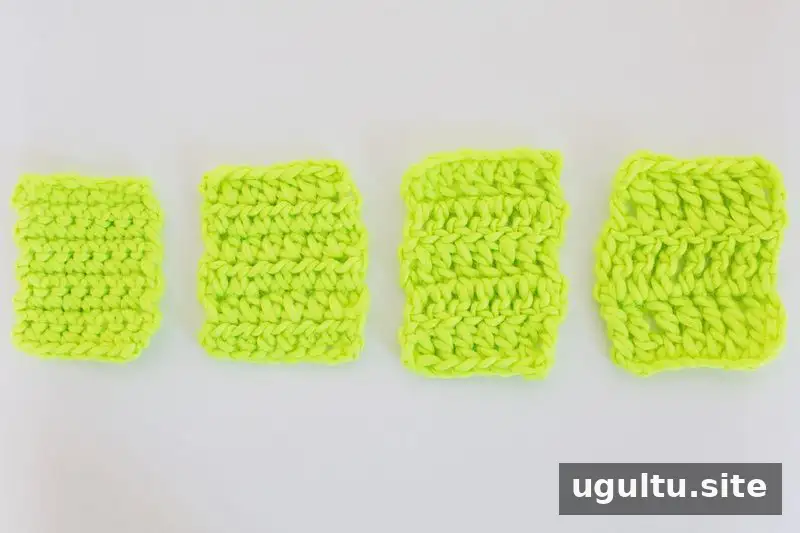
Swatches show how stitch height affects the fabric. In the comparison shown, the far-left sample has 9 rows of sc, followed by 6 rows of hdc, 5 rows of double crochet (dc), and 3 rows of treble crochet (tc). The samples use different row counts, so compare the stitch heights rather than treating them as equal-sized swatches.
Slip Stitch (sl st)
Slip stitch (sl st) is the shortest of these techniques and adds very little height. It can help move across stitches without building up a taller row, join work into a round, or connect crocheted pieces and seams.
Insert the hook into the stitch, yarn over, and pull the yarn through both the stitch and the loop already on the hook. This completes the slip stitch in one motion. Work gently, since pulling the loop too tightly can make it harder to insert the hook into the next stitch.
Practise the Basic Crochet Stitches
Make a few rows of each stitch and check that your edges and stitch counts remain even. Practising single crochet, half double crochet, and slip stitch gives you a useful foundation before moving on to double and treble crochet. — Holly


