
 admin
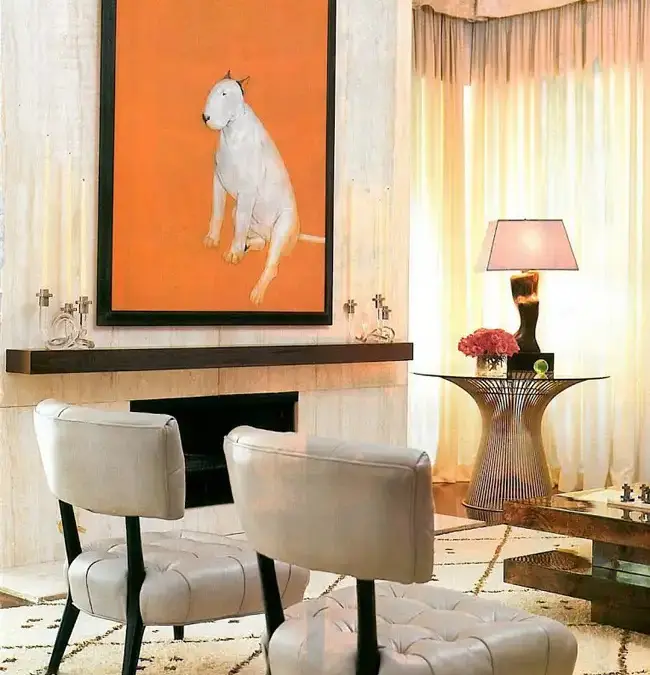
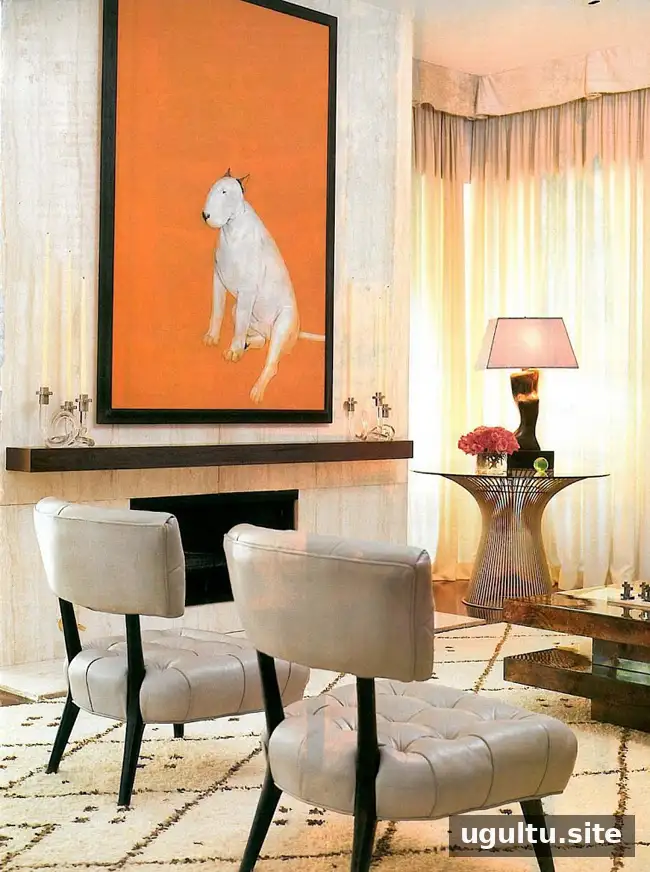
Living room designed by Antonia Hutt, featuring William Haines’s Brentwood Chair.
Hollywood Regency is an interior design style built around glamour, contrast, and fresh interpretations of classical design. It rose to prominence during the 1930s Golden Age of Hollywood, when designers including William Haines created dramatic, polished interiors for film stars. Dorothy Draper brought a different kind of theatricality to hotels and grand public spaces with vivid colors and oversized patterns. Today, the style can be adapted to rooms of many sizes: a few carefully chosen details can add impact without making a space feel crowded.
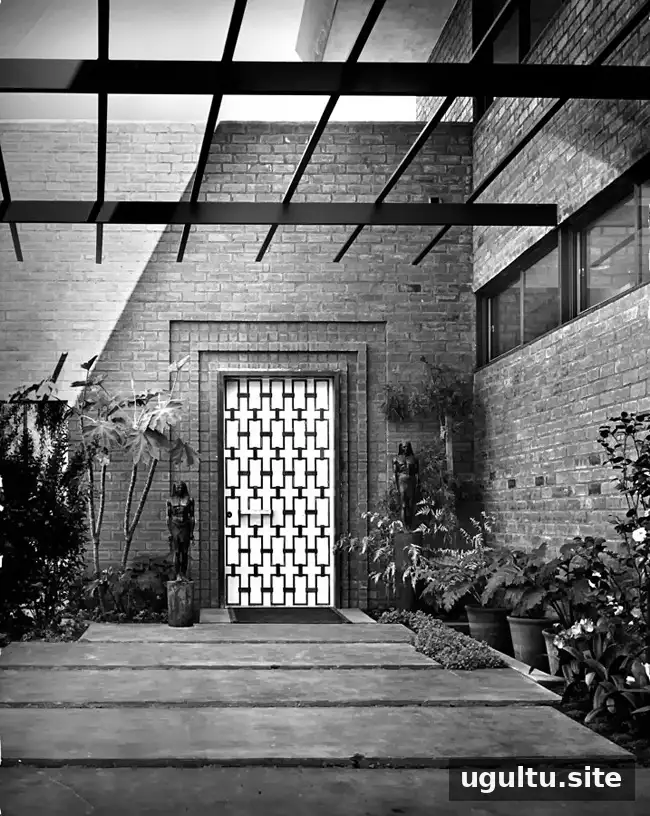
Entrance to William Haines Interiors.
Hollywood Regency and William Haines
William Haines is often described as a founding figure of Hollywood Regency. Before becoming a decorator, he worked as an actor. His refusal to conceal his homosexuality or enter a sham marriage led to his departure from Hollywood. Friendships with film stars helped establish his interior design career, and he later created furniture designs that remain available to the trade. One notable example is the Brentwood Chair, whose tapered, splayed legs draw inspiration from Grecian chairs.
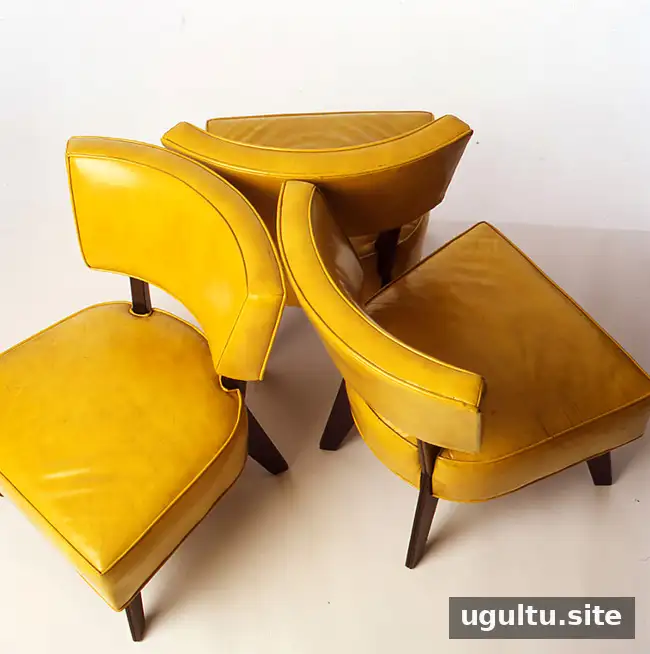
Pull Up chairs, a variation on the Brentwood chair designed by William Haines.
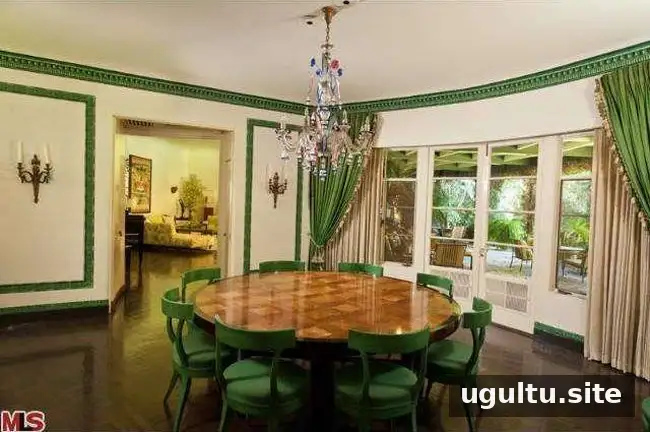
William Haines time-capsule home, as seen at LA Home & Style.
Haines’s interiors often combine neoclassical references with luxurious textiles, tufted seating, and statement-making details. Oversized sculpture, confident color choices, and decorative feminine touches can all contribute to the look. His later work became more streamlined, pairing Hollywood glamour with elements of mid-century modern design.
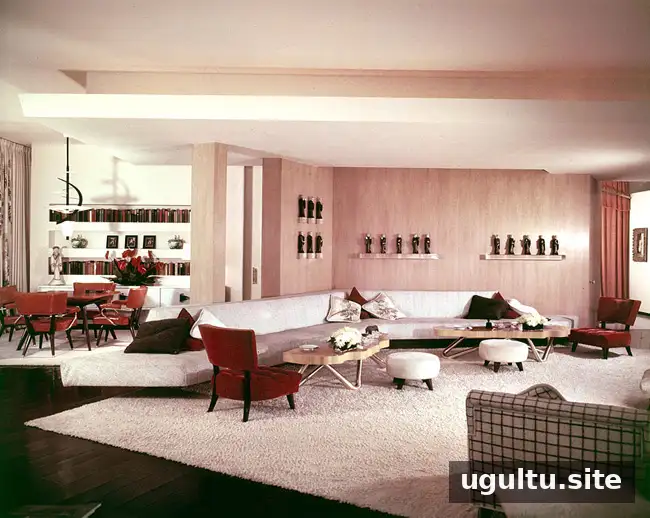
Living room in the Brody house, designed by William Haines.
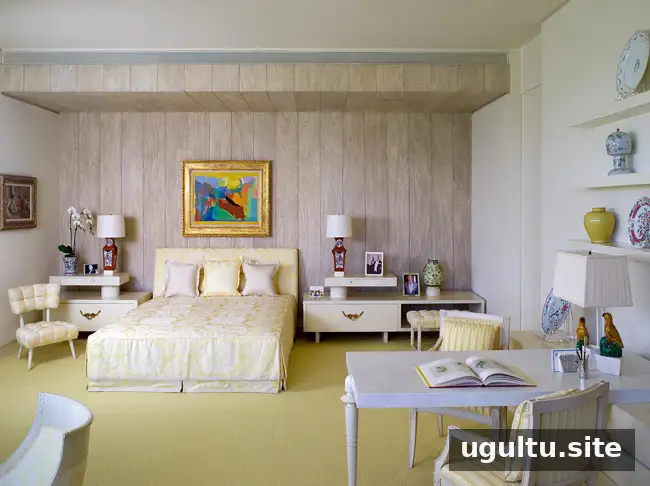
Original master bedroom at Sunnylands, designed by William Haines.
To bring a Haines-inspired note into a room, consider combining one sculptural piece with quieter furnishings. A single patterned pillow, curved sofa, or metallic accent can create a focal point; balance it with simple surrounding shapes so the room remains comfortable and usable.
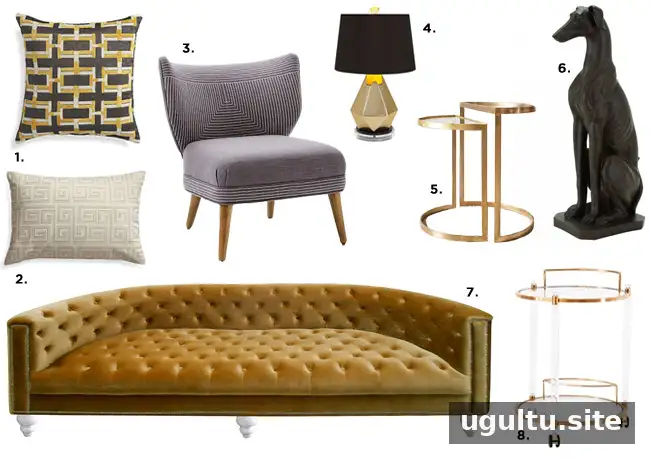
- Trellis Pillow
- Ivory Keystone Pillow
- Slipper Chair
- Golden Age Lamp
- Nesting Tables
- Dog Statue
- Brentwood Curved Sofa
- Gold and Acrylic Bar Cart
Dorothy Draper’s bold interpretation
Dorothy Draper helped shape the style through exuberant, highly visible interiors. In the 1940s, she refreshed traditional rooms with white paint, black lacquer, botanical prints, and strong stripes. Her palettes and patterns brought a lively, often feminine energy to Baroque and Regency references, creating a distinctive American interpretation of historic design.
Compared with Haines’s increasingly sleek and modern approach, Draper’s Regency style tended to retain more traditional forms while using color, scale, and contrast more boldly. She simplified familiar decorative details and enlarged them for dramatic effect. Paneled doors could be emphasized with contrasting black-and-white squares, while stripes, floral chintz, and banana-leaf motifs appeared at an eye-catching scale on walls, floors, and furnishings.
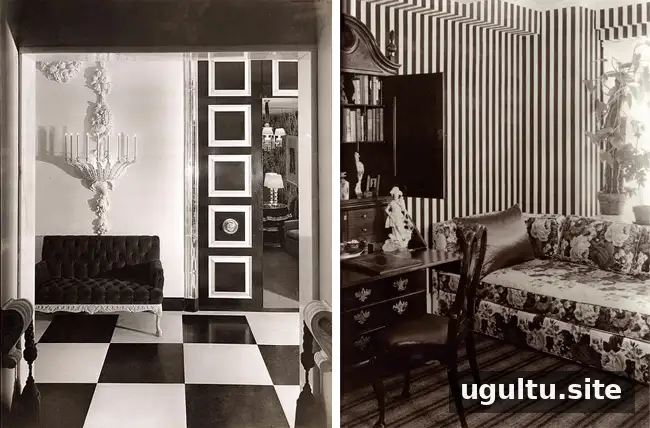
Draper’s influence extended beyond private homes to hotels, clubs, and other public interiors. Her work helped establish interior design as a profession, and her writing for Good Housekeeping introduced decorative ideas to readers across the United States. When using her approach at home, choose one dominant print or color contrast first, then repeat a small number of colors elsewhere to keep the overall scheme cohesive.
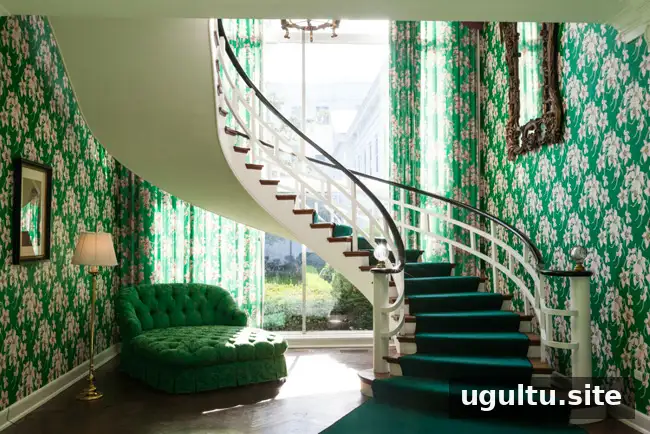
The Greenbrier Hotel, designed by Dorothy Draper. Photo by Gemma & Andrew Ingalls.
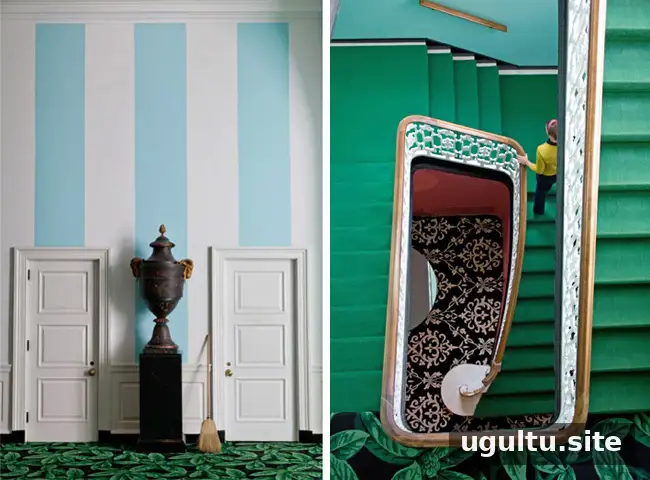
The Greenbrier Hotel, by Gemma & Andrew Ingalls / Victoria Magazine; below: Michel Arnaud for The Baltimore Sun.
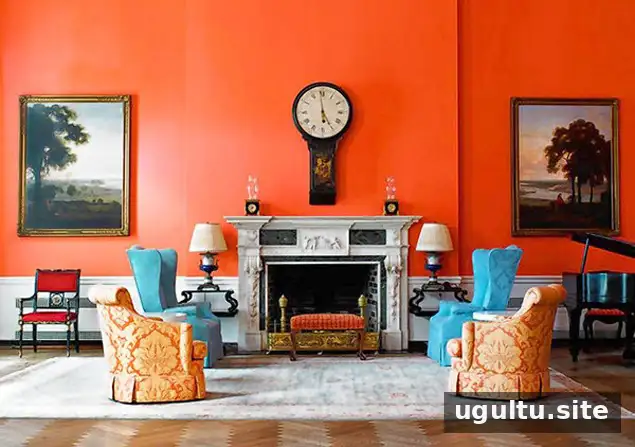
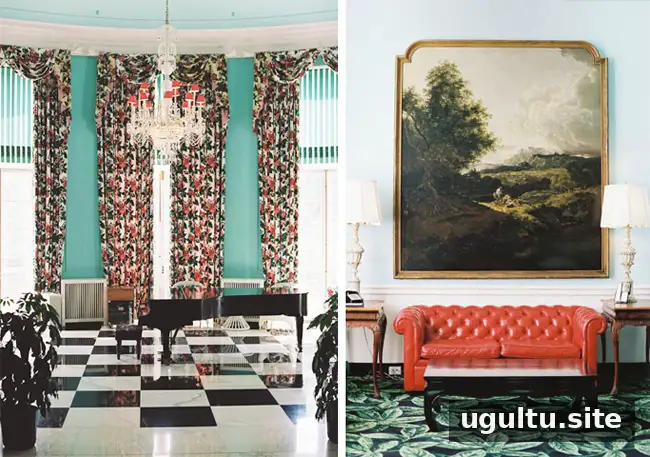
The Greenbrier Hotel, by Cooper Carras for Matchbook Mag.
Draper’s work can still be seen at West Virginia’s Greenbrier Hotel. To interpret similar details at home, combine patterned textiles, a decorative mirror, or a brass lamp with more restrained furniture. Repeating a pattern in several places can be effective, but vary its scale or use solid colors between larger prints to give the eye a place to rest.
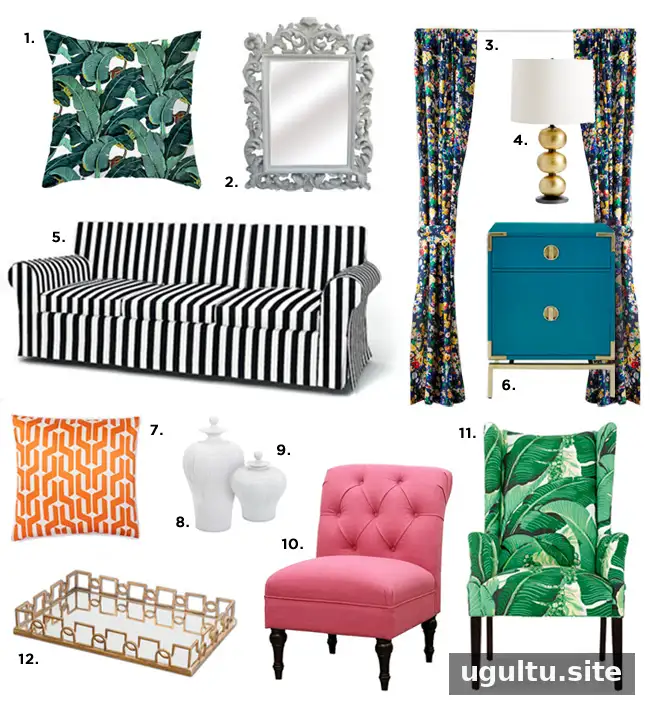
- Banana Leaf Pillow
- Baroque Mirror
- Floral Curtains
- Brass Table Lamp
- Sofa slipcover
- Campaign Nightstand
- Geometric Pillow Cover
- Tall Lidded Urn
- Short Lidded Urn
- Tufted Slipper Chair
- Copley Chair in Dorothy Draper’s Brazilliance
- Mirrored Brass Tray
Hollywood Regency in the 1960s and 1970s
Hollywood Regency continued to evolve, blending with other popular looks over the decades. In the 1970s, it often met mid-century modern design, particularly in California, and shared visual territory with Palm Beach style. Pattern became a defining feature of many interiors, appearing across walls, window treatments, carpets, and furniture.
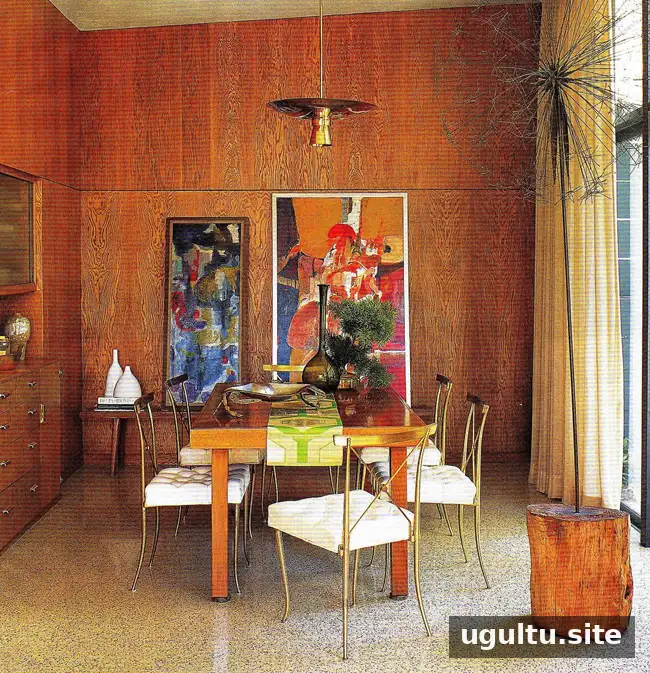
Home of Trina Turk, featuring William Haines chairs; Ford home designed by Darren Brown in the 1970s.
British designer David Hicks became known for combining lively, pattern-rich interiors with tailored, preppy elements associated with Hollywood Regency. His bold geometric designs and confident use of color show how traditional references can coexist with a more playful decorating approach.

Hicksonian, a fabric design by son Ashley Hicks / Hicks’ Grand Wallpaper / La Fiorentina, a fabric design by Ashley Hicks.
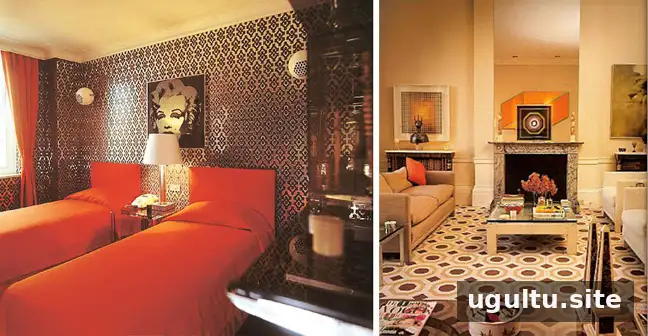
Designs by David Hicks.
The scale of Hicks’s patterns could make a room feel especially dramatic. His work has also been associated with the visual character of films such as Harold and Maude and The Shining, as well as later screen styles linked with Wes Anderson’s The Darjeeling Limited and David Lynch’s Twin Peaks.
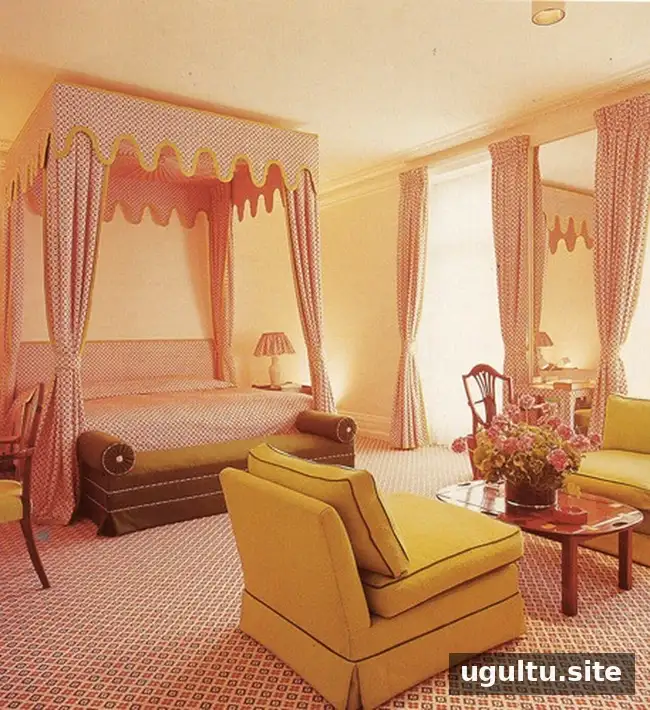
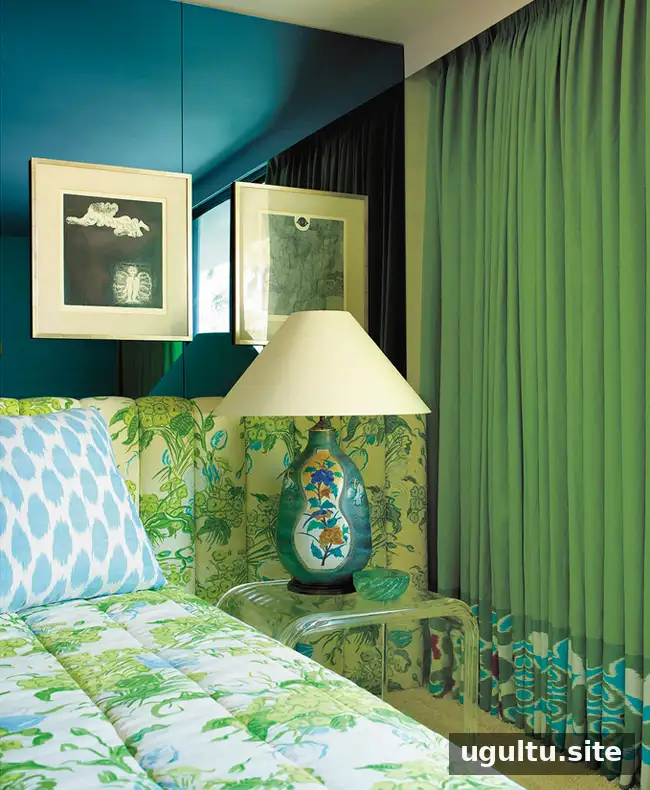
Bedroom designed by David Hicks in the 1970s.
Modern Hollywood Regency interiors
Contemporary designers continue to reinterpret Hollywood Regency’s mix of polish, drama, and decorative detail. Jonathan Adler, Kelly Wearstler, Miles Redd, and Nate Berkus are among the designers who have brought their own perspectives to classic Regency-inspired interiors.
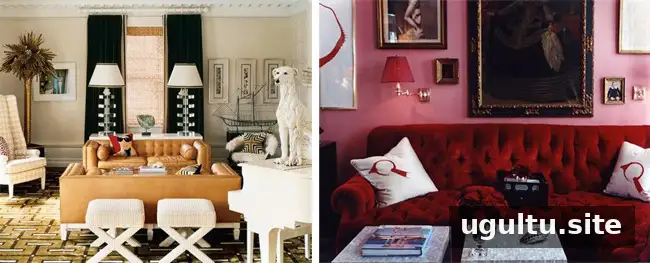
Jonathan Adler / Miles Redd.
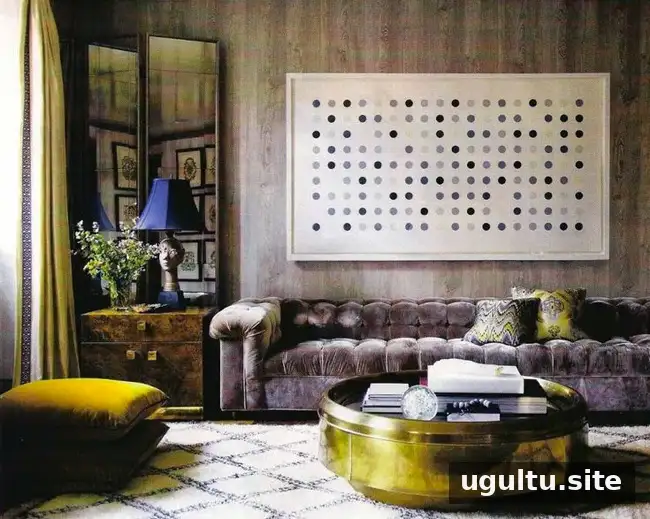
Elle Decor; home of Marjorie Skouras via Apartment Therapy / Lonny.
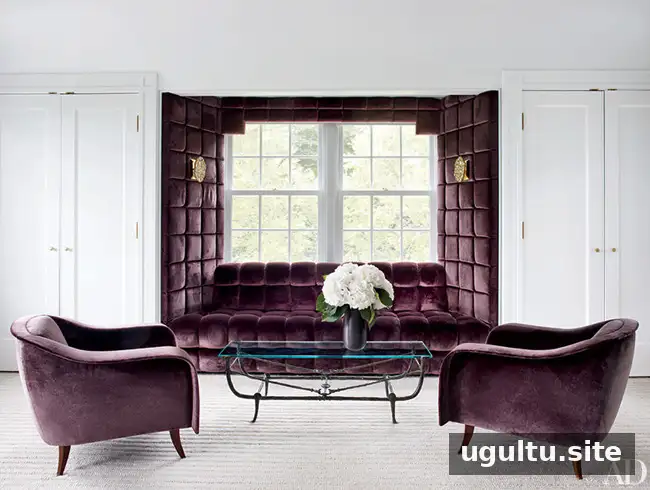
Design by Joe Nahem via Architectural Digest.
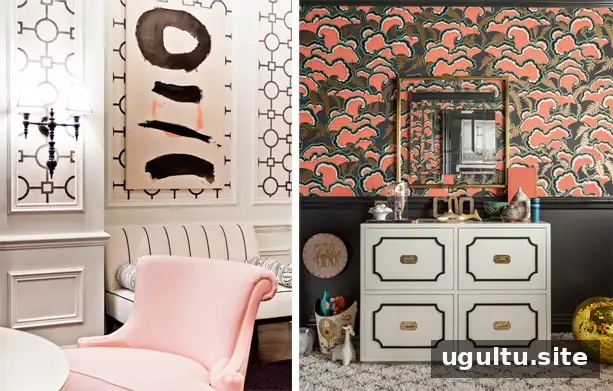
Tobi Fairley / House of Honey / below: Domino.
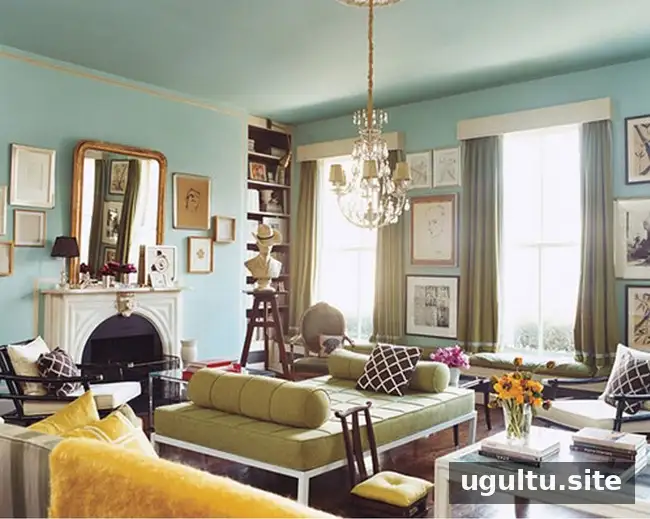
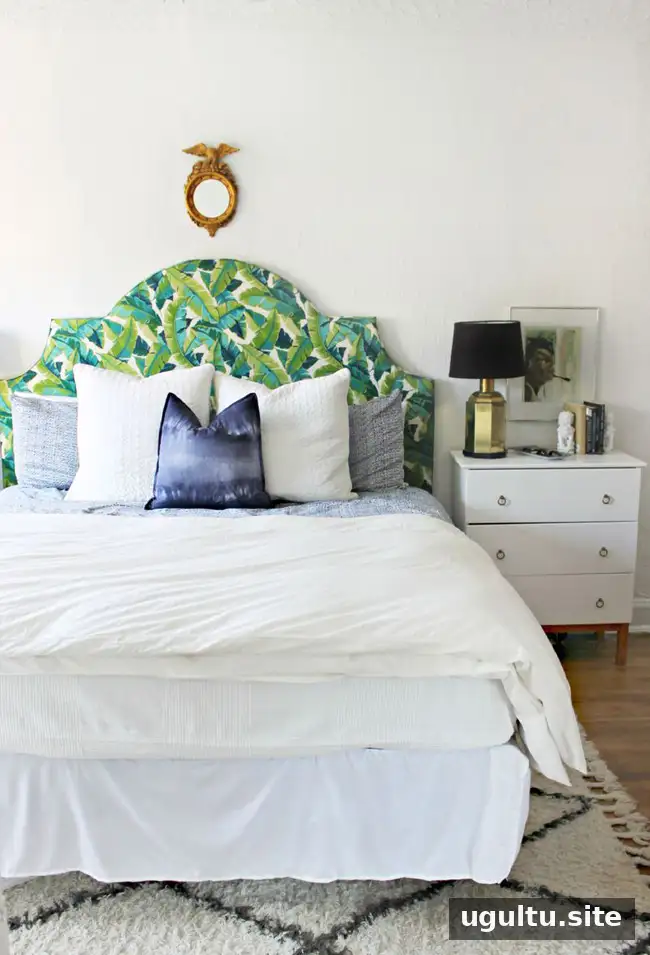
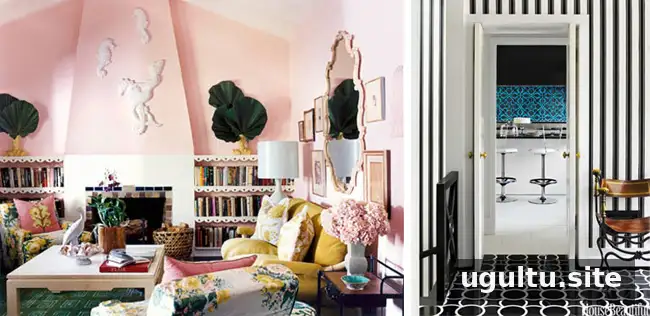
Shannon Smith for A Beautiful Mess / below: House Beautiful / House Beautiful.
To create a modern version of the look, start with a practical room layout and introduce a small number of high-impact elements: a reflective surface, a sculptural chair, a bold print, or a strong accent color. Mix glossy and soft textures to add depth, and leave enough visual breathing room around statement pieces. Hollywood Regency works best when the drama feels intentional rather than overwhelming.
Conclusion: making Hollywood Regency your own
Hollywood Regency has lasted because it can shift between classical references, vivid pattern, and streamlined modern forms. Whether you prefer William Haines’s tailored glamour, Dorothy Draper’s energetic contrasts, or David Hicks’s fearless patterns, begin with one defining detail and build the room around it. With a thoughtful balance of color, texture, and scale, Hollywood Regency can bring character to a contemporary home without sacrificing comfort.


