
 admin
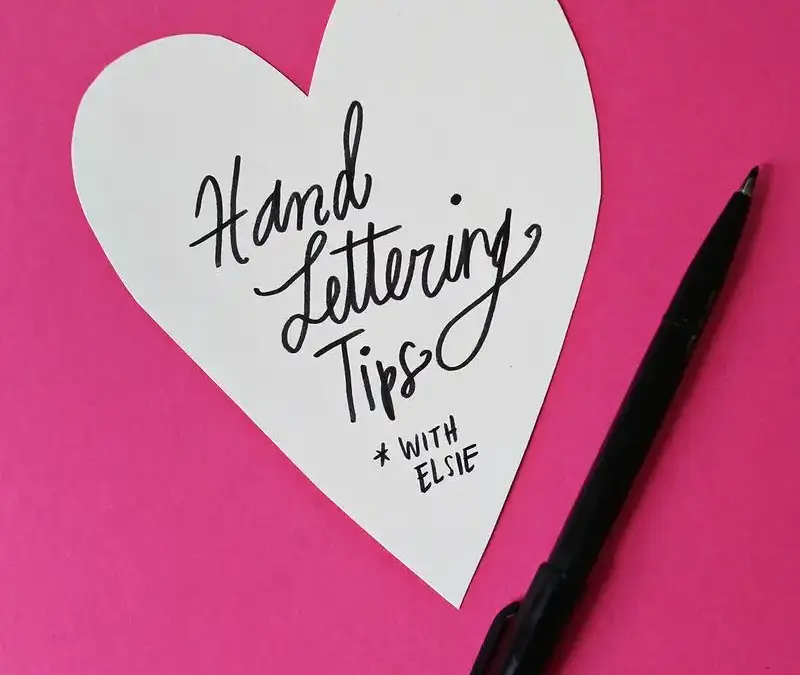
These hand lettering tips can help you build confidence, practise different styles, and create thoughtful handwritten notes. Lettering can be useful for cards, personal projects, blog designs, and stationery. You do not need perfect handwriting to begin: steady practice and a willingness to experiment are more important than getting every letter right on the first try.
Hand Lettering Tips for Getting Started
Start with a short word or phrase and write it several times. Repetition helps you notice the shapes you like and the parts that feel awkward. Rather than trying to change every letter at once, focus on one detail—such as the height of your lowercase letters or the spacing between characters—during each practice session.
It can also help to work slowly at first. Keep your page and writing position comfortable, and leave enough room between practice lines to compare your attempts. If a particular style feels difficult, simplify it and build back up gradually.
Handwriting is personal, and it is common to feel unsure about your first lettering attempts. Even people who have designed many typefaces need time and repetition to develop lettering they are happy with. Treat early drafts as practice rather than finished work, and keep examples so you can see how your letters change over time.
Choosing Pens and Practising Letterforms
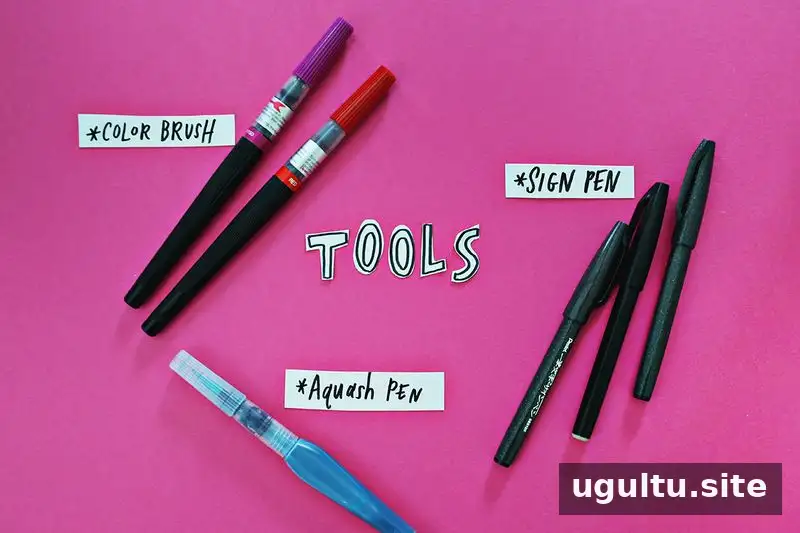
Different pen types can create different effects. A brush pen is useful for exploring varied line widths, while a sign pen offers a more consistent stroke. A water brush can be used for lettering experiments that involve fluid ink or paint. The tools featured here are a color brush pen, a sign pen, and an aquash-style water brush.
- Begin with a familiar tool: Choose a pen that feels comfortable to hold so you can focus on letter shapes.
- Repeat a small set: Practise a few letters or one short phrase at a time instead of filling a page without a focus.
- Compare your attempts: Look for changes in size, slant, spacing, and consistency.
- Try another style: Once a basic form feels comfortable, experiment with different shapes and rhythms.
There is no need to make every line uniform while you are exploring. However, if you want a more polished result, check that similar letters have comparable heights and that words are spaced clearly enough to read.
Video: More Hand Lettering Tips
The video below shares additional guidance on practising hand lettering and trying different approaches. Use it as a starting point, then spend time testing the techniques with your own pens and phrases.
Keep Practising
Hand lettering improves through regular repetition, not a single perfect attempt. Set aside a few minutes to practise, save examples of your work, and return to styles you want to develop. For cards and other personal projects, try a short message first so you can adjust the layout before working on a final piece.
These hand lettering tips are a reminder to be patient, explore tools, and keep practising. With time, you can discover letterforms and styles that suit your projects. Tips by Elsie.


