
 admin
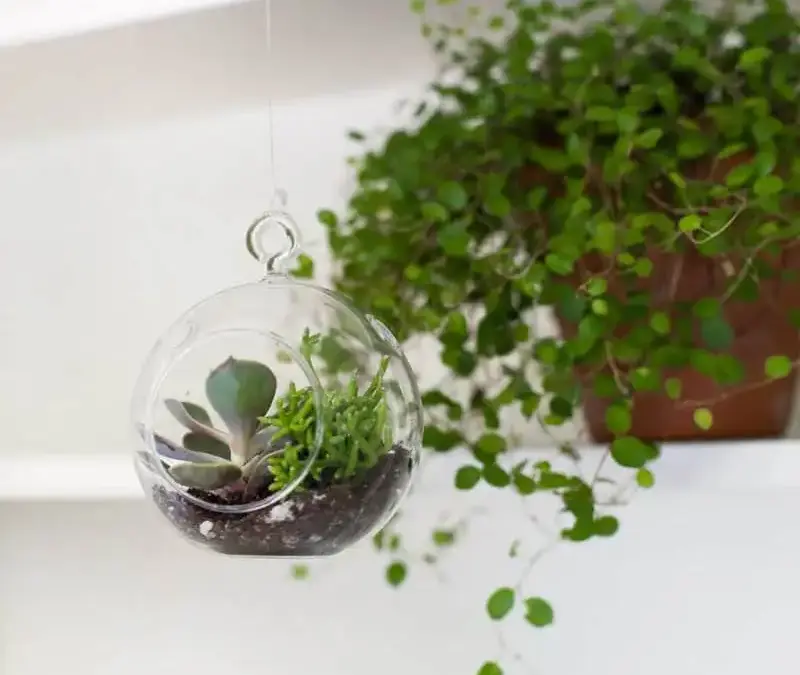
Floating terrariums offer a space-saving way to display small succulents or cacti when shelves, tables and windowsills are limited. Suspended from the ceiling, these glass planters add greenery without taking up floor or surface space. Good drainage and careful watering are essential because the containers do not have a hole at the bottom.
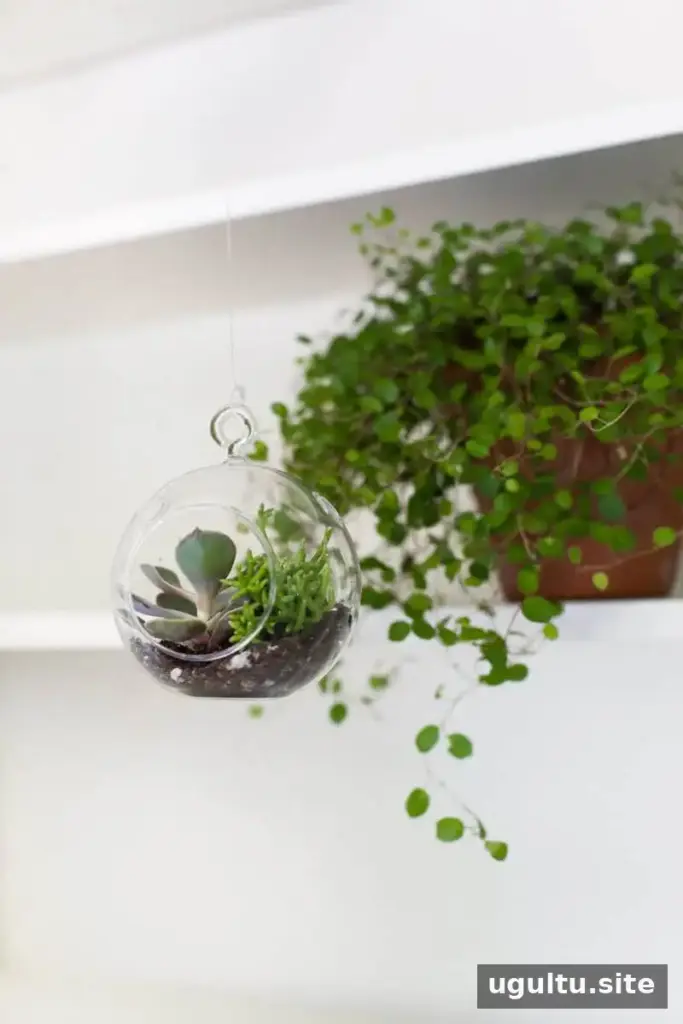
How to Make Floating Terrariums
This simple project uses small glass terrariums, monofilament and a homemade succulent mix. Choose compact plants that fit comfortably inside the opening, and plan where each terrarium will hang before assembling it. A bright spot is best for most succulents, but avoid placing the glass where it may be knocked or exposed to conditions unsuitable for the plant.
Supplies
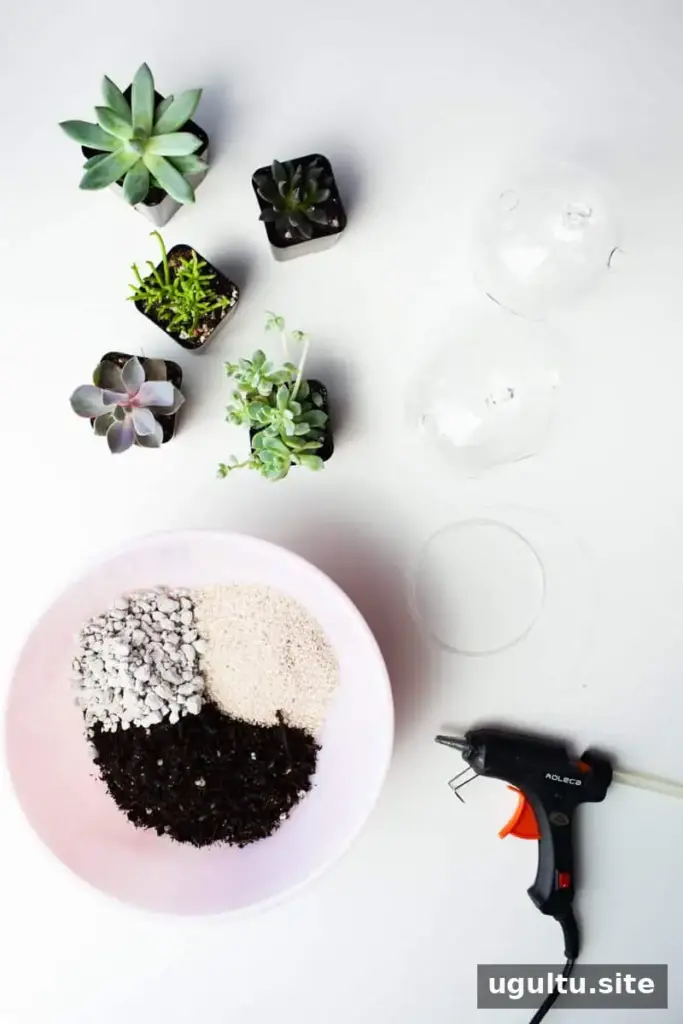
- Glass terrariums with a hanging loop
- Monofilament, also known as fishing line
- Hot glue gun
- 2-inch succulents
- All-purpose potting soil
- Pumice
- Horticultural sand
1. Prepare the hanging line
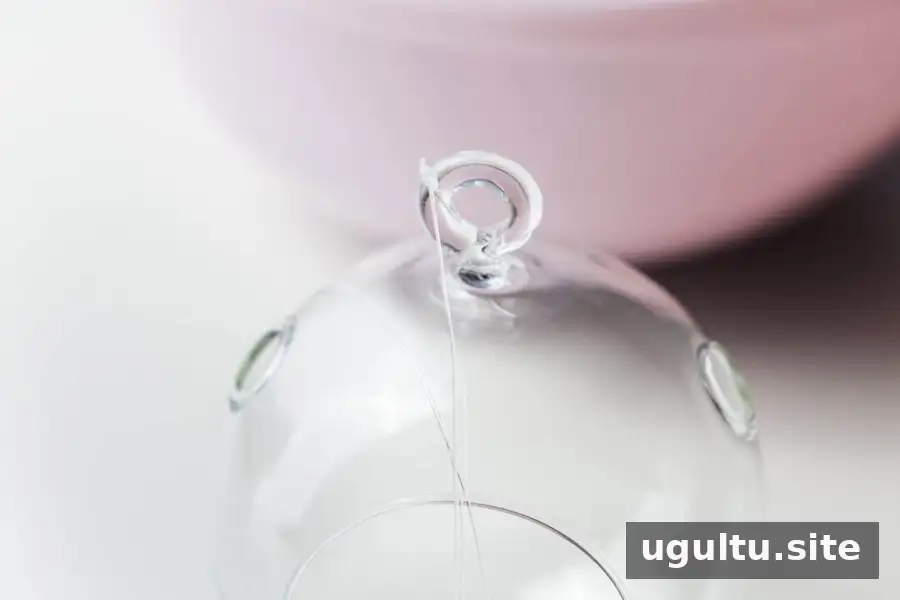
Cut a length of monofilament and tie it securely through the terrarium’s loop. Because the line can loosen over time, add a couple of small dots of hot glue to the knot to help hold it in place. Form a loop at the other end for hanging, secure it with glue, and trim away any excess line.
Before hanging the finished planter, use a ceiling hook or other suitable fixture that can safely support its weight. Keep it clear of walkways and places where it could be bumped.
2. Mix a well-draining growing medium
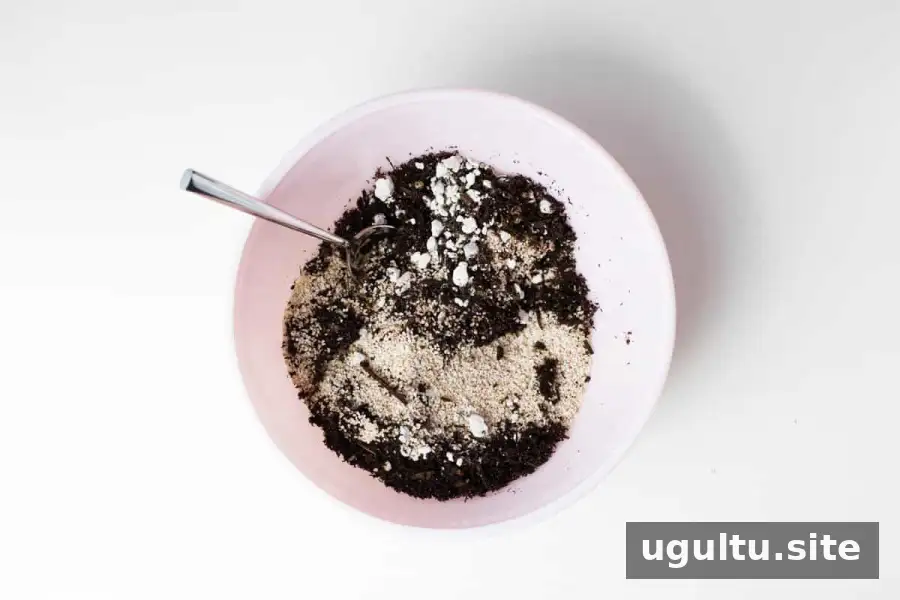
Combine 2 parts potting soil, 1 part pumice and 1 part horticultural sand. For three terrariums, a half cup of potting soil and a heaping quarter cup each of pumice and sand is enough. Make only as much mix as you need, and avoid packing it tightly; a loose, fast-draining blend helps reduce excess moisture around the roots.
3. Add the plants
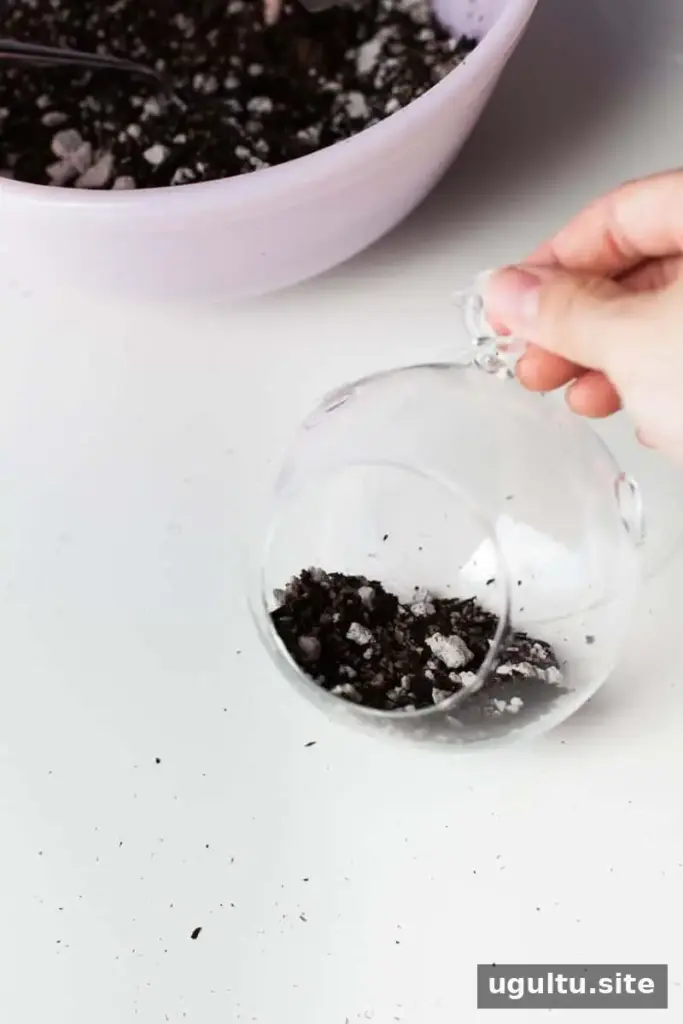
Place about a quarter inch of succulent mix in the bottom of each terrarium. Carefully remove a succulent from its nursery container and gently loosen or remove as much old soil as possible without damaging the roots. Set the plant in the glass vessel. Add another small succulent only if there is enough room for the plants to sit without being crowded.
4. Cover the roots and hang
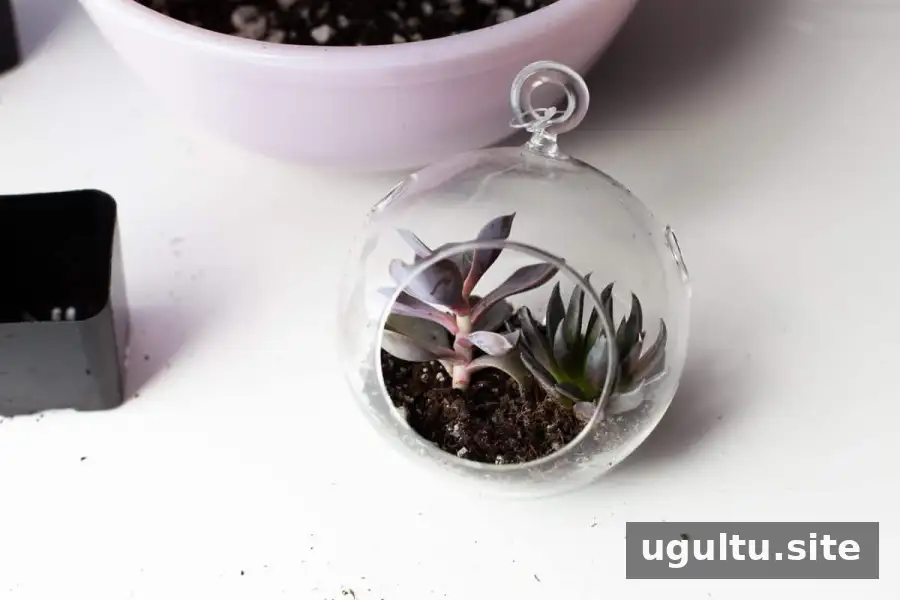
Use a spoon to add small amounts of the prepared mix around the roots until they are covered. Work slowly so soil does not spill over the glass or bury the plant’s leaves. Lightly mist the soil, then hang the terrarium from a secure support.
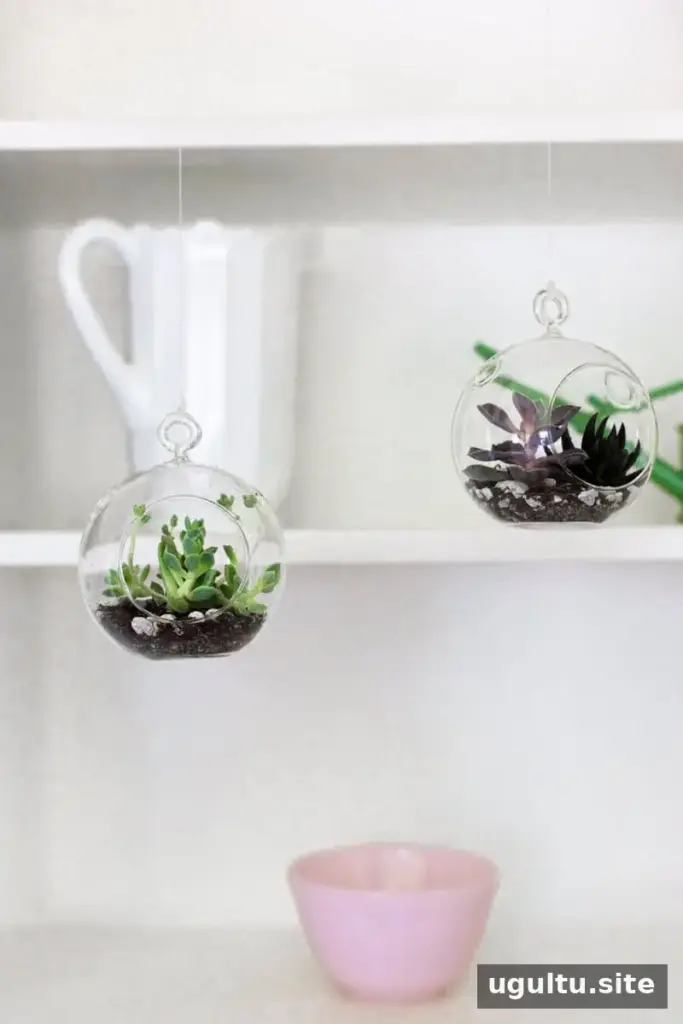
Floating Terrariums: Watering and Light
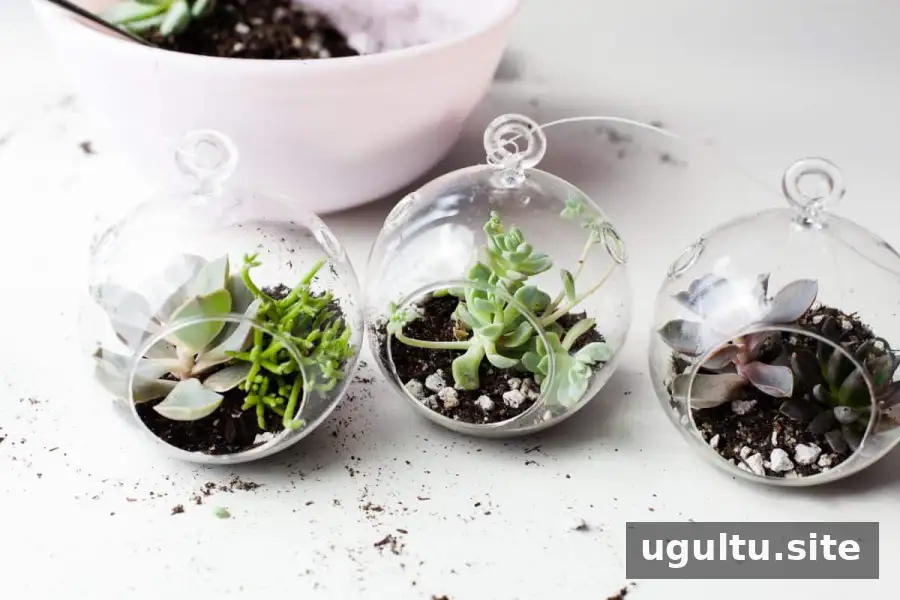
Mist about once a week in spring and summer, adjusting as needed if the weather is very hot or the soil has dried completely. Water less often in fall and winter. Since there is no drainage hole, use a light touch: excess water can collect at the bottom, so check the soil before adding more. Succulents generally do best in bright light, and their exact needs can vary by type and by the conditions in your home.
These floating terrariums can bring plants into rooms with little spare surface space. Choose small plants, keep the soil mix well-draining, and secure each hanging line properly for a display that is both attractive and practical.
— Kayleigh


