
 admin
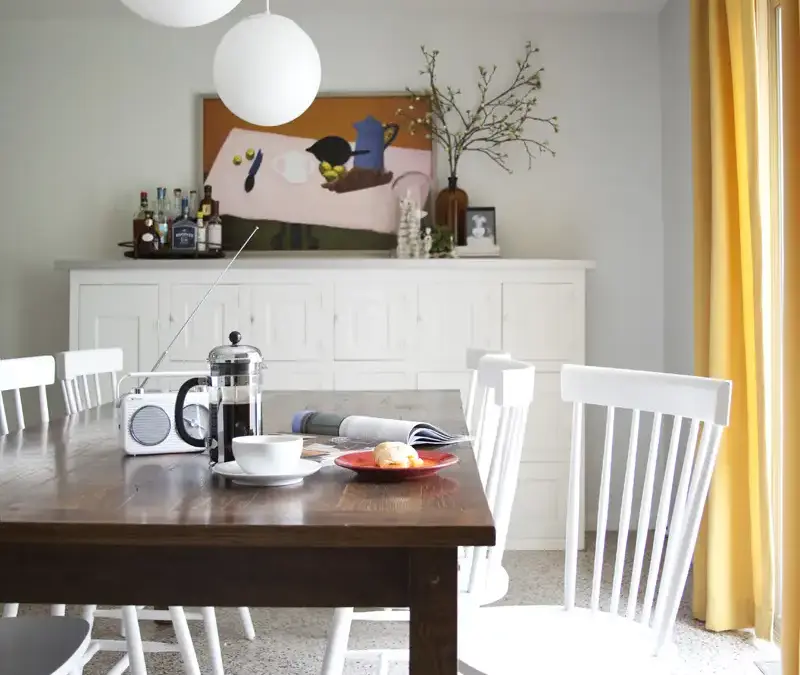
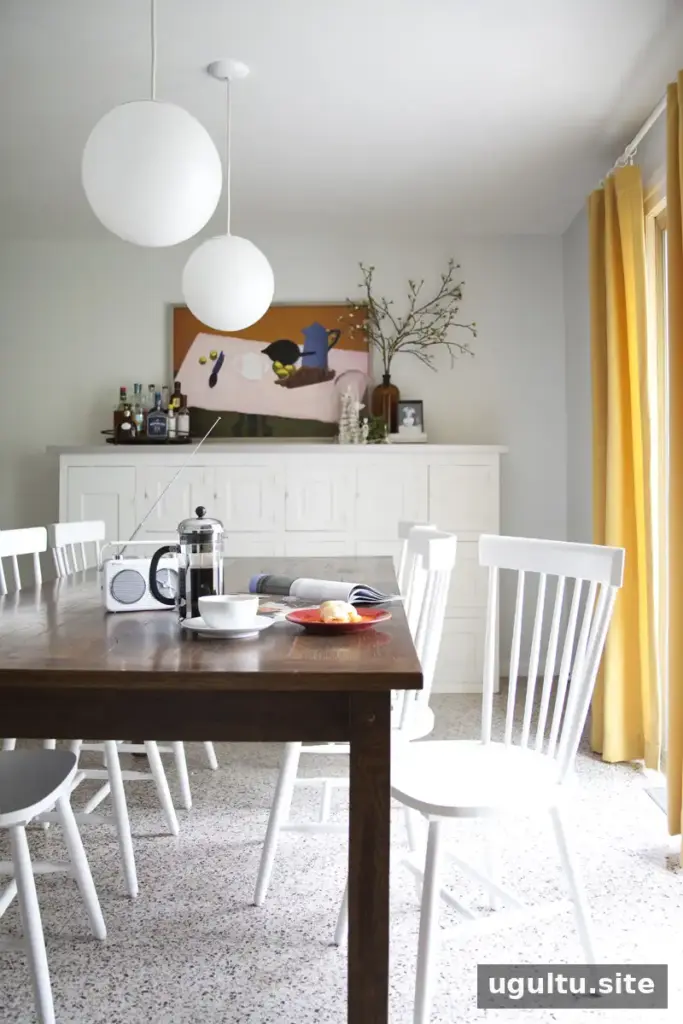
This dining room makeover shows how thoughtful updates can transform a large, open room over time—even when the renovation budget is limited. Rather than changing everything at once, the homeowner gradually refined the space with brighter paint, better-scaled lighting, practical storage and collected furnishings.
The kitchen and dining area were among the home’s most appealing features, but the dining room initially felt dark and unfinished. After two years of saving and gathering affordable secondhand pieces, the homeowner was ready to give it a more considered look.
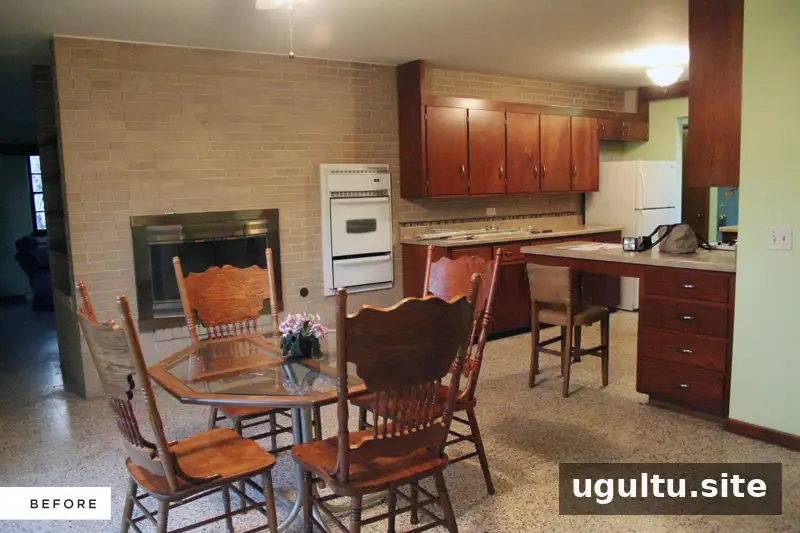
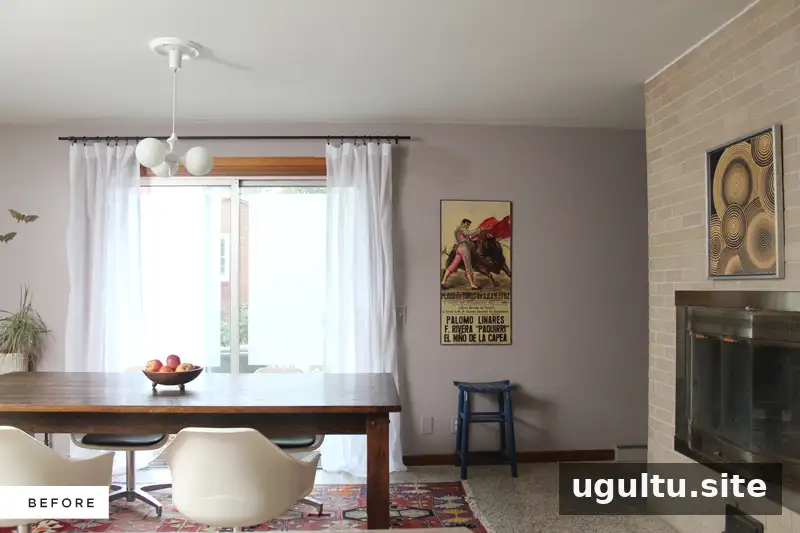
The dining room before the makeover
The earliest photo shows the house before the family moved in. The room was plain and had been unoccupied for some time, leaving it as a blank canvas. In the first years, inexpensive finds and handmade items gradually filled the space while the homeowner worked out which colors and furnishings suited the home.
An early paint choice turned out not to be the right fit. The original walls were a light green, and a quick decision led to a purple-gray color throughout the living and dining rooms. Although the new shade was not disliked outright, it made an already shaded home feel darker and did not reflect the homeowner’s preferred style.
With money tight, repainting immediately was not practical. Waiting also gave the homeowner more time to consider a lighter palette. Practical tip: Test paint samples in the room at different times of day before committing, especially in spaces that receive limited natural light.
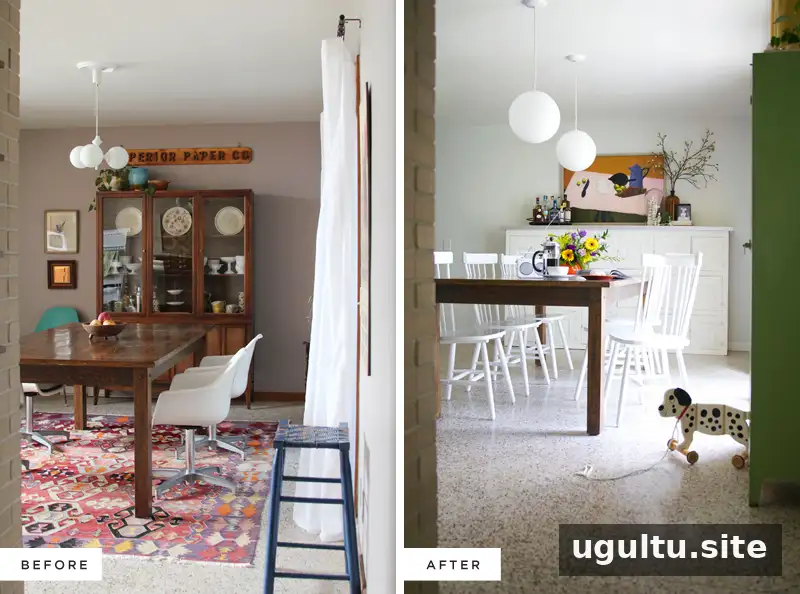
Brighter paint and more balanced lighting
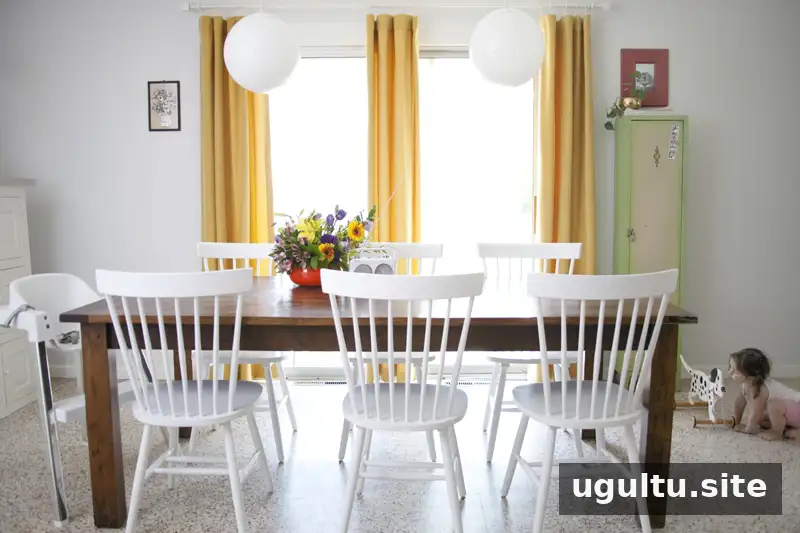
Two years later, the trim was painted glossy white, and the walls received a carefully selected shade called Bright White. The color reads as a very pale gray beside the untinted white trim and cabinetry. The ceiling was also repainted white; the change revealed that its previous finish had become noticeably dingy, contributing to the room’s gloomy appearance.
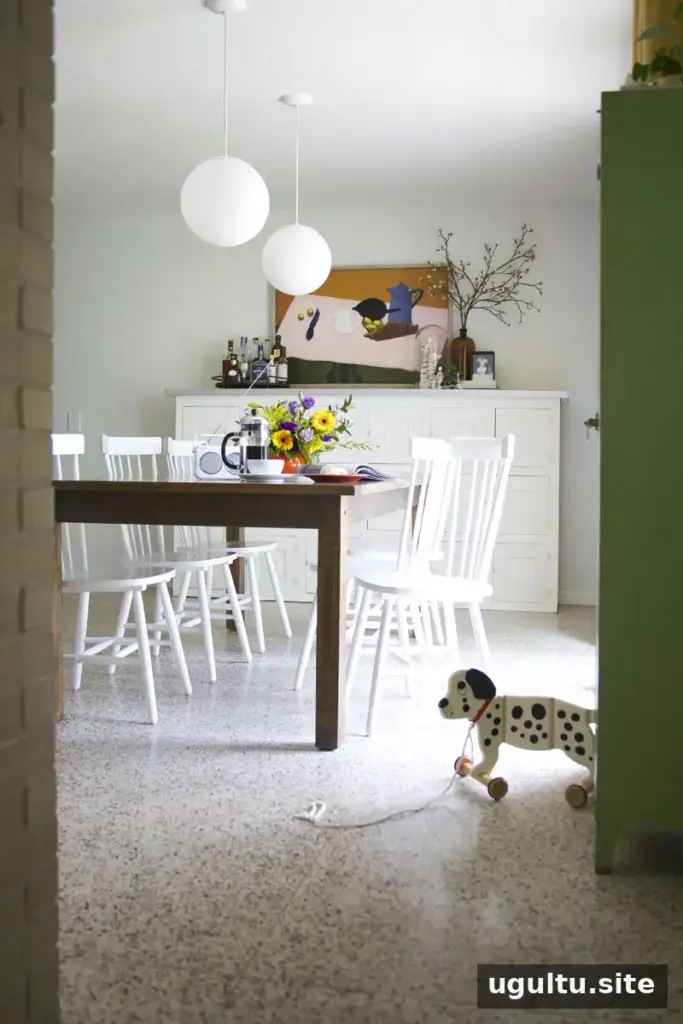
The small ceiling light in the before photo had been chosen as an inexpensive replacement for a ceiling fan. Its size looked out of proportion above the large farmhouse table. Two 12-inch globe pendants provided a better visual balance and introduced a subtle 1960s-inspired detail without making the room feel overly formal or trend-driven.
When choosing dining-room lighting, consider both the table’s dimensions and the scale of the surrounding room. A pair of pendants can help define a dining area in an open-plan layout, while suitable clearance above the tabletop keeps the fixtures practical.
Furniture and flooring choices for everyday life
The homeowner once brought home a set of shell chairs found at a secondhand store. They were later sold because they did not work well in the room, and traditional spindle-back chairs took their place. Selling the chairs helped fund the replacement seating.
A Turkish kilim rug had also appeared in the earlier photos. Once Lucy began eating solid food, the rug was removed and eventually sold. The money from that sale, together with the chair proceeds, helped pay for the new dining chairs. Leaving the terrazzo floor bare made cleanup easier for a family with a young child and for frequent crafting projects.
A rug can soften a dining space, but it is not essential. In a busy household, an uncovered, durable floor may be easier to maintain—particularly where meals and creative activities happen regularly.
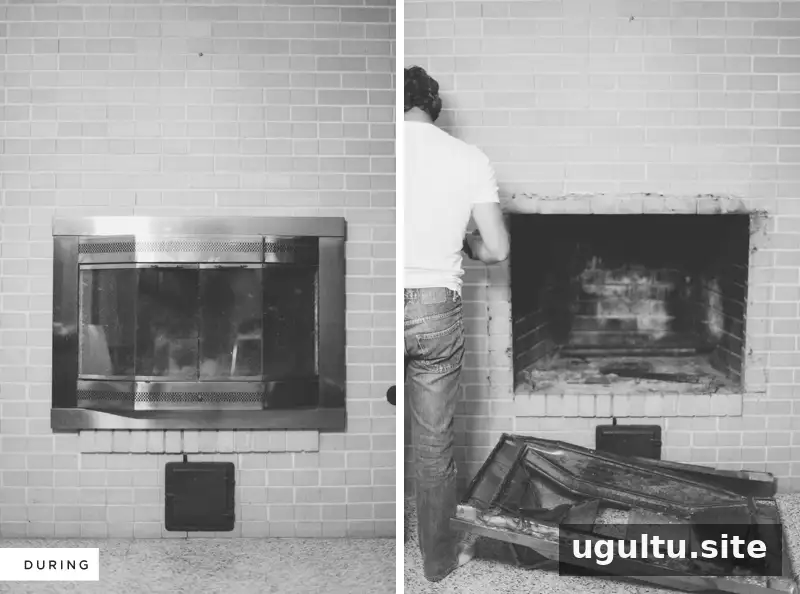
A refreshed fireplace wall
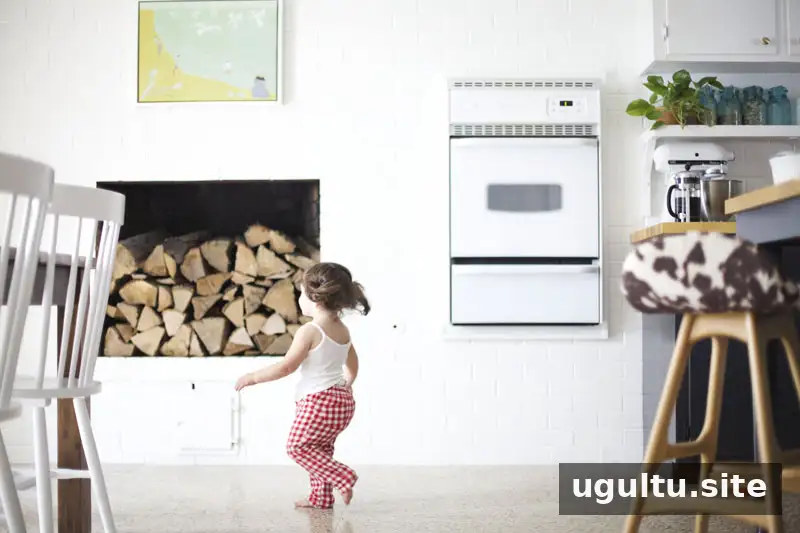
The brass fireplace surround was removed because it was not being used and did not suit the room. Taking it away and cleaning the wall made an immediate visual difference. The homeowner hopes to add a gas fireplace insert in the future; the chimney would require costly repairs before it could be used for wood burning, while a gas line is already in place.
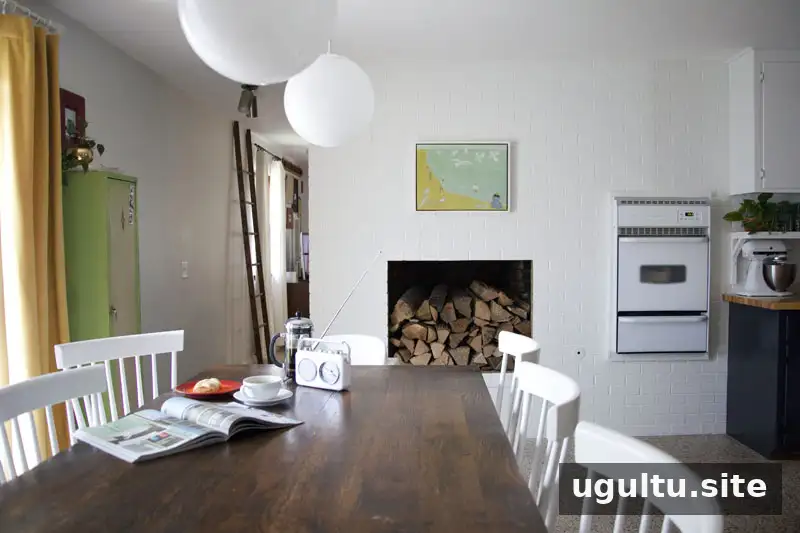
The fireplace’s brick wall is shared with the kitchen. During backsplash repairs, the brick was painted white. Although this was not part of the original plan, the brighter surface helped the dining area feel lighter and allowed the built-in oven to blend into the background.
Storage, curtains and collected details
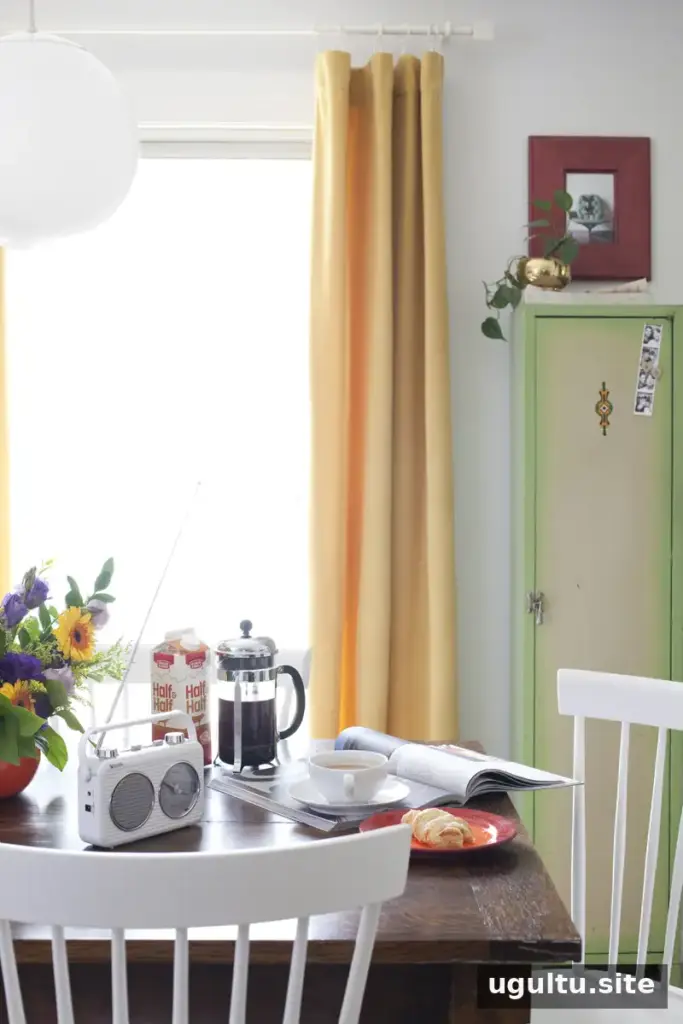
Golden-yellow curtains add color and complement the room’s 1960s-influenced style. A homemade curtain rod completes the window treatment. Since the dining room is also used for crafting, concealed storage was important for keeping supplies out of sight between projects.
A wider antique cabinet replaced a narrow china cabinet with glass doors. The new piece offers more hidden storage, fits better beside the large table and provides a useful surface for display. It was painted white to cover repairs and further brighten the room. Its lower height also leaves space to arrange decorative objects.
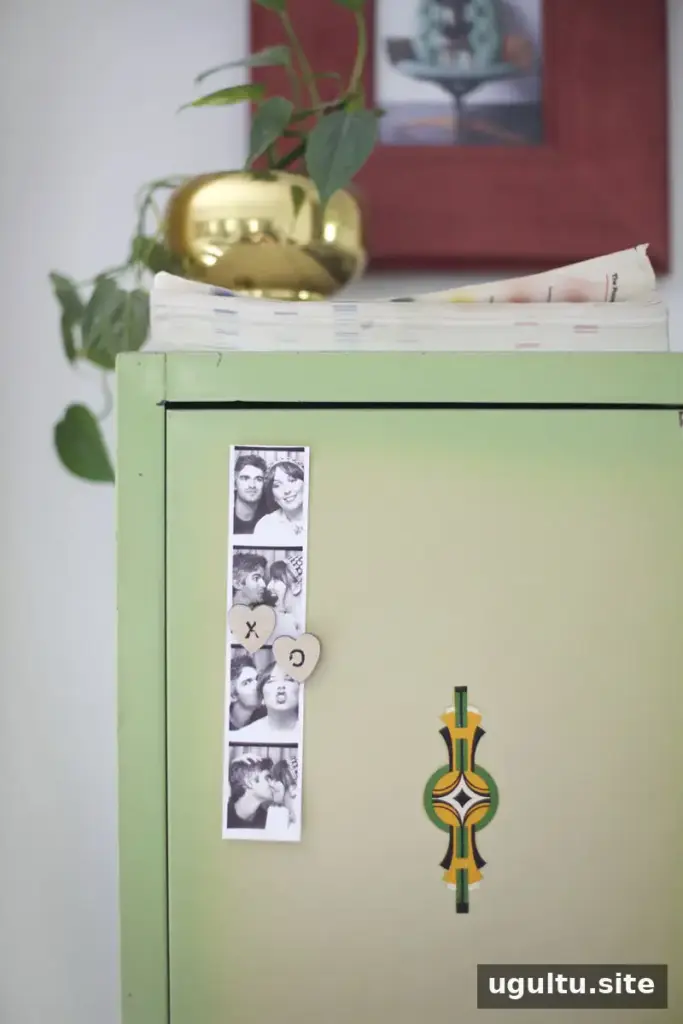
A vintage green locker fits beside the sliding door without blocking the route to the patio. Its original avocado-green finish was kept because the aged surface adds character. Before repainting a vintage item, consider whether its existing patina is part of what makes it appealing.
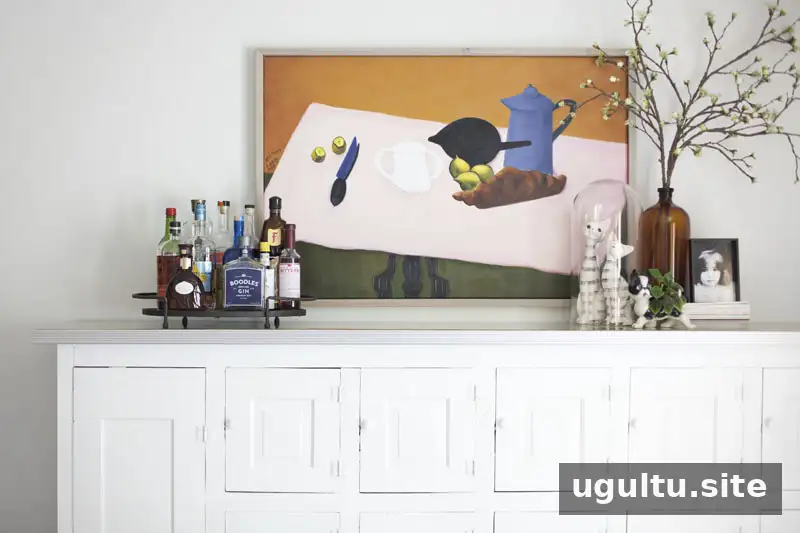
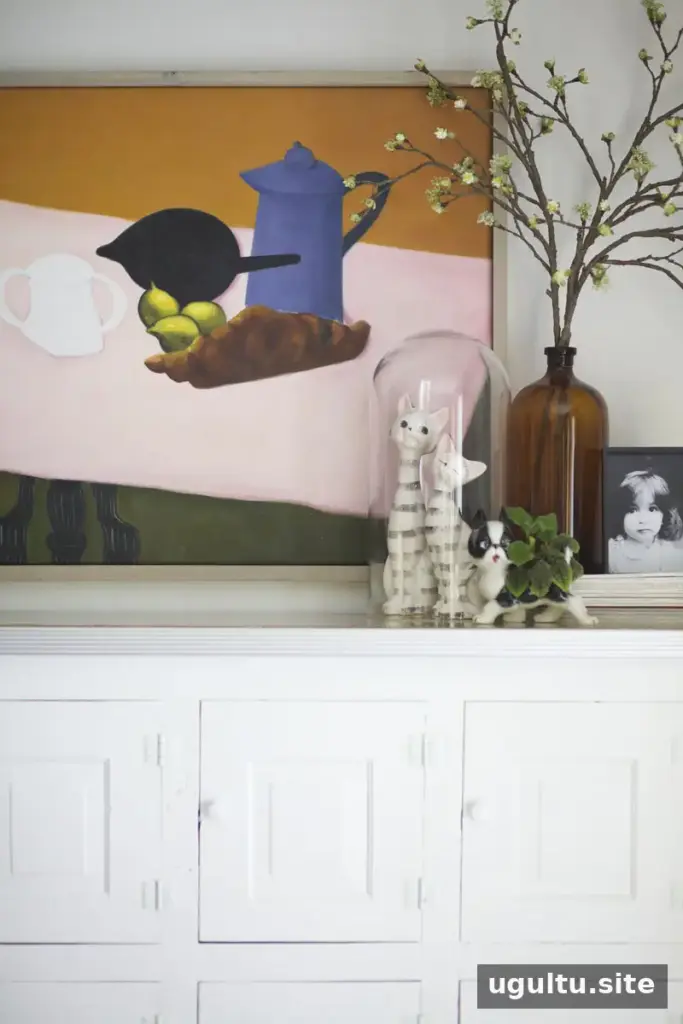
The cabinet display can be changed with the seasons. For now, it holds small decorative objects and Lucy’s photograph; seasonal pieces can be added later without changing the larger furniture arrangement.


The glitter countertop
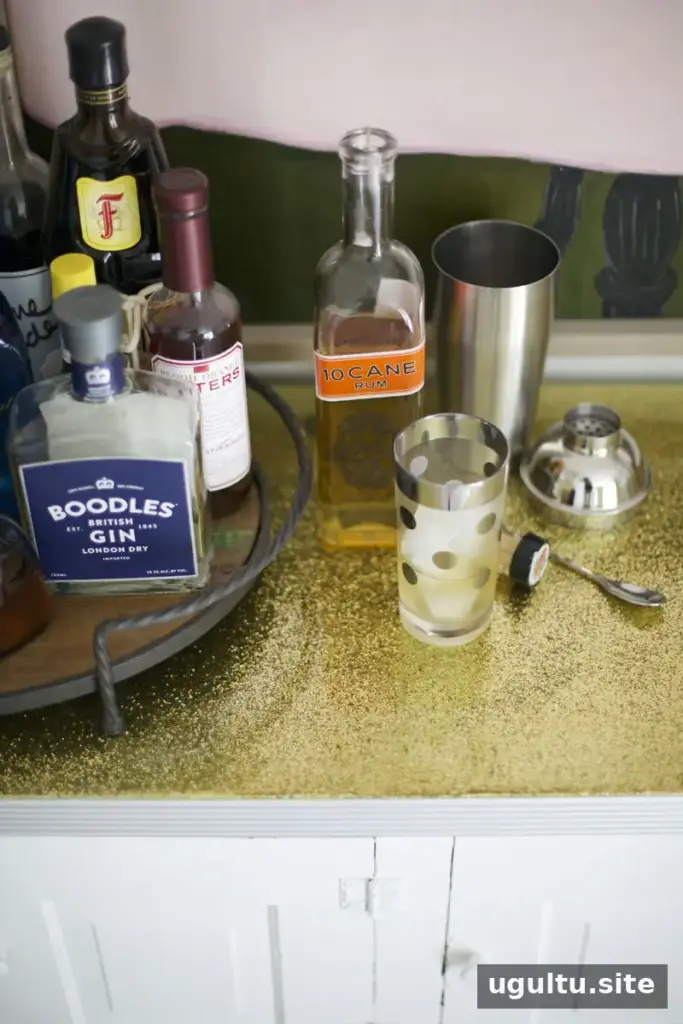
A cabinet found during the kitchen renovation needed repairs before it could be used. The homeowner built a countertop for it and added glitter as a playful finish. Because the countertop sits high, the sparkle is most noticeable when someone approaches the cabinet rather than from across the room.
This project adds a personal detail without overwhelming the overall design. For a similar DIY surface, consider how visible the finish will be from normal standing and seated positions before choosing its color or texture.

Artwork and seasonal color
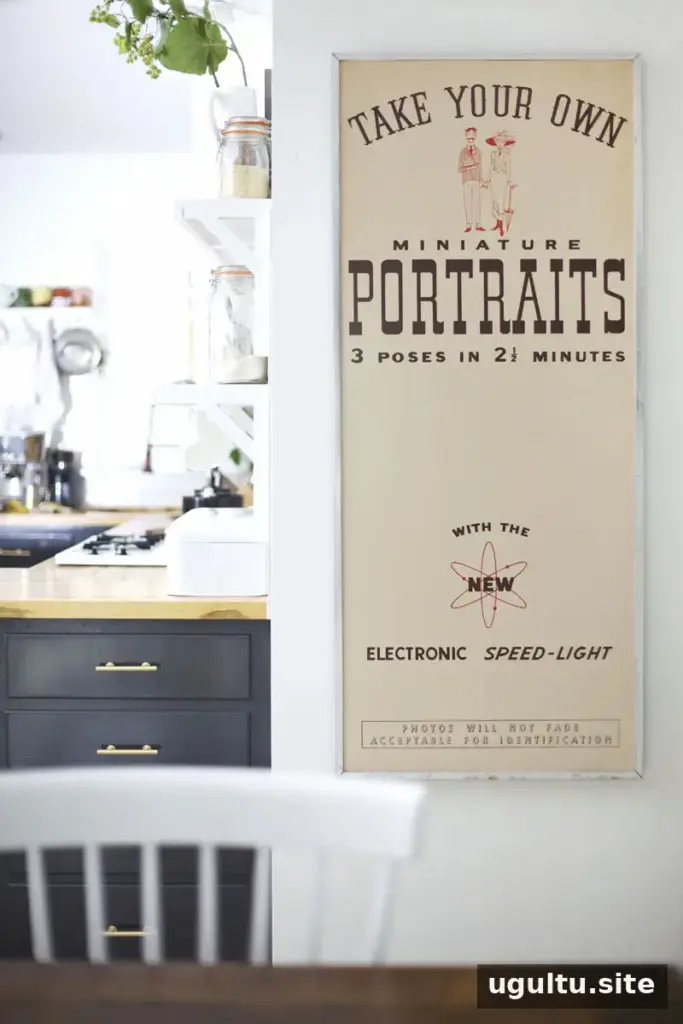
Over several years, the homeowner collected wall art that felt more personal than earlier secondhand finds. One distinctive piece is a vintage photobooth panel from Cedar Point, a Northeast Ohio amusement park, purchased at an antique and resale shop in Columbus.
The two paintings in the dining room are reproduction canvases of works by Milton Avery. They were framed by the homeowner. Fresh flowers, arranged in a vintage glazed pot, bring a bright seasonal accent to the table. Grocery-store flowers can be an easy way to introduce color without making a permanent change to the room.


Room details
- Dining table: made from old barn siding
- Dining chairs: replacement spindle-back chairs
- Cabinet: vintage, repaired and painted
- Countertop: DIY glitter finish
- Locker: vintage, with its original green patina
- Curtains and curtain rod: curtains paired with a DIY rod
- Artwork: Milton Avery reproduction canvases, framed by the homeowner
- Photobooth panel: vintage, purchased in Columbus
- Wall paint: Bright White
- Brick wall: untinted white semi-gloss paint
- Cowhide stool: reupholstered
- Dog on wheels: garage-sale find
- High chair: used without its pad

What this dining room makeover shows
This dining room makeover was completed gradually, with choices shaped by budget, family life and the way the room is used. Brighter paint and appropriately sized pendants changed the atmosphere, while closed storage, durable flooring and furniture selected for the table made the space more practical. Vintage finds, handmade details, artwork and flowers give the finished room its character. — Mandi


