
 admin
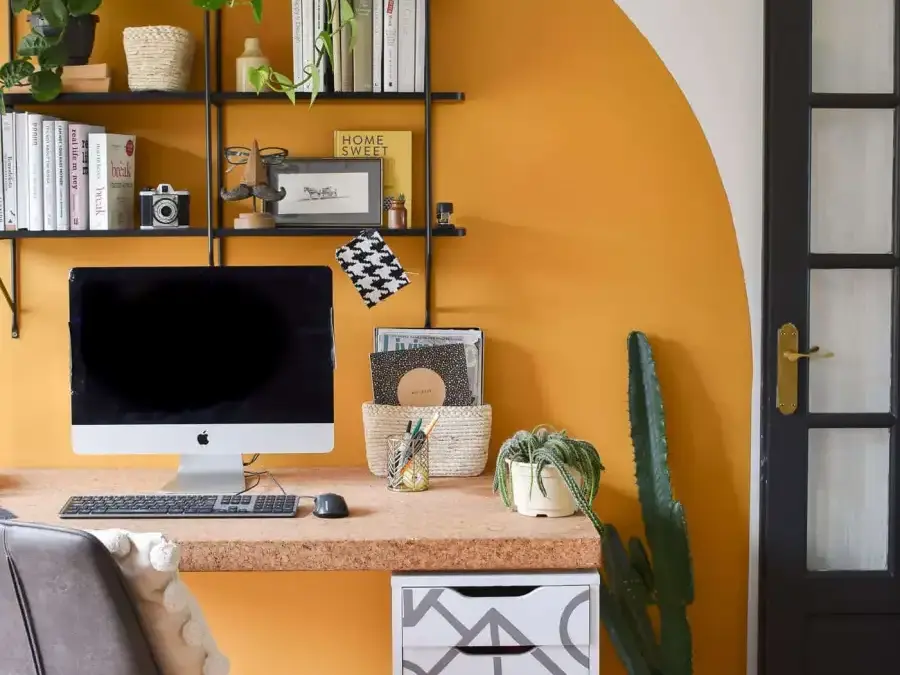
Peel and stick wallpaper makes it easier to add color and pattern to a home without the paste and cleanup required by traditional wallpaper. It can be especially useful for renters or anyone looking for a change that may be reversible. However, removal results depend on the wallpaper, surface, and how long it has been installed, so test a small, inconspicuous area first and check the product instructions.
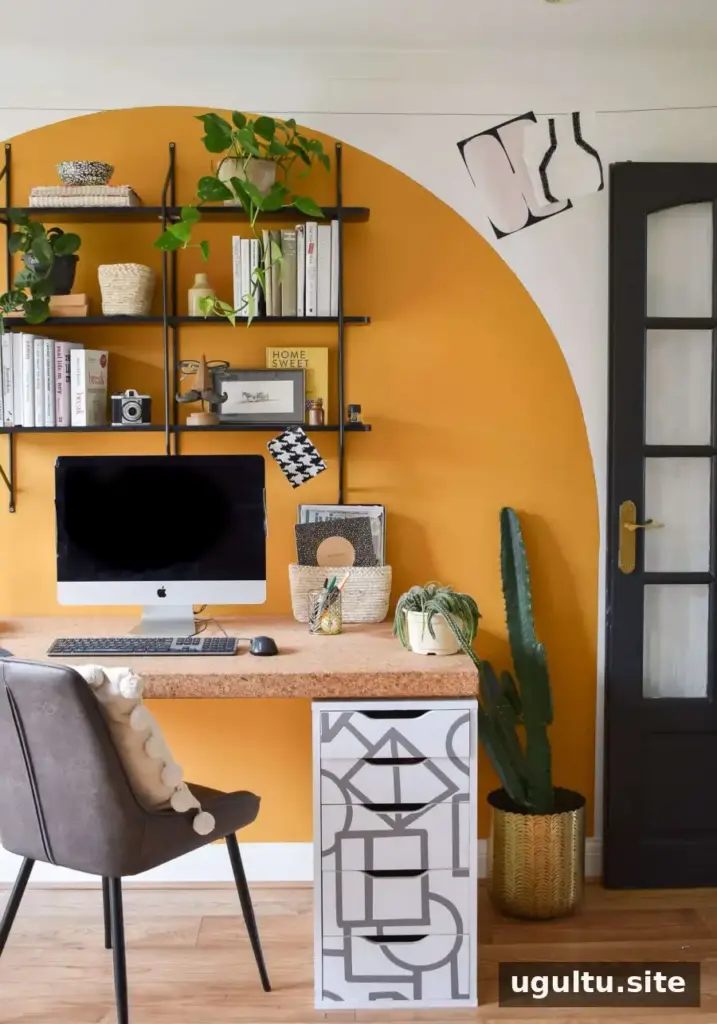
Although it is commonly used on walls, peel and stick wallpaper can also refresh furniture, cabinet interiors, and other smooth surfaces. Here are five ideas, along with a few practical considerations to help you plan each project.
1. Create an Accent Wall with Peel and Stick Wallpaper
An accent wall can bring a pattern or a pop of color into a room without covering every wall. It is also a way to make a visual feature of an entryway, a bedroom, or another small area. Before applying the paper, measure the wall and plan where the pattern will begin so the finished design looks intentional.
Use pattern to highlight a space
A patterned wall can provide a backdrop for furniture or make a plain corner feel more considered. In an entryway, for example, wallpaper can add interest behind a cabinet. The lower half of a wall can also be covered for a distinct look, provided the edges are measured and finished neatly.
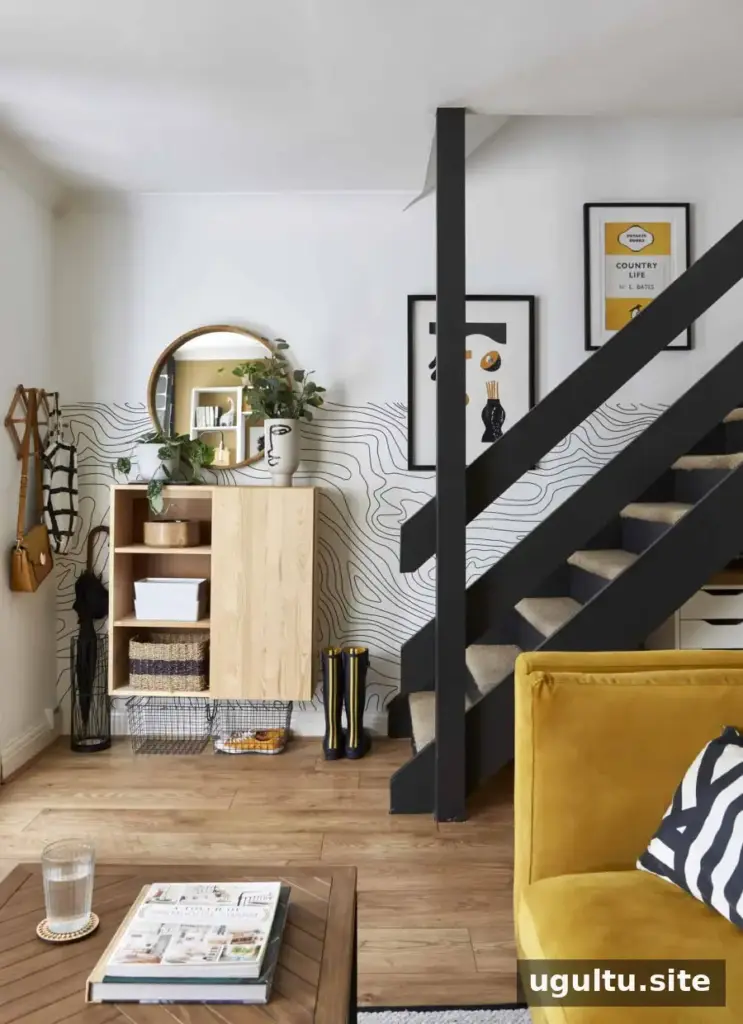
Photo credit: Kasia Fiszer Photography
This entryway uses wallpaper behind an IVAR cabinet. Measuring carefully and planning around furniture can help make an accent wall work even if you are covering only part of the surface.
2. Try Peel and Stick Wallpaper on Temporary Flooring
Some people apply peel and stick wallpaper to existing hard flooring, such as laminate, tile, concrete, or linoleum, and seal it with several coats of polyurethane. This approach can change the look of a small area, but wallpaper is not necessarily designed to withstand foot traffic, moisture, or regular cleaning.
Before starting, check the wallpaper and sealant manufacturers’ instructions and test the materials in an inconspicuous spot. Consider whether the finished surface could become slippery, and avoid using this method where it may create a safety hazard. Protecting furniture feet with soft pads can also help reduce scratching and wear.
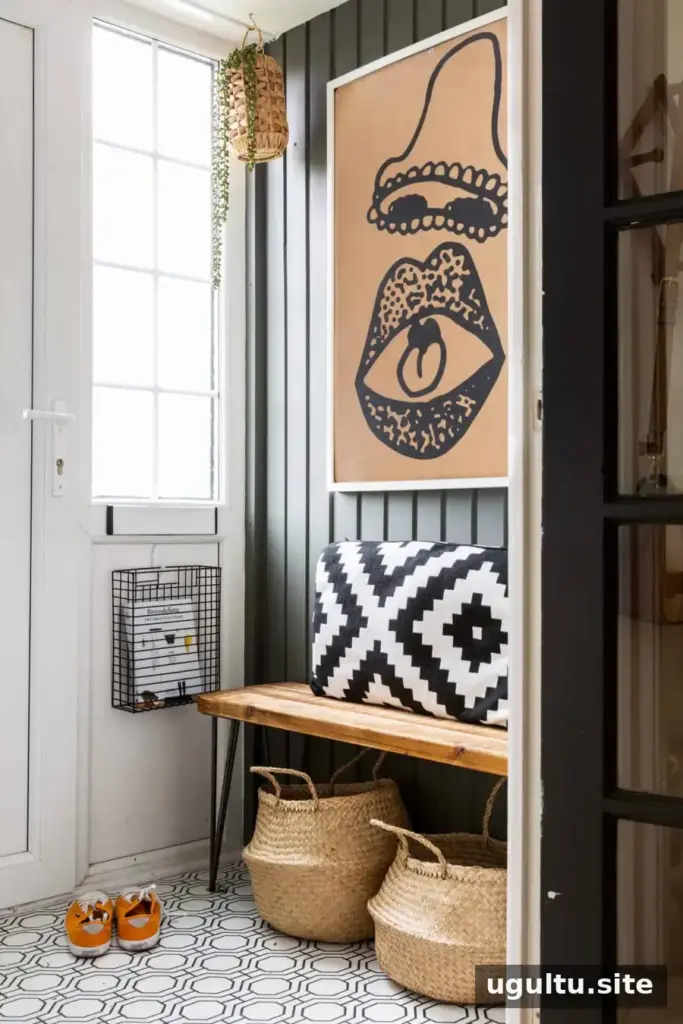
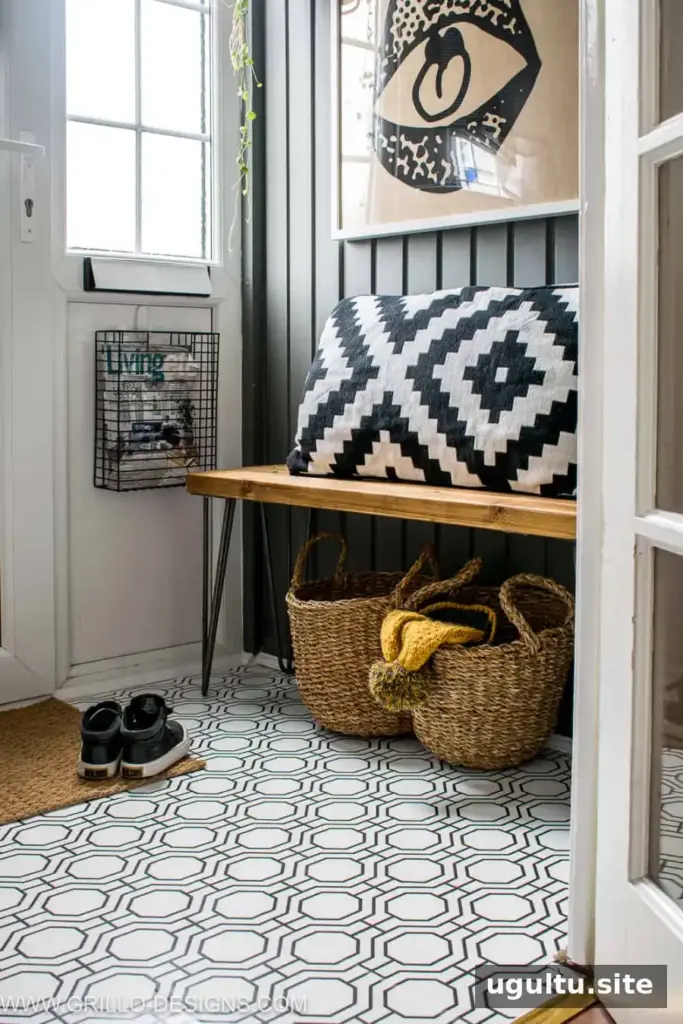
Photo credit: Kasai Fiszer Photography
A porch floor covered with tile-effect wallpaper brightened a previously dark area. The finish lasted about two years; using pads under the bench legs may have helped prevent damage. Results will vary with the condition of the floor and how much use it receives.
3. Line Kitchen Cabinets
Adding wallpaper to the inside back of a cabinet can make open shelving more visually interesting. This is a relatively simple way to introduce pattern into a kitchen without replacing permanent features such as countertops or wall cabinets.
If you remove cabinet doors to create open shelving, label the hardware and store the doors safely so they can be reattached later. Clean and dry the cabinet surface before applying paper, and check that the material is suitable for the area. Keep it away from direct heat and surfaces that are frequently exposed to water or grease.
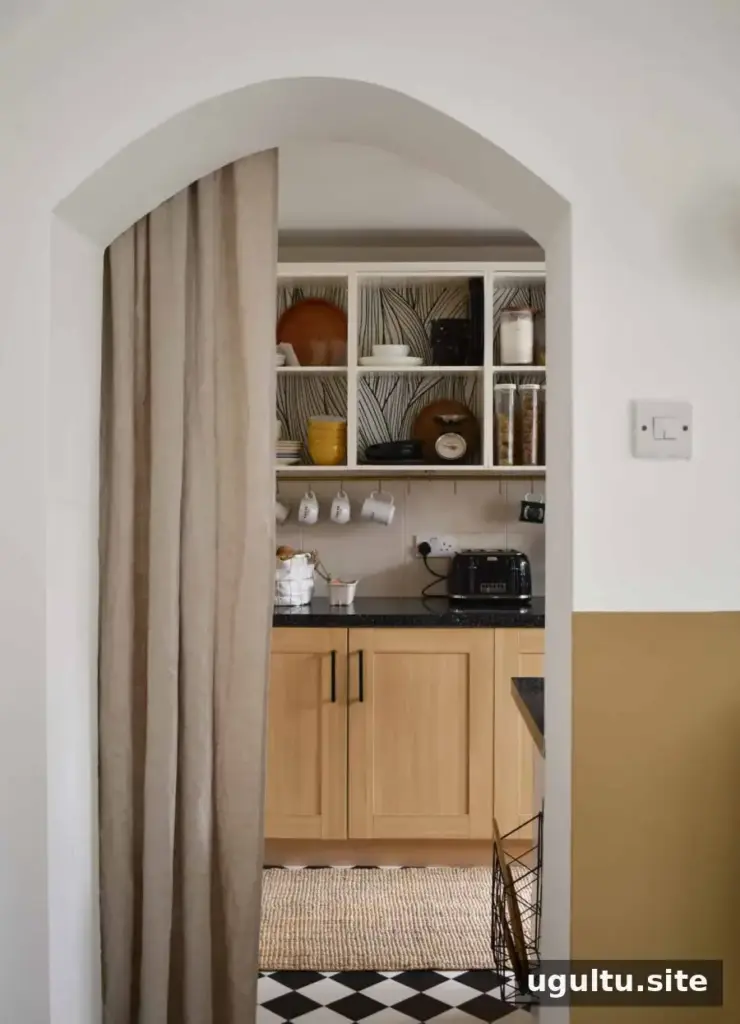
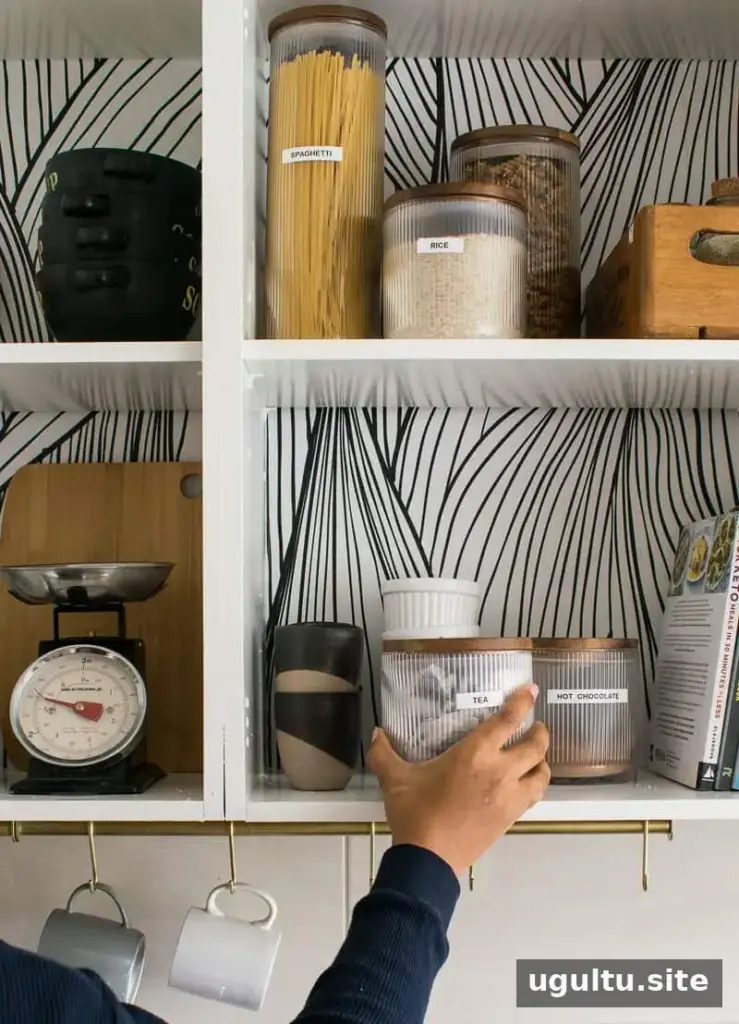
A patterned backing creates a decorative background for dishes and crockery. For a tidy result, measure the cabinet panels and cut the wallpaper before removing its backing paper.
4. Decorate the Ceiling
The ceiling can be another place to add color or pattern. Wallpaper overhead may give a room a more distinctive look and draw attention upward. A subtle design can complement a busy room, while a bolder print can become the main feature in a simpler space.
Applying wallpaper overhead is more demanding than covering a wall. Work carefully, use suitable equipment, and consider getting help to support the paper as you position it. Check that the ceiling is clean, smooth, and appropriate for the product before beginning.
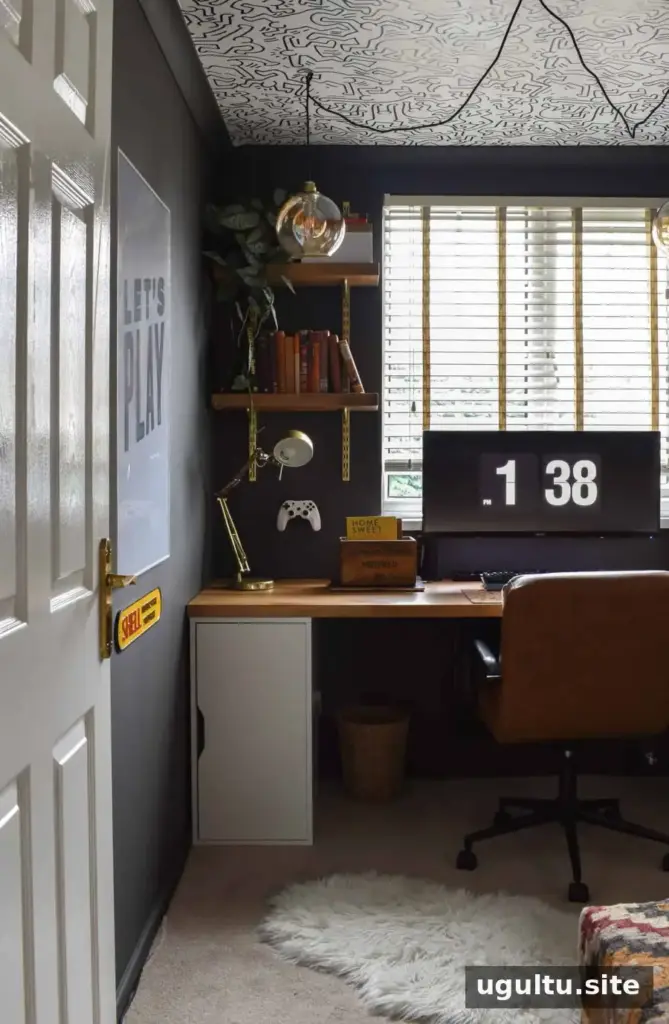
A patterned ceiling brightened a small, dark office. When choosing a print, consider how it will look alongside the room’s lighting and furnishings, since patterns can appear different overhead.
5. Update Furniture with Peel and Stick Wallpaper
Wallpaper can refresh the top, sides, or front of a piece of furniture, or add color inside a drawer. It is an option for updating a piece without painting, particularly when using leftover material from another project.
Clean the surface and make sure it is smooth before applying the paper. Cut the pieces slightly larger than needed, position them carefully, and trim the edges for a neat finish. Test a small area first, especially on delicate finishes, because removable wallpaper may still affect some surfaces during removal.
Leftover wallpaper gave a set of ALEX drawers a new look in less than 30 minutes. For a similar project, start with a small, flat surface to get comfortable smoothing out air bubbles before covering larger sections.
Make the Most of Peel and Stick Wallpaper
Peel and stick wallpaper can be used for more than a conventional wall covering. Accent walls, cabinet interiors, ceilings, furniture, and carefully considered flooring projects offer different ways to bring pattern into a home. For the best chance of a clean result, prepare the surface, measure before cutting, follow the product instructions, and test both application and removal in a hidden spot first.


