
 admin
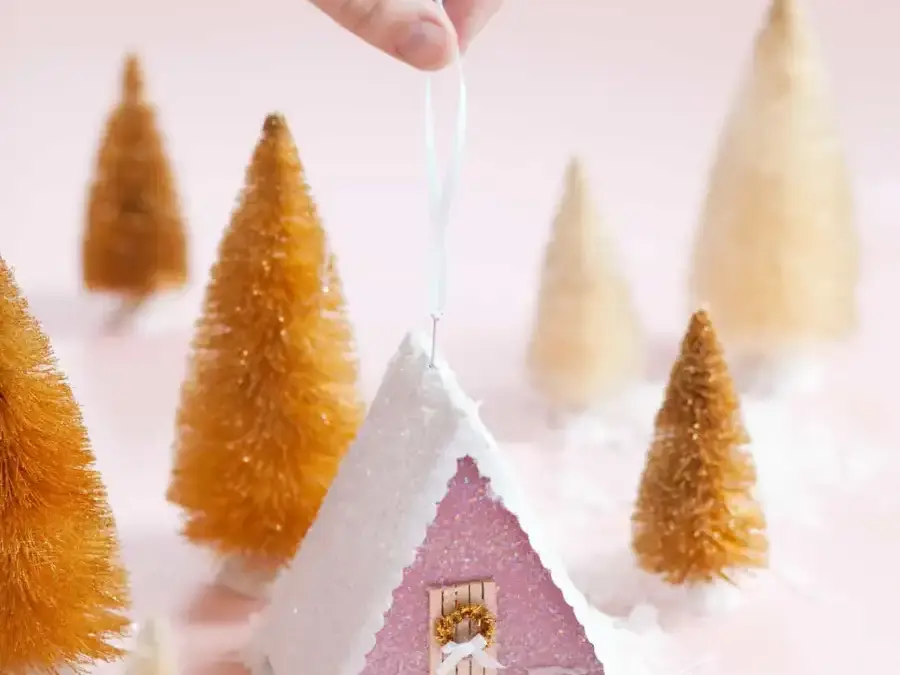

An A-frame cabin ornament brings the nostalgic look of a vintage Putz house to a small, handmade decoration. This project turns thin cardboard from an empty food box into a miniature cabin, with a cardstock roof, painted walls, and a sparkling finish. It’s a practical way to reuse clean packaging and create a seasonal craft for a family activity or a small craft gathering.
The supplies are straightforward, and many are common craft materials. Before you begin, clear a work surface and keep a craft blade for adult use only. A little advance preparation—especially cutting and folding the pieces—can make the decorating steps easier for younger crafters.
Materials and tools for an A-frame cabin ornament
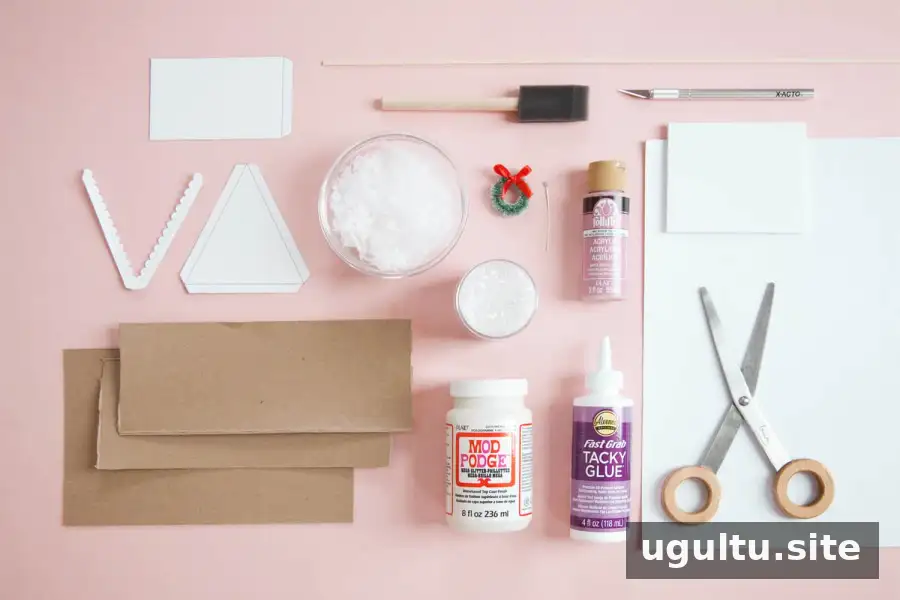
- Cabin template
- 3 1/4″ x 4″ piece of white foam board
- One piece of white cardstock
- Thin cardboard from an empty food box, such as a pasta or cracker box
- 1/8″ wide strip of balsa wood
- Mini wreath, or a pipe cleaner and narrow ribbon
- Mod Podge (the white glitter version works well for this project)
- Fast Grab Tacky Glue
- Crystal glitter
- Fake snow (optional)
- Eye pin and/or narrow ribbon for hanging
- Acrylic paint
Tools: paintbrush, scissors, pencil, and craft blade.
Choose cardboard that is clean, dry, and thin enough to cut and fold. Keep the foam board measurement exact so the base fits the cabin design.
How to make the miniature cabin
1. Trace and cut the cabin pieces
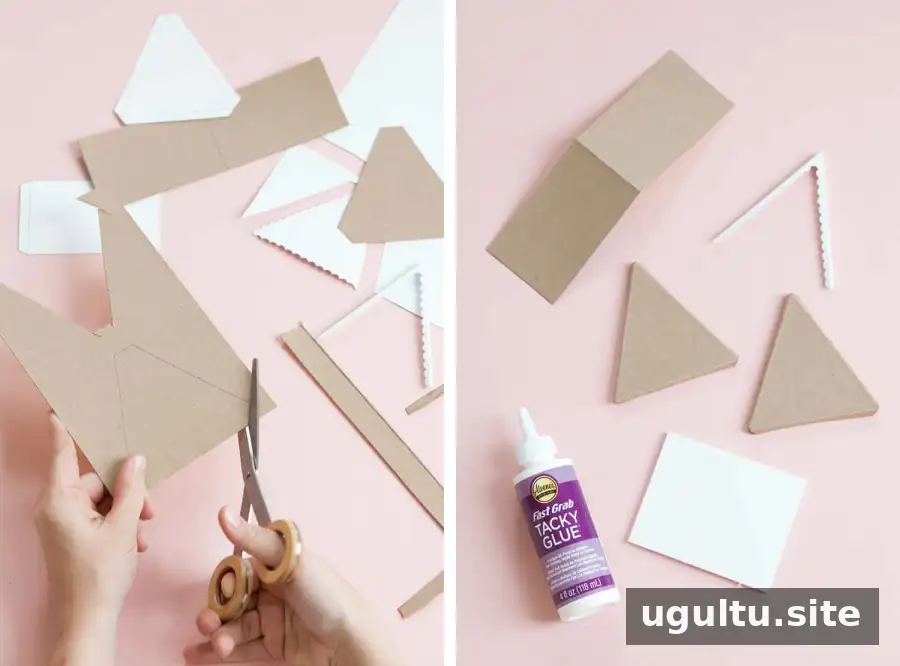
Print and cut out the cabin template. Trace two triangle shapes onto the cardboard. For the roof, cut two rectangles and glue them together, or use a long enough piece of cardboard to make a rectangle twice the template’s length and fold it in half. Repeat the roof shape on white cardstock, then trace two gingerbread trim pieces onto the cardstock.
Cut out the shapes: two cardboard triangles, one cardboard roof, one cardstock roof, two cardstock gingerbread trims, and the 3 1/4″ x 4″ foam board piece. Take care when using the craft blade; scissors can be used for pieces that are easy to cut safely.
2. Assemble and paint the cabin
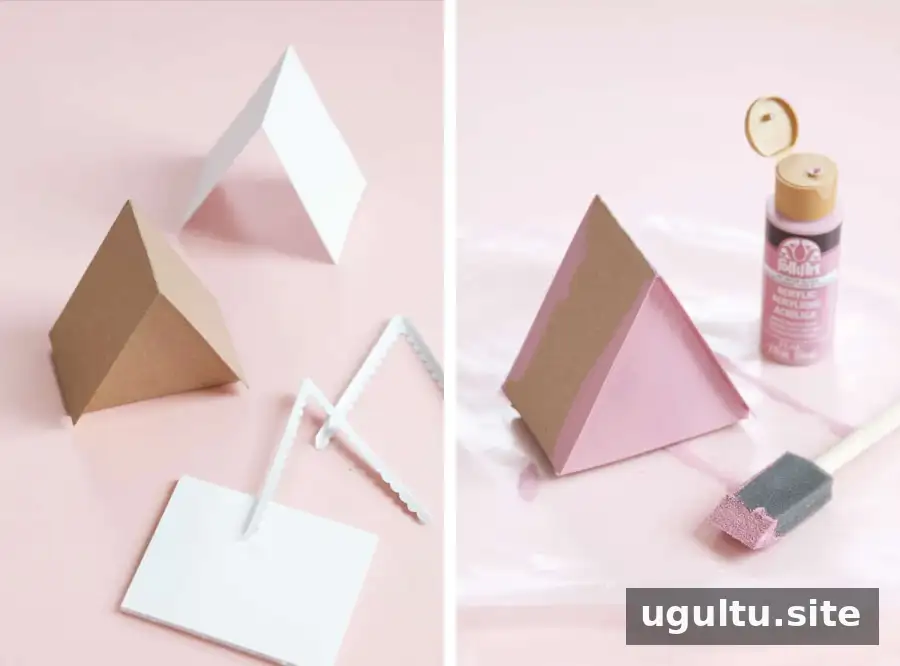
Fold down the flaps on the triangles and gingerbread trim. Glue the cardboard pieces together to form the cabin, but leave the white cardstock pieces separate for now. Paint the triangle faces in your chosen color. Cardboard may need two coats; let the paint dry before continuing so it doesn’t transfer or mix with the glue.
3. Add the roof, trim, and door
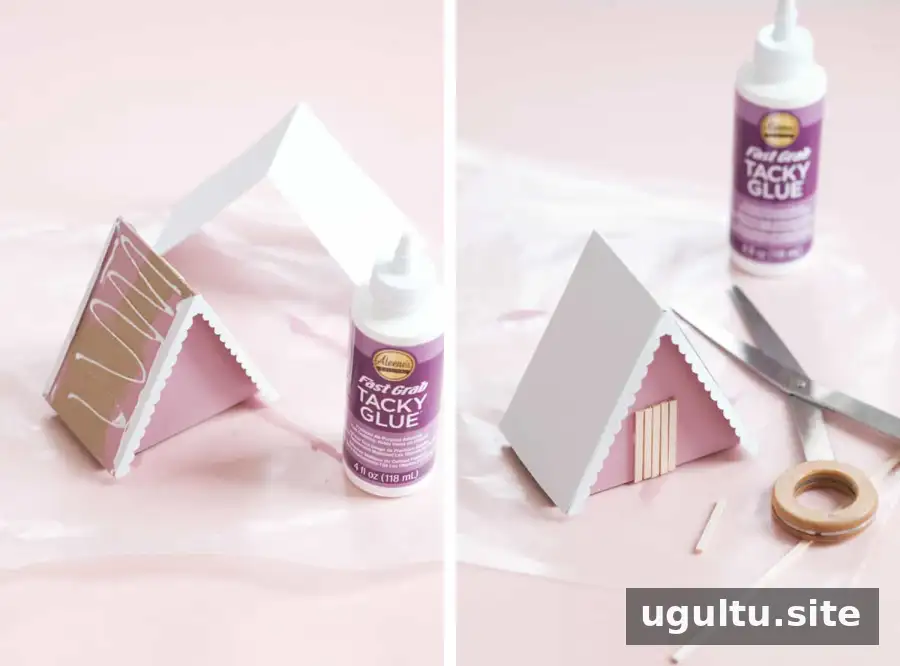
Once the paint is dry, glue a gingerbread trim piece onto each side of the roof. Cover the roof with the white cardstock piece, following the shape of the pitched roof.
Cut small pieces of the 1/8″ balsa wood strip to make a planked door. Arrange them on the front of the cabin, then glue them in place. Dry-fit the pieces first to check their spacing before applying glue.
4. Add a hanger and a snowy finish
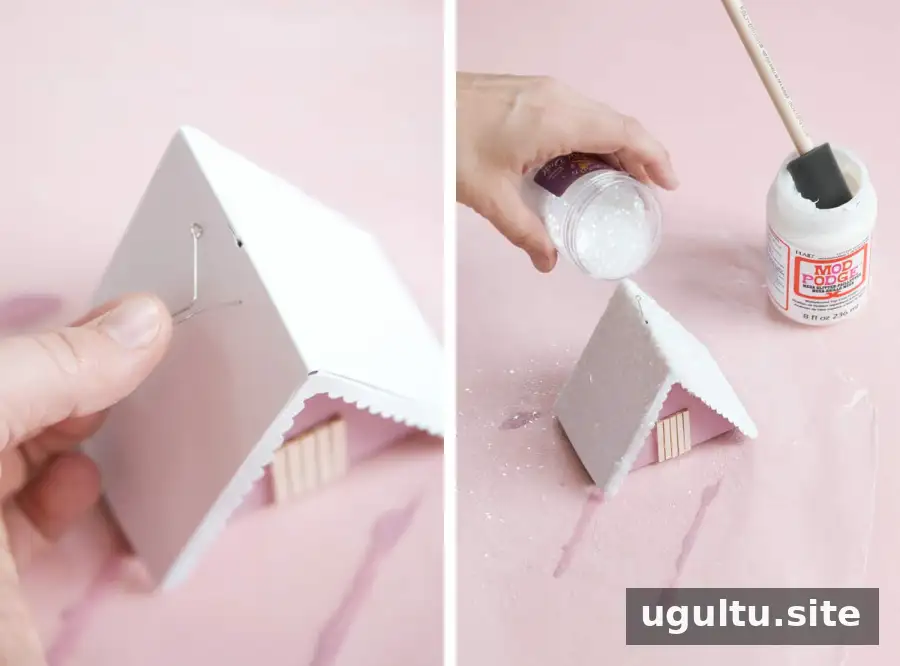
Make a small hole through the roof peak for hanging. Insert a bent eye pin, or thread narrow ribbon or yarn through the hole and tie a secure knot inside the cabin. Check that the hanger is firmly attached before displaying the ornament.
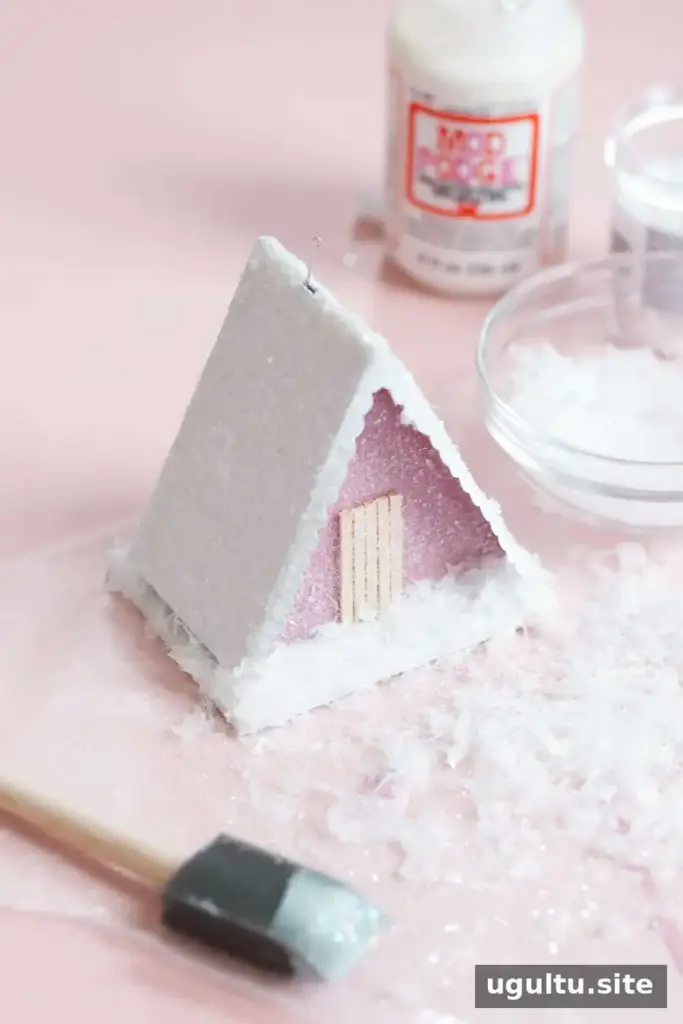
Brush Mod Podge over the cabin and sprinkle on crystal glitter. For a snowy look, add more Mod Podge to the roof and the foam board “lawn,” then sprinkle on fake snow. Use a light hand at first; you can always add more decoration while the adhesive is wet.
If a mini wreath looks too large for the front door, shape a smaller one from a pipe cleaner and finish it with a tiny bow made from narrow ribbon. Attach it to the door with hot glue, taking care around the hot adhesive.
Drying and displaying your A-frame cabin ornament
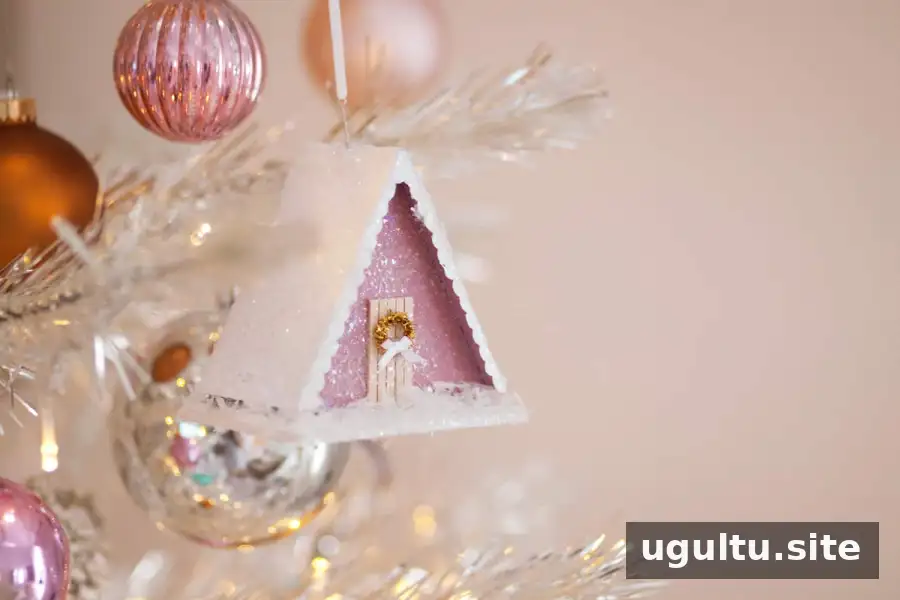
Let all glue and Mod Podge dry completely before hanging the ornament. This helps the glitter, snow, and decorative details stay in place. The finished cabin can be displayed on a tree or used as a small tabletop decoration.
For a group craft session, prepare the template pieces and handle any blade work in advance. Children can take part in painting and adding glitter or fake snow with supervision.
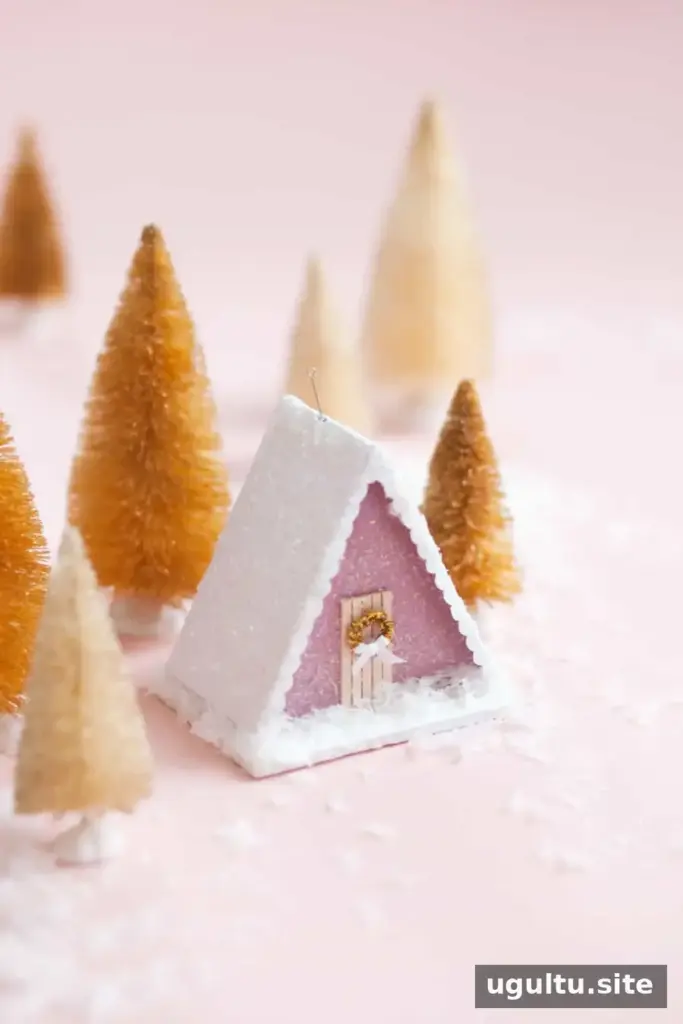
Make the A-frame cabin ornament your own
Choose a paint color and embellishments that suit your holiday decor, while keeping the cabin lightweight enough to hang securely. This cardboard Putz house uses simple materials to create a distinctive miniature keepsake. — Mandi


