
 admin
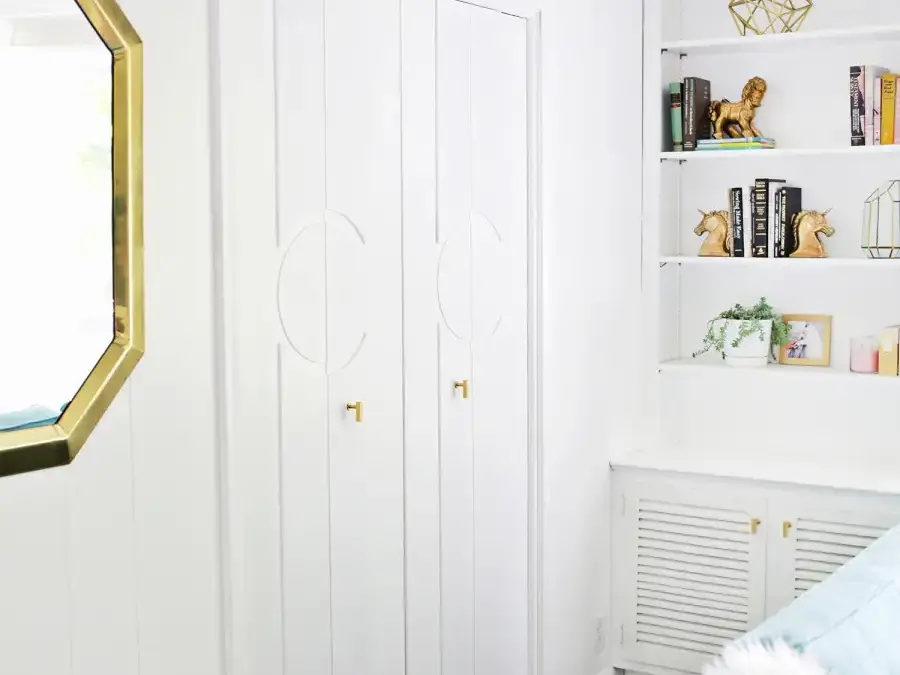
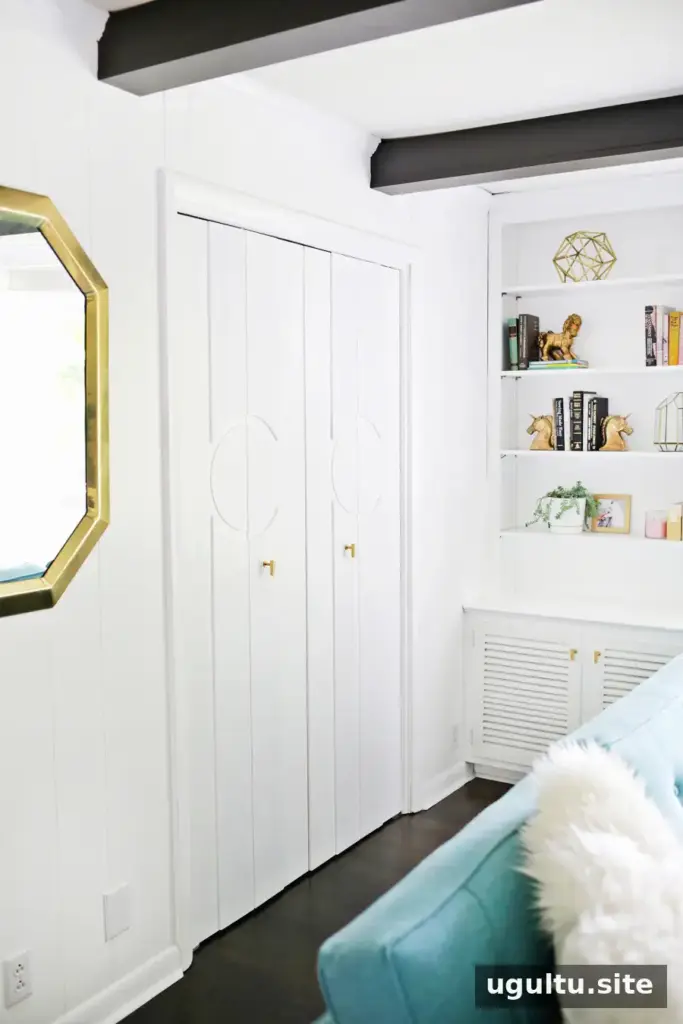
Small finishing details can give a room a more complete, personalized feel. Geometric closet door panels are one way to add character to plain flat doors without introducing a bold color or distracting from other features in the room. This white-on-white design uses simple shapes and matching paint to create a subtle, custom-looking detail.
Larger geometric forms give the doors a different look from designs made with many small trim pieces. The half-circle pattern also adds visual interest while keeping the overall effect restrained.
Materials and preparation for geometric closet door panels
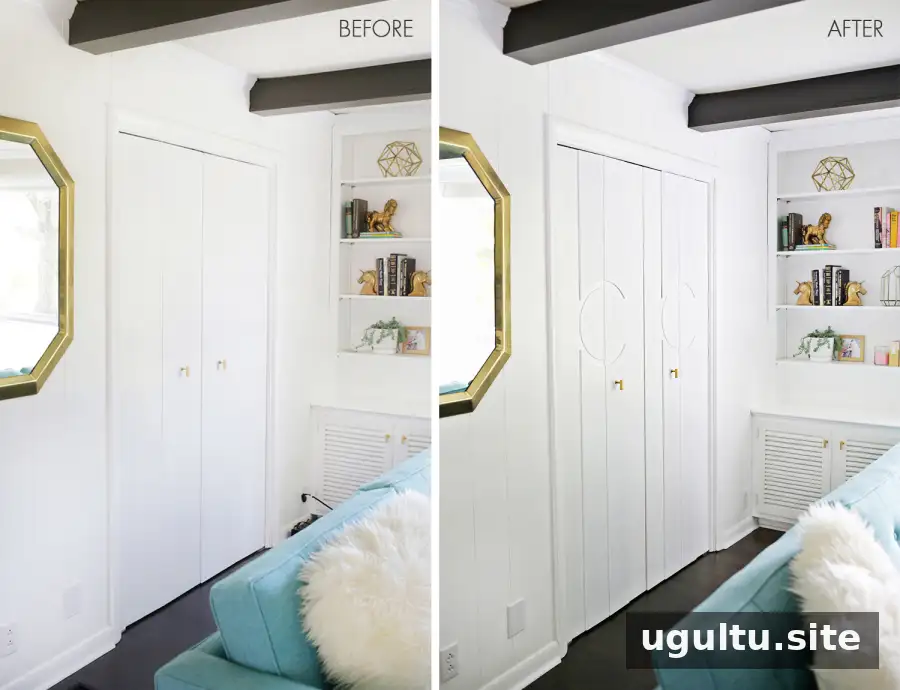
The doors shown here were basic, flat-front wooden closet doors that had already been painted white. Before starting, check that the doors are in good condition and that added panels will not interfere with their opening, closing, or hardware. Plan the design on the door before cutting so the shapes sit where they will be visible in the finished room.
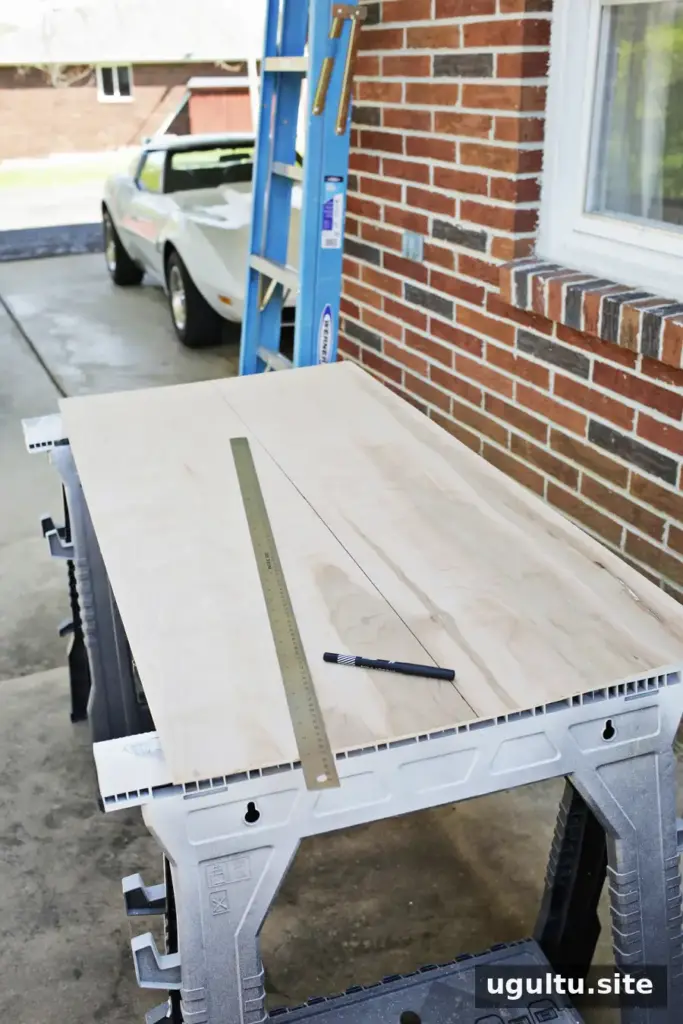
Two sheets of thin birch plywood measuring 2’x4’ were used. Each sheet was cut lengthwise down the middle with a jigsaw to make 12-inch-wide strips.
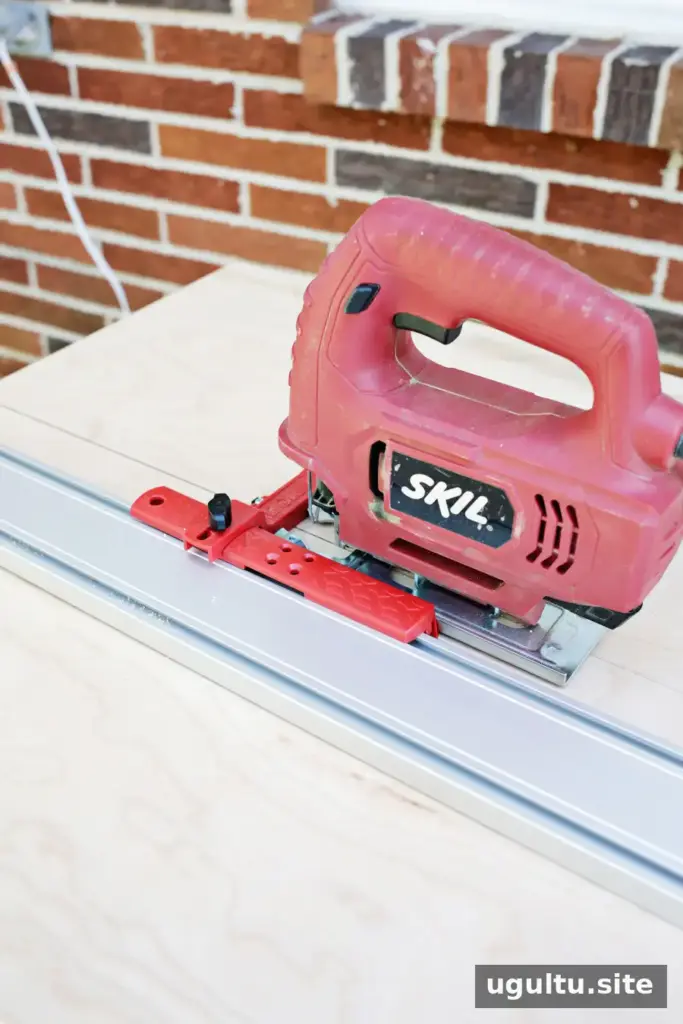
A saw guide helps keep long cuts straight, which is especially useful when the plywood strips will be visible on the finished doors. Secure the material before cutting and follow the tool manufacturer’s safety instructions.
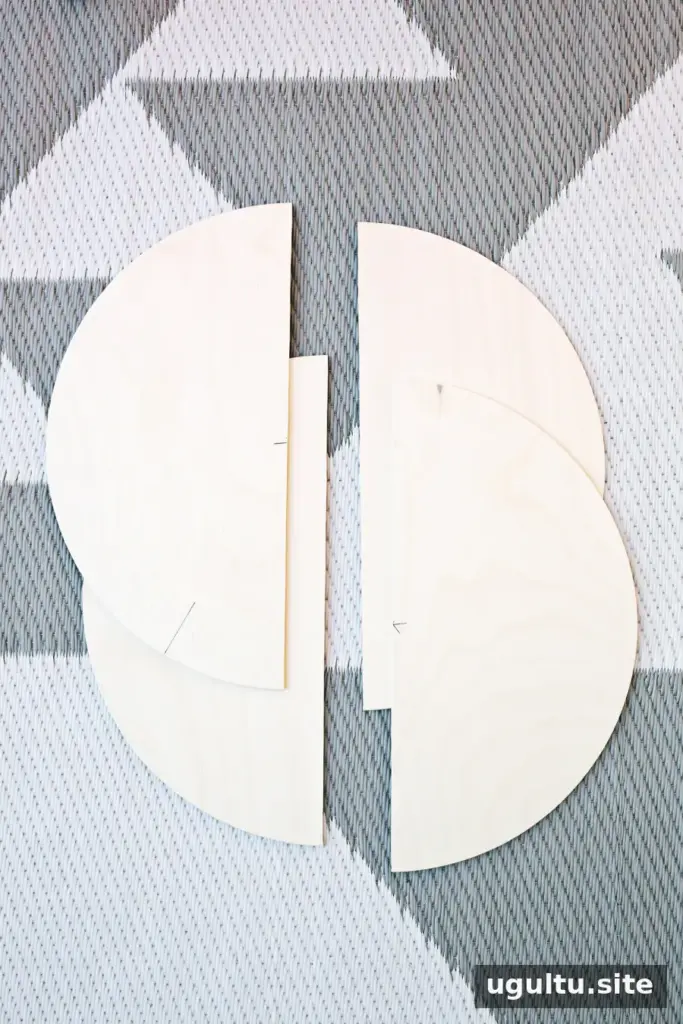
Two 12-inch wooden circles were also cut in half for the rounded parts of the design.
Cutting and fitting the geometric shapes
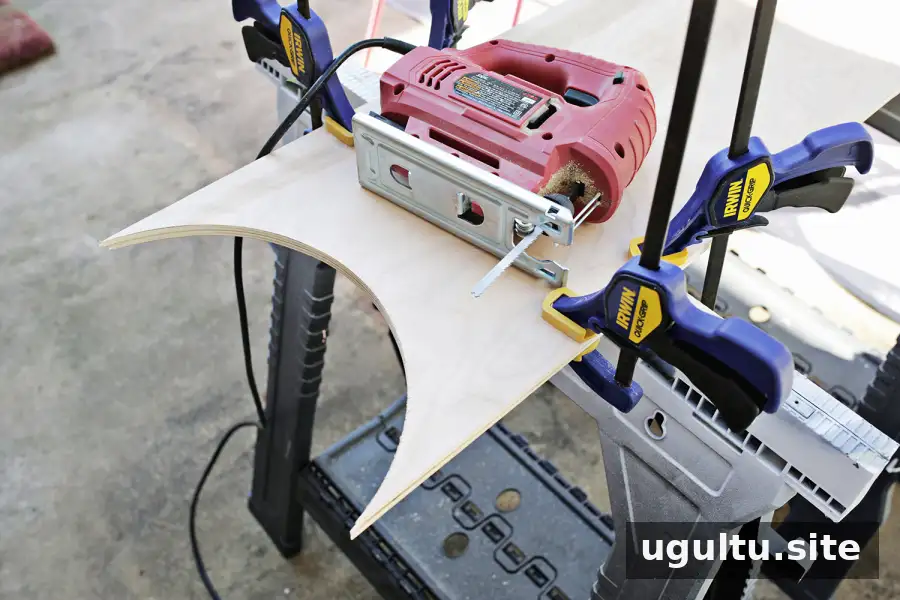
To make the panel edges follow the curve of the circles, the curved lines were traced onto the strips before cutting them with the jigsaw. The first layout did not align as intended: placing the circle 1.5 inches from the curved cuts made the shapes look uneven.
For a matching curve set 1.5 inches from a 12-inch circle, the traced circle needs to be 3 inches larger in diameter. In this project, tracing a 15-inch circle and recutting the wood created the intended spacing. Test the pieces together before making final cuts, since a small layout adjustment can change how the pattern looks across the door.
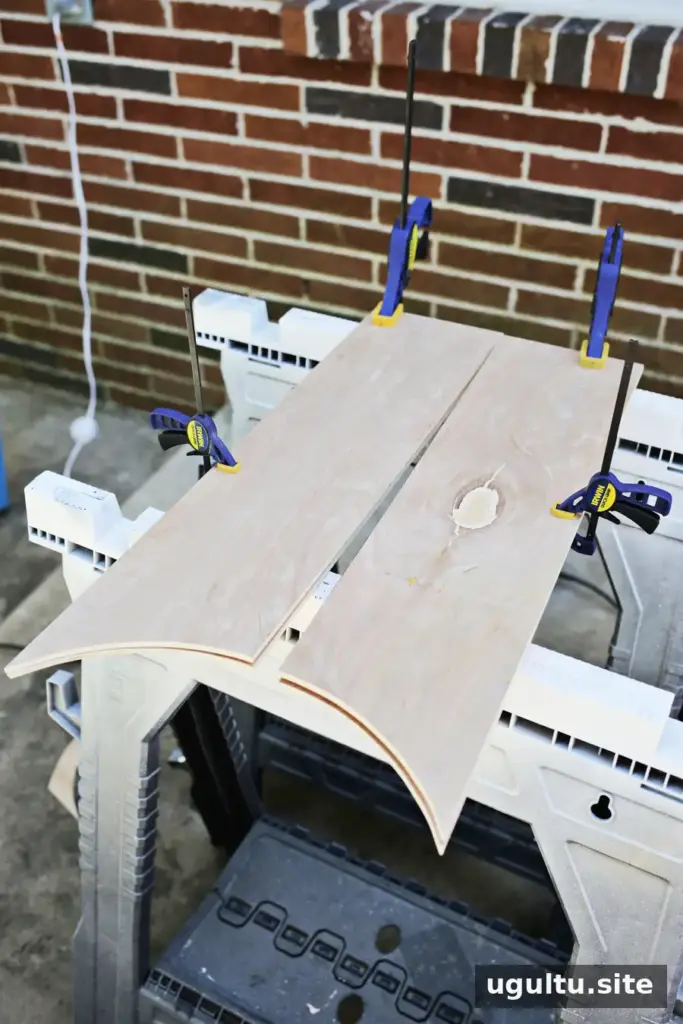
After correcting the curved cuts, the panels were cut in half again to make pieces 6 inches wide.
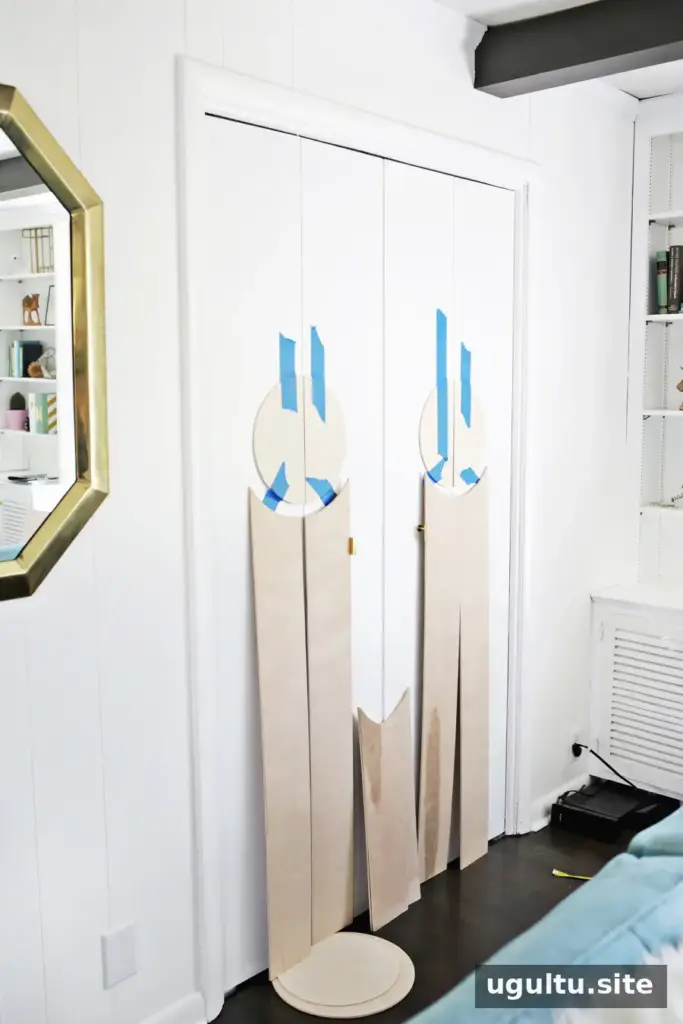
Before trimming the panels to their final height, the circles were positioned on the doors. They were placed higher than the center so the design would remain visible above the couch in front of the doors. Measure the upper and lower pieces in relation to the circles, and check that the arrangement looks balanced on each door.
Attaching and finishing the panels
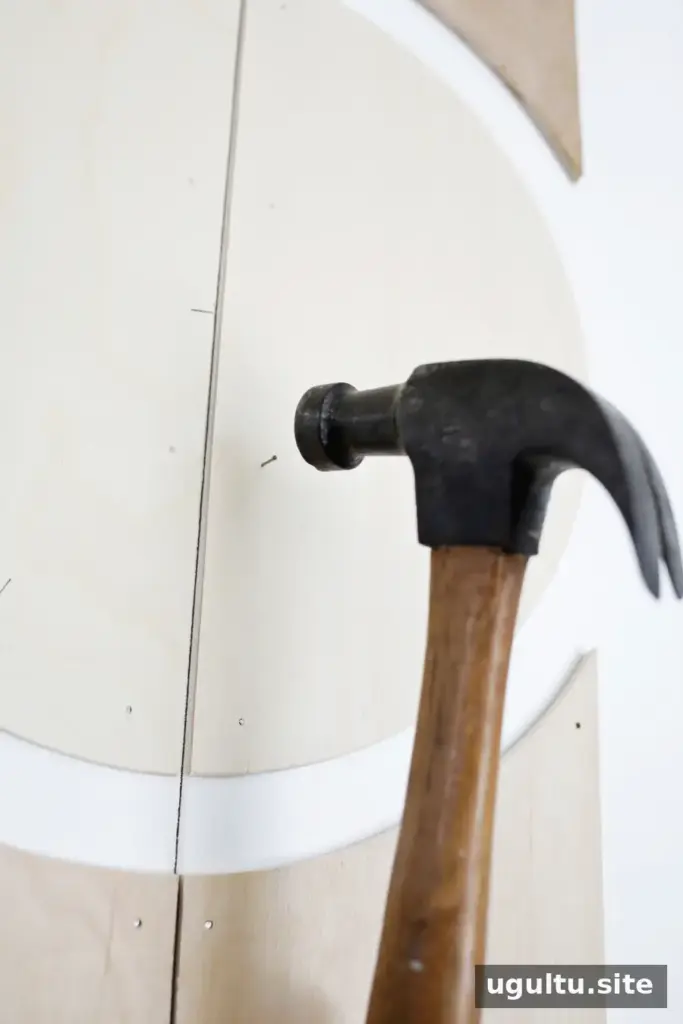
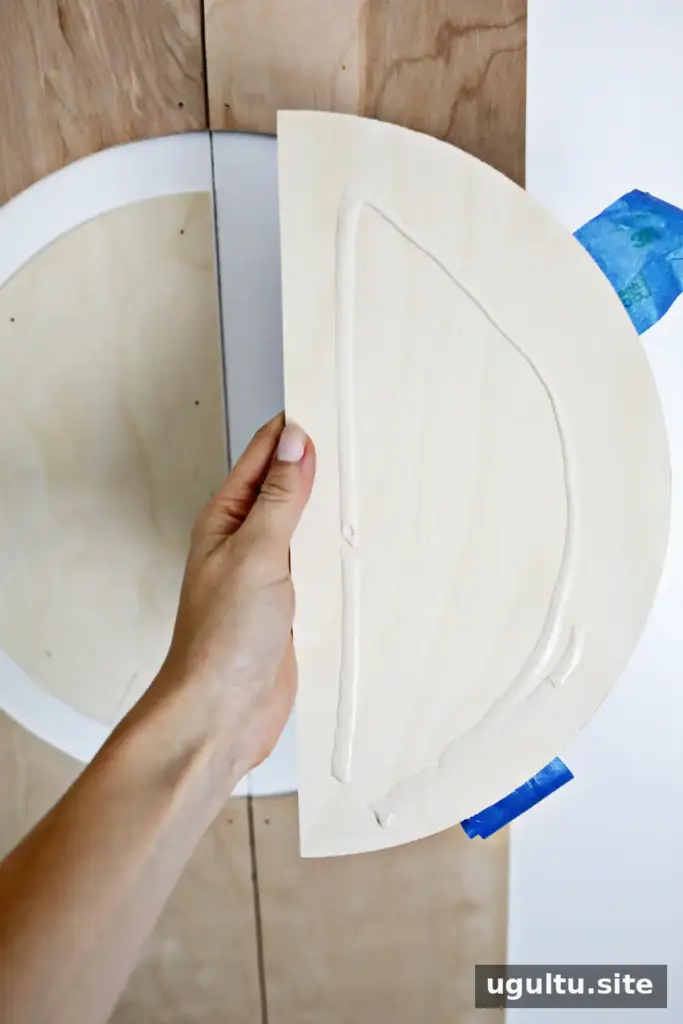
Once all the pieces were cut and test-fitted, wood glue was applied to attach them to the doors. Small nails were then used to hold the panels in place. Keep the pieces aligned while securing them, and make sure any fasteners are suitable for the door material.
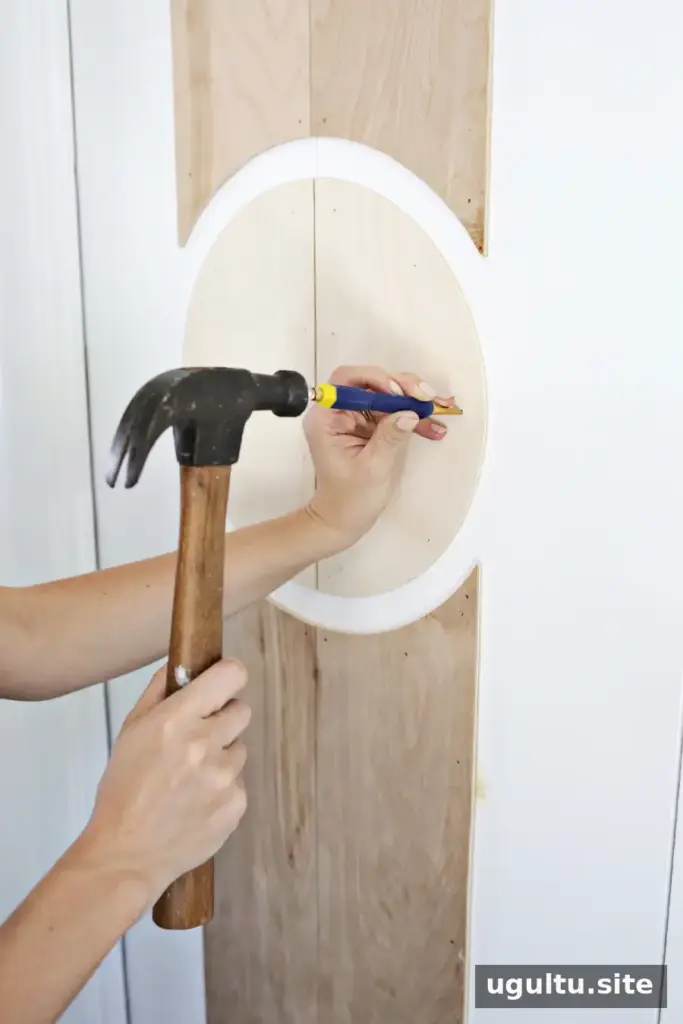
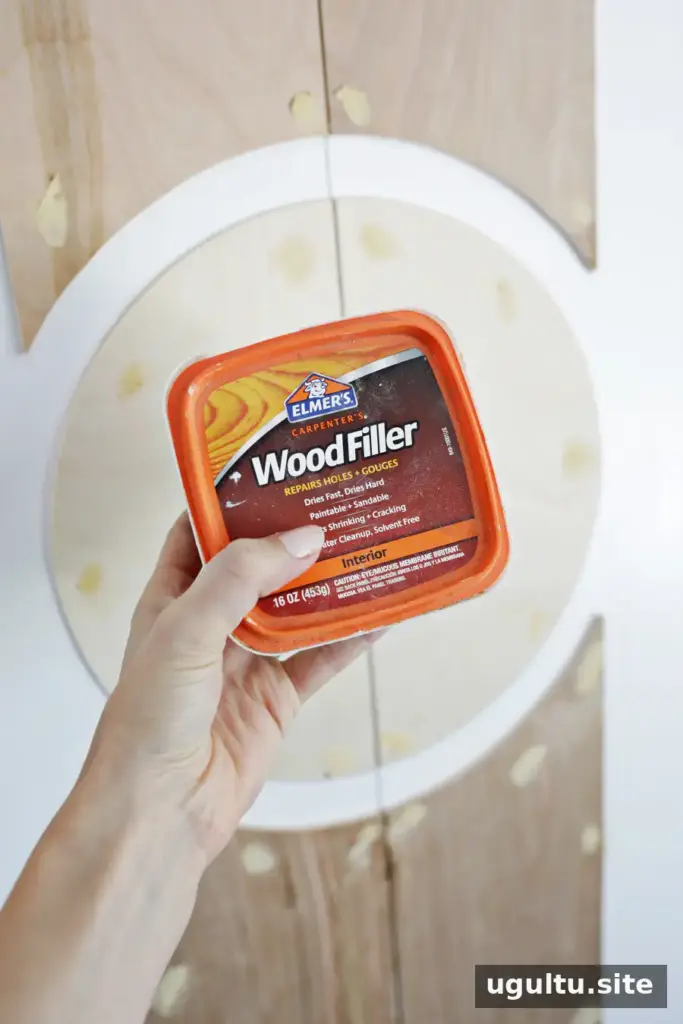
For a seamless finish, a nail setter was used to drive the nail heads slightly below the surface. The small indents were filled with wood filler, then sanded flat after the filler dried. Smooth the filled areas before painting so the fasteners are less noticeable.
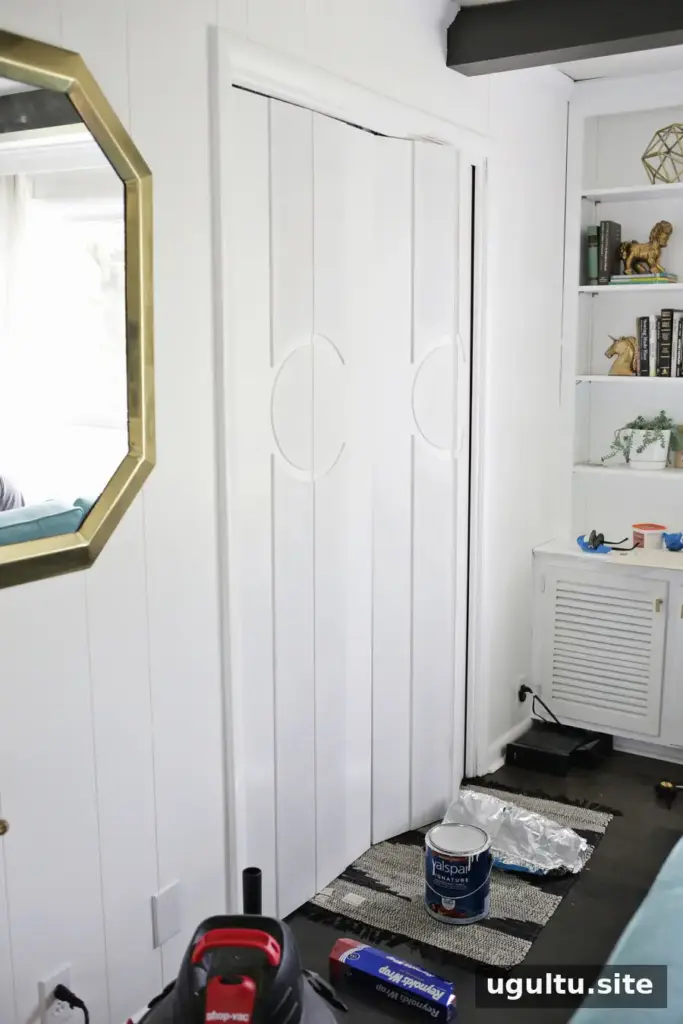
The panels were painted to match the doors. After the paint dried, new holes were drilled for the hardware in a slightly different position to make room for the added panels. Check hardware placement and door clearance before drilling.
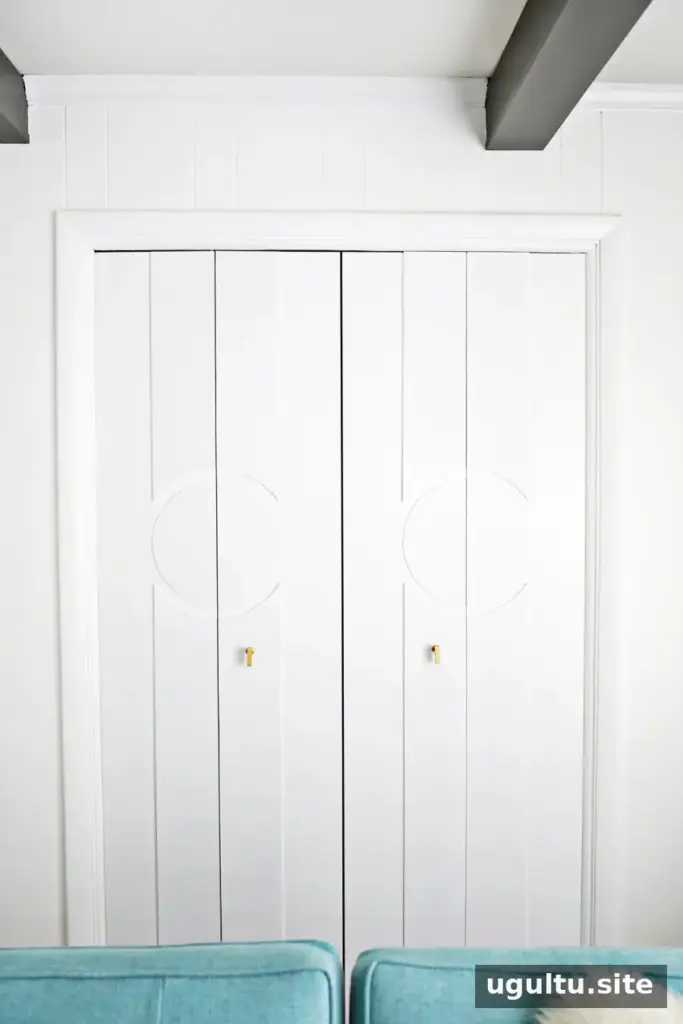
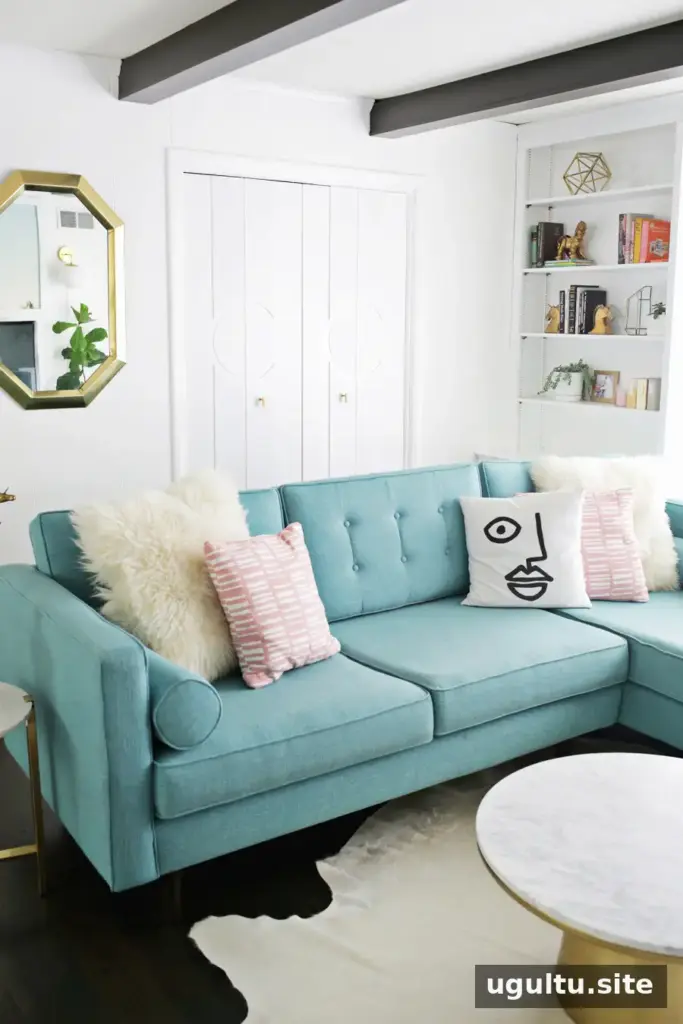
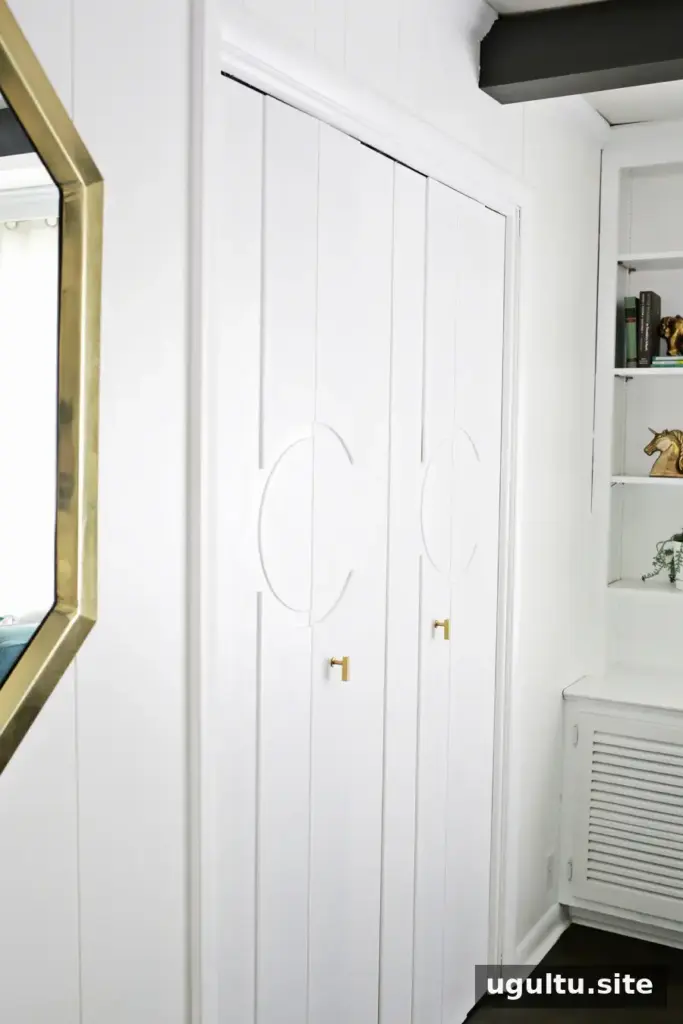
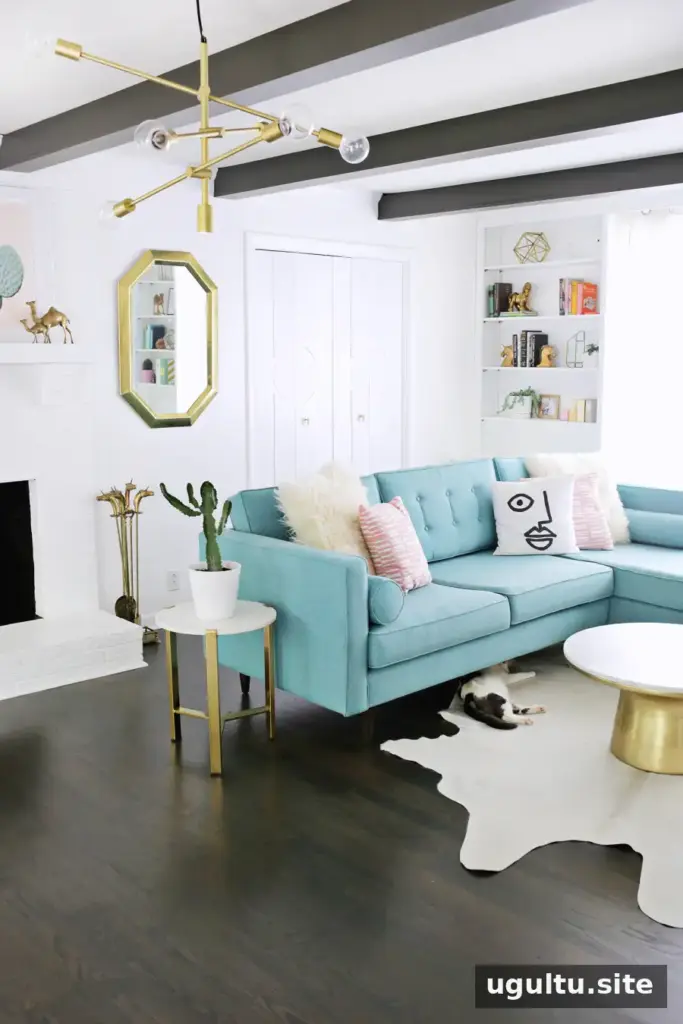
The monochromatic pattern brings detail to plain doors while allowing the room’s other furnishings to remain the focal point. The mirrored circles have a mid-century-inspired feel, and the simple white finish helps the design blend with the surrounding space.
Adapting the design to your doors
If you do not have a jigsaw, you can still create a similar effect with wooden shapes that are already cut to the sizes and forms you need. Look for complete shapes or pre-cut half circles, then arrange them on the doors before attaching anything. Measuring and dry-fitting the pieces first can help you avoid unnecessary cuts and make it easier to keep both doors consistent.
Geometric closet door panels offer a practical way to give basic doors a more considered appearance. With careful measuring, secure attachment, and paint that matches the door, the finished pattern can add personality without overwhelming the room.
Project notes by Laura.


