admin
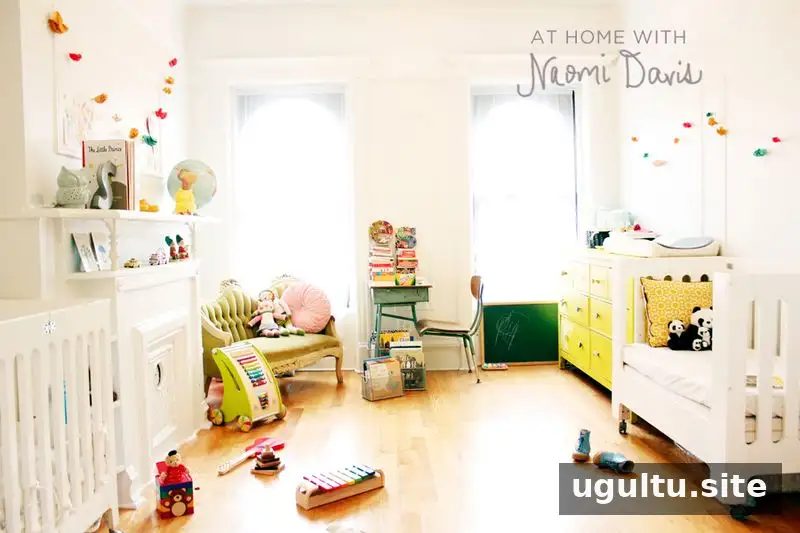
This New York City nursery shows how a family can make a compact apartment work for everyday life. Naomi Davis shares the room she created for her children, Eleanor and Samson, with space for play, family time, and treasured furniture.
Choosing a New York City apartment and nursery
After moving their family from Washington, DC, back to New York City in August, Naomi and her family knew they would need to make some compromises to find an apartment that suited them. Their home is on the fifth floor of a walk-up building, which can be a challenge with a two-year-old and a nine-month-old. In return, the apartment offers a convenient location near parks, museums, and public transportation, along with abundant natural light, crown moldings, and spacious bedrooms with large closets.

In a walk-up, carrying children, groceries, or a stroller up and down the stairs takes extra planning. The location and apartment features helped balance that drawback for this family. When weighing a home, it can be useful to list practical daily needs alongside the features that make a space appealing.
Making room for play in a small home
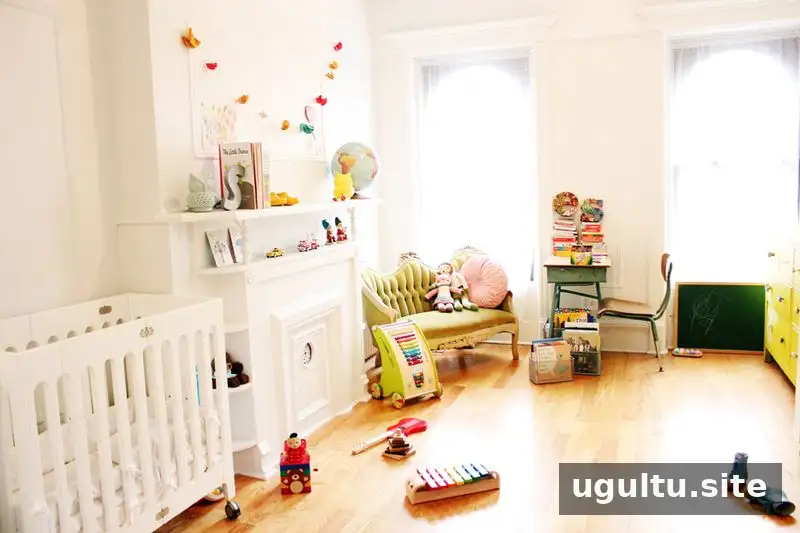
Because the apartment is compact, Naomi wanted Eleanor and Samson to have enough room to move around and play. She also wanted adults to be able to sit on the floor and join in. The family made the apartment’s largest bedroom into the nursery and chose the smaller bedroom for themselves.
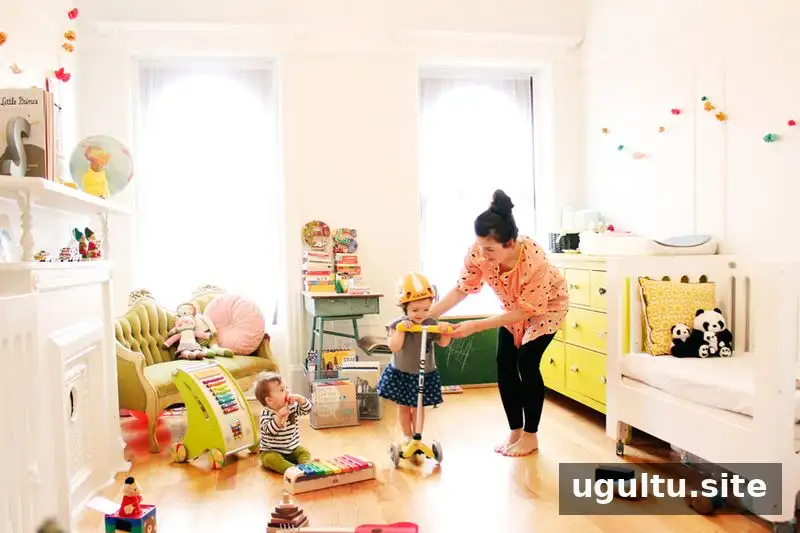
That layout gives the children’s room a central role in family life. The family spends much of the day there, and often gathers in the room in the evenings. The nursery also receives the apartment’s best natural light, making it a welcoming place to spend time during the colder, windy New York winter.
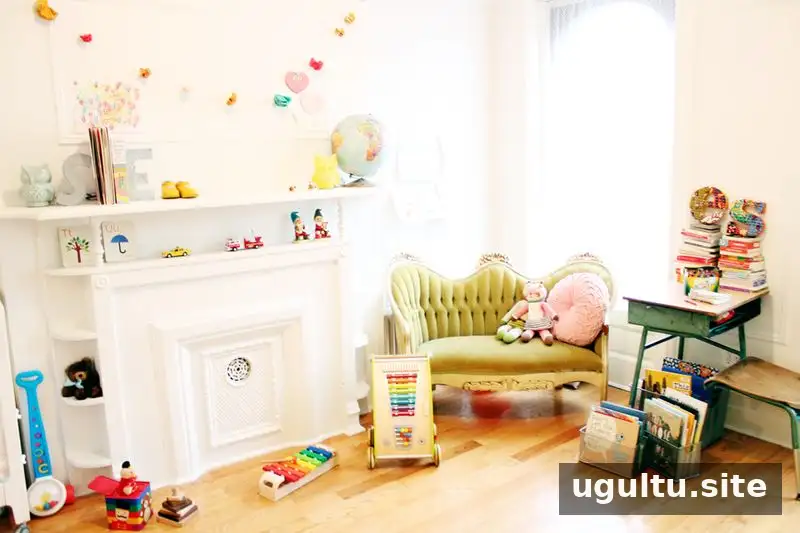
For a similar setup, consider how each room is used throughout the day before deciding which bedroom should serve as a nursery. Leaving an open area for floor play can make a room more flexible, while baskets offer a simple way to keep books and toys within reach.
Personal furniture and meaningful details
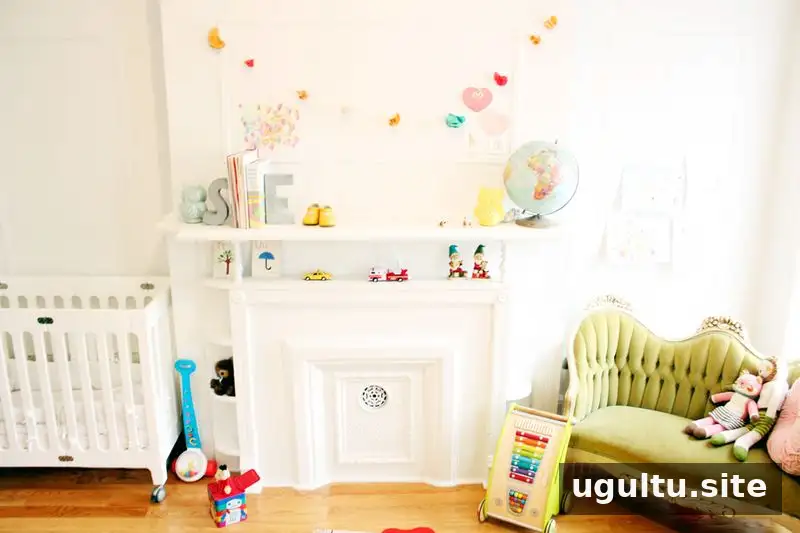
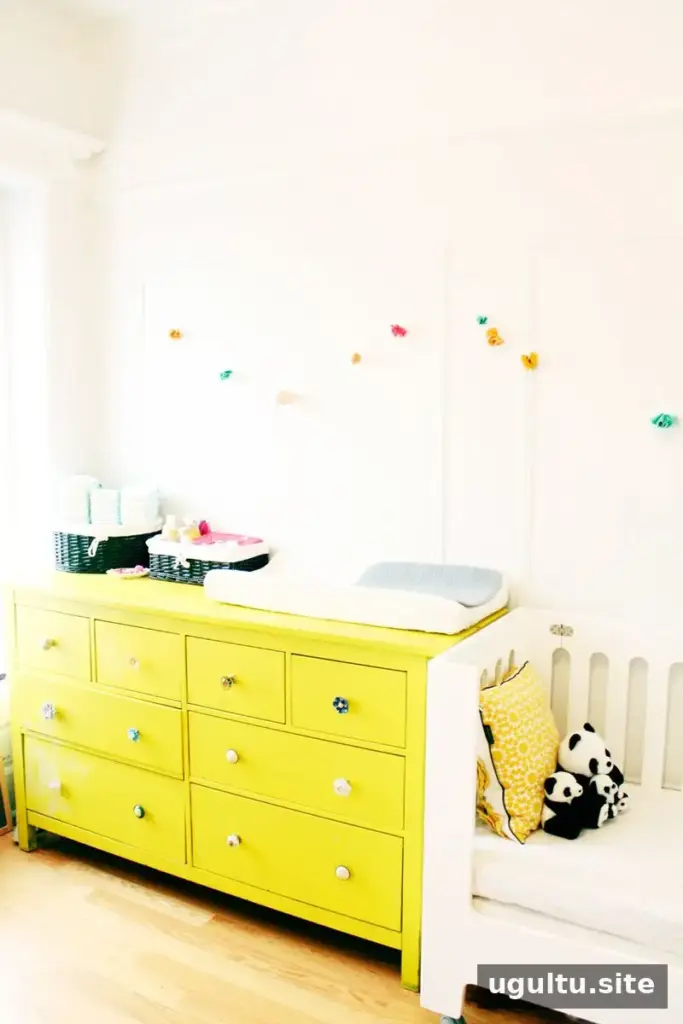
A green settee is one of Naomi’s favorite pieces in the nursery. She found it while pregnant with Eleanor, and it has remained a useful part of the room. The yellow dresser also has a personal history: Naomi and her husband, Josh, bought it when they were newly married and living in a New York City studio apartment. They later painted it yellow and added mismatched knobs.
The dresser has become worn over time, but the family has kept it because of its sentimental value. A familiar piece of furniture can give a nursery character without requiring every item to be new. Before keeping an older dresser in a child’s room, check that it is stable and secure, and make sure drawers and hardware are in good condition.


A lived-in nursery for everyday family life
The nursery is not always tidy. Eleanor and Samson often take books out of their baskets, and tidying up is not their favorite activity. Rather than treating every small mess as a problem, Naomi describes the room as well-used and appreciates the children’s playful energy.
Keeping a few accessible baskets can make it easier for children to take out books and toys—and for adults to gather them again later. A family room does not have to stay perfectly arranged to be comfortable or useful; it needs to support the way people actually spend time together.
Naomi Davis’s New York City nursery is a thoughtful example of adapting a home to family priorities. By choosing the largest bedroom for the children, making room for play, and keeping meaningful furniture, the family created a bright, welcoming space that serves daily life.