admin
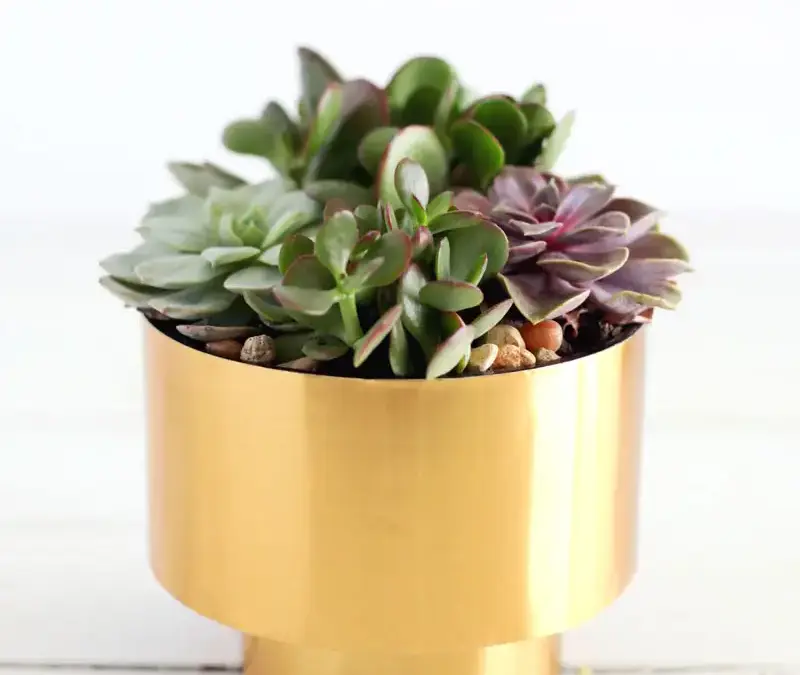
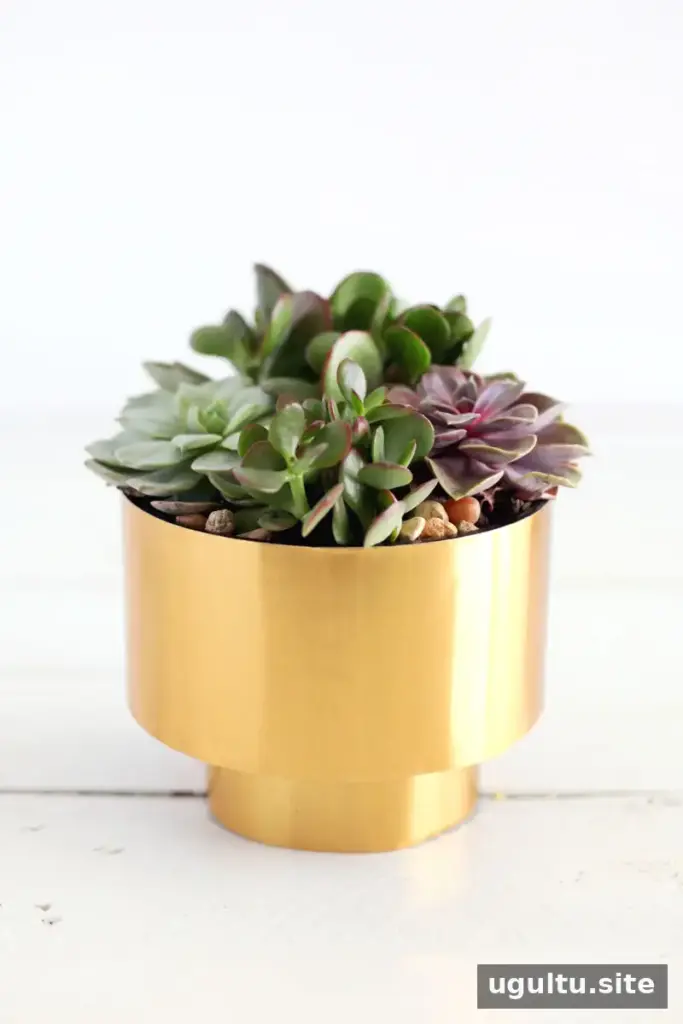
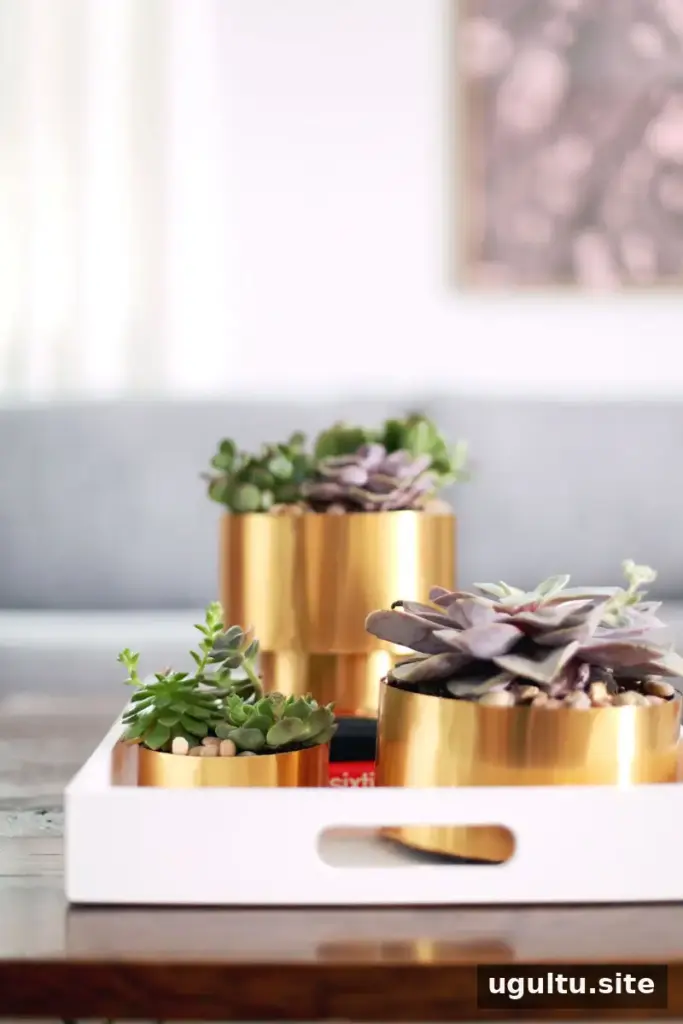
A brass succulent planter DIY project can add a bright metallic accent to a coffee table or shelf without the cost of a store-bought planter. This design wraps PVC drain caps in brass-colored aluminum sheet to create simple planters, including a pedestal style with a built-in saucer. The materials used for three planters cost less than $20, with some supplies left over.
Supplies for a Brass Succulent Planter DIY
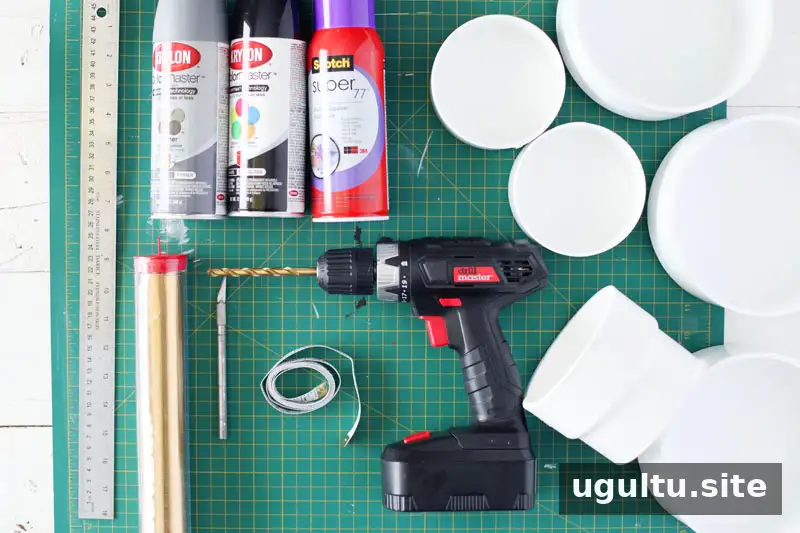
- PVC sewage drain caps in various sizes
- Power drill and drill bit
- Brass-colored aluminum sheeting (38 gauge)
- Craft knife
- Steel ruler and measuring tape
- Permanent spray adhesive
- Cutting mat (optional, but helpful)
- Black paint and primer (optional)
- Gloves and protective paper for handling and cutting the metal
How to Make the Planters
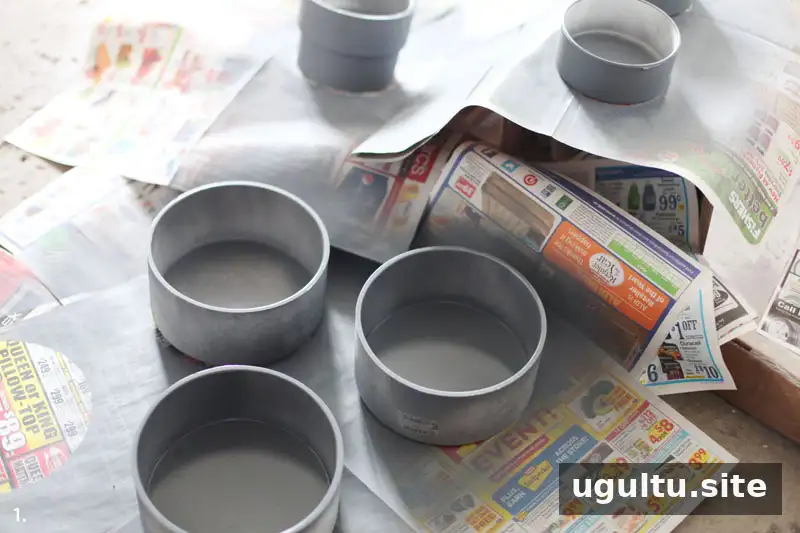
1. Paint the PVC caps if needed
If your caps are not black, paint them before adding the metal. A dark finish can help disguise the PVC if small gaps show around the wrap or through the drainage holes. Painting is optional, so allow the caps to dry fully before moving on.
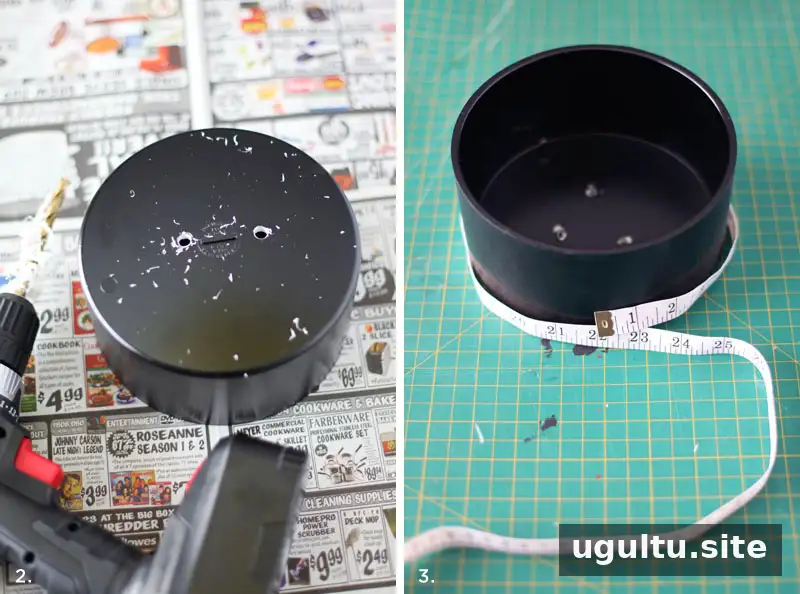
2. Drill drainage holes
Drill three to four holes in the bottom of each larger cap that will hold a plant. Succulents need soil that drains well and can dry between waterings; standing water can contribute to root rot. Wear eye protection while drilling and secure the cap so it does not slip.
For a pedestal planter, leave the smaller cap unperforated. It will sit open-side up beneath the planted cap and catch water that drains through the holes. Pebbles do not replace drainage holes, so make sure the planted cap can drain freely.
3. Measure the caps
Measure the circumference and height of each PVC cap. Add 0.25 inches to the circumference measurement and subtract 1/16 inch from the height. Record the adjusted measurements; they will determine the size of each aluminum strip.
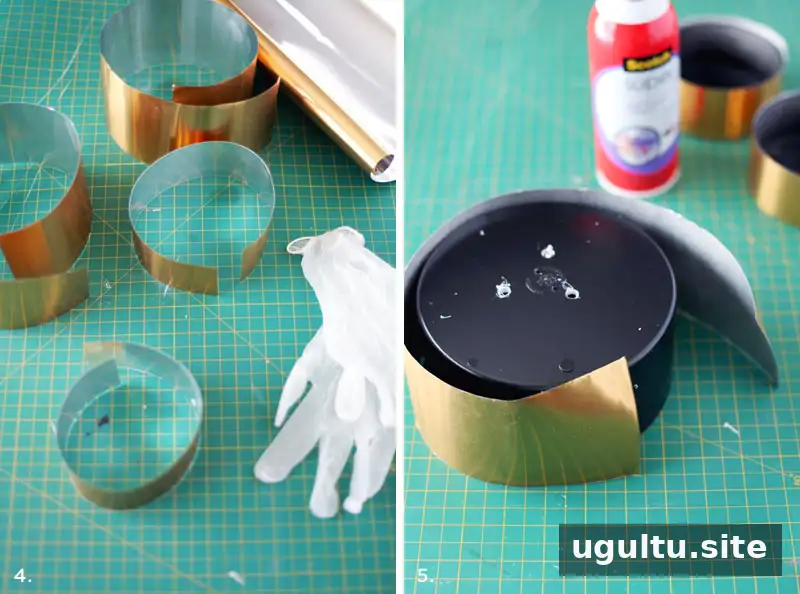
4. Cut the aluminum strips
Cut one piece of sheet metal for each cap using the measurements from the previous step. Aluminum can crease or warp easily, and dents may be difficult to remove, so handle it carefully. Gloves can help prevent fingerprints and protect your hands from sharp edges. Use a ruler and cutting mat for more controlled cuts.
5. Attach the metal to the caps
Place the strips face down on protective paper with a few inches between each piece. Apply permanent spray adhesive to the reverse side, covering the edges while avoiding overspray on the visible surface. Follow the adhesive label for ventilation and drying instructions.
Turn a PVC cap upside down and press the center of the adhesive-backed strip against it. Smooth the aluminum around the cap toward both ends. Overlap the extra metal slightly at the seam and press it down so it adheres. Take your time: smoothing gradually helps reduce wrinkles.
6. Add soil and succulents
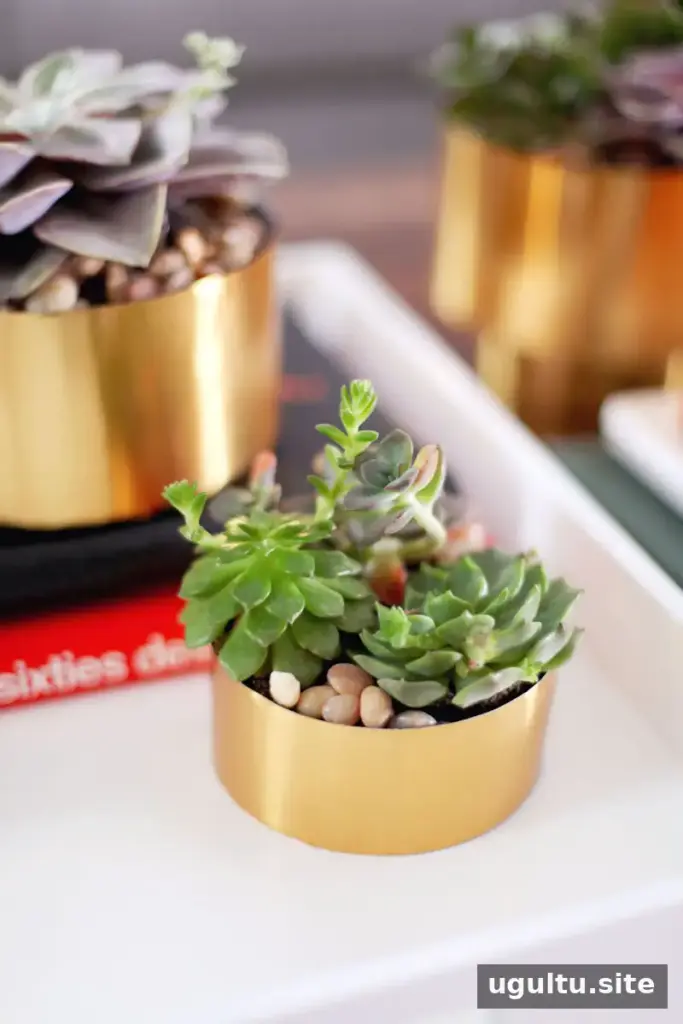
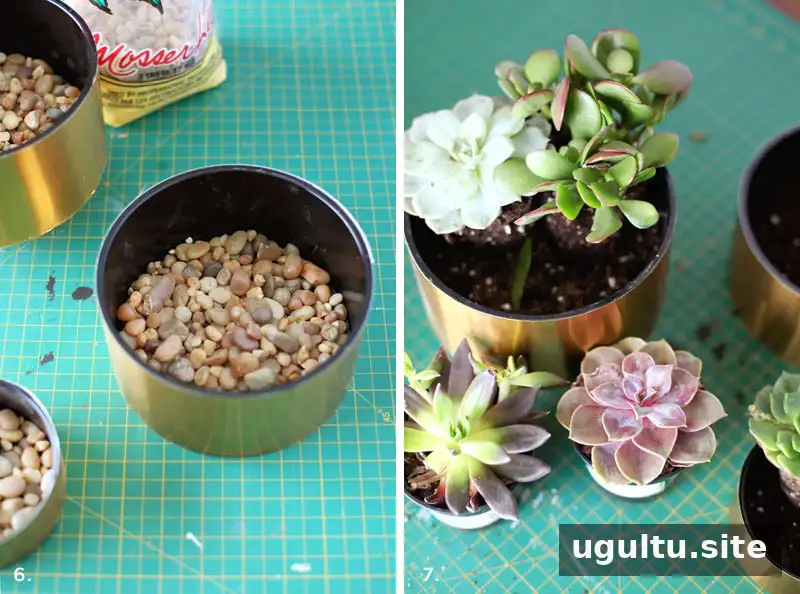
The design includes a layer of pebbles inside the cap, but this is optional and should not be relied on for drainage. Add fast-draining potting mix, position the succulents, then fill around the roots with more soil. A thin pebble topping is optional as well.
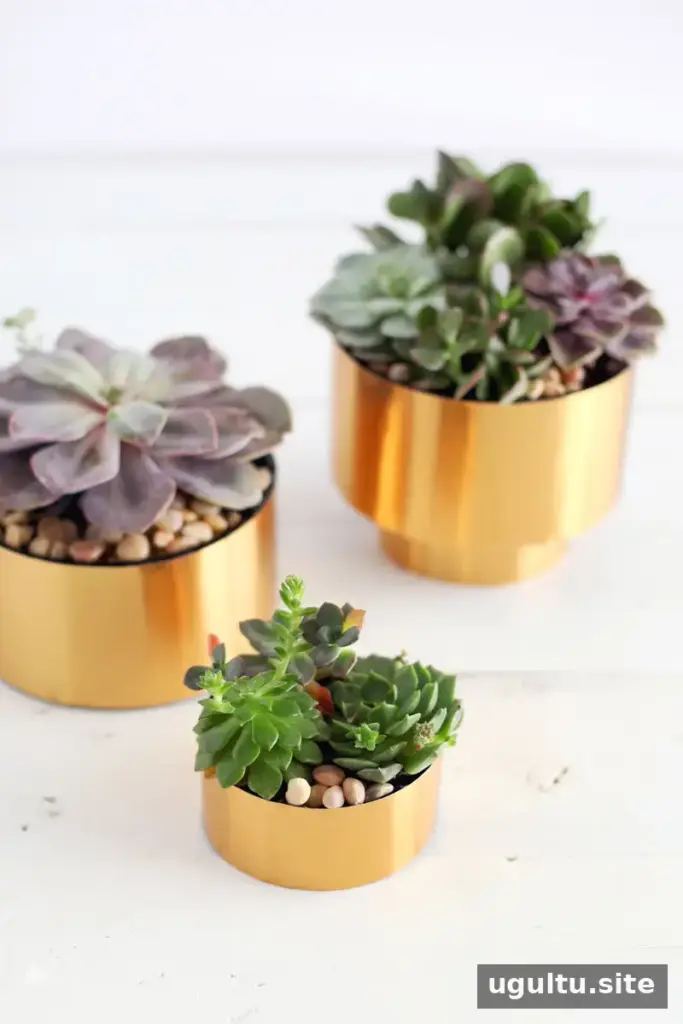
For the pedestal look, stack each planted, larger cap on an unplanted smaller cap, open side facing up. The lower cap acts as a catch saucer. If using a single cap on its own, water the plant somewhere that can safely handle runoff, such as a sink, and let excess water drain before returning it to its display spot.
Choosing a Spot and Caring for Succulents
Place the planter in a bright location. In the original setup, south- and west-facing windows and light-colored walls made the room especially bright. Light needs vary by succulent, so observe the plant and adjust its position if it stretches or shows signs of stress.
Water thoroughly when the soil is dry, then allow excess water to drain. Check moisture by inserting a finger about an inch into the soil before watering. Avoid leaving the planter standing in collected water; empty the lower cap after watering if needed.
Estimated Material Cost
The PVC caps cost less than $12, and the brass-tone aluminum sheet cost less than $5. With spray adhesive and paint already on hand, the supplies for three planters came to less than $20, with material left over. Prices vary by location, but the project can be a low-cost way to coordinate planters with metallic accents in a room.
Conclusion
This brass succulent planter DIY combines PVC drain caps and brass-colored aluminum to make a compact planter with an optional pedestal base. Measure carefully, handle the thin metal gently, and prioritize drainage and bright light to help your succulents thrive.
—Mandi