
 admin
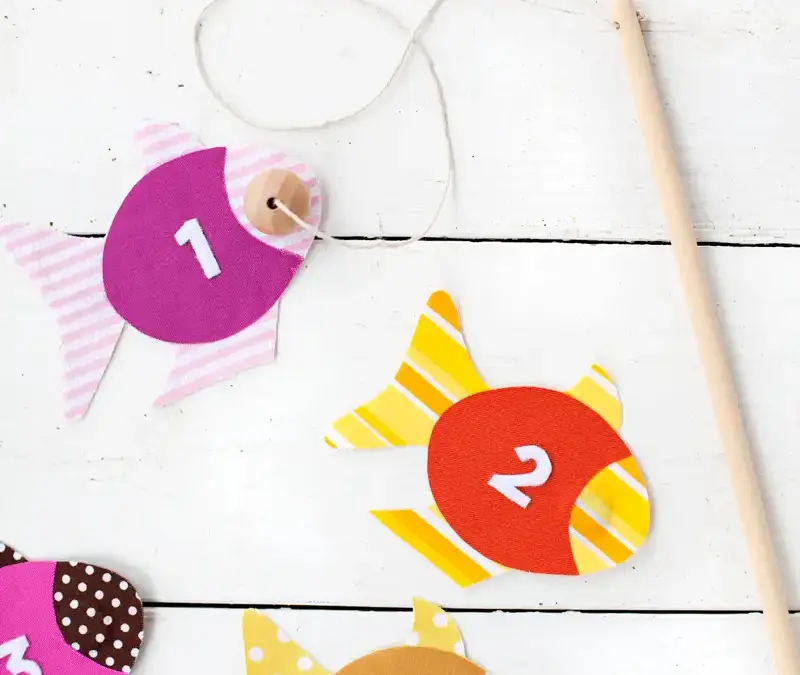
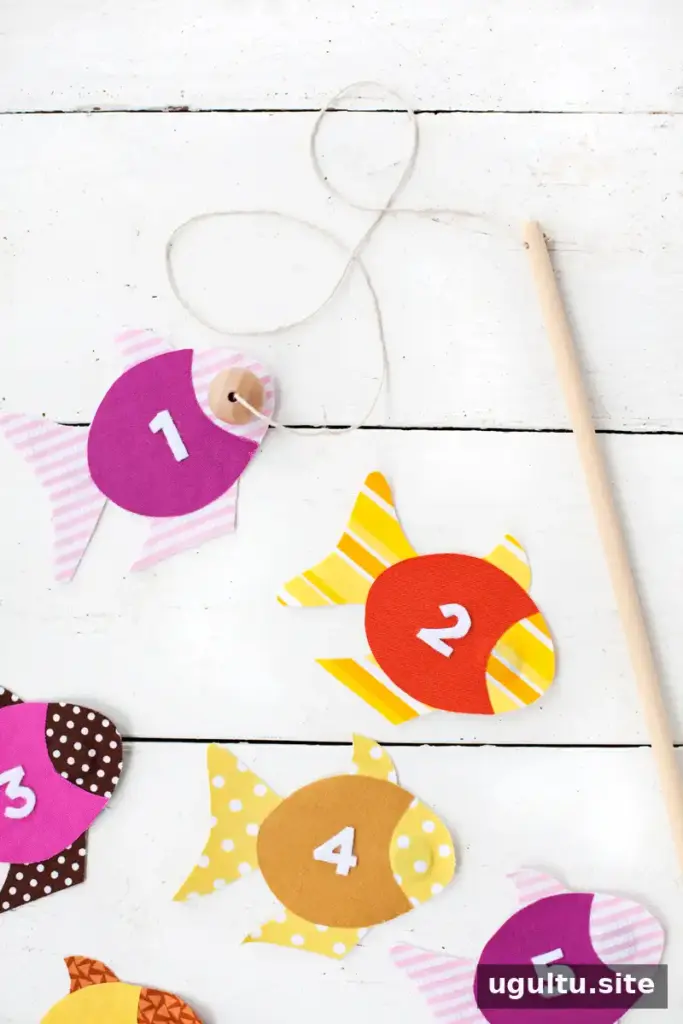
A DIY fabric fishing game is a handmade toy that can turn fabric scraps into a playful activity for young children. Players use a magnetic fishing rod to catch numbered fish, making the game a fun way to practice counting, simple addition, imagination, and hand-eye coordination. It can also be adapted to suit the materials and tools you already have at home.
Before you begin, gather your supplies and check the instructions for your fusible webbing, since ironing temperatures and pressing times can vary. The project uses small magnets, so an adult should handle them and supervise children during play.
Materials and tools for a DIY fabric fishing game
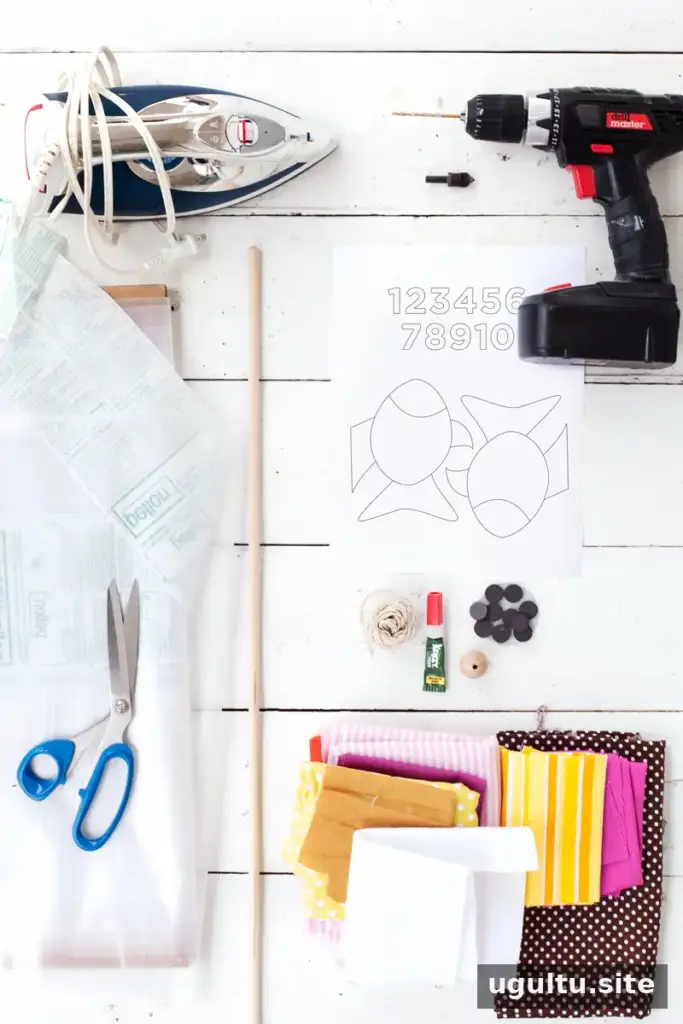
Materials:
- Fabric scraps in coordinating colors
- Felt in a contrasting color
- Fusible webbing
- A dowel rod (choose the diameter you prefer)
- 11 circle magnets, including at least one heavy-duty magnet
- A wooden bead
- Glue; tacky glue can be used
- String
- A printed template
Tools:
- Fabric scissors
- An iron
- A permanent marker
- A power drill and small drill bit (optional)
- A countersink drill bit (optional)
Set up a clear work surface and keep the magnets away from young children while assembling the game. If you do not have a drill, the rod can be prepared using the no-drill option in the instructions below.
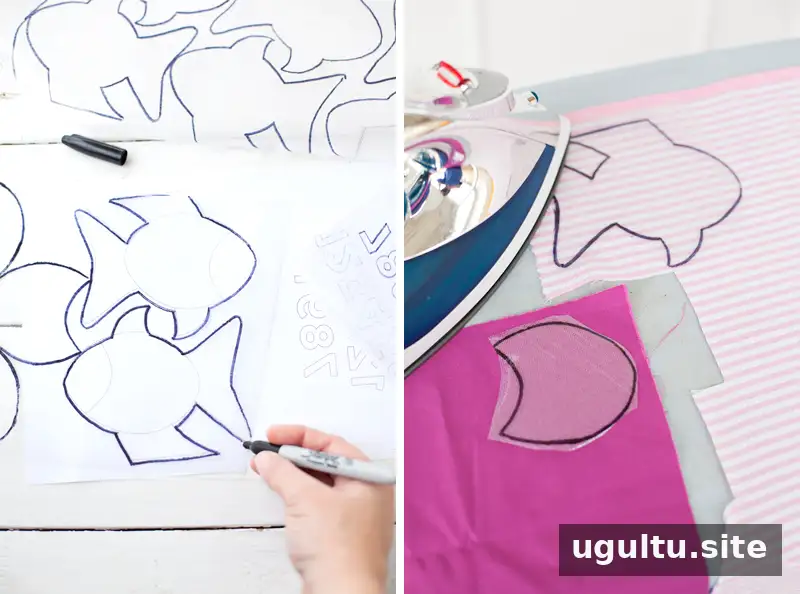
Step 1: Trace the shapes. Print the template and trace 10 fish, 10 fish-belly shapes, and one of each number onto the paper or slick side of the fusible webbing.
Step 2: Fuse the shapes to fabric. Roughly cut out the traced pieces, leaving a small border around each shape. Following the webbing manufacturer’s directions, iron them onto the back of the fabric. The original method uses a hot, dry iron for about 10 seconds. Fuse the number shapes to white felt, or use another contrasting color.
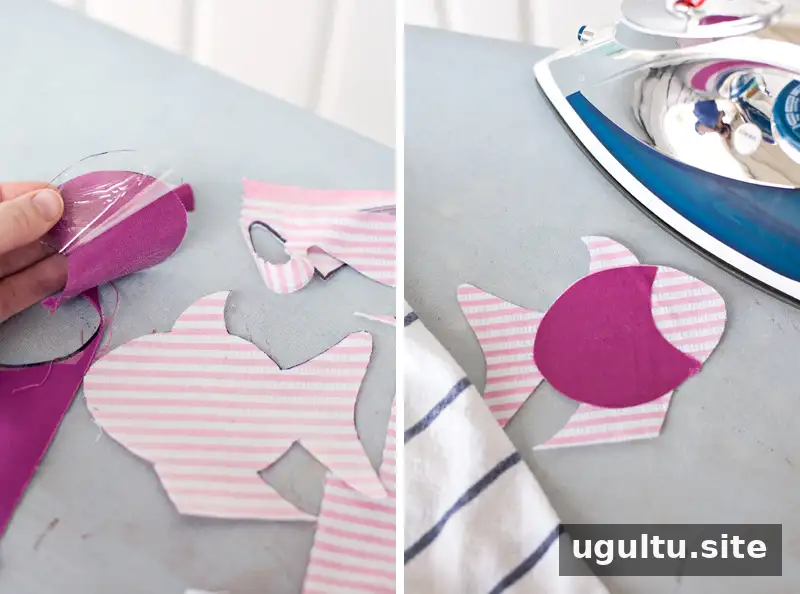
Step 3: Cut and attach the fish bellies. Carefully cut out the shapes, including the felt numbers. Peel the backing from each fish-belly piece and iron it onto a fish shape as shown. Leave the fish-shape backing in place for now, and do not remove the backing from the felt numbers. Follow the webbing instructions; the method described uses a damp cloth for about 12–15 seconds.
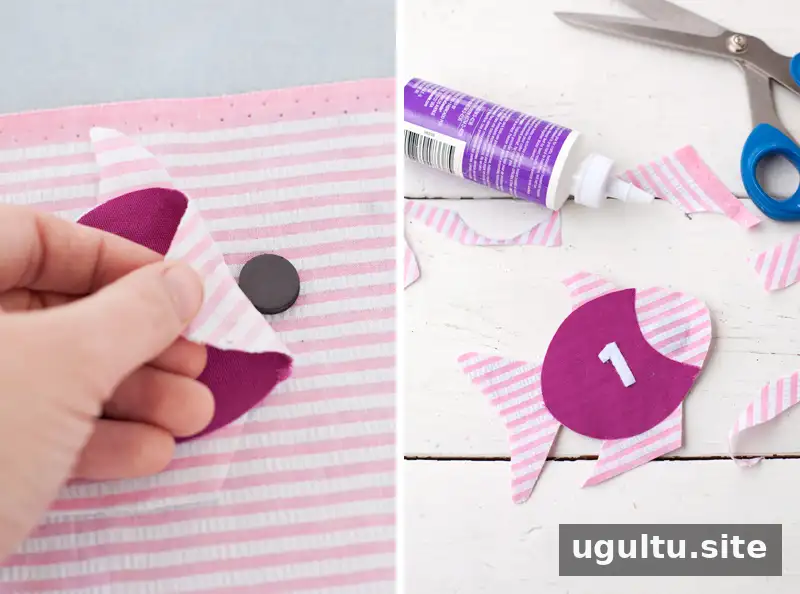
Step 4: Add a magnet to each fish. Remove the backing from a fish shape and press it onto the back of coordinating fabric, placing a magnet where the fish’s mouth will be. Check that the magnet is positioned securely within the fabric layers.
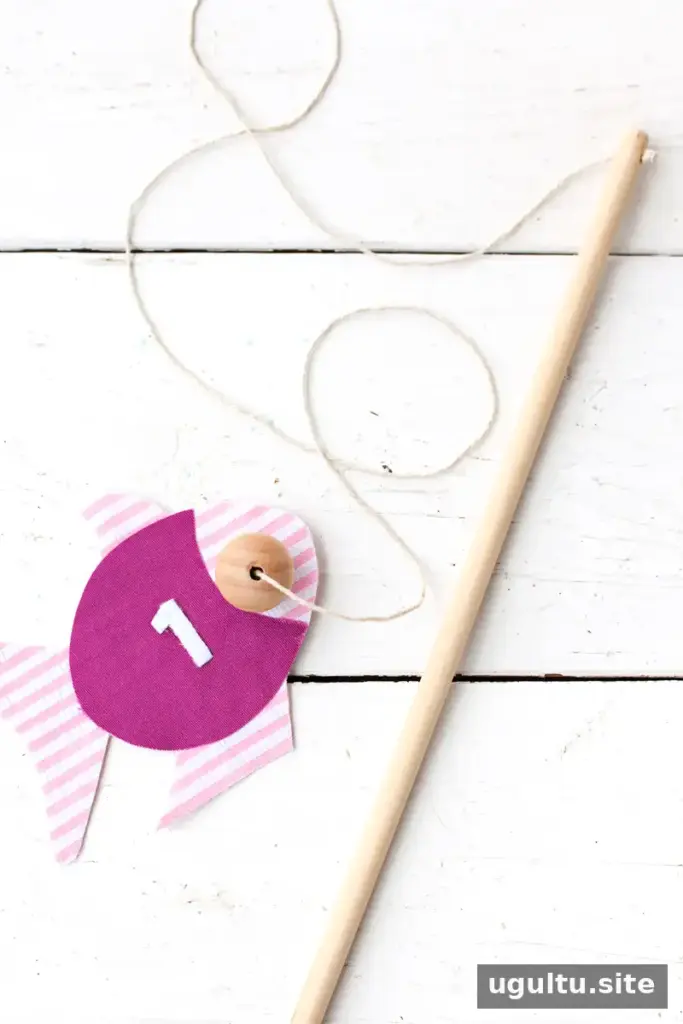
Step 5: Finish the fish. Cut around the fused fabric to create the fish shape. Glue a felt number onto each fish belly and allow the glue to dry before playing.
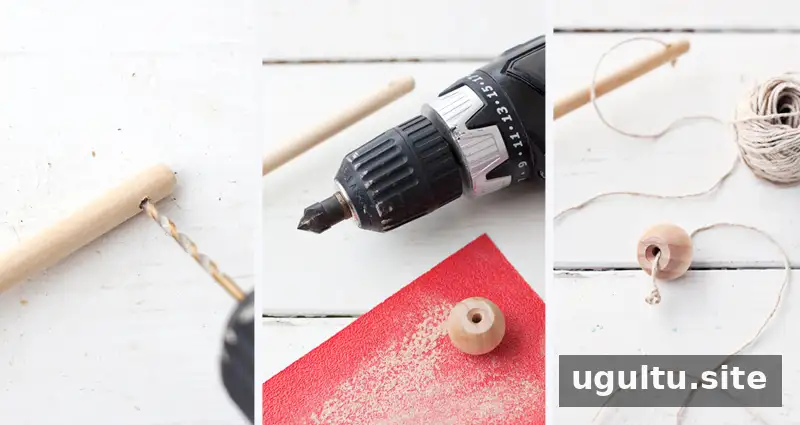
Step 6: Prepare the fishing rod. Drill a hole at one end of the dowel, large enough to thread the string through. If you do not have a drill, tie the string around the dowel and glue it in place instead.
Step 7: Prepare the bead. Sand one side of the wooden bead until it is flat enough to glue on a magnet. A countersink drill bit can create a recessed space for the string knot; a larger drill bit or sandpaper can also be used to make this space.
Step 8: Attach the line and magnet. Thread the string through the bead and tie a knot so the string cannot pull back through. Glue the heavy-duty magnet onto the flat, sanded side of the bead, covering the knot. Let the glue set fully before using the rod.
Ways to play and adapt the game
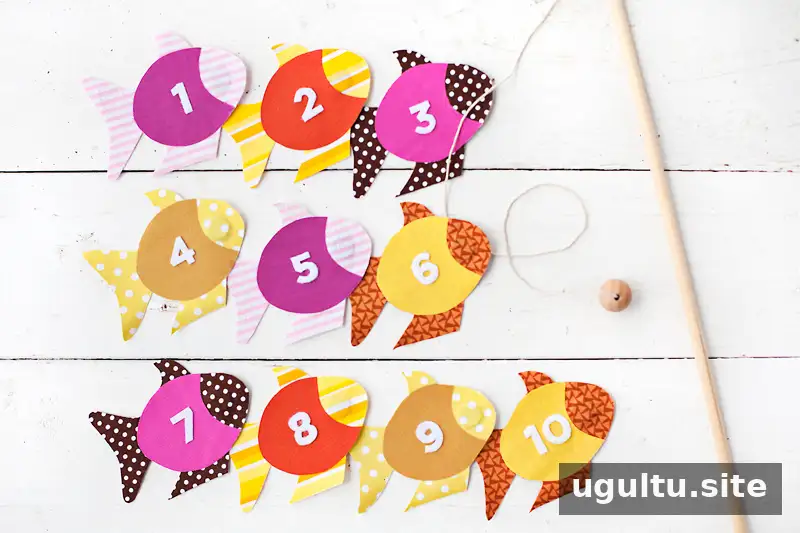
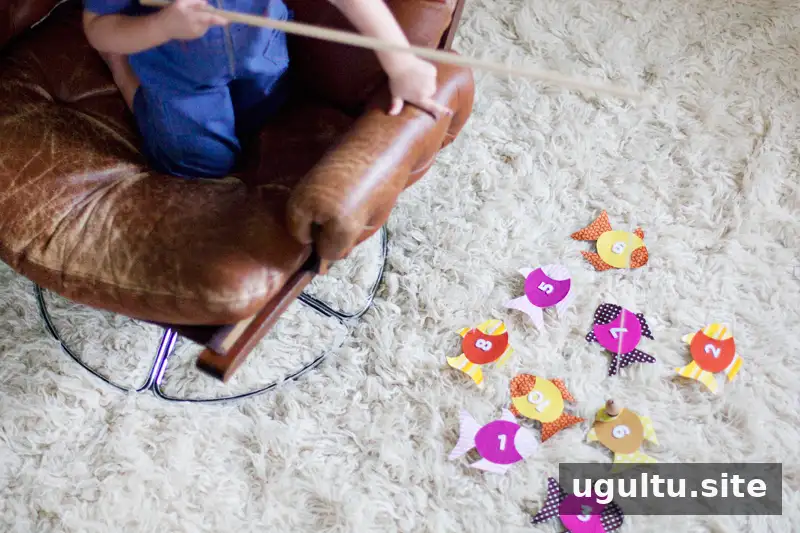
Make as many fish as you want, and customize the markings to match the child’s age or interests. Numbers can be replaced with names written in puffy paint, or the fish can be sorted by color. For a simple game, players can count how many fish they catch. For a more challenging round, add the numbers on the fish and compare the totals.
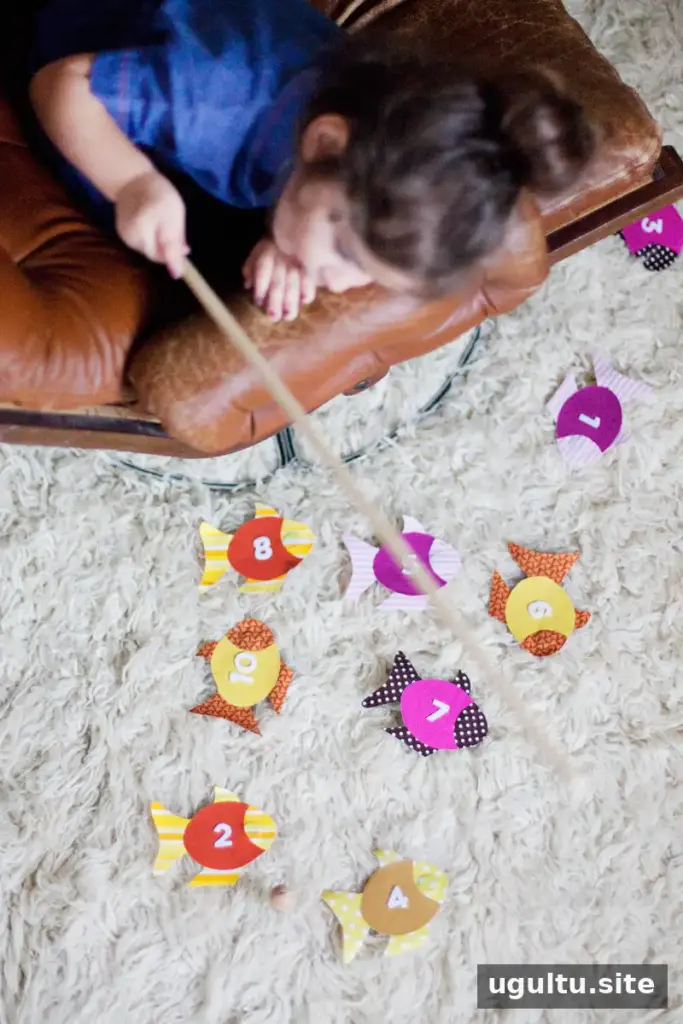
Two fishing rods can make the activity suitable for a friendly competition: players can see who catches the most fish or whose numbered catch adds up to the highest total. For younger children, start with fewer fish and focus on naming colors and counting aloud. Keep play supervised, and store the magnets securely when the game is not in use.
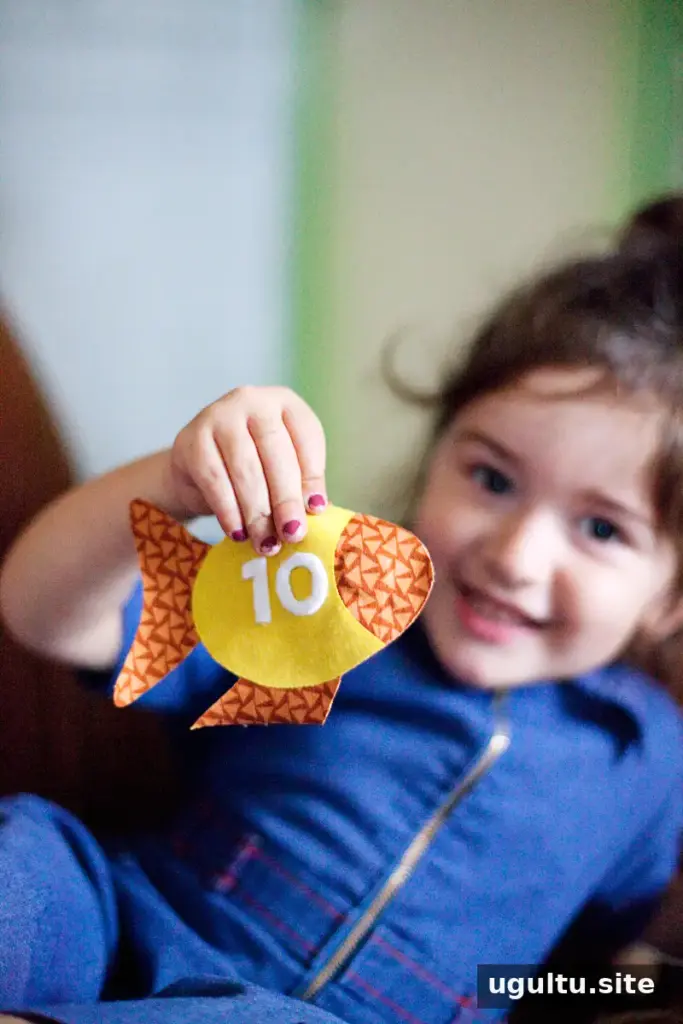
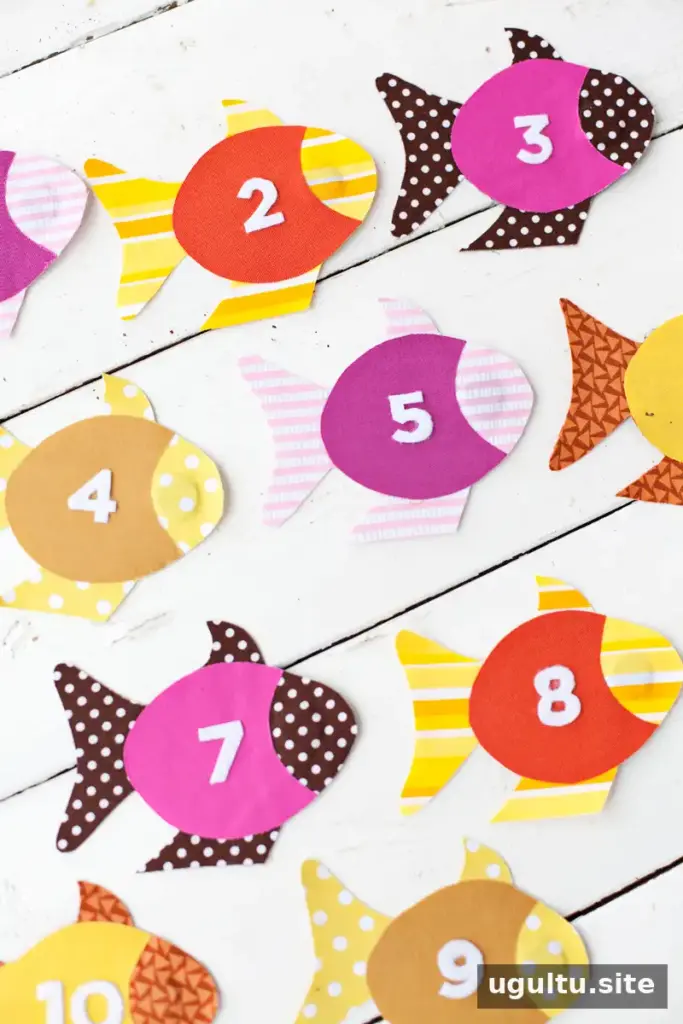
This project is a practical way to use leftover fabric and create a toy that can be customized with different colors and numbers. The DIY fabric fishing game can support counting and simple addition while giving children an imaginative activity to play. —Mandi


