
 admin
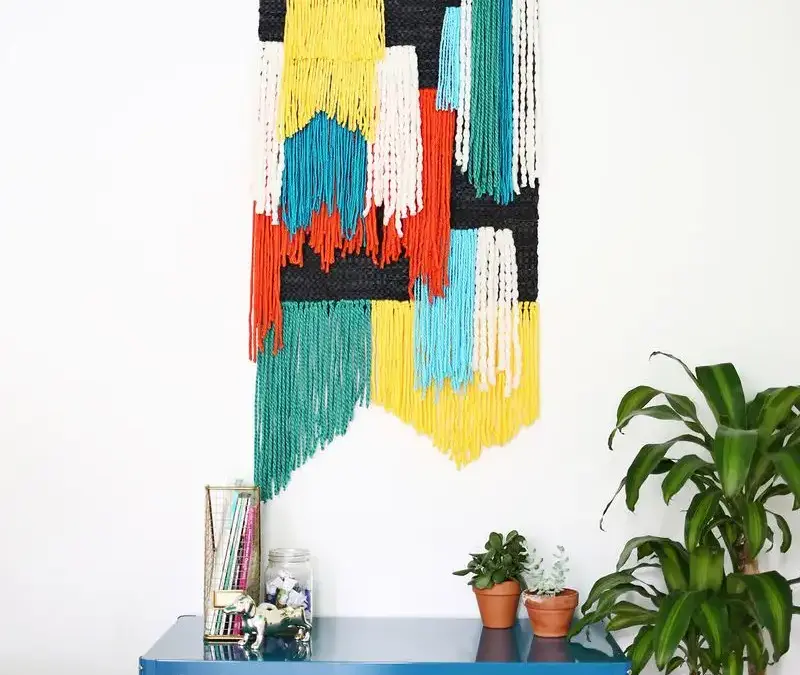
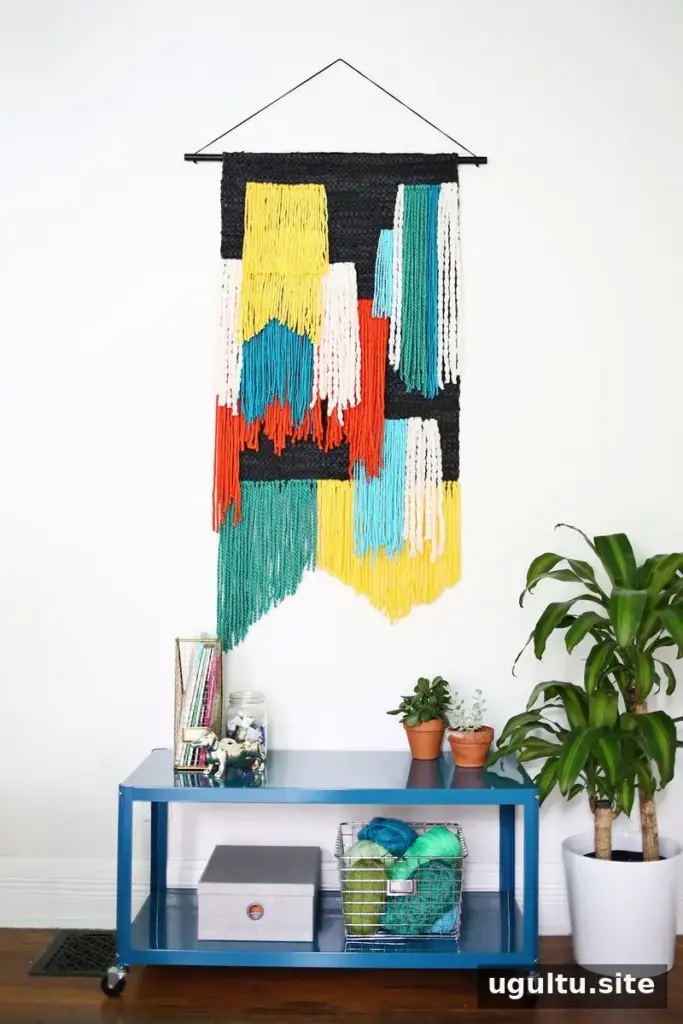
A large tapestry wall hanging can add color and texture to a room, but weaving one from scratch may take a lot of time. This project offers a simpler approach: use a loosely woven 2′ x 3′ rug as the base, then attach yarn in rows to create a layered textile design. The method is straightforward and leaves plenty of room to experiment with color, yarn thickness, and texture.
If you want to learn traditional weaving techniques, look for a beginner’s guide to weaving before you start. For this project, the rug’s open weave does most of the structural work.
Supplies for a Large Tapestry Wall Hanging
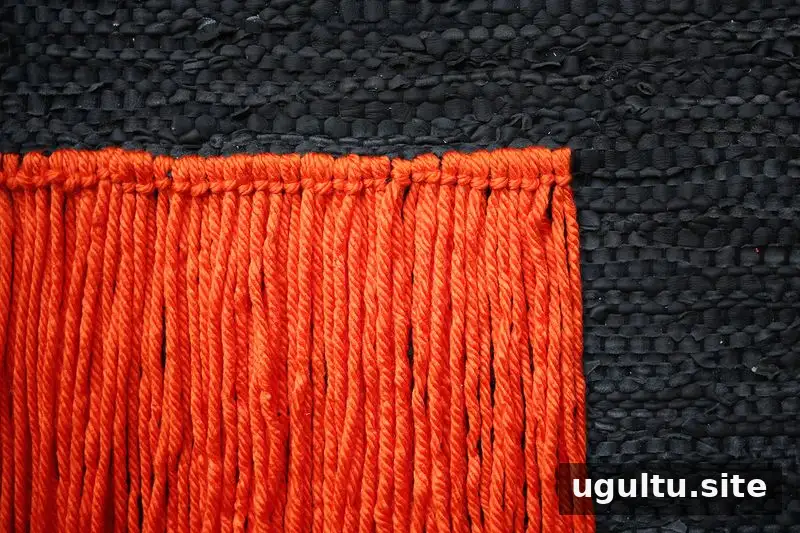
- One 2′ x 3′ loosely woven rug with openings large enough for a small crochet hook
- A small crochet hook
- Yarn in several widths, colors, and textures
- A dowel rod and string for hanging
Check that the rug’s weave is open enough for the hook to pass through before choosing it. Gathering yarn in different weights and textures helps create visible contrast between sections.
Attach Yarn to the Woven Base
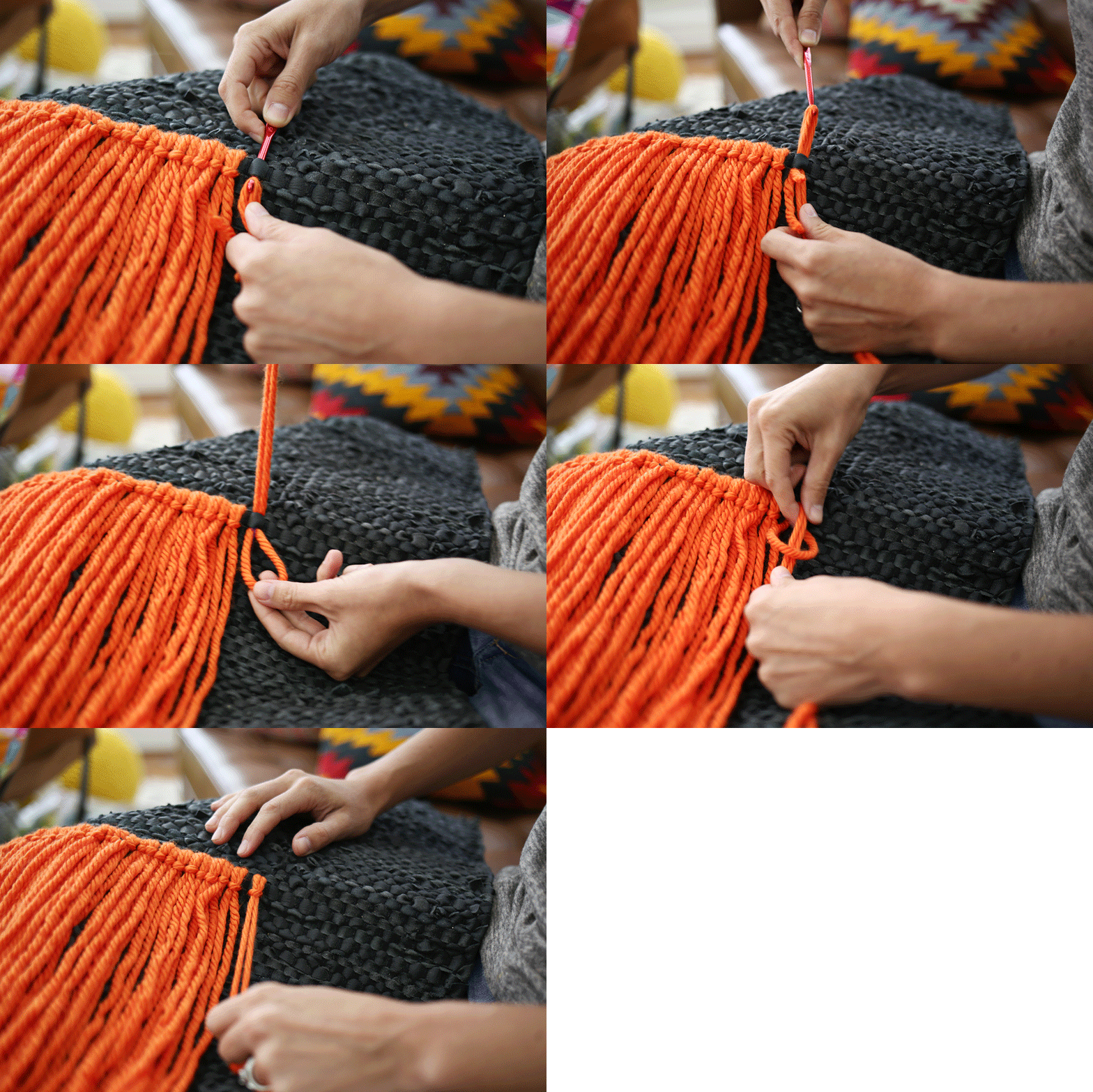
Cut the first yarn color into strands twice the desired hanging length. Folding each strand in half will bring it to the intended length when attached. Insert the crochet hook downward through a horizontal loop in the rug. Fold a strand in half, catch it with the hook near the folded end, and pull it partway through the rug.
Pass the two loose ends through the folded loop, then pull them snug against the rug. Repeat the knot along the row, placing strands close together. You can complete a full row or leave space between sections to create a more varied layout. Keep the knots secure, but avoid pulling so tightly that the rug’s weave distorts.
Plan the Colors and Textures
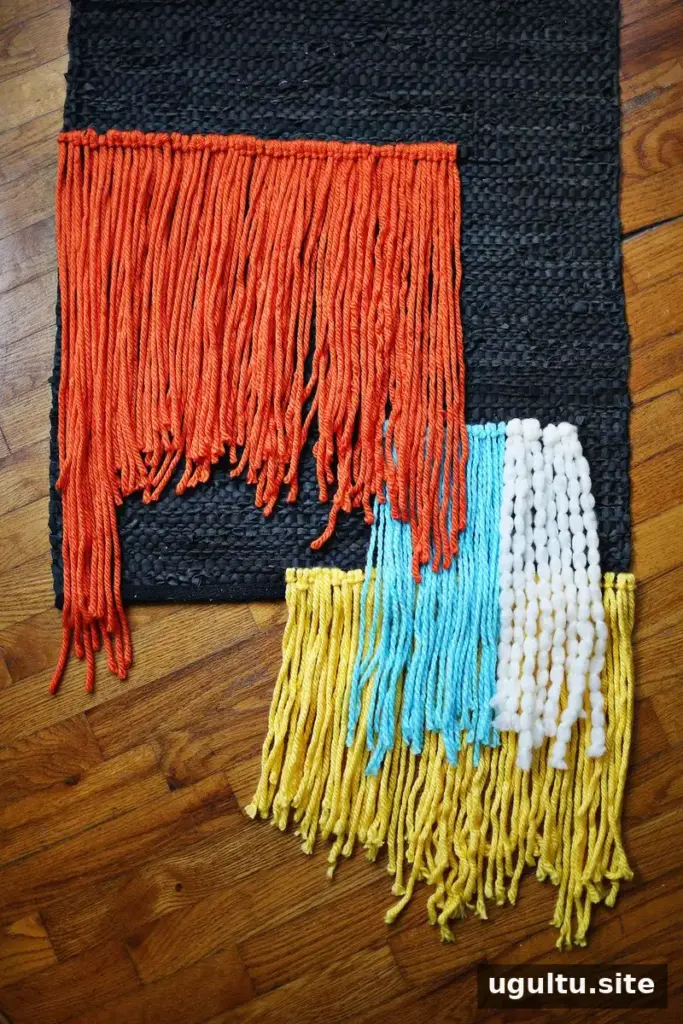
Build the design in blocks of different colors and textures. For example, layer a smaller or larger texture in a contrasting color over a broad section to help the colors stand apart. Warm and cool shades can also provide visual contrast.
Leave the yarn slightly longer than the final desired length while arranging the sections. That extra length gives you room to trim overlapping areas later. Also leave enough bare rug at the top to fold over and form a hanging pocket.
Make the Hanging Pocket and Rod
Fold about 3 inches of the rug’s top edge back to create a pocket for the rod. Depending on the rug’s thickness, secure the fold with a sewing machine or hand-sew it with a needle and thin yarn.
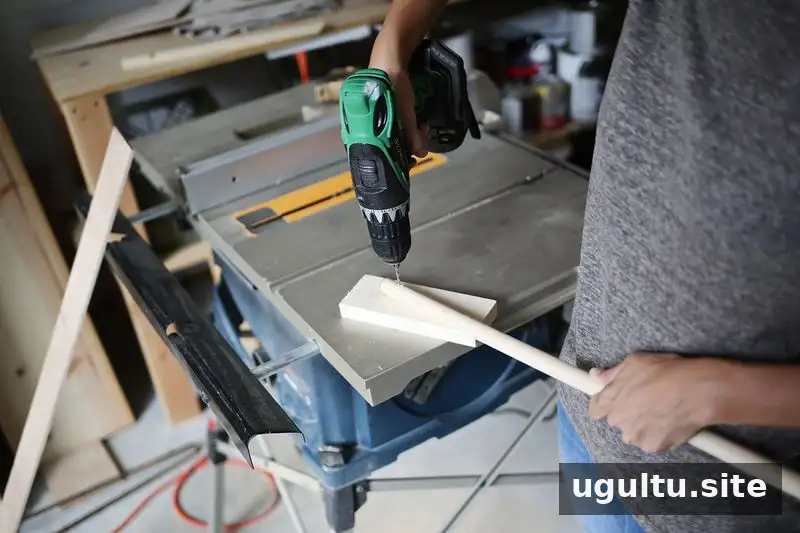
A 1-inch dowel can be cut so it extends about 3–4 inches beyond the rug on each side. Drill a hole near each end, about 1 inch in from the edge, wide enough for the hanging string. Use care when drilling and keep the rod steady.
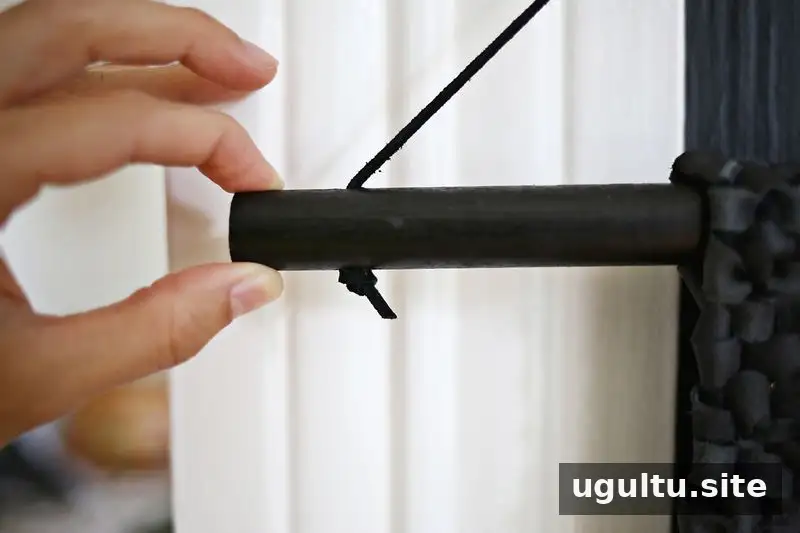
Choose string or yarn strong enough to support the finished tapestry. A leather string was used for this project. The dowel can be painted before assembly; thread the string through both holes and knot it securely. Before hanging, make sure the wall fixture is appropriate for the weight of the completed piece.
Trim and Finish the Tapestry
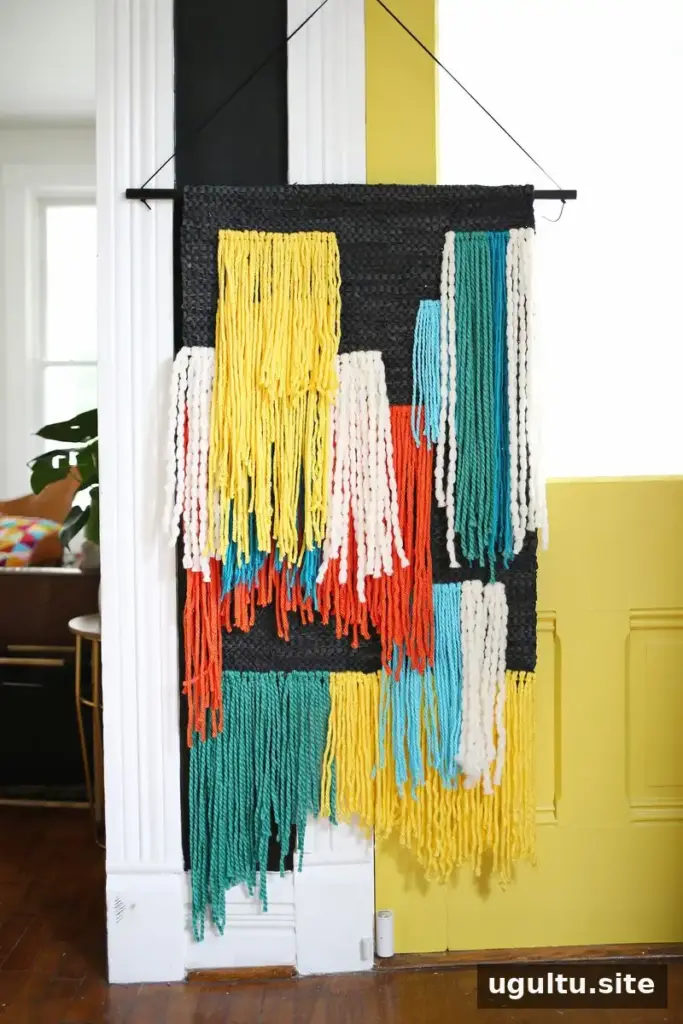
Once all the yarn is attached, the surface may look uneven. Trimming the ends helps define the color sections and gives the piece a more finished appearance.
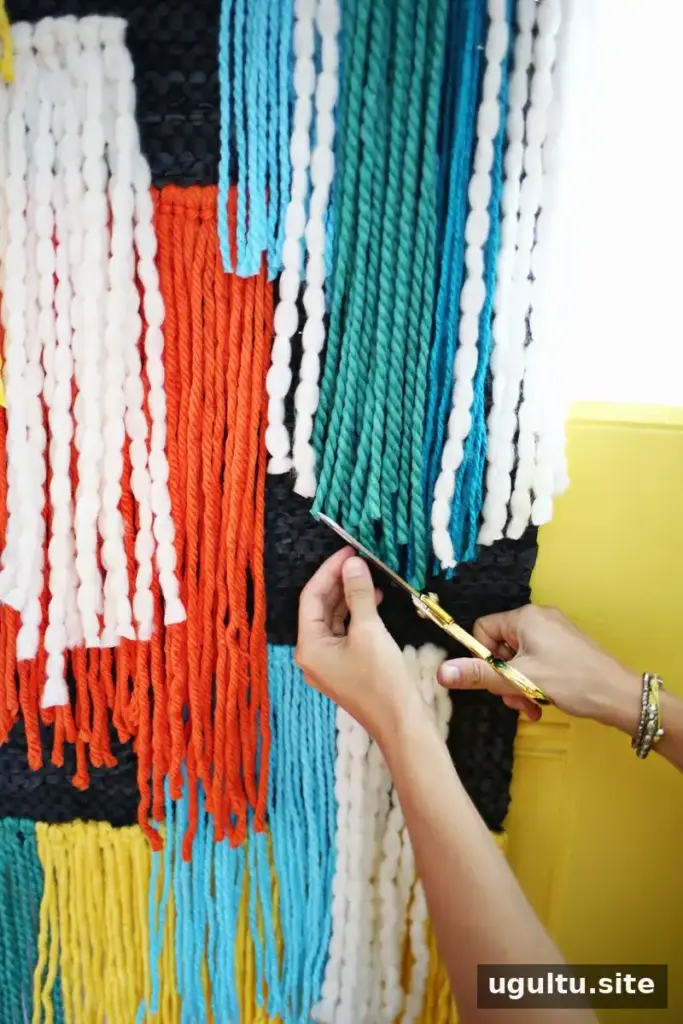
Decide which yarn groups should have straight edges, angled edges, or remain untrimmed. Mixing these finishes can add variety. Cut gradually, checking the overall shape as you go so you do not remove more length than intended.
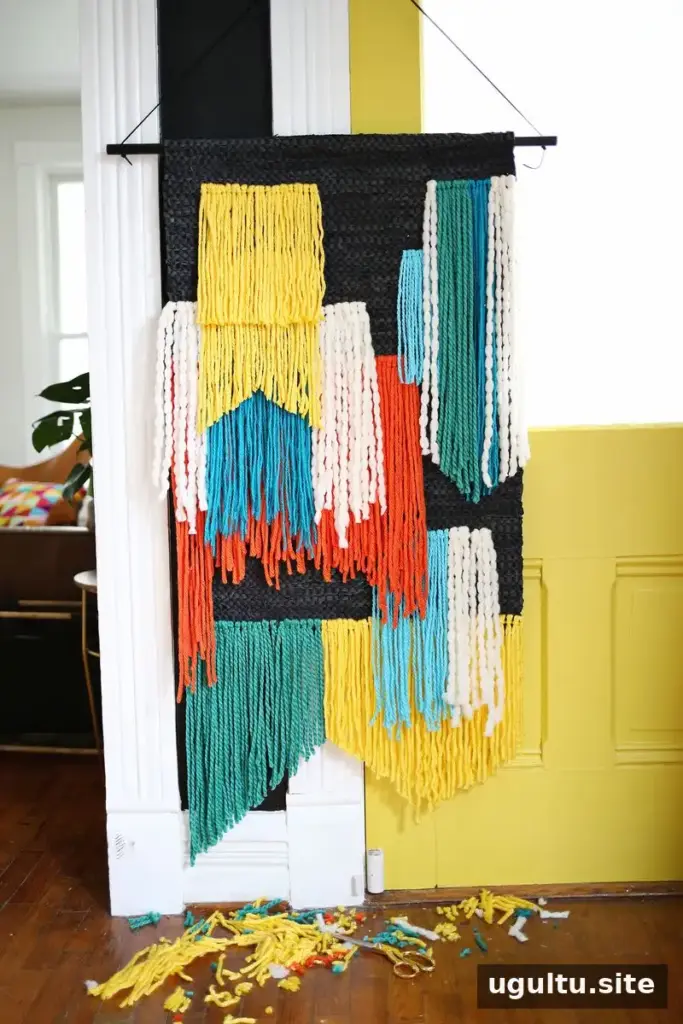
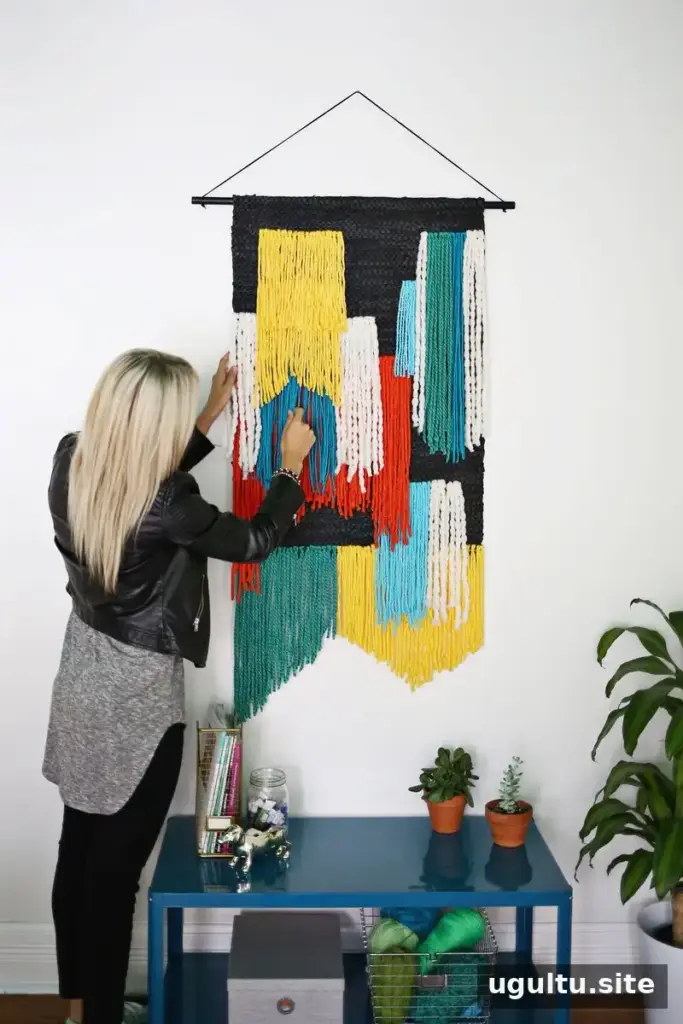
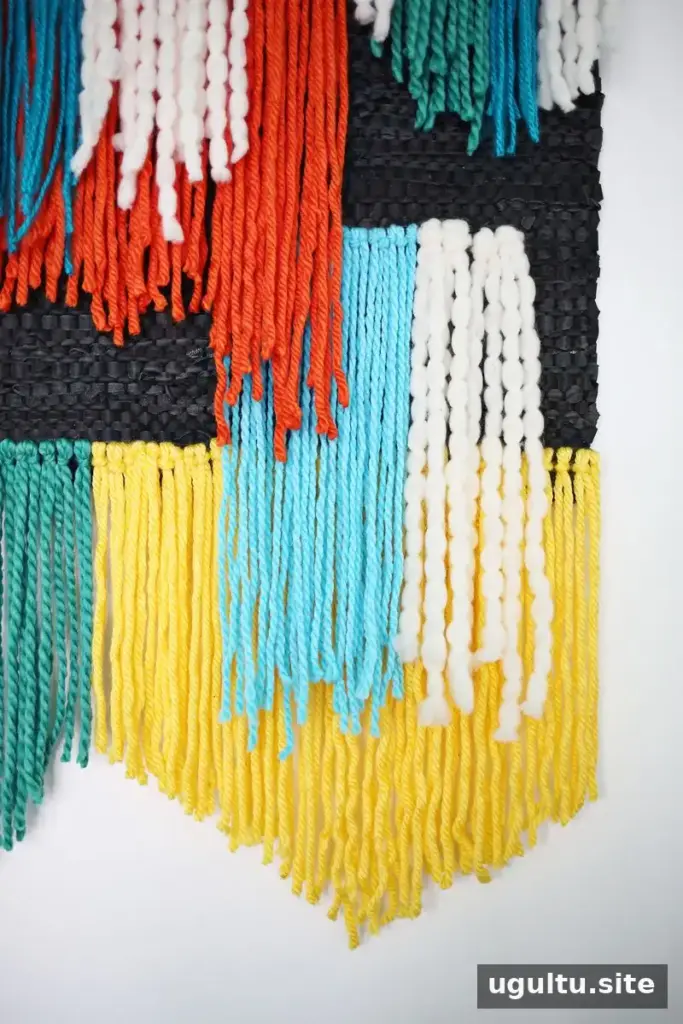
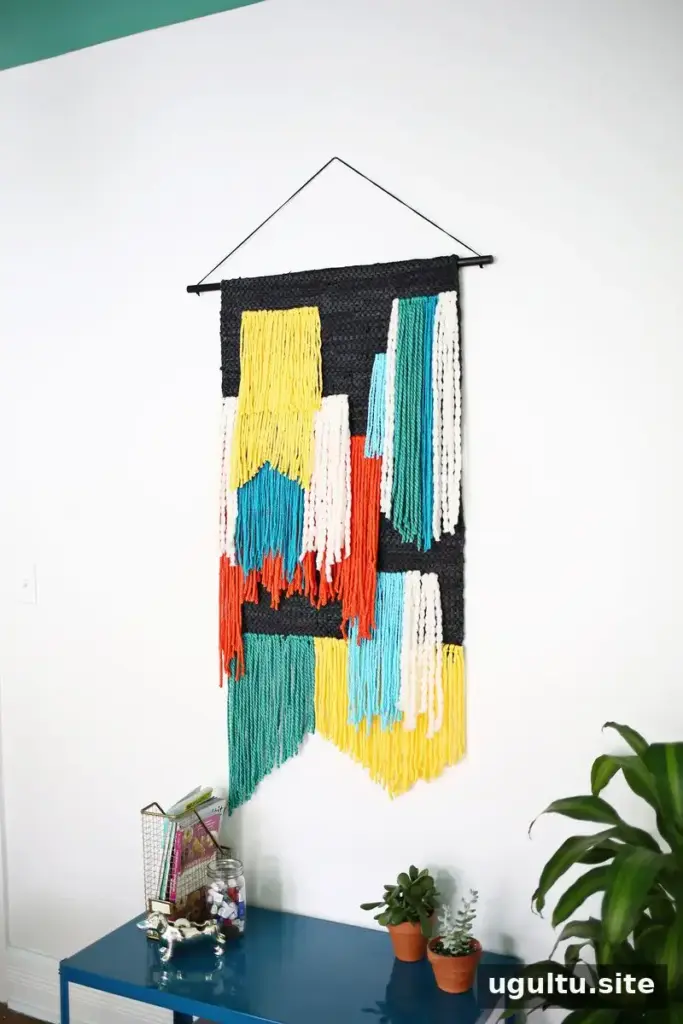
The project took about 3 hours from start to finish. Since attaching the yarn uses the same simple knot repeatedly, the work can be done in stages. A large tapestry wall hanging made this way combines a ready-made woven base with custom color and texture choices. Project by Laura.


