
 admin
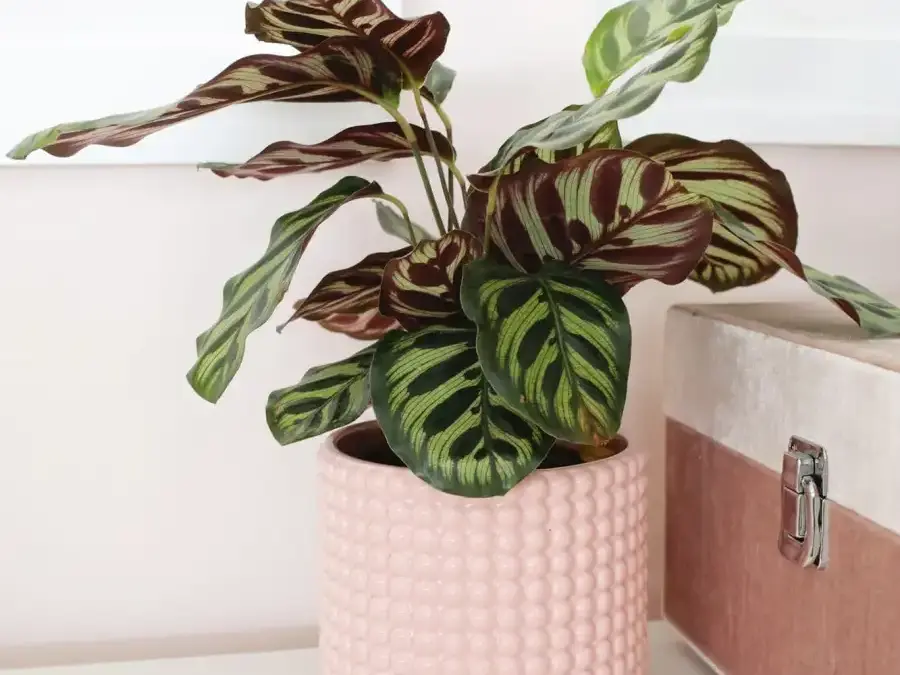
Calathea plant care is all about recreating the warm, humid conditions these tropical plants prefer. Their patterned leaves make them striking houseplants, and their daily leaf movements—known as nyctinasty—add to their appeal. Calatheas are generally considered nontoxic to pets and children, but they are sensitive to cold, direct sunlight, and inconsistent moisture.
Calatheas are native to tropical areas of the Americas. They are sometimes called prayer plants because their leaves move during the day and night. In cooler climates, grow them indoors and keep them away from cold drafts.
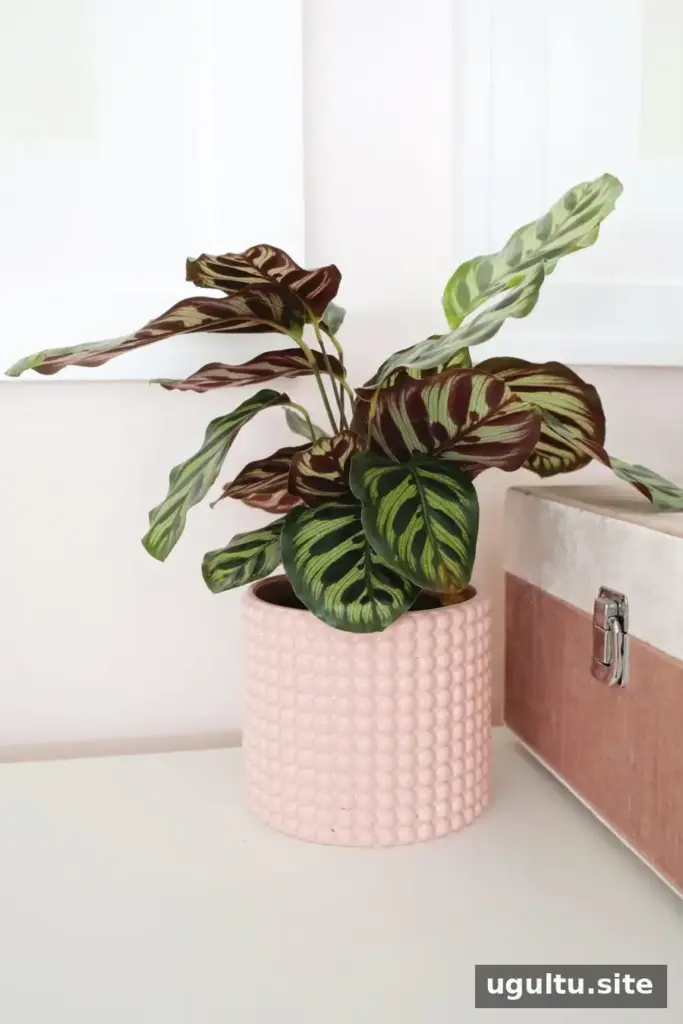
Popular types of Calathea plants
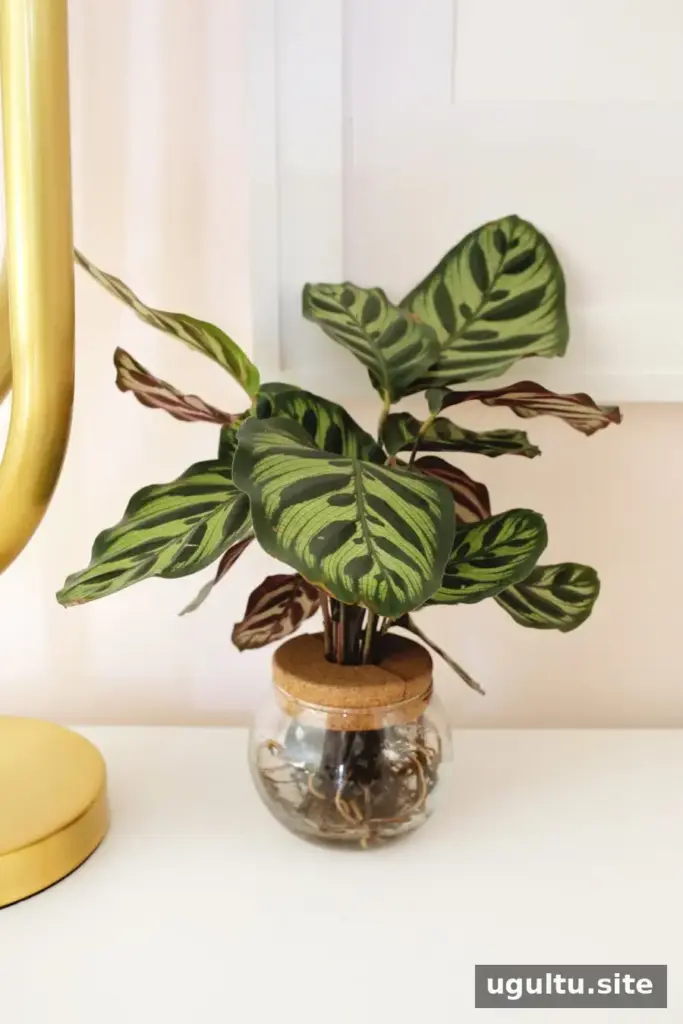
- Calathea Makoyana: Often called the peacock plant, it has dark green leaves with cream, purple, and pink tones, plus red stems.
- Calathea Louisae: Its dark green leaves have wavy edges and lighter green markings along the midvein.
- Calathea Lancifolia: Also known as the rattlesnake plant, it has slender green leaves with dark green blotches and purple undersides.
- Calathea White Fusion: Its variegated leaves combine shades of green, white, and lilac.
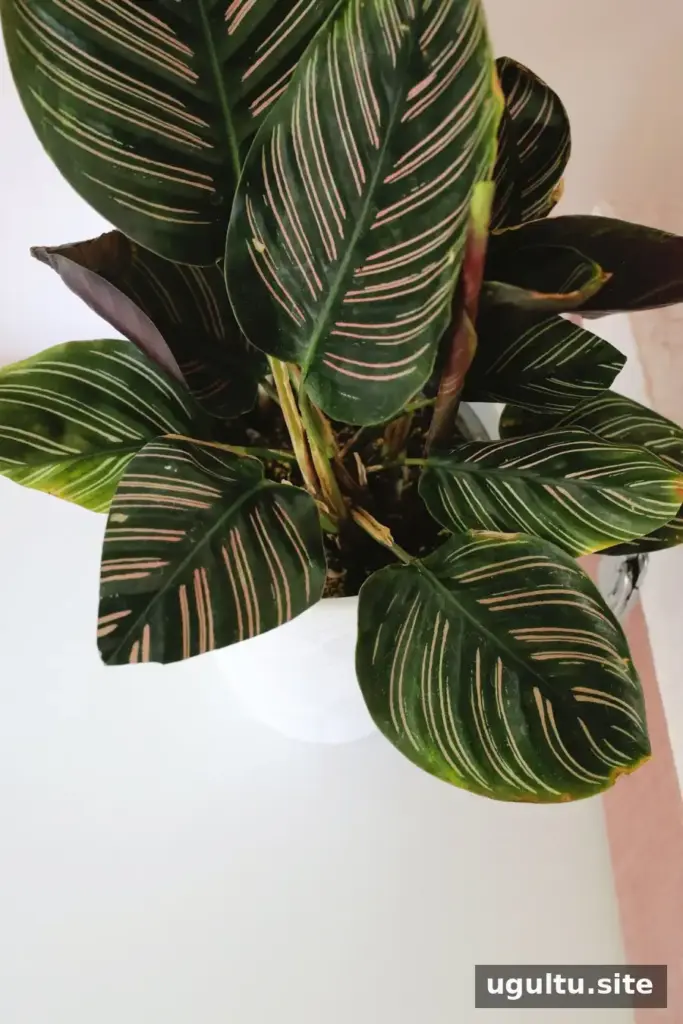
- Pin Stripe Calathea Ornata: This variety has glossy, dark green leaves with fine pink stripes.
Choose a variety based on the leaf pattern you like, then check that you can provide a warm spot with indirect light and steady humidity.
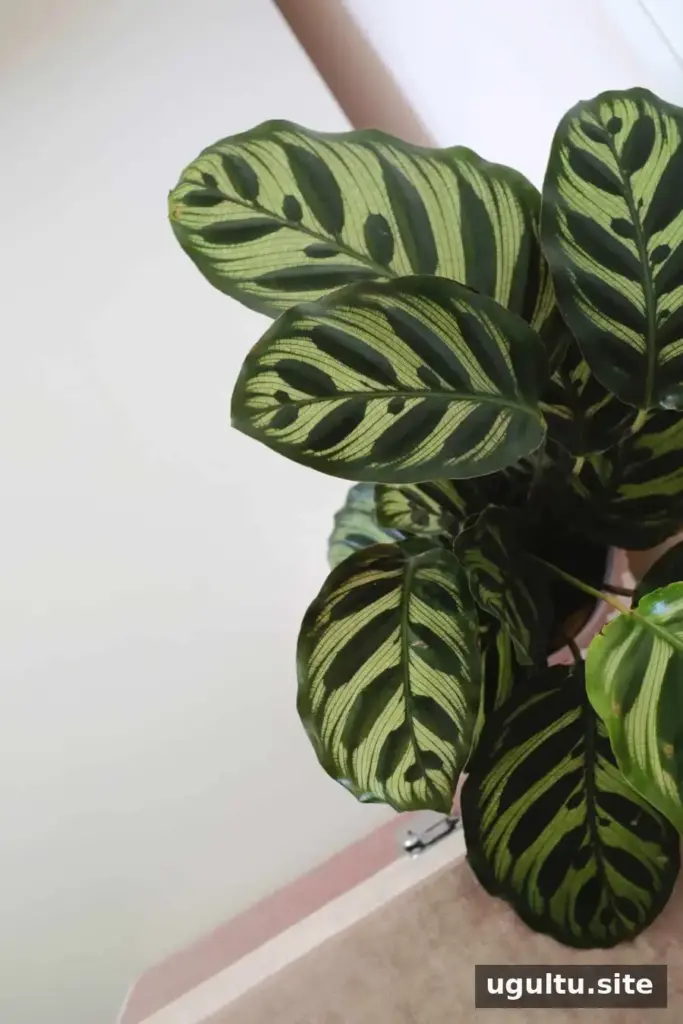
Calathea plant care: watering needs
Calatheas prefer consistently moist soil, but their roots should not sit in waterlogged conditions. Check the top 1–2 inches of soil with a finger and water when that layer feels dry. A pot with drainage holes helps excess water escape; empty any water collected in the saucer.
These plants can be sensitive to minerals and chemicals in tap water. Filtered, distilled, or rainwater may be a better choice. Leaving tap water out overnight can help some chlorine dissipate, but it does not remove fluoride or all dissolved minerals.
Humidity and temperature for Calathea plants
A humidity level of at least 50% is a useful target. A humidifier is a practical way to raise humidity. Alternatively, set the pot on a pebble tray filled with water, making sure the pot itself sits above the waterline. A bathroom can also work if it receives suitable indirect light.
Calatheas do best at about 70–85°F and may struggle when temperatures fall below 60°F. Keep them away from cold windows and drafts, and avoid sudden temperature changes.
How much sunlight do Calathea plants need?
Provide medium to bright indirect light. Calatheas can tolerate lower-light spots, although their leaf colors and patterns may appear less vivid. As a general guide, varieties with darker leaves often manage with less light than lighter or more colorful types.
Direct sun can scorch leaves and fade their markings. If you are unsure about a location, start farther from the window and watch the plant for changes.
What is the best soil for Calathea plants?
Use a well-draining potting mix that retains some moisture without becoming soggy. Drainage holes are important, since dense, waterlogged soil can contribute to root problems. Check the pot after watering to make sure excess water can run out freely.
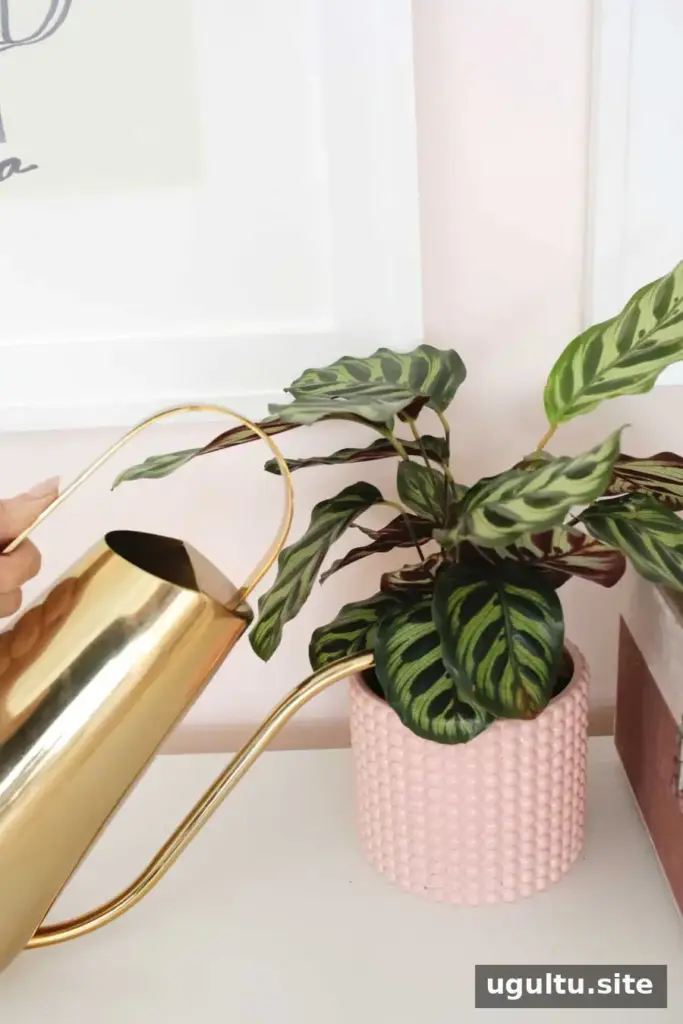
Should you fertilize a Calathea?
During the warmer growing season, feed the plant once a month with liquid fertilizer diluted to half strength. Growth generally slows in winter, so pause fertilizing during that period. Follow the fertilizer label and avoid applying it to dry soil.
Pruning Calathea plants
Regular pruning is usually unnecessary. Use clean, sharp scissors or pruning shears to remove dead or damaged leaves and stems. If a leaf is mostly brown and crispy, trim it off at the stem; brown tissue will not turn green again.
Diagnosing common Calathea problems
- Brown leaf tips: Tap-water chemicals or mineral buildup may be a cause. Try filtered, distilled, or rainwater and check that humidity is adequate.
- Yellowing leaves: This can indicate overwatering. Let the top 1–2 inches of soil dry before watering again and make sure the pot drains well.
- Curled leaves or drooping stems: The plant may need water. Check the soil first, then water if it feels dry.
- Pests: Mealybugs, fungus gnats, and spider mites can affect houseplants. Inspect the leaves and stems, isolate an infested plant, and use an appropriate treatment according to its label.
- Leaf spots: Mineral buildup from water may contribute. Switch to lower-mineral water and avoid leaving foliage wet for long periods.
When symptoms appear, check the soil and growing conditions before changing several things at once. Making one adjustment at a time can help identify the cause.
How to propagate Calathea plants
Calatheas are propagated by dividing a mature plant. Remove it from its pot and gently separate the root mass into sections, making sure each division has roots and foliage. Plant each section in its own pot with suitable soil, water it, and keep it warm with indirect light while it settles in.
Frequently asked questions
Are Calathea plants toxic to pets or children?
Calatheas are generally considered nontoxic to pets and children. Even so, keep houseplants out of reach when possible, since chewing on plant material can still cause irritation or stomach upset.
Should I cut brown parts off Calathea leaves?
Brown areas will not recover their green color. You can trim small crispy edges with clean scissors, or remove a badly damaged leaf at its stem.
Calathea plant care: key points to remember
For successful Calathea plant care, keep the soil lightly moist but well drained, provide indirect light, and maintain warm temperatures and humidity. Check the plant regularly for changes in its leaves, and adjust watering or placement gradually rather than making several changes at once.


