
 admin
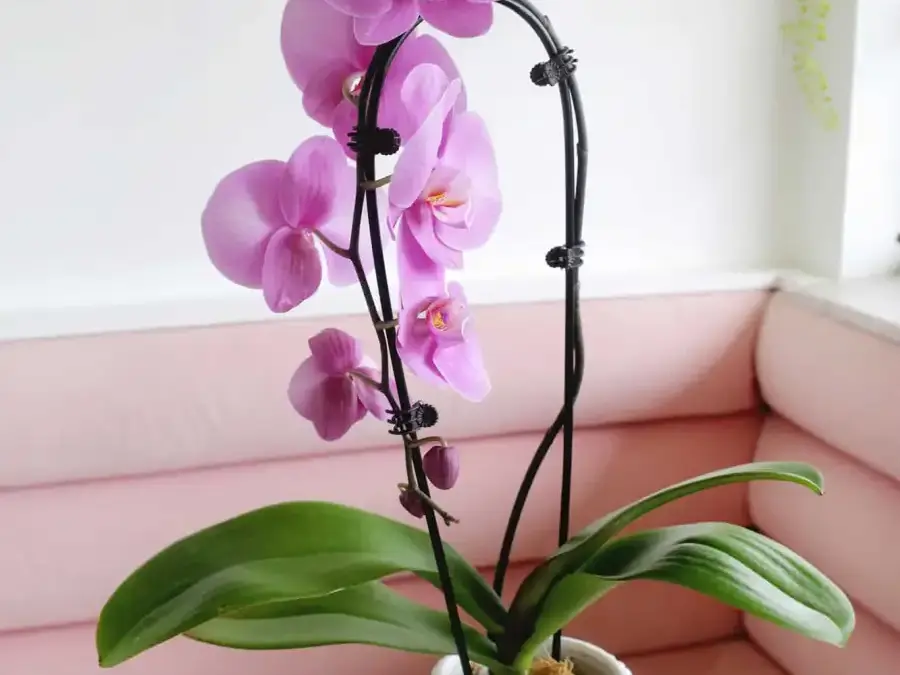
Good orchid care starts with choosing a variety that suits the light and temperature in your home. Orchids in the Orchidaceae family are popular indoor plants, valued for their striking flowers and green foliage. With suitable conditions and consistent attention, a plant can live for up to 15 years. While their needs differ by variety, careful watering, suitable light, and a well-draining growing medium help support healthy growth and flowering.
Before bringing an orchid home, check the care needs of its particular variety. Some prefer brighter light, while others do better in lower-light spots. Matching the plant to your home can make ongoing care simpler.
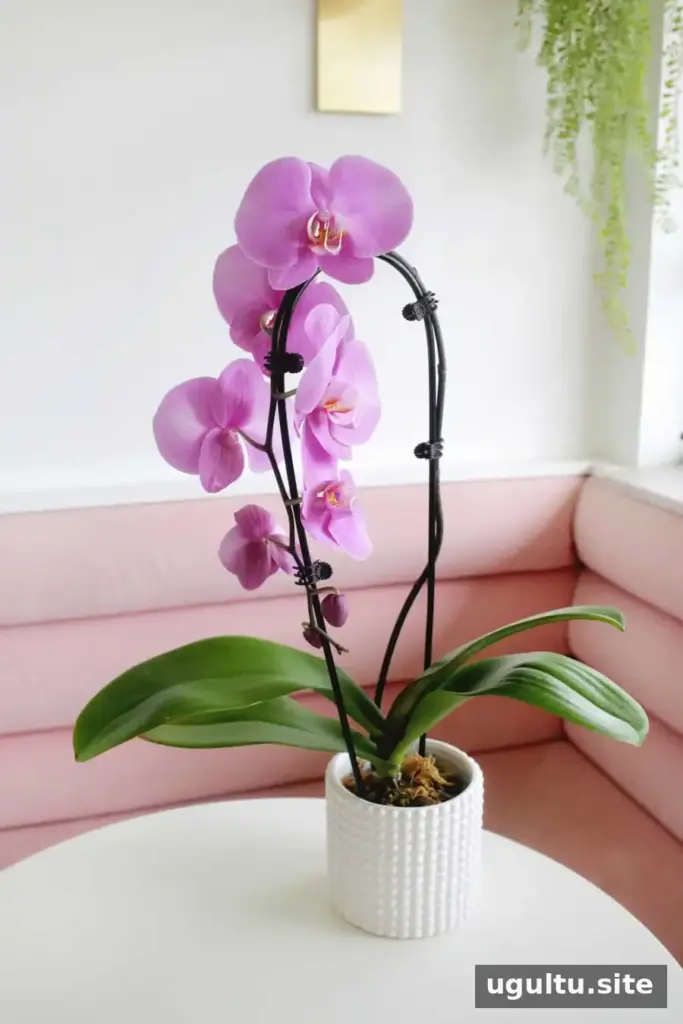
Orchid Care: How Often Should You Water?
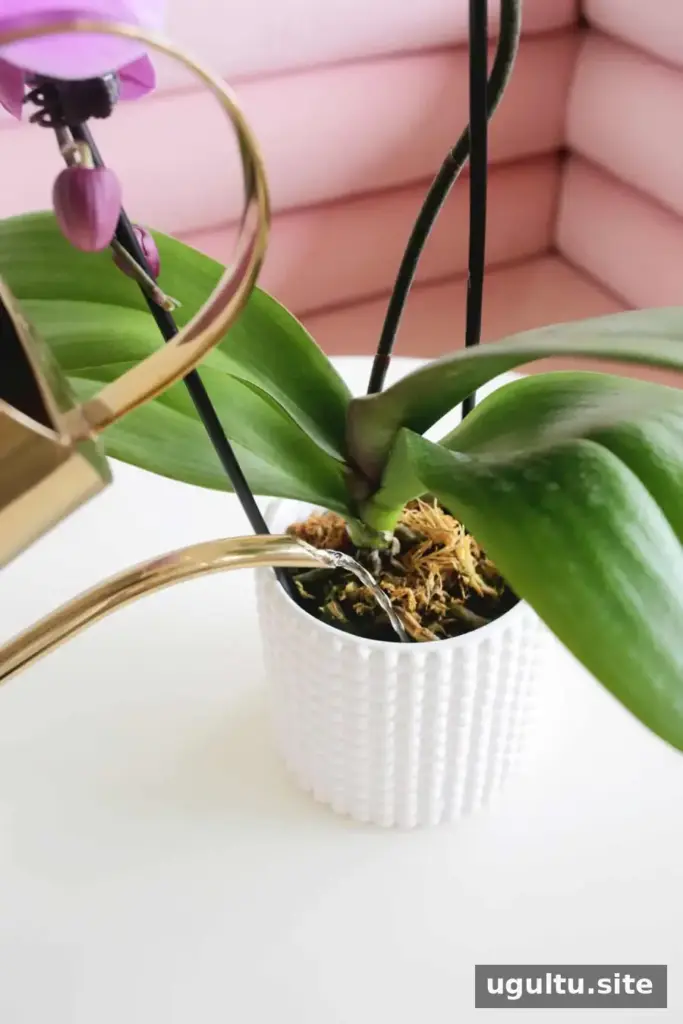
Overwatering is a common problem because orchid roots do not do well when left in soggy growing medium. Water thoroughly, then allow the medium to dry out most of the way before watering again. Check moisture near the surface; when the top few inches feel dry, it is generally time to water.
Water earlier in the day so the plant has time to dry before night. After watering, check the crown and the joints between leaves for trapped water. Tip the pot over a sink to drain it, and empty any water that collects in the saucer. A pot with drainage holes is essential for letting excess water escape.
Keeping roots too wet can lead to root rot and may kill the plant. On the other hand, prolonged underwatering may cause accordion growth, in which leaves develop pleated folds.
How Much Light Do Orchids Need?
Many orchids grow well in bright, indirect light. A spot near a sunny window can work, but avoid direct sun that may reach the leaves. South- or east-facing windows are suggested options; observe your plant and adjust its position if the light seems unsuitable.
Light preferences vary, and insufficient light can prevent flowering. Check the needs of the variety you have rather than relying on a general rule. Common examples include:
- Higher light: Vanda, Cymbidium, Cattleya, Epidendrum, Dendrobium, and Brassavola.
- Medium light: Cattleya, Dendrobium, Phalaenopsis, Paphiopedilum, and Oncidium.
- Lower light: Phalaenopsis, Miltonia, Paphiopedilum, Oncidium, Dendrobium, Masdevallia, Bulbophyllum, and Encyclia.
Should You Fertilize an Orchid?
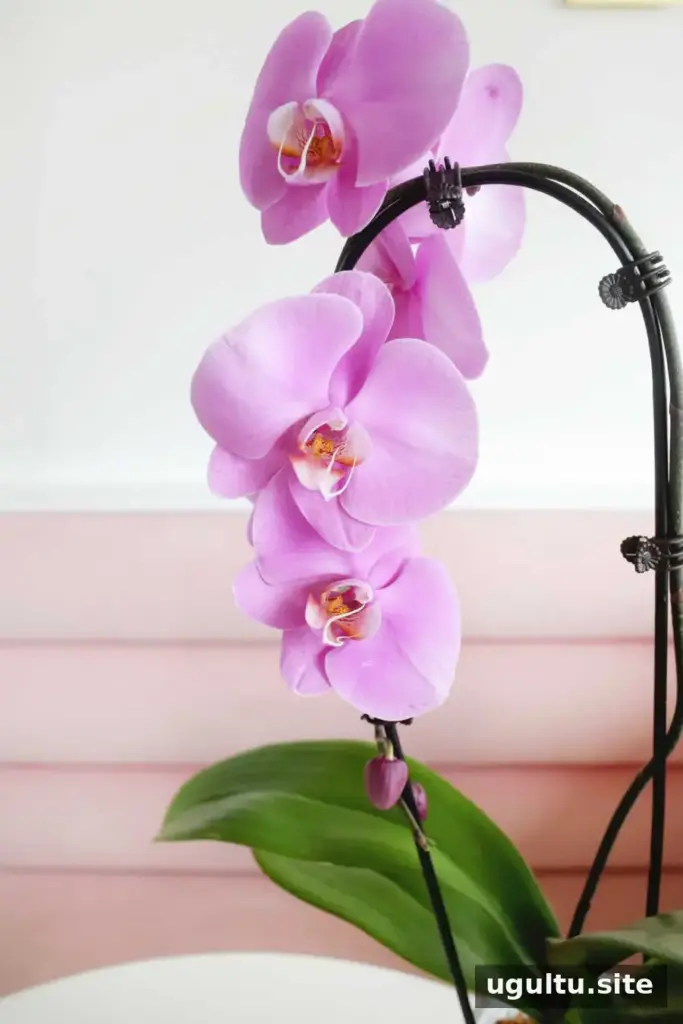
During the growing season in spring and summer, use an all-purpose fertilizer diluted to half strength or follow the label directions for an orchid fertilizer. Weekly feeding is one option during this period. Growth often slows in winter, so feeding can be paused. Follow the fertilizer instructions and avoid applying a stronger mixture than recommended.
Temperature and Humidity for Orchids
Orchid preferences depend on the variety, but the general range given for orchids is 50° to 90°. Many prefer humidity around 40% to 70%. Keep indoor plants away from heating or cooling vents and cold drafts, which can cause sudden temperature changes.
Orchids can be kept outdoors in USDA zones 5–11, but bring them inside when nighttime lows fall below 55°. If the air indoors is dry, a nearby humidifier can help. Another option is a tray of pebbles and water: set the pot on top of the pebbles, making sure it sits above the water rather than in it.
- Cool: 60–70° during the day and 50–55° at night.
- Intermediate: 70–80° during the day and 55–65° at night.
- Warm: 80–90° during the day and 65–70° at night.
Practical tip: A bathroom may suit an orchid if it offers enough light and has warm, humid conditions. Check the plant regularly, since humidity alone cannot make up for unsuitable light.
Pruning Orchids
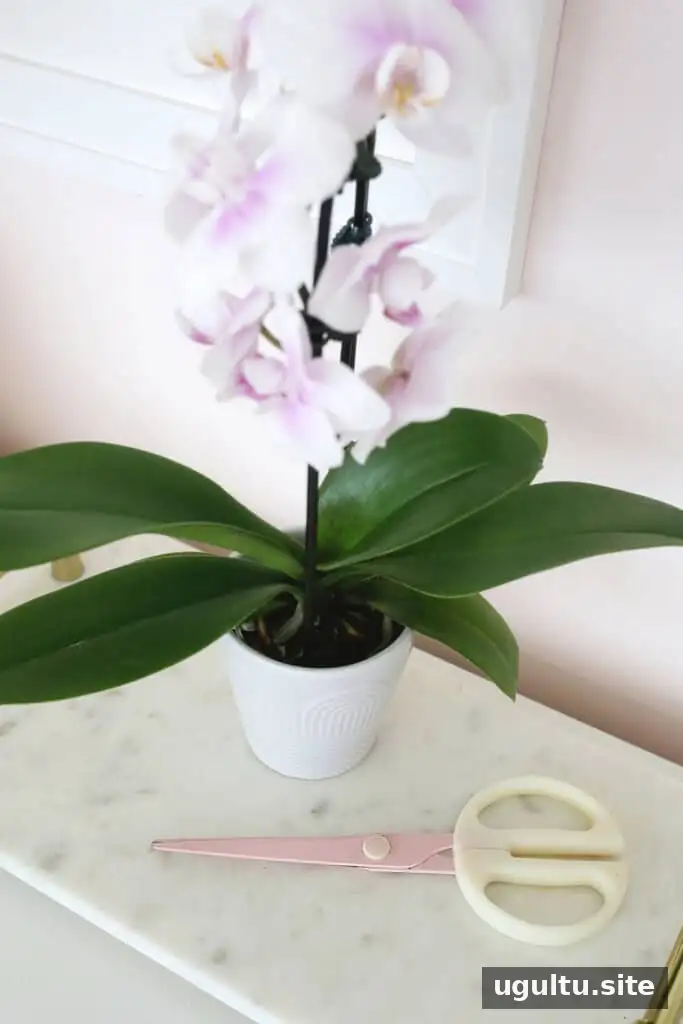
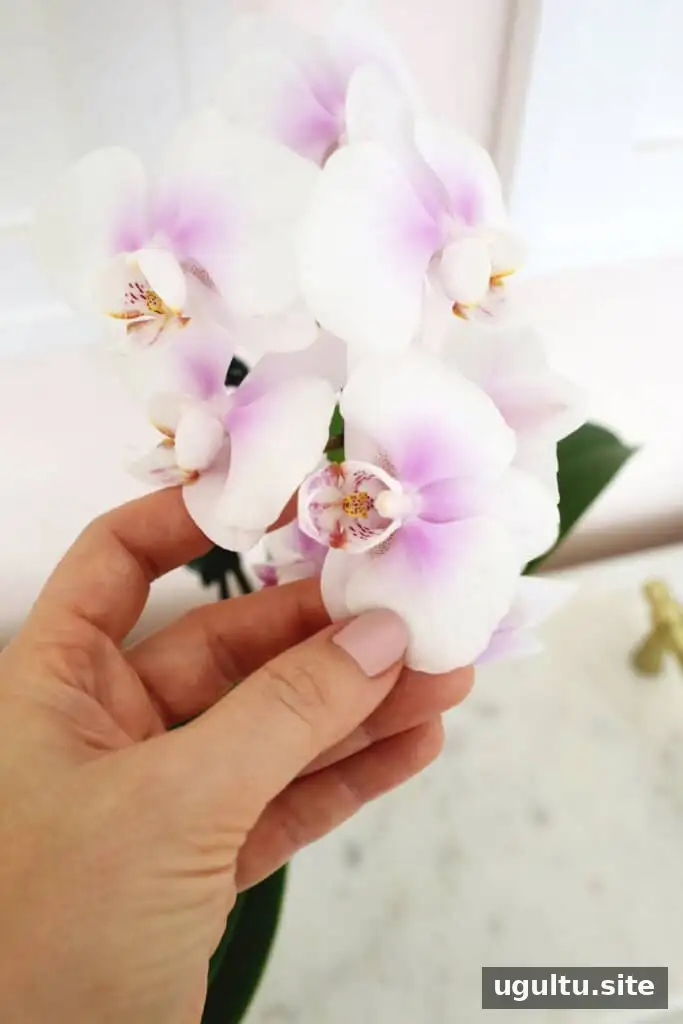
Pruning needs can vary among orchid varieties. In general, remove spent flowers after the blooming cycle and cut away withered stems when needed. Use clean, sterilized scissors or pruning shears to reduce the chance of spreading disease. If you are unsure whether a stem is finished, check the care guidance for your variety before cutting it.
Repotting Orchid Plants
Wait until flowering has finished before repotting. Orchids are epiphytes, meaning they naturally grow on the surface of other plants, and their roots need airflow rather than a dense, waterlogged potting mix. Choose a lightweight, fast-draining orchid medium, which may contain bark, sphagnum moss, charcoal, perlite, or peat. Use a pot with drainage holes and avoid ordinary potting soil unless it is specifically suitable for the orchid.
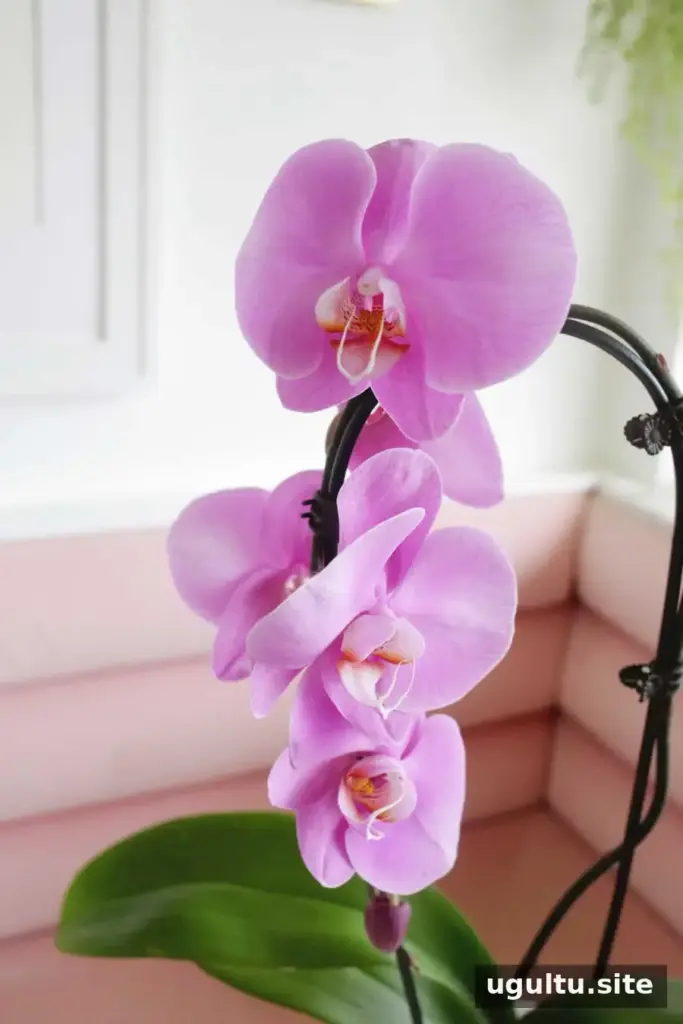
How to Repot an Orchid
- Soak the roots in water for 10 minutes to make them more flexible.
- Carefully remove the plant from its old pot. With a sterile cutting tool, trim away dead or wilted leaves and flowers.
- Place the orchid in a slightly larger pot and fill the open spaces with fresh orchid growing medium.
- Water as needed and provide suitable light while the roots become established. If the plant is drooping, use a stake to support it as it recovers.
Choosing an Orchid Pot
- Clear plastic pots: These make it easier to inspect the roots and see whether the medium is wet or drying. Orchid roots can also photosynthesize when exposed to light.
- Terracotta pots: Unglazed clay is breathable, so the growing medium tends to dry more quickly than it does in glazed ceramic.
- Orchid pots: Pots with holes or slits in the sides promote airflow and help the medium dry out.
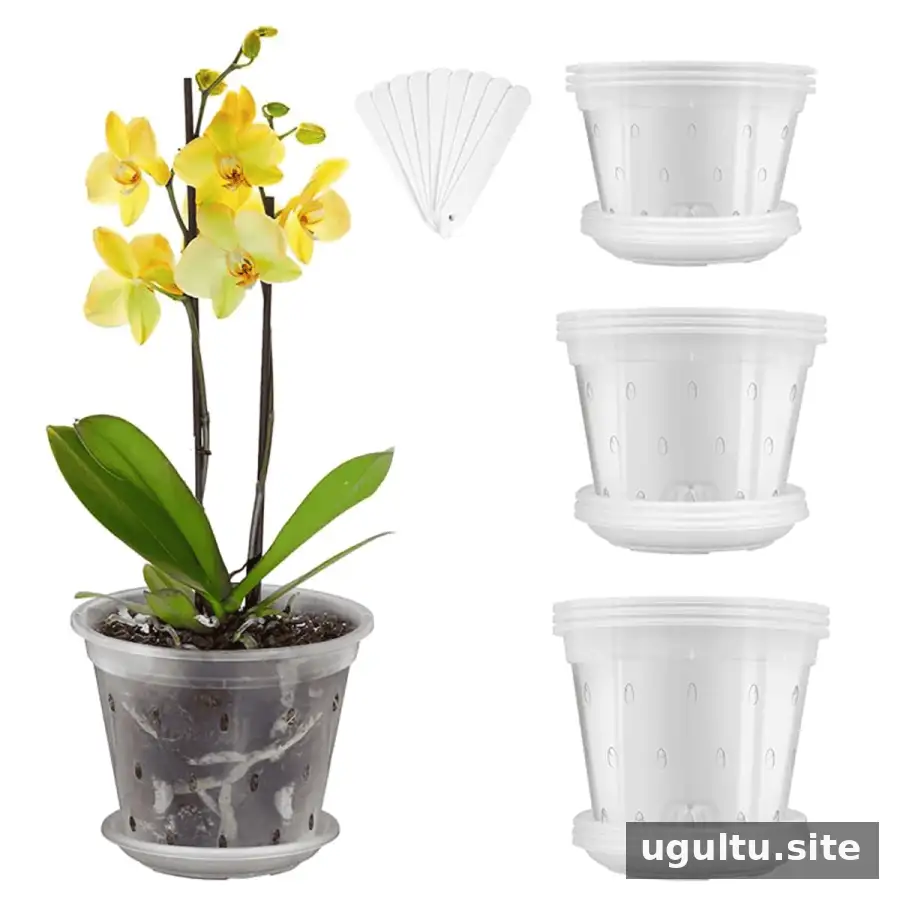
Clear pots make it easier to check moisture and observe the roots.
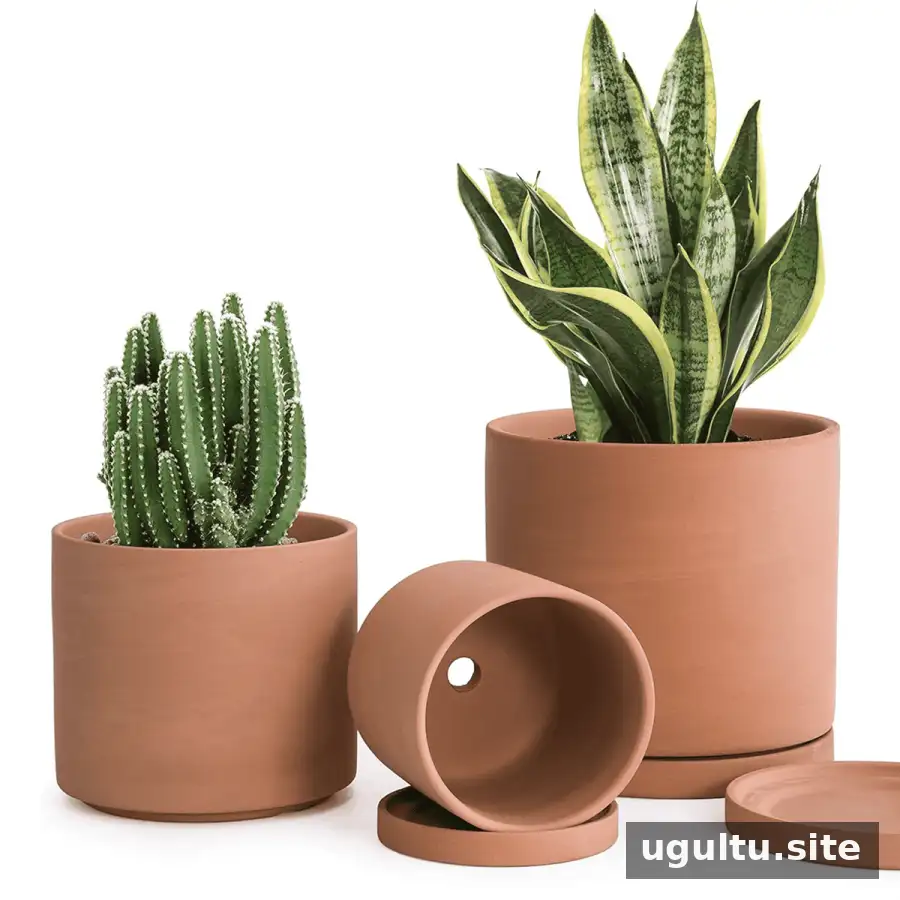
Terracotta allows airflow through the pot and can help the growing medium dry more quickly.
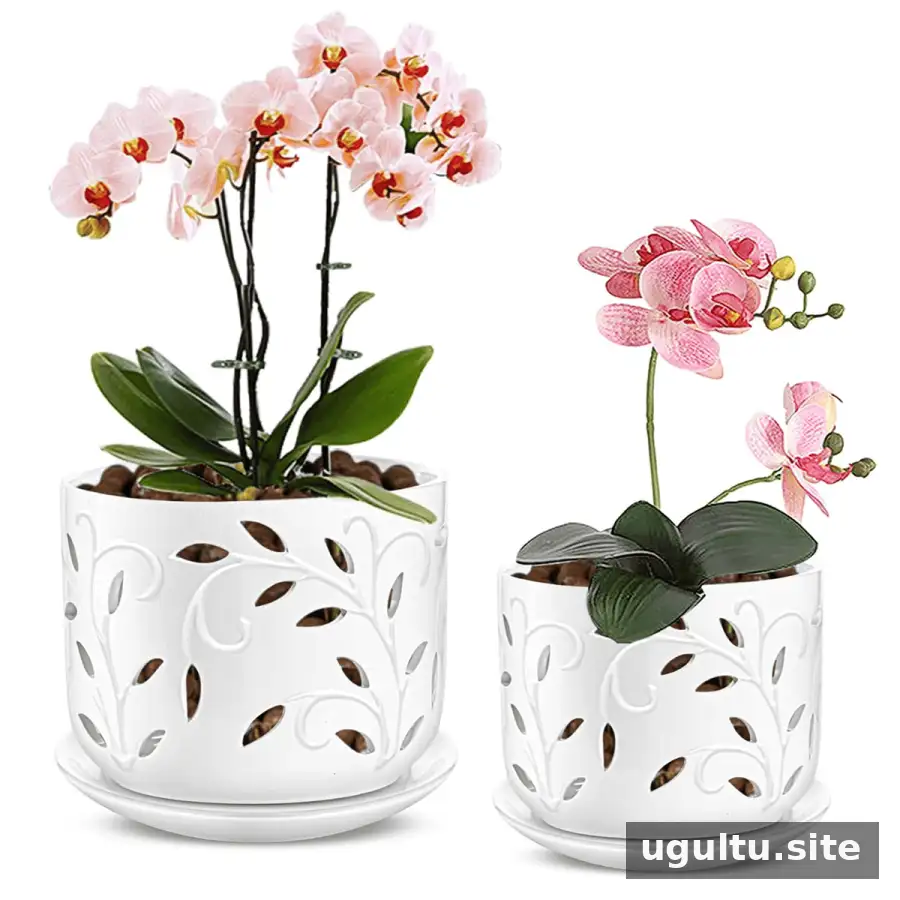
Side openings in orchid pots help improve airflow around the roots.
Propagating Orchids
Growing orchids from seed is extremely difficult, so division is a practical way to propagate an established plant. Use a sterile cutting tool and prepare separate pots with fresh orchid medium before beginning.
- Carefully take the orchid out of its current pot.
- Inspect the roots and remove any that are not plump and healthy, using a sterile tool.
- Separate the root mass into two plants and pot each division in fresh orchid medium.
- Water as needed and provide suitable light while new roots establish. A stake can support a drooping plant.
How to Get Orchids to Rebloom
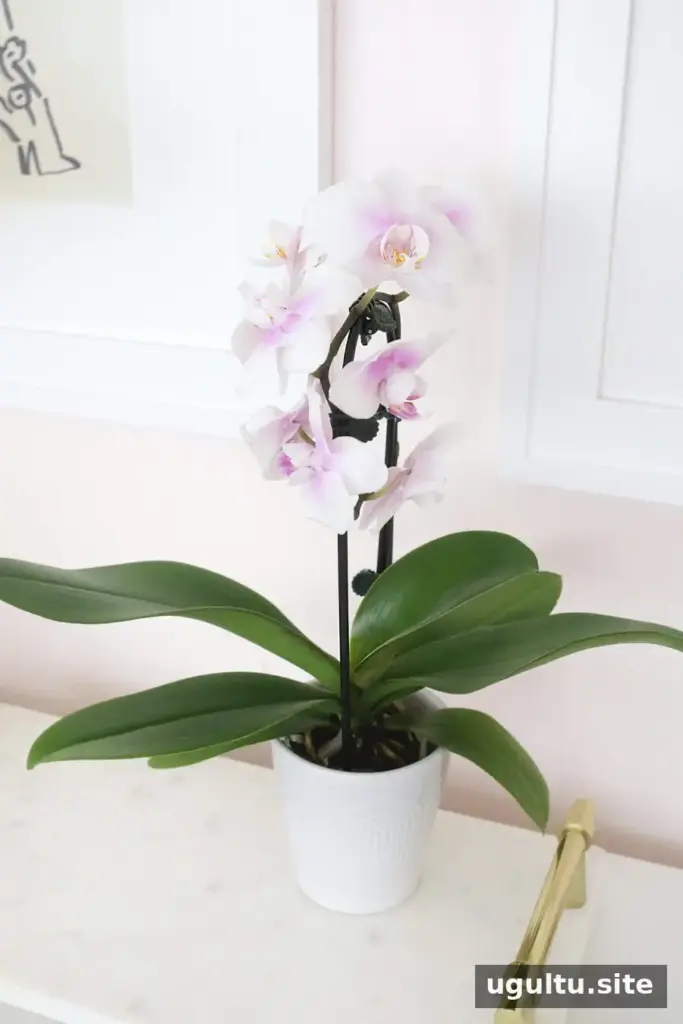
Blooming schedules vary by species, but many orchids flower at least once a year. Their flowers can last from 2 to 4 months. If a plant is not blooming, review its light, watering, humidity, temperature, and feeding routine before changing several conditions at once.
Some varieties, including Phalaenopsis, may need cooler nighttime temperatures to encourage flowering. If nights are warmer than 55°, the plant may benefit from a few nights outdoors in cooler air, provided conditions are appropriate for the plant. Avoid sudden exposure to drafts or temperatures outside its preferred range.
Popular Orchid Varieties
There are 30,000 wild orchid varieties and more than 100,000 hybrids. These popular types have different appearances and care preferences, so identify your plant before adjusting its growing conditions.
- Corsage orchids (Cattleya): Often called queen orchids, they are available in many colors and shapes and are commonly used in corsages.
- Vanda orchids (Vanda spp.): Native to Southeast Asia, these orchids prefer higher light and humidity. They can spend summer outdoors in suitable conditions and should be brought inside for winter.
- Dancing lady orchids (Oncidium): Known for their distinctive yellow flowers, some varieties also produce fragrant blooms.
- Boat orchids (Cymbidium): These have large, long-lasting flowers and may produce multiple flower spikes. They have a long history of cultivation in China.
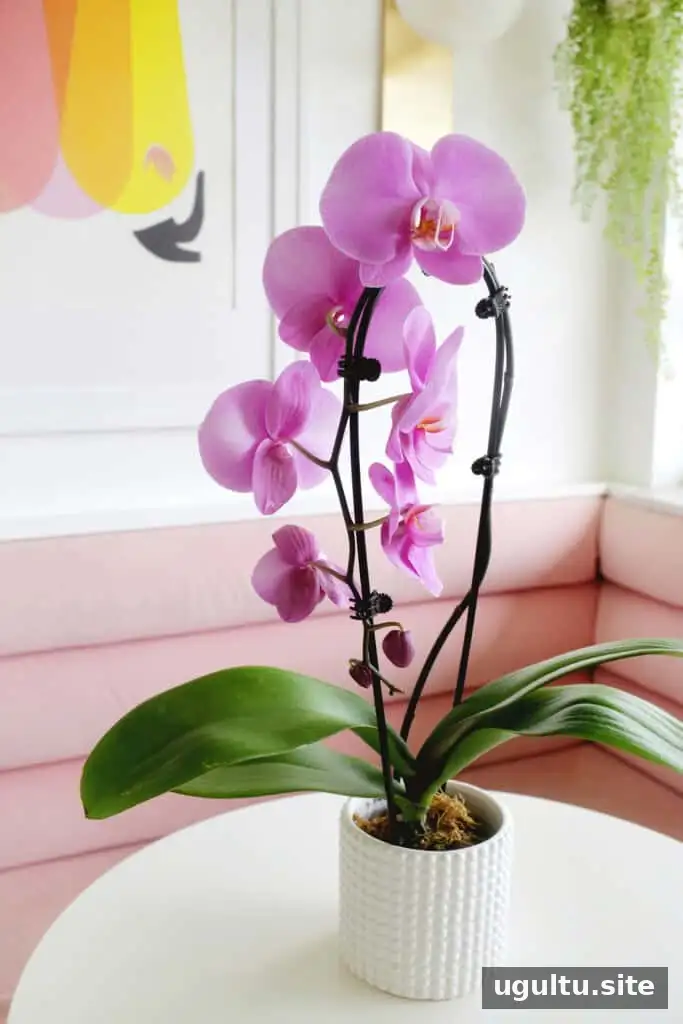
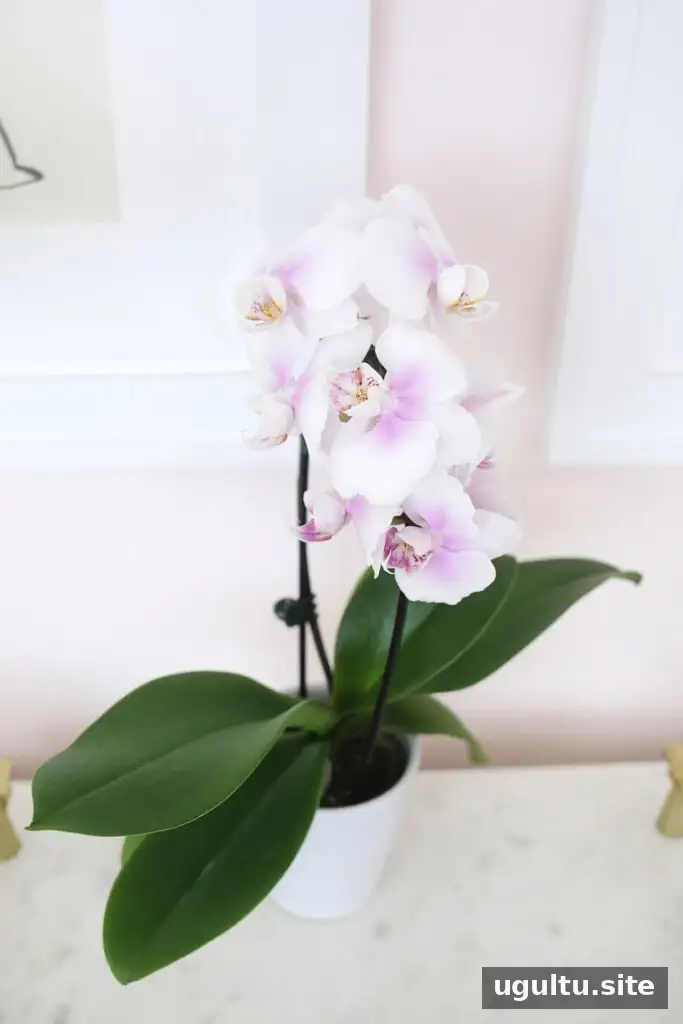
- Moth orchids (Phalaenopsis): Often considered a beginner-friendly choice, they have thick leaves and long-lasting flowers, commonly in pink, white, purple, or combinations of these colors.
- Cane orchids (Dendrobium): A large group from Southeast Asia that includes hard-caned and soft-caned types, often with purple or white flowers.
Diagnosing Common Orchid Problems
- Yellow or drooping leaves: Yellowing may indicate that the roots are staying too wet. Let the growing medium dry out more between waterings. Drooping can also be associated with insufficient light, so check the plant’s location and watering routine.
- Pests: Orchids may be affected by spider mites, fungus gnats, aphids, mealybugs, scale, thrips, or whiteflies. Inspect leaves and stems, isolate an affected plant if practical, and use neem oil or insecticidal soap according to the product directions.
- Dropped buds: Buds may fall before opening if the plant is near a draft, has been overwatered or underwatered, needs more humidity, or is close to fruit releasing ethylene gas. Check these conditions one at a time.
- Wrinkled leaves: Wrinkling or shriveling can be a sign of underwatering. Check the growing medium and water as needed, then monitor it regularly to avoid extended dry periods.
Frequently Asked Questions About Orchid Care
Are orchids toxic to pets or people?
Orchids are nontoxic to cats, dogs, and people. However, eating a large amount may cause mild stomach discomfort, so keep plants out of reach of pets and children who may chew them.
Orchid Care: Key Takeaways
Successful orchid care depends on the needs of the particular variety. Provide suitable indirect or brighter light, water only after the growing medium has dried most of the way, and use a pot and orchid mix that drain well. Monitor temperature and humidity, and check for pests or changes in the leaves. These practical steps help create conditions for healthy roots, steady growth, and recurring blooms.


