
 admin
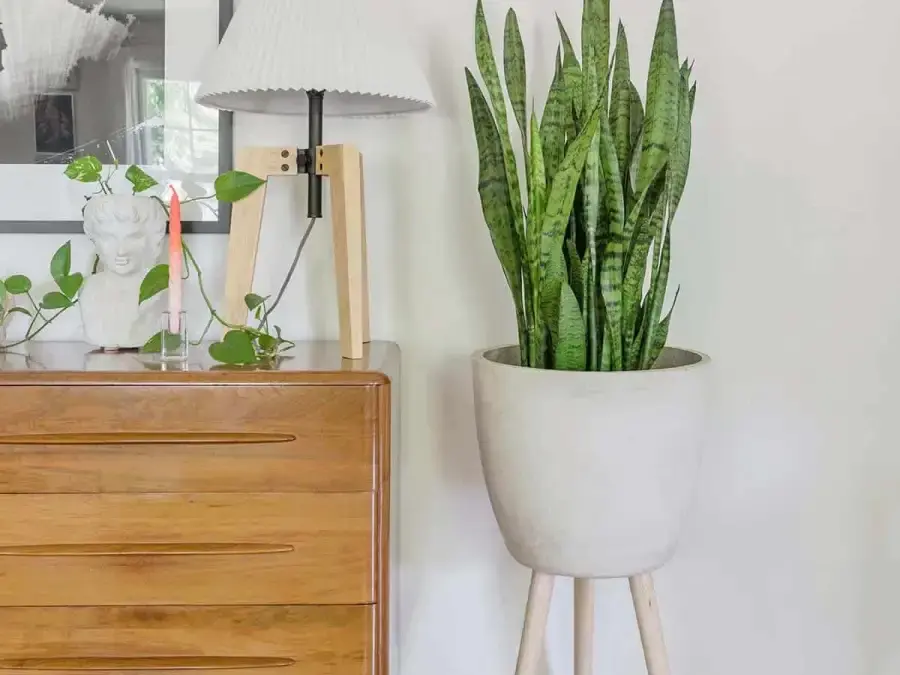
Snake plant care is straightforward, which makes this hardy houseplant a popular choice for beginners and experienced growers alike. Known as Sansevieria or mother-in-law’s tongue, the plant is native to Africa and has sword-shaped leaves that add sculptural interest indoors. Its scientific name is Dracaena trifasciata.
Snake plants tolerate some low-light conditions and periods of drought, but they generally grow better in bright, indirect light. The most important care principle is to prevent excess moisture around the roots: use free-draining soil and let the soil dry before watering.
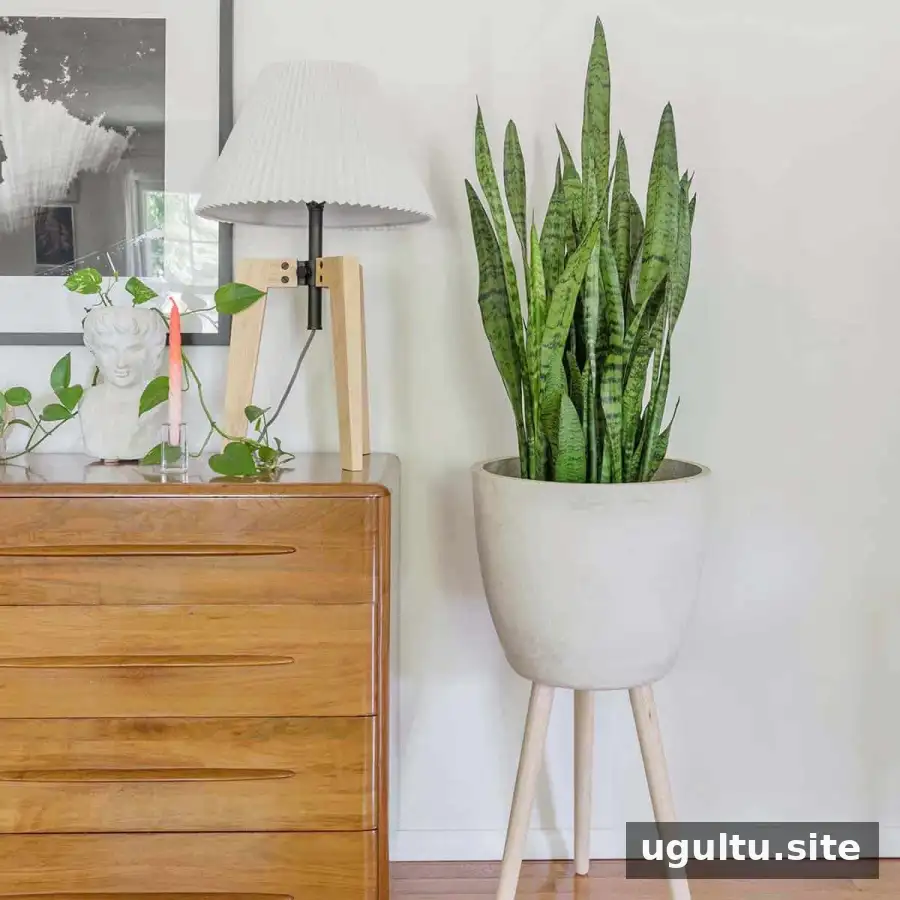
Research has examined whether Sansevieria can remove certain chemicals from indoor air, but its real-world air-purifying effect in homes is uncertain. It is best grown for its appearance and manageable care rather than relied on to improve indoor air quality.
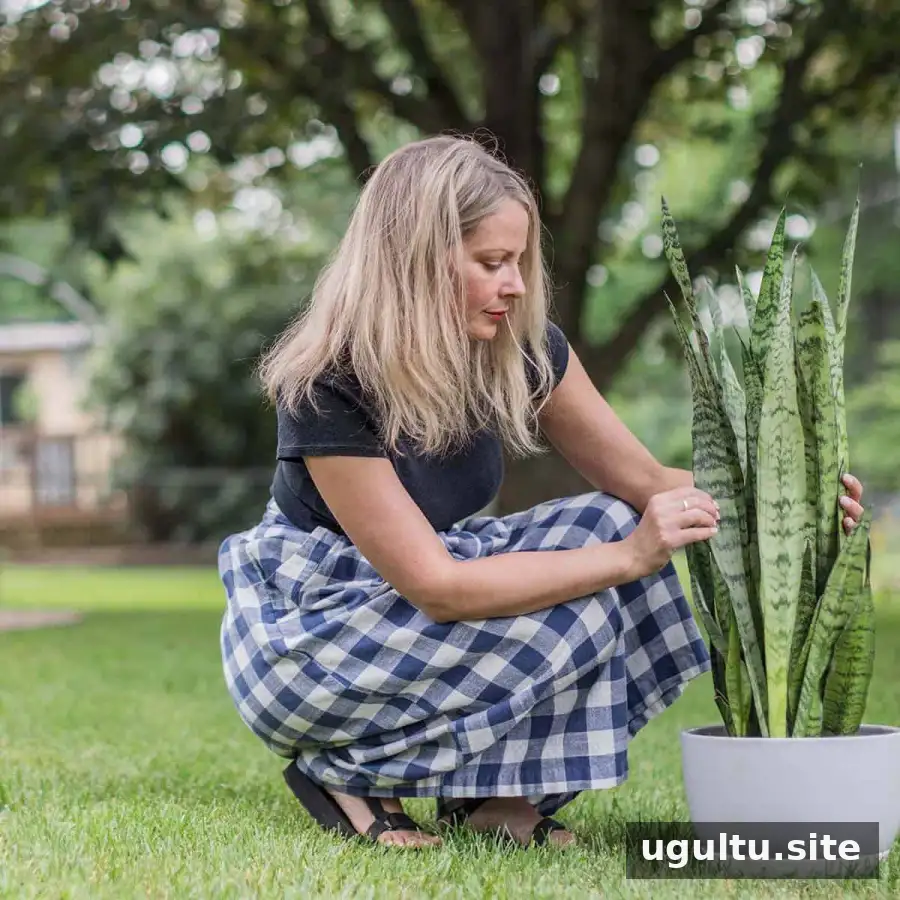
Snake Plant Care: Choosing Soil and a Pot
Snake plants need a loose, well-draining potting mix. A commercial cactus or succulent mix is a convenient option. For extra aeration, perlite can be mixed into the soil. If adding sand, choose horticultural sand; finer play sand can compact the mix and reduce drainage. Avoid outdoor soil, which may contain pests or other unwanted organisms.
Choose a pot with a drainage hole so excess water can escape. Terracotta is useful because it allows soil to dry more quickly, although moisture may pass through the pot and affect the surface beneath it. Use a saucer or protective base on wood or other moisture-sensitive surfaces.

Fertilizing and Repotting
Snake plants do not require frequent feeding. During the growing season, use a general-purpose houseplant fertilizer diluted to half strength at the beginning of spring and again in midsummer. Avoid fertilizing when the plant is not actively growing.
Repot when roots begin emerging from the drainage holes or the plant has outgrown its container. Move it into a pot that is about 2 inches wider in diameter, rather than choosing an oversized container. A large volume of soil can remain wet for longer and increase the risk of root rot.
Practical tip: Check that the new pot has a drainage hole before repotting, and empty any water that collects in its saucer.
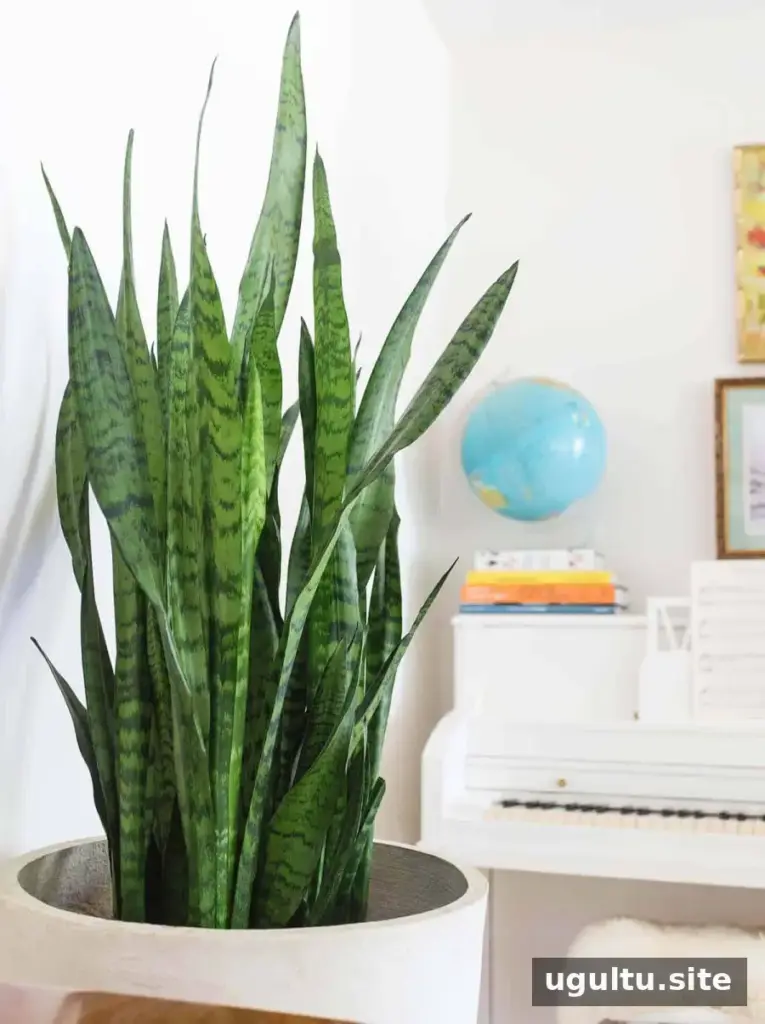
How Much Light Does a Snake Plant Need?
Snake plants adapt to a range of indoor lighting conditions. Bright, indirect light usually supports faster growth, while a lower-light spot can be suitable if brighter areas are not available. Growth may be slower in dim conditions. Turn the pot occasionally so the plant receives light more evenly, especially when it sits near a window.
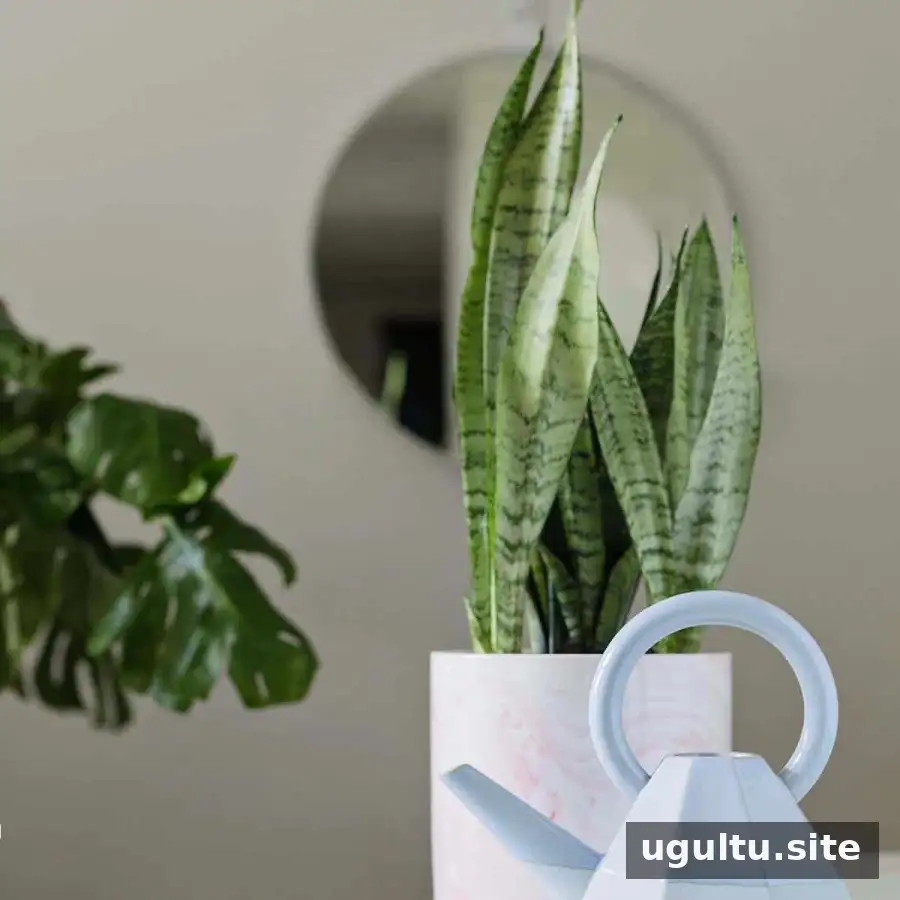
Watering a Snake Plant
Let the soil dry before watering. Check several inches below the surface with a finger; if the soil still feels damp, wait and check again later. How quickly it dries depends on factors such as room temperature, humidity, light, and the pot material, so use the soil’s condition rather than a fixed schedule as your guide.
Watering every 2–3 weeks during the spring-to-fall growing season and about every 4 weeks in fall and winter can be a starting point, but adjust those intervals to your home and the plant’s soil. Pour water onto the soil rather than over the leaves, and do not let water collect in the leaf rosettes. Room-temperature water is suitable. Filtered or collected rainwater can also be used.
Overwatering and waterlogged soil can cause root rot. When in doubt, it is safer to wait until the soil is dry than to water too soon.
Humidity and Leaf Cleaning
Typical household humidity of around 30%–50% is generally suitable, so extra humidity measures are usually unnecessary. Wipe dusty leaves with a slightly damp cloth, cleaning both sides gently. Clean leaves can receive light more effectively. Take care not to leave water sitting in the center of the plant.

How to Propagate a Snake Plant
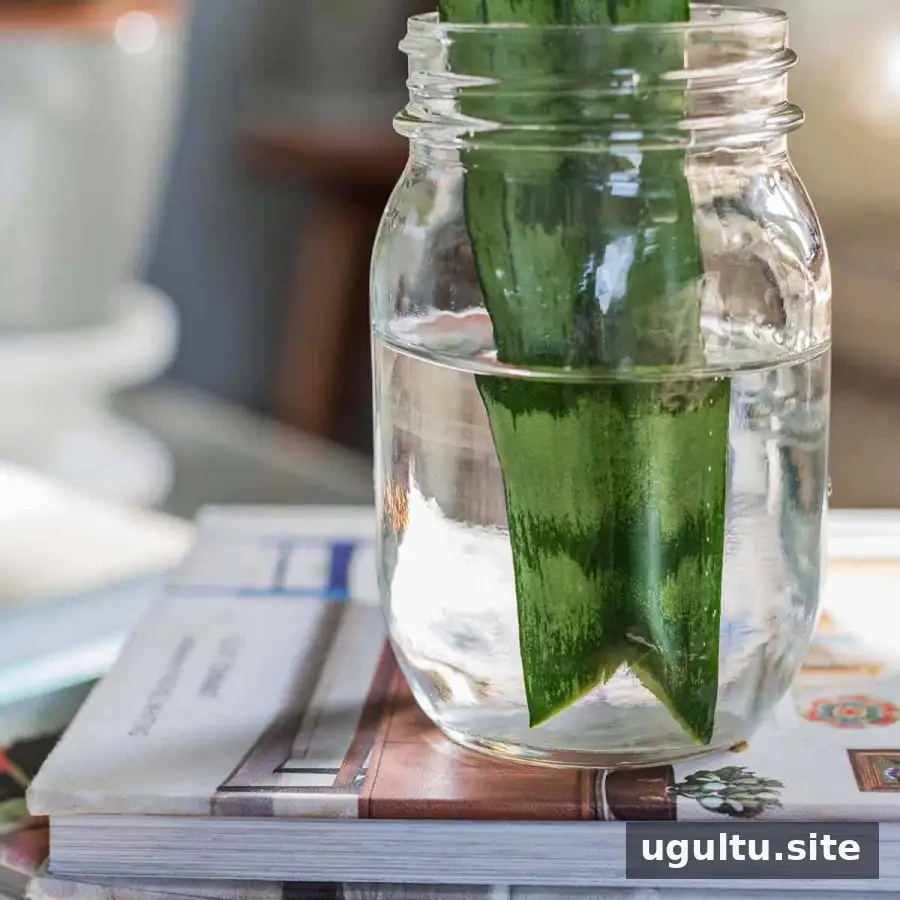
Snake plants can be propagated from leaf cuttings in water or soil. Use clean scissors or another freshly cleaned cutting tool. Cut a leaf near its base; a V-shaped cut at the bottom is another option that provides a wider area for roots to form.
For water propagation, place the cut end in a clean glass or jar with the bottom portion of the leaf submerged. Keep the cutting in a bright spot, out of harsh direct sunlight, and change the water if it becomes cloudy. When roots reach about 1–2 inches, transfer the cutting to a pot with well-draining soil.
For soil propagation, place the cutting in a pot of lightly damp, well-draining mix. Keep the soil from becoming completely dry while roots establish, but avoid keeping it saturated. Because roots are not visible in this method, check the cutting gently and allow time for new growth.
Other Snake Plant Varieties
Snake plants include several distinctive forms, and their basic care is similar. Whale Fin (Dracaena masoniana) is known for its broad, fin-shaped leaves. The African Spear, or Cylindrical Snake Plant (Dracaena angolensi), has tubular leaves that fan outward. Dracaena pearsonii is a related variety with succulent, red-tinted leaves.
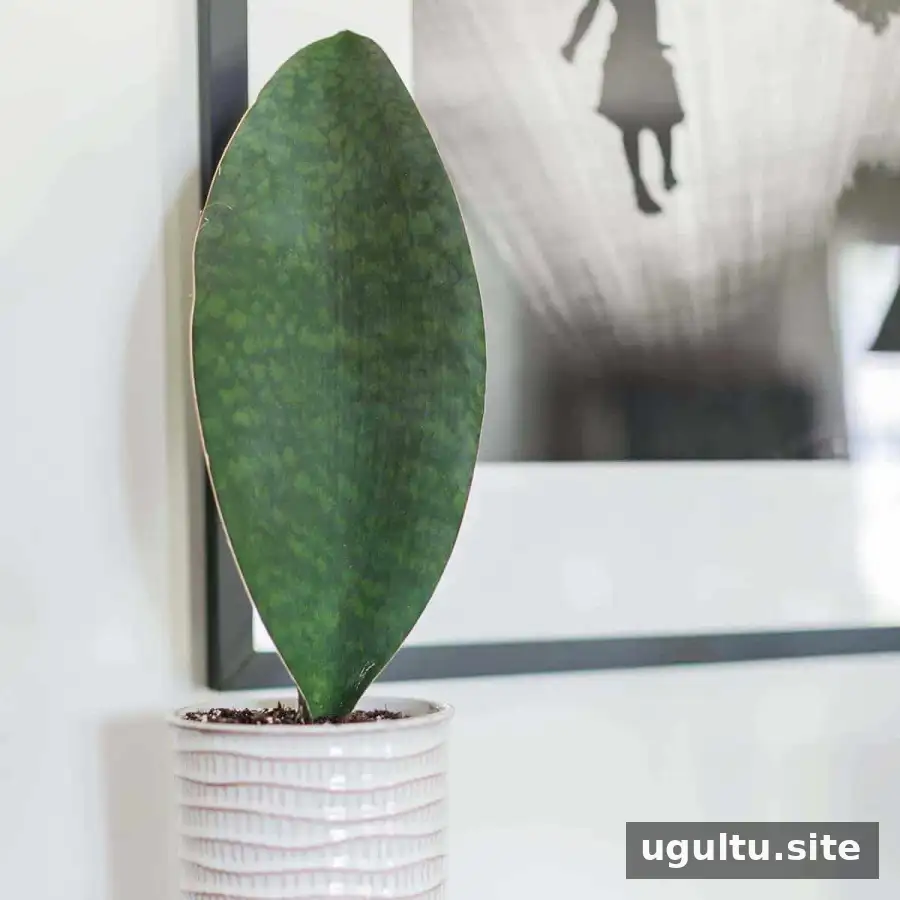
Other varieties include the twisted-leaf Twist variety (Sansevieria trifasciata), Rhino Grass (Sansevieria desertii), white-striped Bantel’s Sensation (Sansevieria trifasciata), and the silvery-green Moonglow (Dracaena trifasciata).

Troubleshooting Common Problems
- Yellow or brown leaves: These can be signs of overwatering, root problems, or pests. Check the soil and roots, reduce watering if the mix stays wet, and inspect leaves for insects.
- Pests: Spider mites, mealybugs, and thrips may be treated with insecticidal soap or neem oil, following the product directions. Scale insects and mealybugs can also be carefully removed with a cotton swab and rubbing alcohol; test a small area first.
With well-draining soil, a pot that lets excess water escape, and watering only when the mix is dry, snake plant care can remain simple and dependable. — Janae


