
 admin
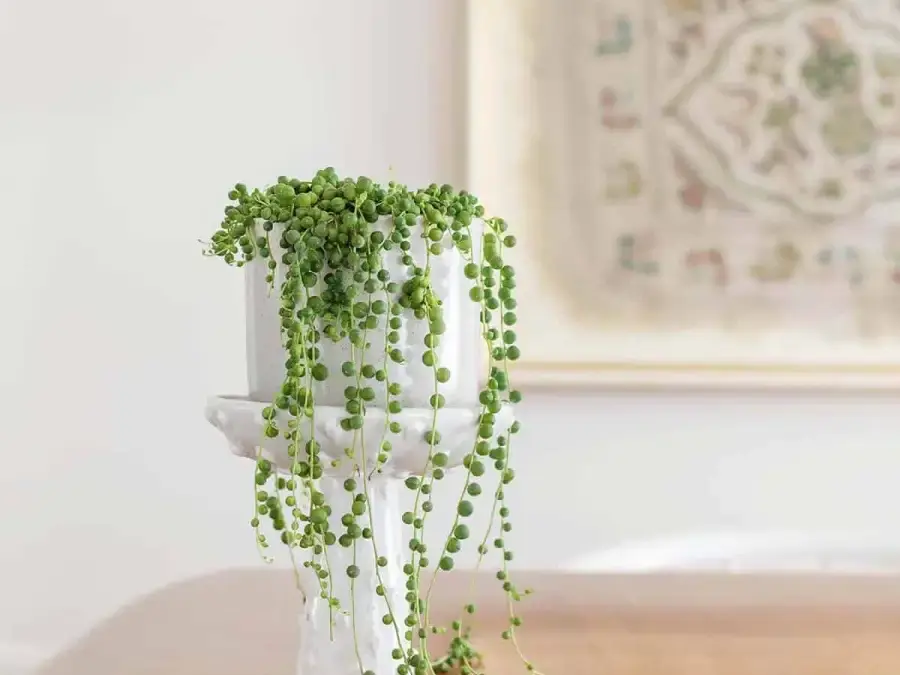
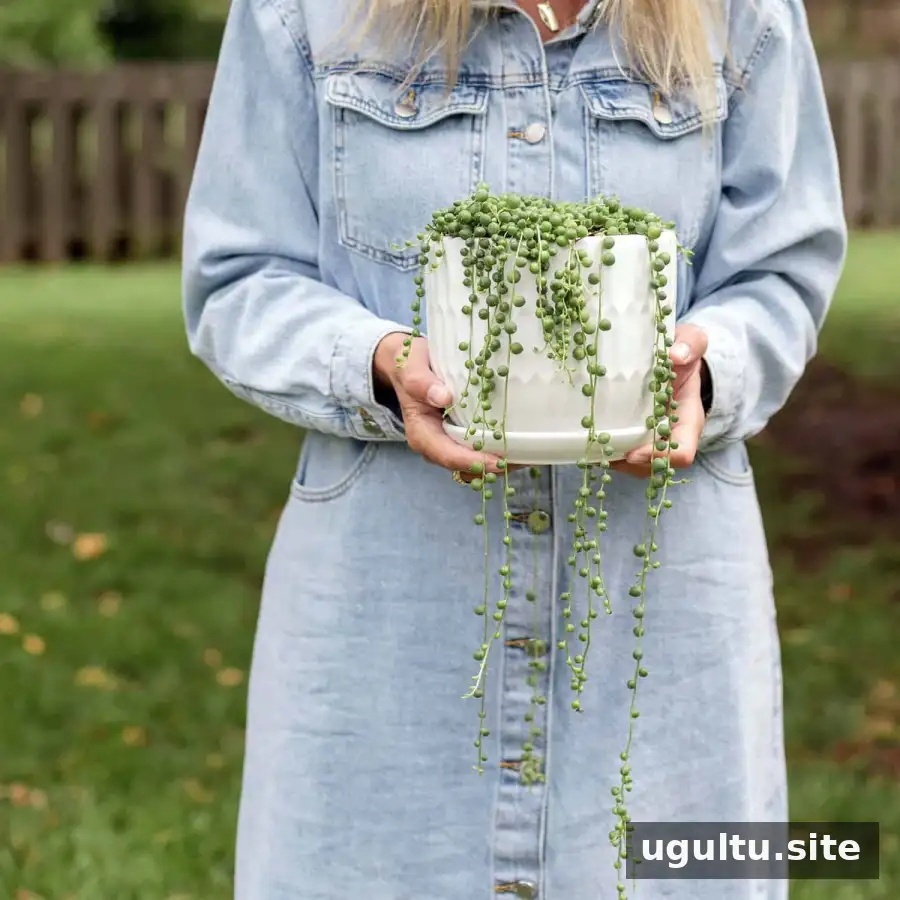
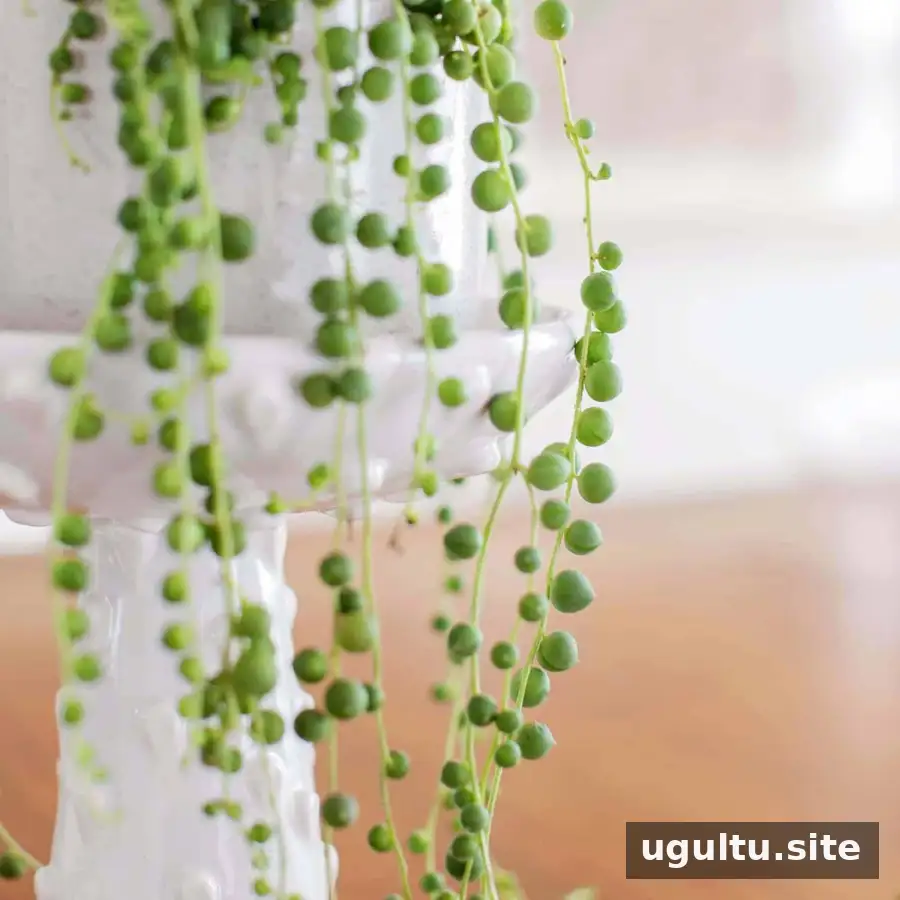
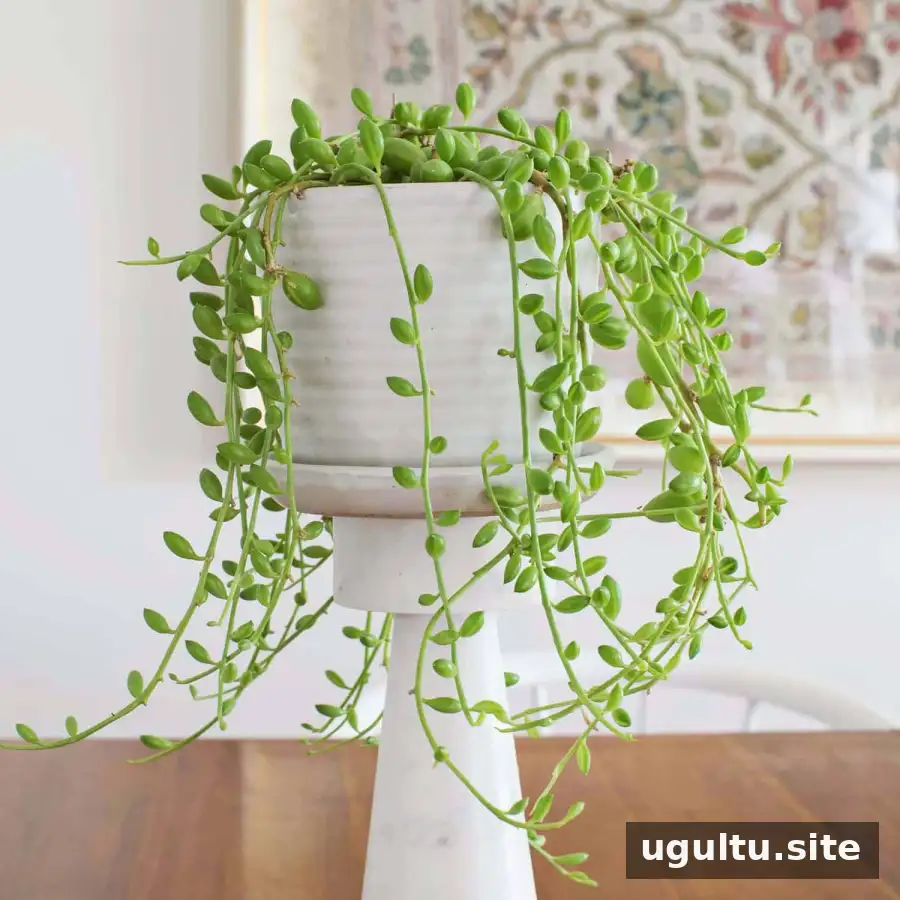
String of Pearls plant care starts with understanding this trailing succulent’s need for bright light, well-draining soil, and careful watering. Also known as Curio rowleyanus, this distinctive plant is native to southern Africa and has round, pea-like leaves that trail over the edge of a pot. A few simple adjustments to its growing conditions can help keep its stems and foliage healthy.
String of Pearls Plant Care: Potting and Soil
Use a well-draining cactus or succulent mix. Sand and perlite can improve drainage and airflow, which helps reduce the risk of roots sitting in wet soil. Choose a pot about the same size as the nursery pot or slightly larger; a pot that is too large can hold excess moisture around the roots.
A drainage hole is essential. Terracotta or unglazed clay pots are practical options because they allow the soil to dry more readily than many nonporous containers. When repotting, handle the trailing stems gently, since individual leaves may come loose.
Set the plant so the roots sit just below the rim and the foliage rests above it. This helps prevent water from collecting on the leaves. Backfill around the roots without packing the soil too tightly, then carefully separate tangled stems rather than pulling hard on them.
Safety note: String of Pearls is toxic to people and pets if eaten. Keep the plant out of reach and promptly pick up fallen leaves.
Light and Temperature
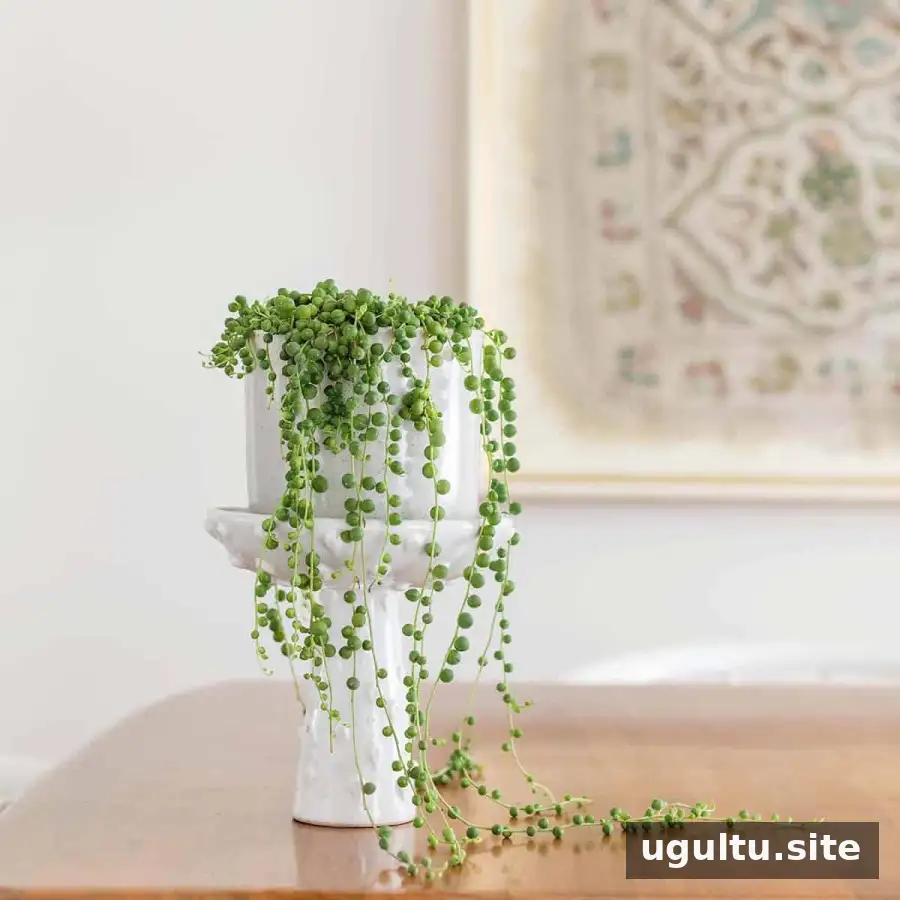
Place the plant in a bright location, such as near an east- or west-facing window. Bright, indirect light is generally a good choice. Prolonged exposure to intense direct sun can scorch the foliage, so observe the plant and adjust its position if the leaves show signs of sun damage.
A covered porch can provide bright, indirect light during warm weather. Bring the plant indoors as temperatures fall, and avoid placing it beside drafts, exterior doors, or heating and cooling vents. Before moving an outdoor plant inside, inspect it carefully for insects and other pests, including beneath the leaves and along the stems.
Watering String of Pearls
Overwatering is a common cause of problems. Let the soil dry partly between waterings, then water lightly and allow excess water to drain from the pot. Do not leave the plant standing in water. It generally needs more frequent checks during active growth in spring and summer, and less frequent watering in fall and winter. Adjust the timing to your home’s humidity, temperature, and light rather than following a fixed calendar.
Check the soil with a finger or lift the pot to gauge whether it still holds moisture. Avoid letting the mix become bone dry for extended periods. Soft, squishy, or translucent leaves can indicate excess moisture, while a potting mix that has pulled away from the sides of the container may be extremely dry.
If you suspect root rot, remove the plant carefully and inspect the roots. Healthy roots are firm; mushy, dark roots may be damaged. Trim affected roots with clean scissors and repot the plant in fresh, dry, well-draining mix. Use room-temperature water rather than very hot or cold water. Filtered water or collected rainwater can be alternatives to tap water; leaving tap water out may reduce some chlorine, but it does not remove fluoride.
How to Propagate a String of Pearls
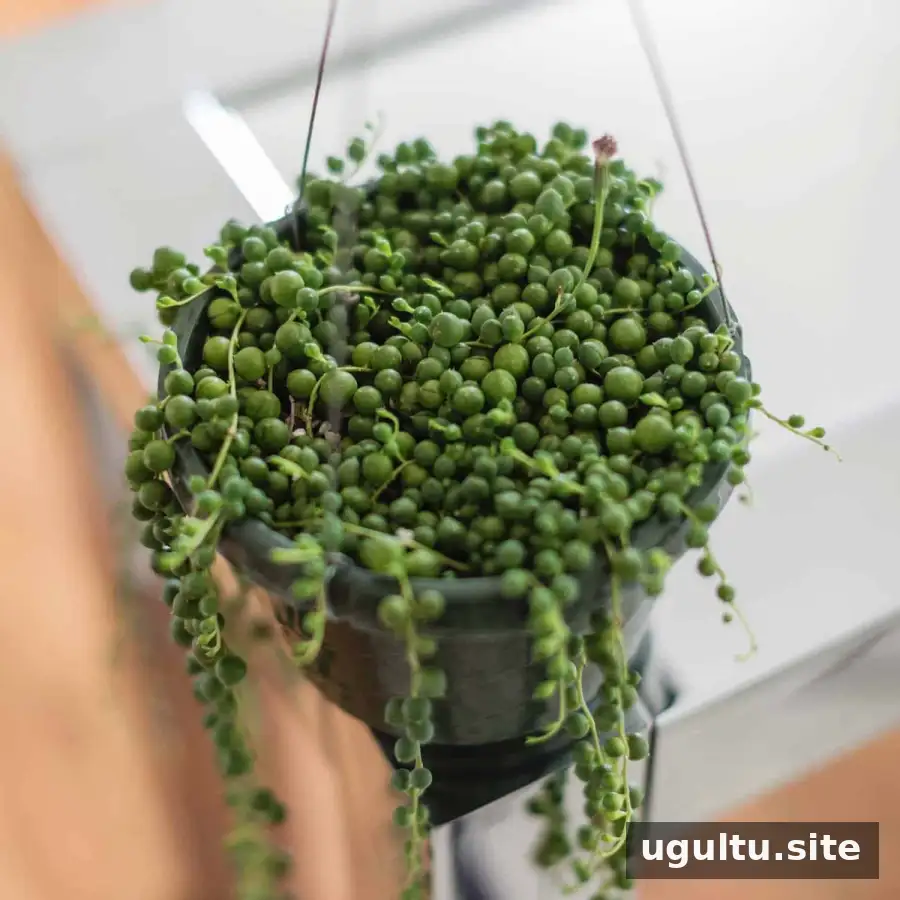
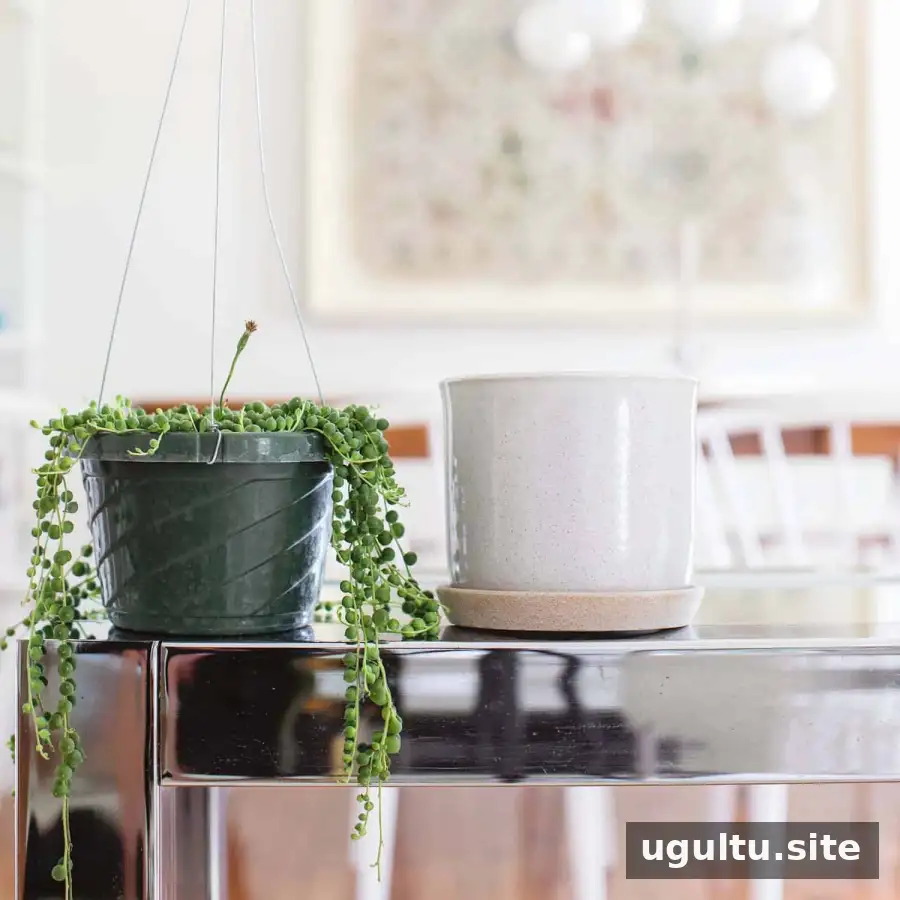
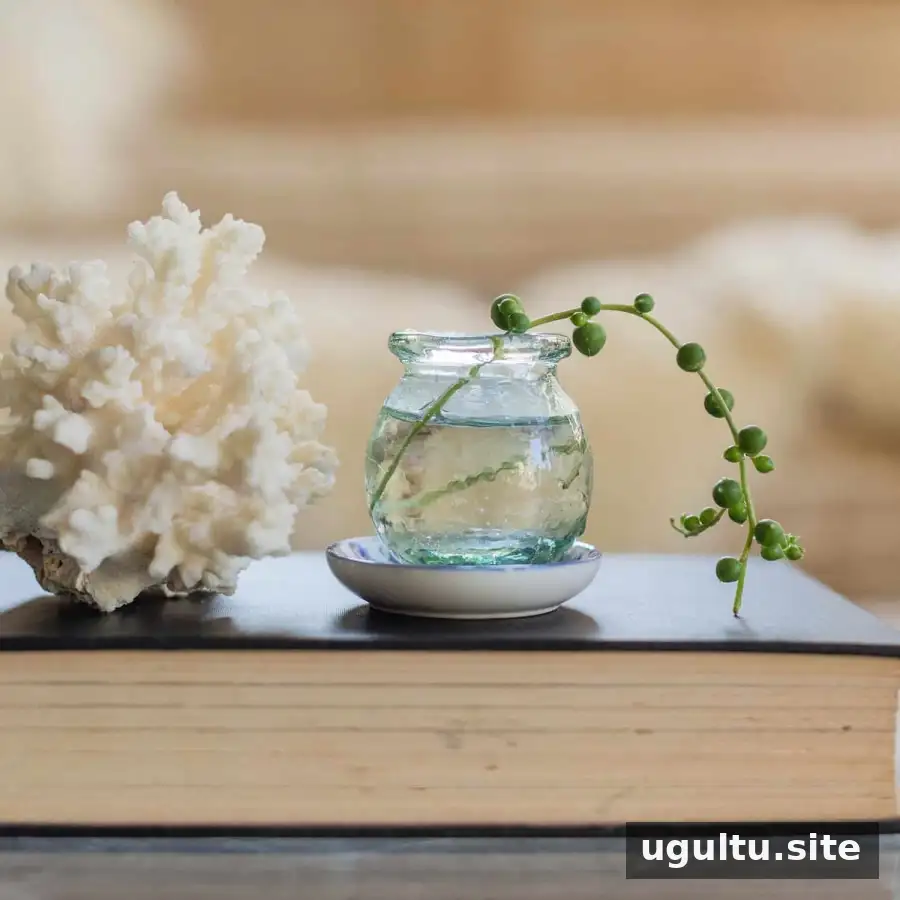
String of Pearls can be propagated in water, soil, or by layering. For any method, choose a healthy stem and use clean scissors or pruning shears. A cutting around 4–5 inches long is a useful size.
Propagation in water
Remove the leaves from the bottom 1.5–2 inches of the cutting. Let the cut end dry for 24 hours, out of direct sunlight, so it can callus. Place the bare section in water while keeping the remaining leaves above the waterline. Change the water if it becomes cloudy and rinse the container. Roots may appear in 3–4 weeks. When they reach at least 1 inch long, pot the cutting in a small container with drainage and succulent mix.
Propagation in soil or by layering
For soil propagation, prepare the cutting in the same way and insert its bare section into a small hole in lightly moistened succulent soil. Keep the mix slightly moist, not saturated. After about three weeks, a gentle tug can help indicate whether roots have formed; avoid pulling hard, as new roots are delicate.
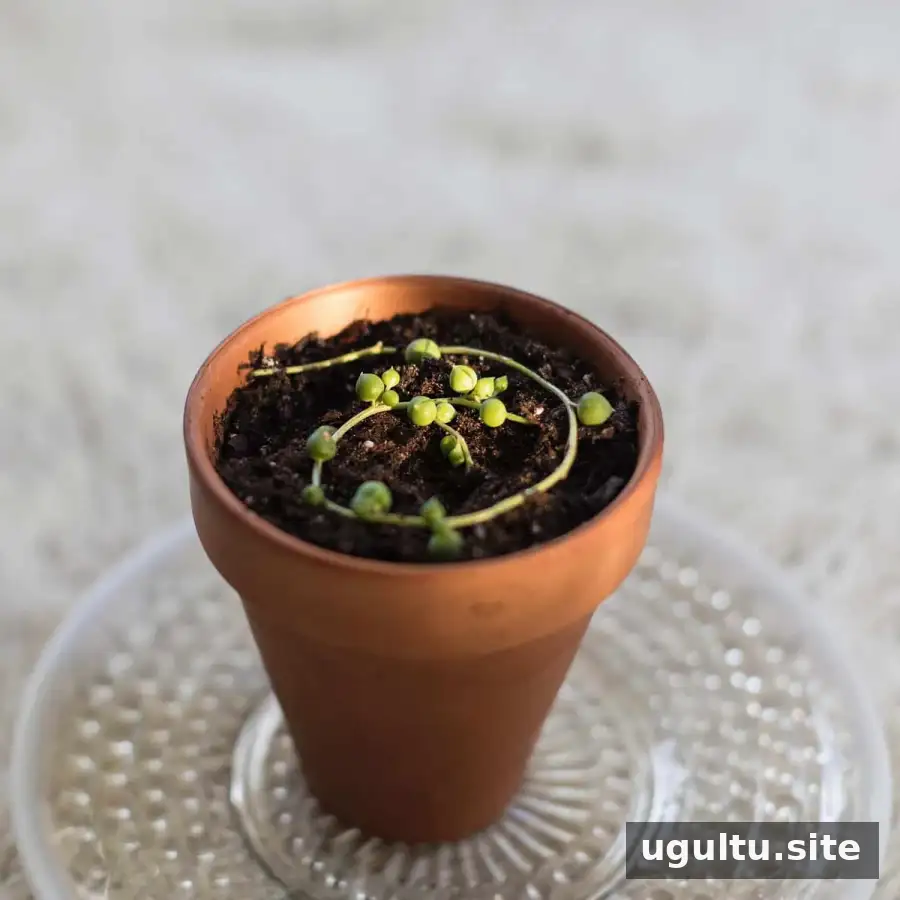
Layering is another option: lay a long, healthy stem in a loose coil across the surface of fresh, lightly moistened succulent soil. Keep the stem in contact with the mix and check that the soil does not remain wet. Once sections have rooted, they can be separated and grown on.
Fertilizing
During the growing season in spring and summer, apply a balanced fertilizer about once a month. Use half the manufacturer’s recommended concentration to reduce the risk of over-fertilizing. Liquid fertilizer is easy to mix into water and distribute, but apply it to soil that is not completely dry and follow the product label.
Related String-Like Succulents
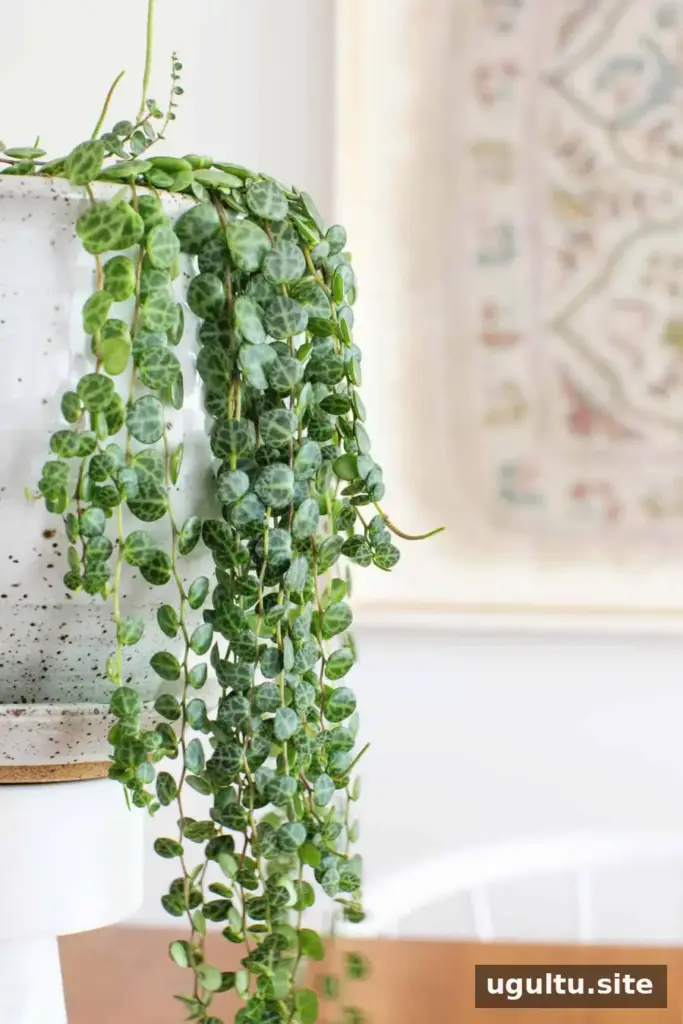
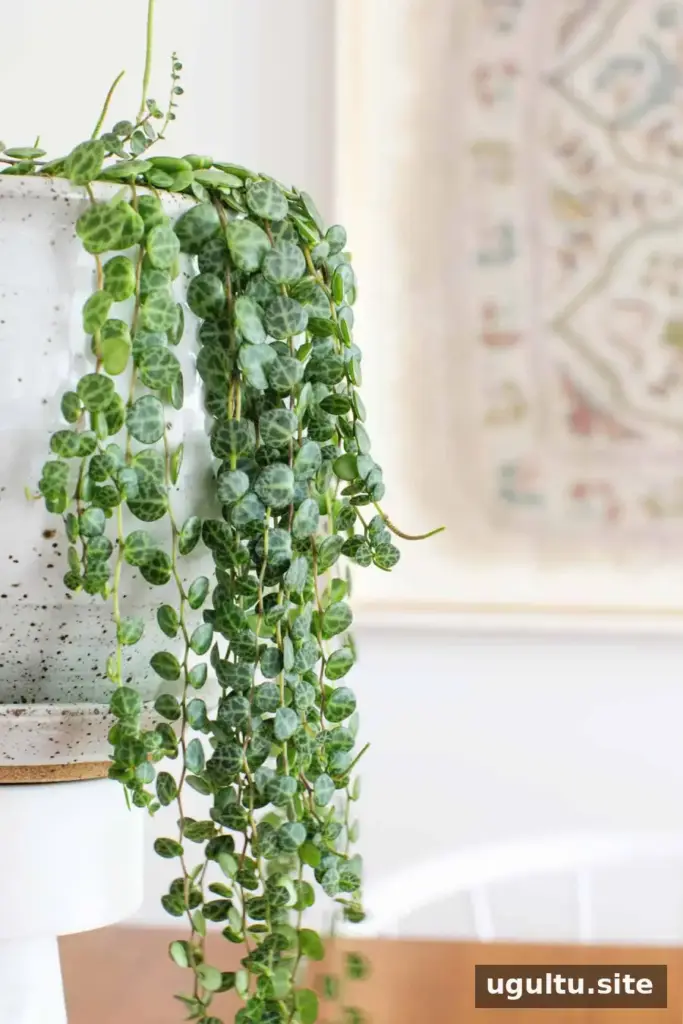
Other plants with a trailing, string-like appearance include String of Turtles and String of Watermelons. Their leaves have different patterns and shapes, so check the plant’s label and growing needs rather than assuming every trailing succulent requires identical care.
Final Tips for String of Pearls Plant Care
For successful String of Pearls plant care, prioritize a drainage hole, a fast-draining potting mix, bright indirect light, and cautious watering. Check the soil before watering, protect the plant from temperature extremes, and handle its delicate stems gently during repotting or propagation. — Janae


