
 admin
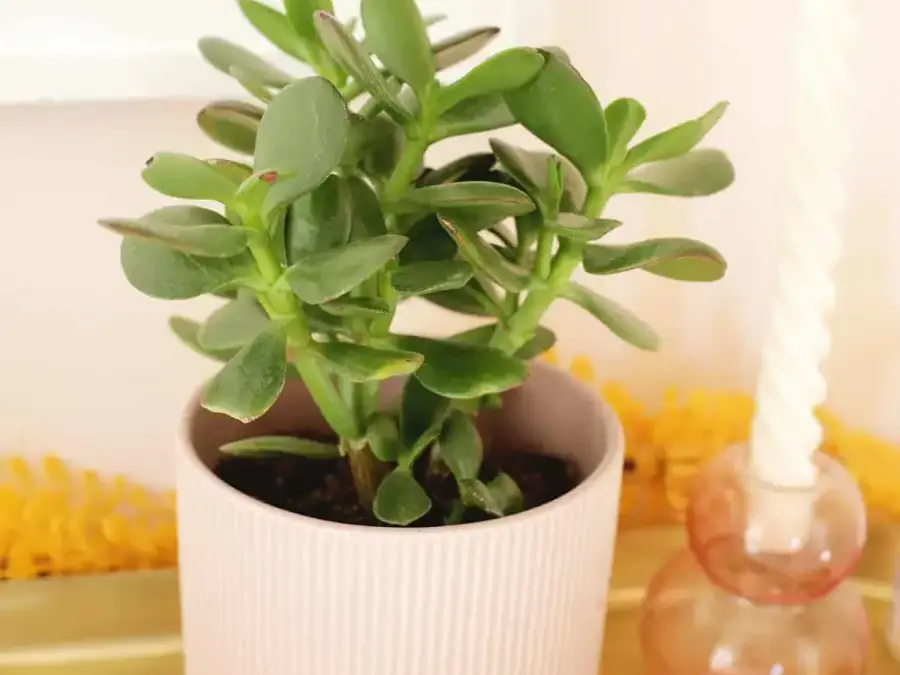
Jade plants (Crassula ovata) are long-lived succulents known for their woody stems and glossy, oval leaves. With suitable jade plant care, they can thrive indoors for decades and may reach heights of up to 3 feet. Their tree-like shape also makes them a popular choice for bonsai, and new plants can be started from a leaf or stem cutting.
Native to southern Africa, jade plants store water in their leaves and stems, so they generally need less frequent watering than many houseplants. They grow slowly—often no more than 2 inches per year—and prefer warm, bright conditions. In suitable outdoor climates, mature plants may produce clusters of star-shaped flowers with a faint sweet scent that can attract bees, butterflies, and beetles.
Jade plants belong to the Crassulaceae family. They are also called friendship plants, money plants, or silver dollar plants, and are sometimes given as symbols of good luck and prosperity. Keep in mind that the plant is toxic to dogs and cats and should be placed away from pets and young children.
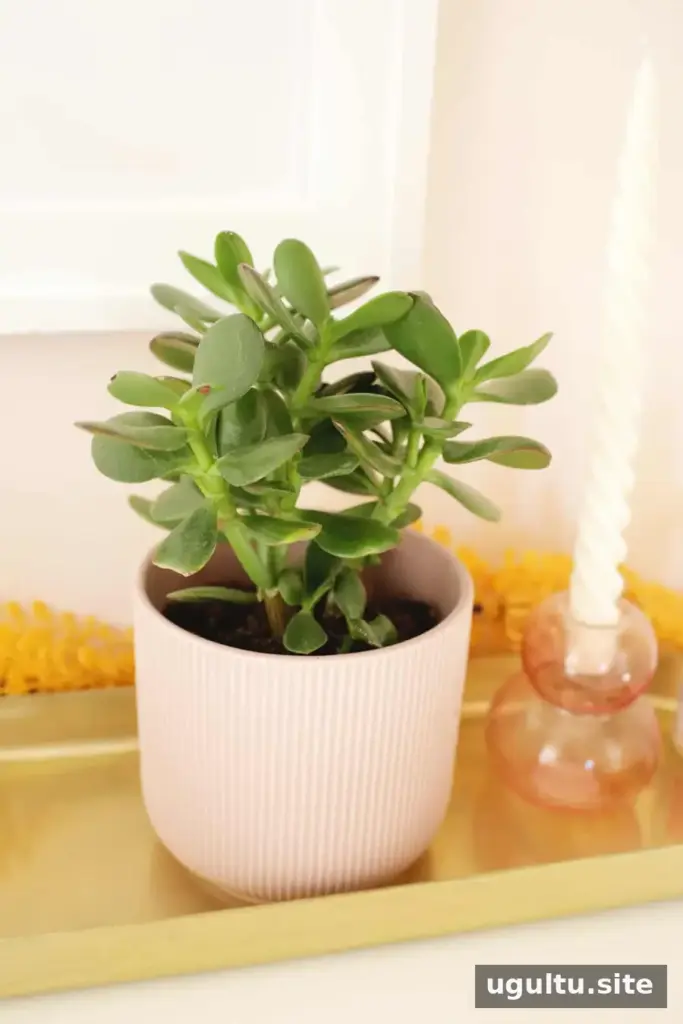
Jade plant care: watering and light
How often should you water a jade plant?
Water more often during spring and summer, when the plant is actively growing, and reduce watering in fall and winter. When watering, moisten the soil thoroughly, then wait until it has mostly dried before watering again. A pot with drainage holes is essential because persistently wet soil can cause root rot.
During the cooler dormant months, let the soil dry out completely between waterings. Jade plants may be sensitive to tap water, so distilled, filtered, or rainwater can be a suitable alternative. Check the soil before watering rather than following a rigid schedule.
How much sunlight does a jade plant need?
Aim for about 4–6 hours of bright light each day. Young plants do best in indirect light, while established plants can tolerate some direct sun. South- or west-facing windows are often good indoor locations. Turn the pot occasionally to help the plant grow evenly; in dim conditions, stems may stretch and become leggy as they reach toward the light.
Fertilizer, temperature, and humidity
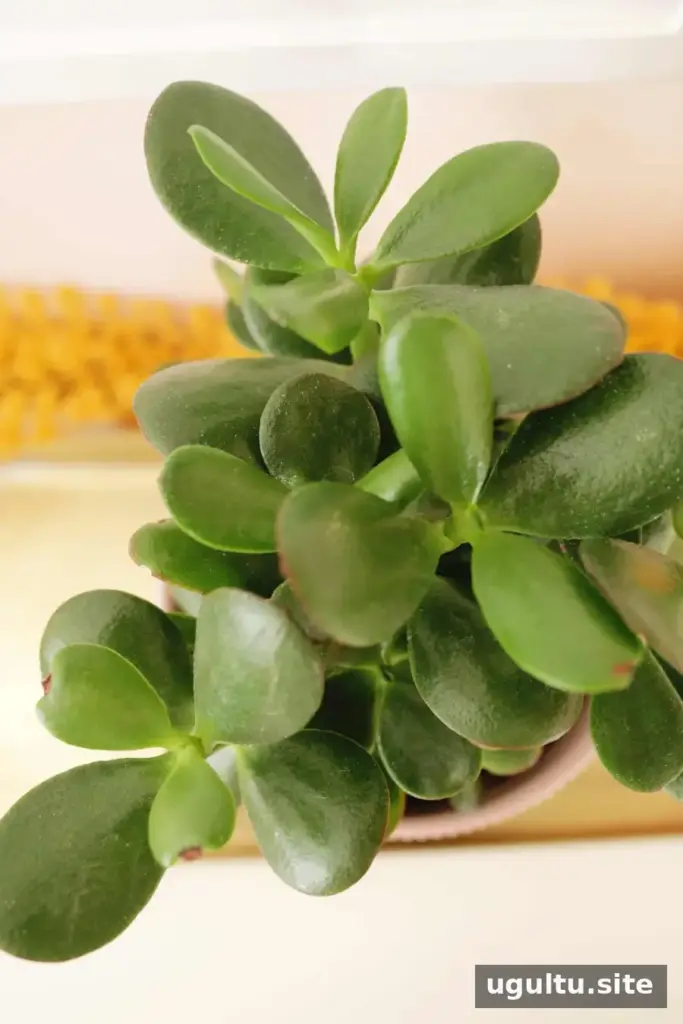
Jade plants have modest nutrient needs. During the growing season, you can apply a balanced fertilizer diluted to half strength every two months. Avoid overfeeding, and do not fertilize a newly repotted plant for about a month so its roots have time to settle.
For indoor plants, a temperature range of 65° to 75°F is suitable. Jade plants do not tolerate temperatures below 50°F well, so bring patio plants indoors when cold weather approaches. They can grow outdoors in warm, dry climates, including USDA hardiness zone 10 or warmer. High humidity is unnecessary and can contribute to pest problems; good air circulation is helpful.
Pruning jade plants
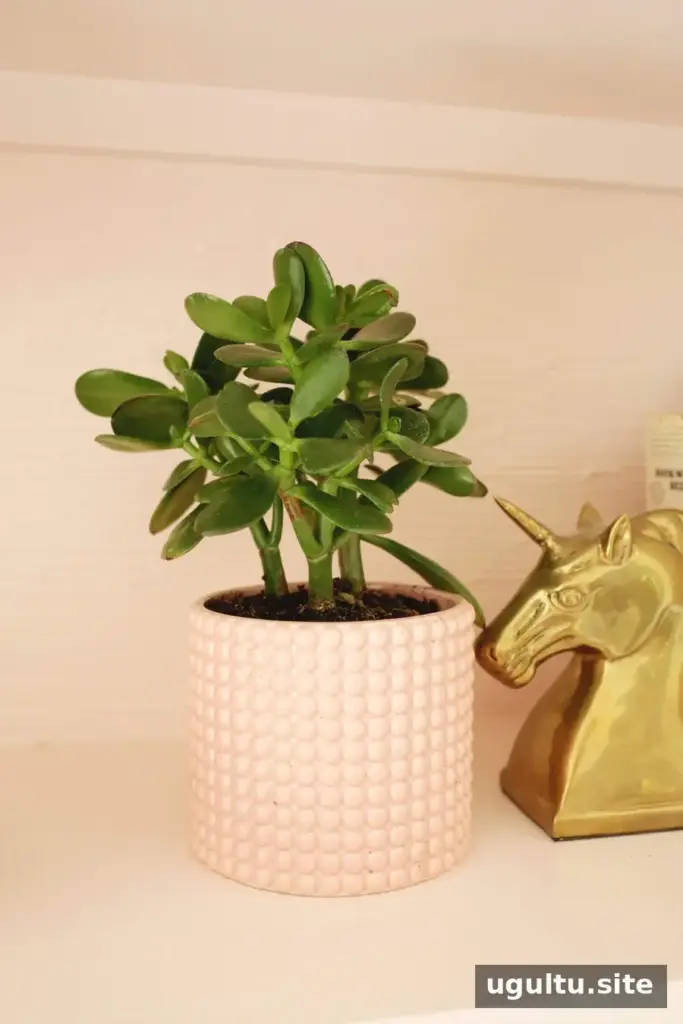
Prune in spring or early summer as new growth begins. Use clean, sharp scissors or pruning shears to remove long, thin, leggy sections, cutting back to a lateral branch. Pruning can help shape the plant and reduce the weight carried by its woody trunk. Remove dead branches where they meet the trunk, and trim leaves that are yellowing or have dark spots.
Sanitize tools between cuts to reduce the risk of spreading disease. To encourage a taller shape rather than wider growth, pinch off the small new leaves at the tips of stems. Make gradual changes instead of removing too much growth at once.
Repotting jade plants
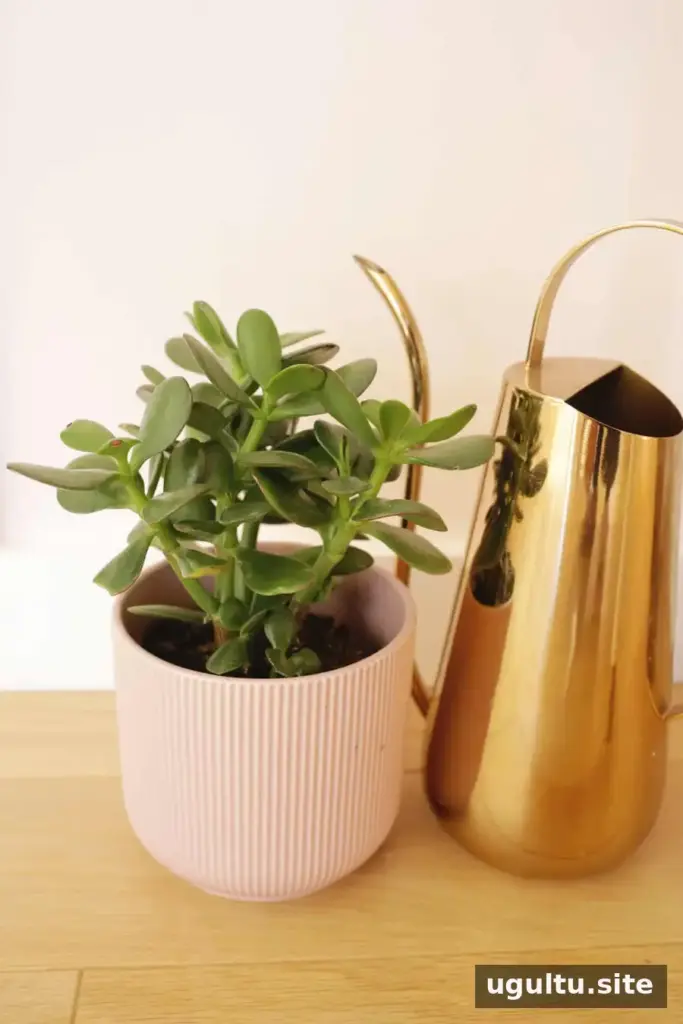
Jade plants tolerate being somewhat root-bound, so they usually need repotting less often than many houseplants. Younger plants may need a new pot every 2–3 years; mature plants can often remain in place for 4–5 years. Choose a sturdy pot with drainage holes and moderate depth to help support the plant’s top-heavy growth. The new pot should be only slightly larger than the root ball, since excess soil can stay wet for too long.
Repot in early spring if possible. Use a succulent potting mix or combine general potting mix and perlite at a 2:1 ratio for better drainage. If reusing a pot of the same size, trim roots as needed and shape the stems carefully. After repotting, wait about a week before watering and avoid fertilizer for a month.
Propagating jade plants from leaves or stems
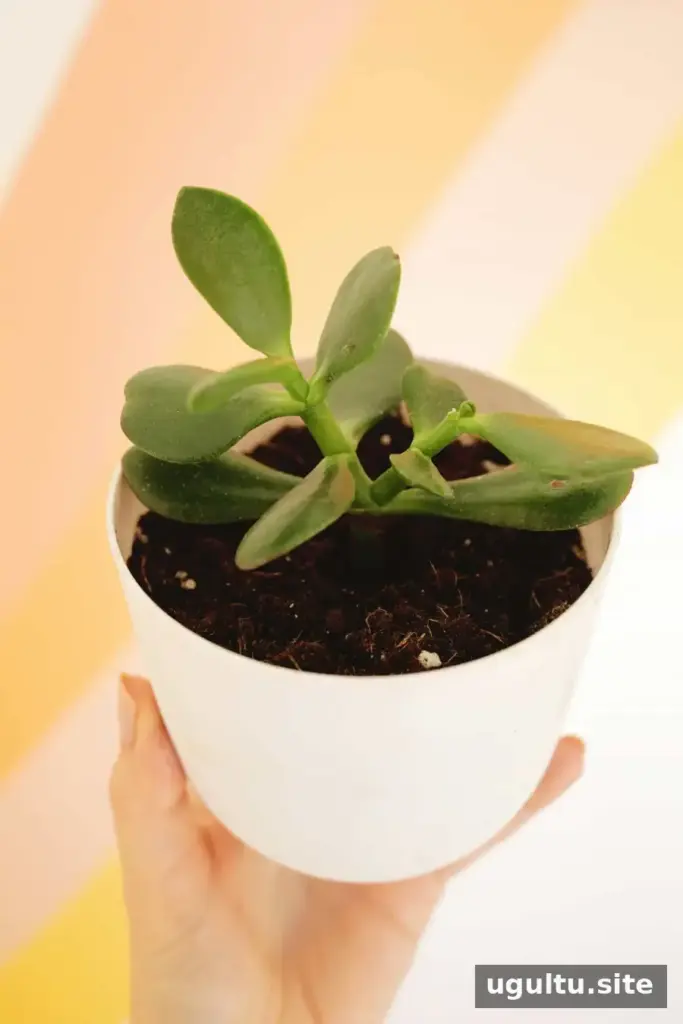
Jade plants can be propagated from a leaf or a stem cutting. Summer is a good time to start, before the plant enters its winter dormancy, and mature plants are the best source of cuttings.
- Take a cutting: With a clean, sharp knife or scissors, cut a 3–4-inch stem, or gently remove a single leaf.
- Let the cut end callus: Leave the cutting in a warm place until the cut surface dries and forms a callus. This helps reduce the chance of rot.
- Set it in the growing medium: Place a leaf horizontally on well-draining potting mix, with its cut end lightly covered. Insert stem cuttings directly into the mix and use a skewer or toothpick for support if needed. Keep the cutting in a warm, bright spot; avoid soaking the soil.
- Wait for roots: Roots may begin to develop in about a week. Gently check for resistance before treating the cutting as rooted. Once roots are established, water thoroughly, then allow the mix to dry between waterings. Keep young plants out of direct sunlight until they are established.
Popular jade plant varieties
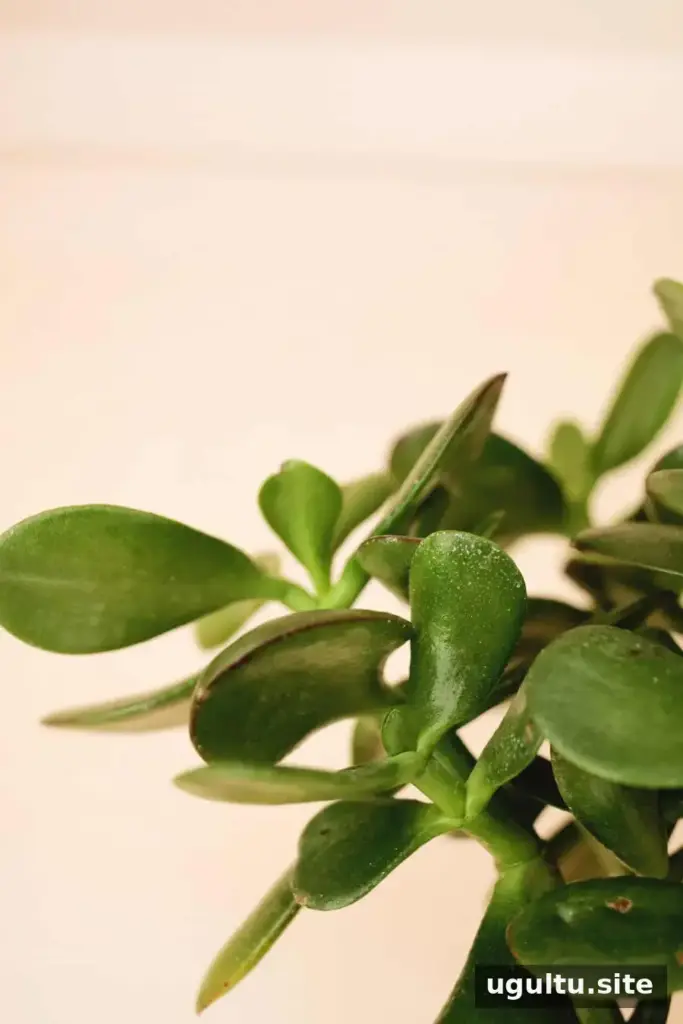
- ‘Sunset’: Green leaves with cream and pinkish-red markings.
- ‘Hobbit’: Dense growth with tubular leaves and red-tipped ends.
- ‘Bronze Beauty’: Small coppery-green leaves and very slow growth.
- ‘California Red Tip’: Leaves can develop purplish-red edges in strong sunlight.
- ‘Gollum’: Nearly tubular leaves with reddish coloring and suction-cup-like tips.
- ‘Tricolor’: Cream and rose-colored stripes, with pointed pink and white flowers.
- ‘Variegata’: Green leaves striped with white and yellow.
Varieties with colorful markings may need bright light to show their characteristic colors. Introduce plants to stronger sunlight gradually to avoid stressing the leaves.
Common jade plant problems
- Mealybugs: These pests look like small, fuzzy white spots. Jade plants can be sensitive to insecticides, so dab visible insects with a cotton swab dipped in rubbing alcohol. Check the plant daily for several days or weeks, and improve ventilation if the area is humid. Scale and spider mites can also be treated by carefully removing visible pests in this way.
- Falling, brown, or shriveled leaves: The plant may need water, but check the soil first. If it is dry, water thoroughly and allow excess water to drain. Review the plant’s watering pattern, especially during active growth.
- Mushy or squishy leaves: This can indicate excess moisture. Let the soil dry before watering again, and check that the pot drains freely.
- Leaf loss or stretched growth: Insufficient light may be a factor. Move the plant to a brighter location and rotate it periodically for more even growth.
When diagnosing a problem, consider both soil moisture and light rather than changing several care conditions at once. This makes it easier to identify what the plant needs.
Frequently asked questions
Are jade plants poisonous to pets or children?
Jade plants are poisonous to dogs and cats, so keep them out of pets’ reach. They are also mildly poisonous to humans; place the plant where small children cannot handle or ingest it.
Conclusion: consistent jade plant care
Successful jade plant care comes down to bright light, warm conditions, well-draining soil, and careful watering. Let the soil dry between waterings, especially during winter, and repot only when needed. With regular checks for pests and changes in leaf condition, a jade plant can remain a long-lived feature in a home or suitable outdoor space.


