admin
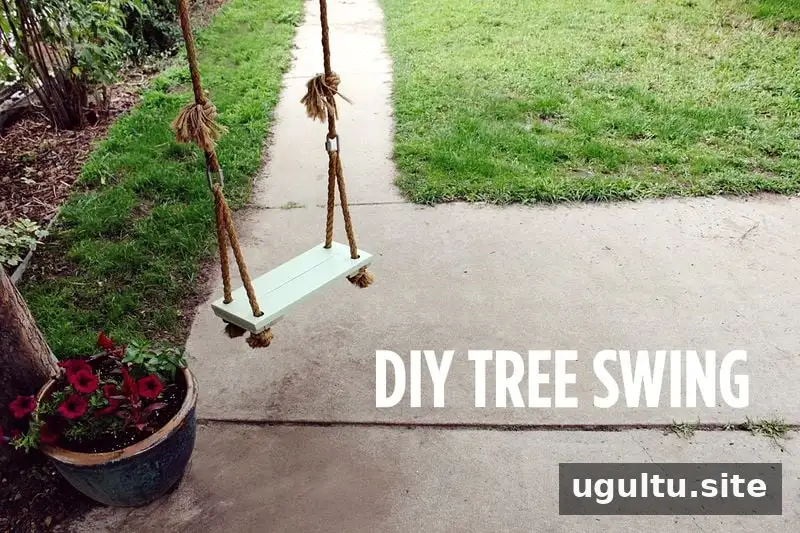
Learning how to hang a swing from a tree starts with choosing a suitable branch and building a seat that is assembled securely. This project describes a simple wooden seat supported by rope, but a homemade swing is not a professionally engineered product. Inspect the tree and every component carefully, and do not use the swing if you are unsure that the branch, rope, knots, or connections can safely support the intended load.
How to hang a swing from a tree: supplies and safety checks
Gather the following materials and tools before starting:
- One 2x4x8 piece of wood for the seat
- One 1x2x8 piece of wood for the top rope support; the original plan suggests at least 40 ft. of rope, long enough for the branch height and strong enough to support adult weight
- Wood glue and two clamps, or heavy objects to hold the glued pieces together
- A drill and a bit wide enough for the rope; a 3/4-inch bit was used for this design
- Eight 1 1/2-inch wood screws
- Two 3/8-inch chain quick links
- Sandpaper and paint or wood sealant, if desired
Before assembling anything, check that the branch is healthy and free of obvious cracks or decay. Use rope and connectors with suitable load ratings, and make sure the swing has clear space around and beneath it. If you cannot confidently assess the branch or hardware, ask a qualified professional to evaluate the installation.
Build the wooden swing seat
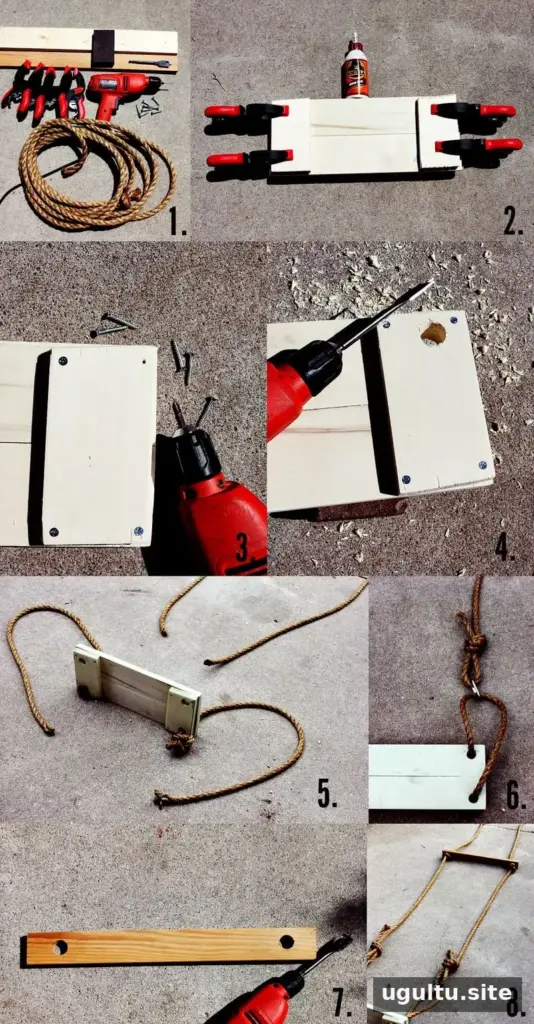
Cut the 2x4x8 into two pieces, each 2.5 ft. long, and two pieces, each 8 inches long. Place the longer boards side by side and glue their long edges together. Glue one short piece across each end, keeping the edges flush rather than overlapping. Clamp the assembly or place heavy items on top while the glue sets, checking that the pieces do not shift.
After 20 minutes, pre-drill holes near the four corners of each short piece, staying far enough from the edges to reduce the risk of splitting the wood. Add the screws. Drill two rope holes near the outer corners of each end, again avoiding the edges. Sand the seat and paint or seal it if you wish. Follow the adhesive and finish manufacturers’ directions for full curing before use.
Attach the ropes and hang the swing
Cut two rope lengths of about 5 ft. for the seat. Tie a double overhand knot at one end of each piece, pass the rope up through the seat and back down through the other hole, then tie the same knot at the other end. Repeat on the opposite side. Check that the knots are seated firmly and the seat hangs evenly.
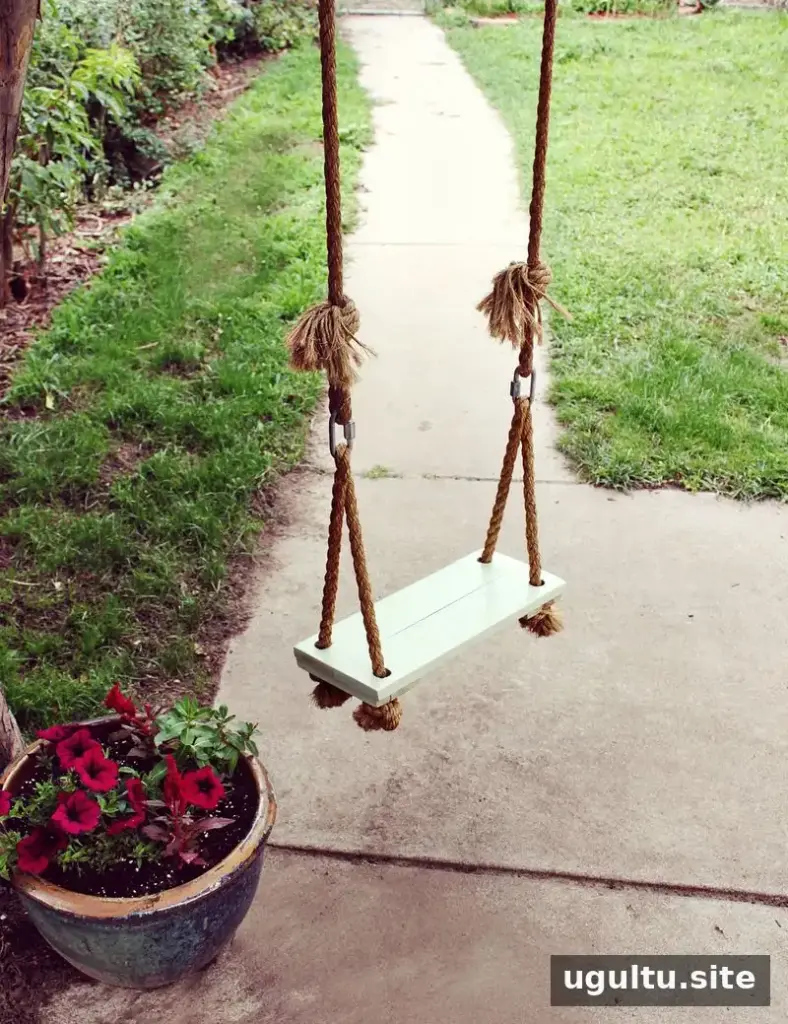
Divide the remaining rope into two lengths, about 15 ft. each; a higher branch requires longer rope. Fold one end of each length to form a loop and tie a secure knot, following the design shown in the accompanying images. Connect each rope loop to the corresponding seat-rope loop with a 3/8-inch chain quick link.
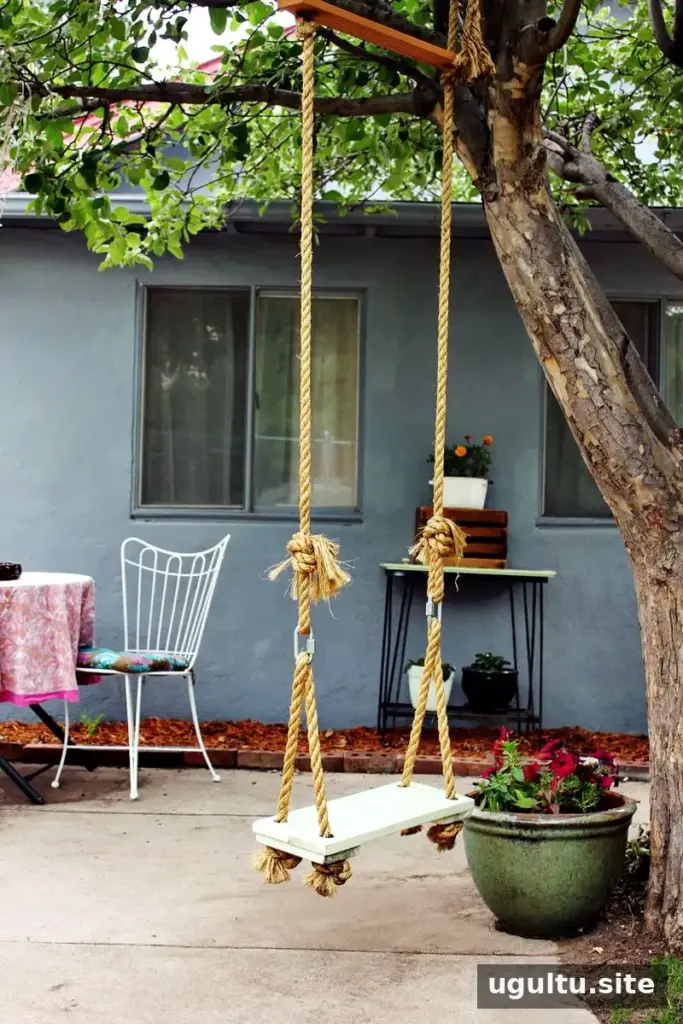
Cut the 1x2x8 piece to 2.5 ft., or to the length of the seat if you made a longer one. Drill a hole about 1 inch from each end, centered across the board. Measure about 5 ft. above the seat, tie a knot in each rope, and pass the loose rope ends through the holes in the board. The original instructions finish by tying the ropes to the tree branch with a taut-line knot. Ensure the ropes are routed evenly and that the knots and connections cannot slide or loosen during use.
Inspect the swing before use
Test the complete setup cautiously with weight before anyone sits on it, as the original instructions advise. Recheck the branch, seat, rope, knots, and quick links regularly, and stop using the swing if you notice wear, movement, cracking, or loosening. Make and use a homemade swing at your own risk; supervision and routine checks are especially important when children are using it.
A tree swing can add a welcoming feature to an outdoor space. If there is no suitable tree, an indoor swing should only be attached to a structural beam that has been confirmed appropriate for the load—not to an unsupported ceiling finish. —Rachel