admin
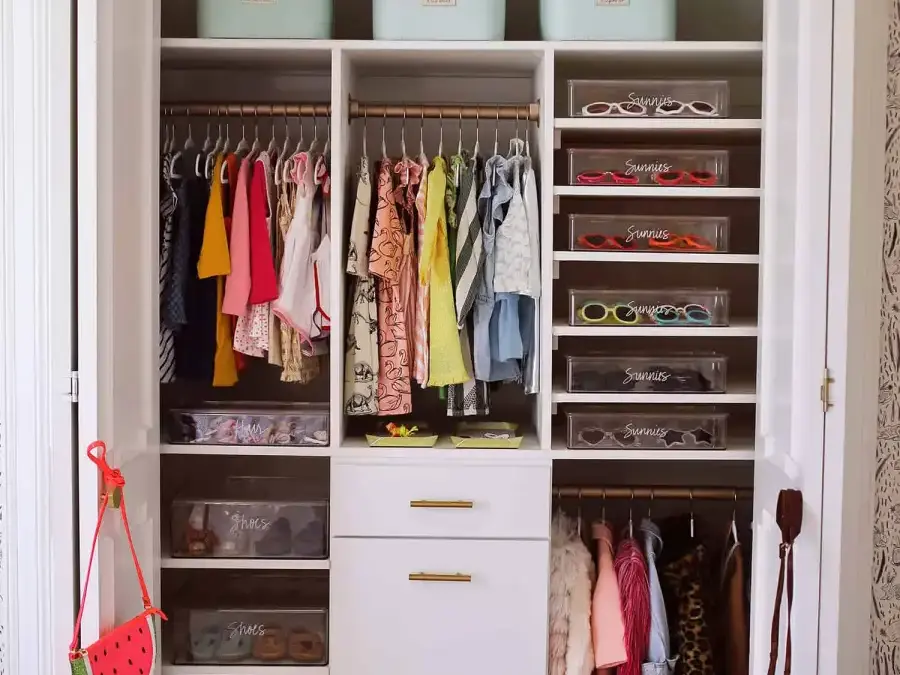
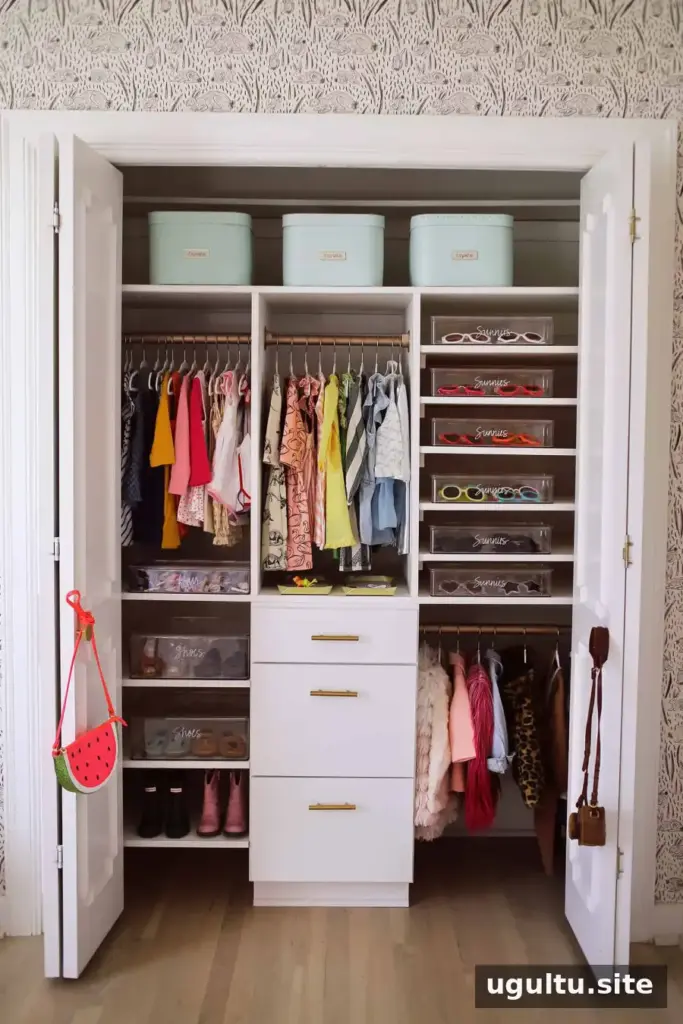
Baby closet organization can quickly become a challenge as tiny outfits, gifts, and keepsakes accumulate. A thoughtful layout can make the space easier to use now and simpler to adjust as your child grows. Professional organizers Clea and Joanna share practical ideas for storing sentimental items, choosing adaptable containers, and keeping clothing that does not currently fit out of the way.
Plan a closet that works for your family
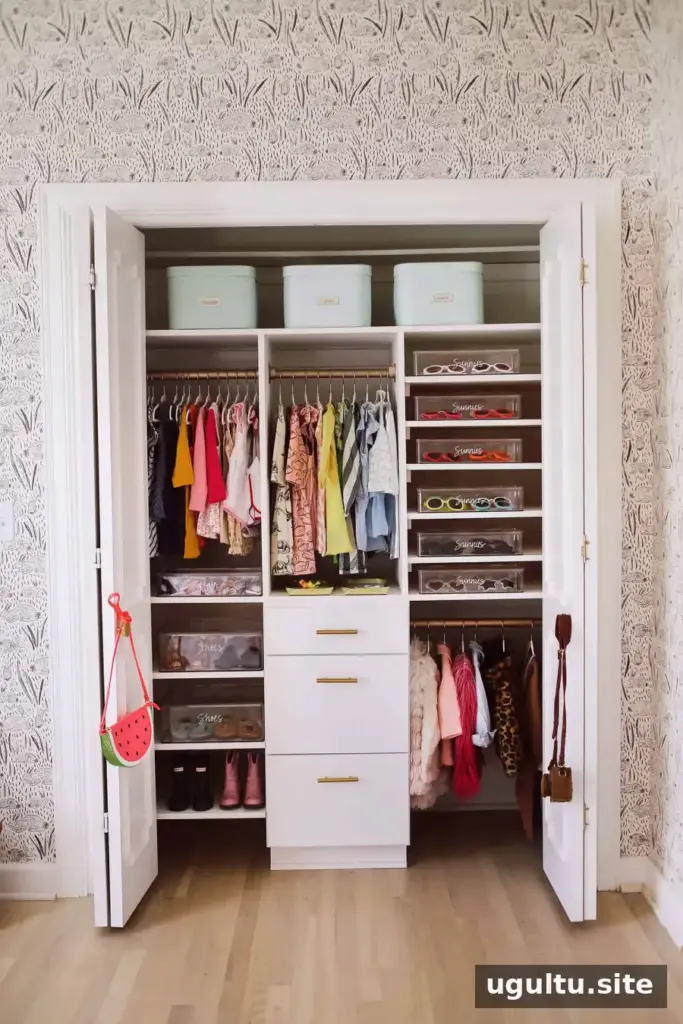
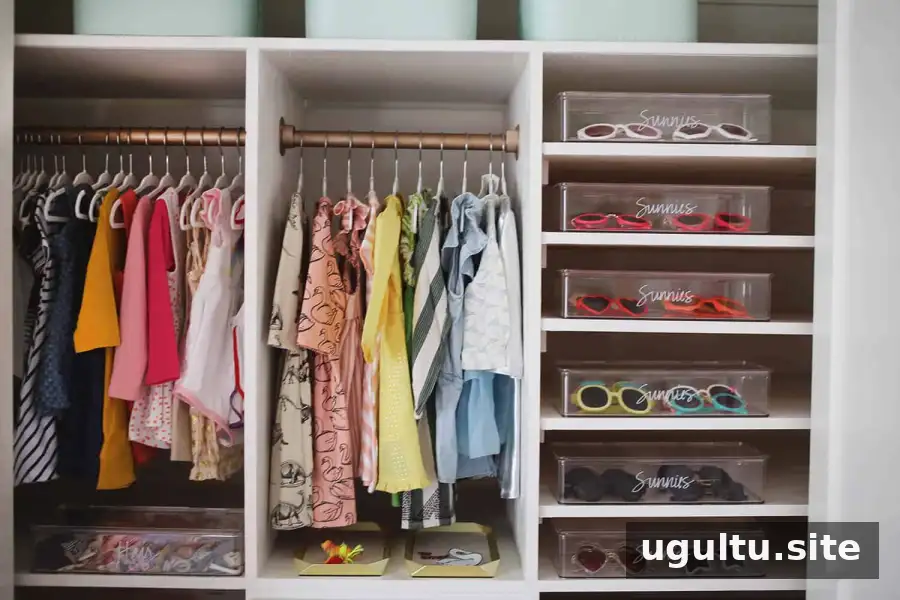
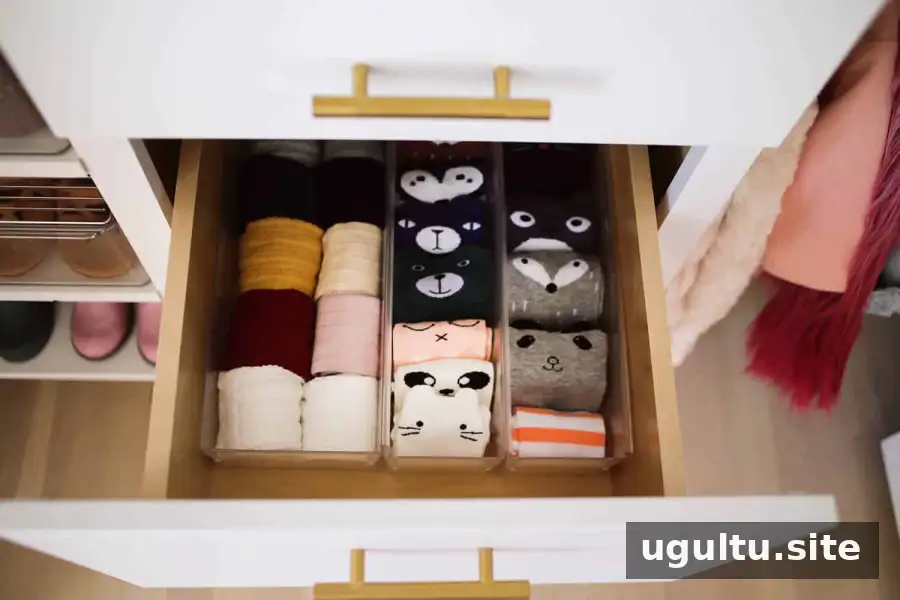
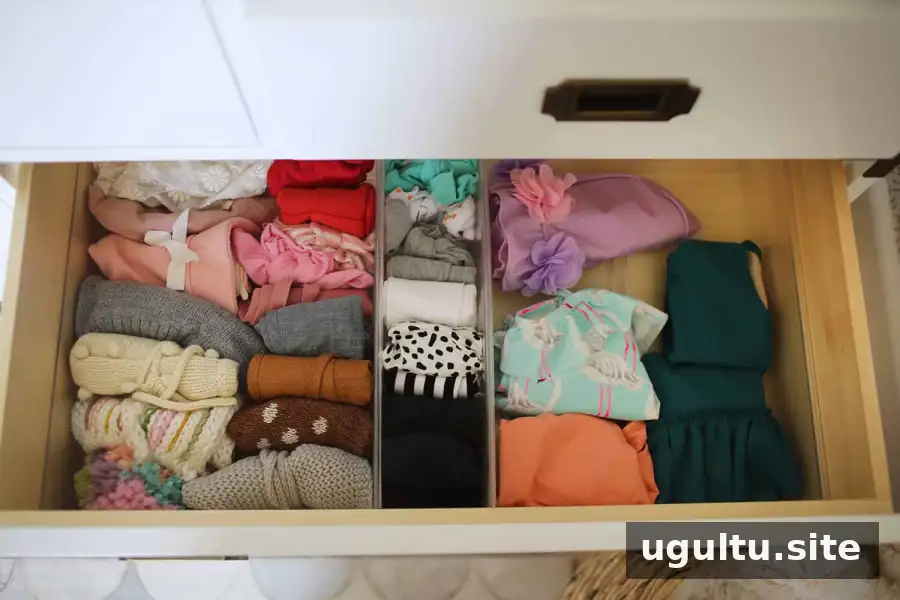
A standard closet may not use its full height or width efficiently, especially when most of the clothing is small. In this example, a simple built-in arrangement added shelves and a pre-made cabinet with drawers. Existing furniture can be a useful starting point when building drawers from scratch is not practical.
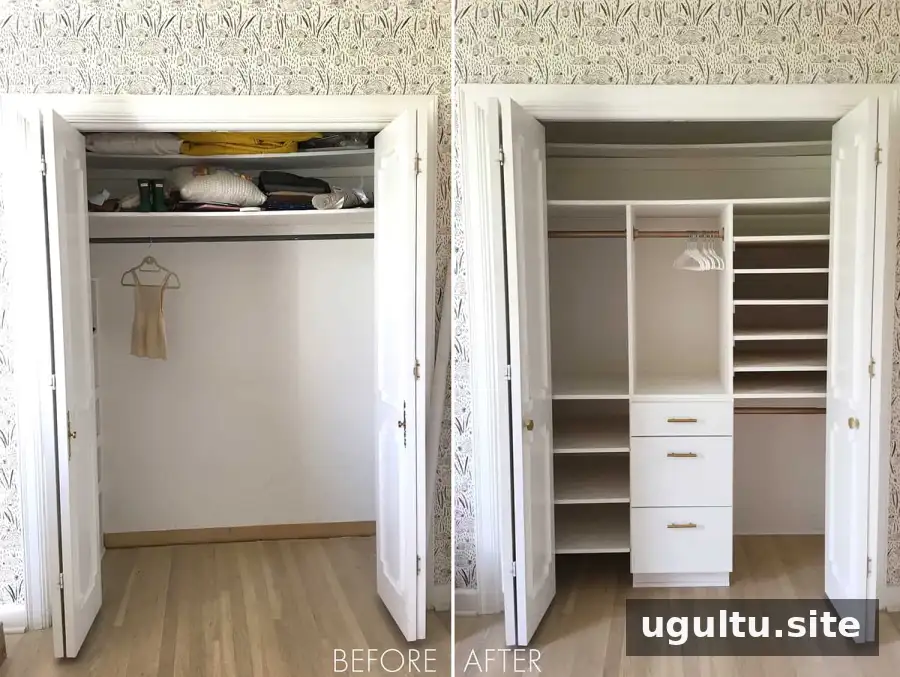
For families planning to stay in their home or expecting the closet to serve more than one child over time, a more permanent layout may be worth considering. Compare the cost of a custom setup with the storage containers you might otherwise buy, and measure the space before choosing shelves or furniture. The original closet update was designed for its specific dimensions, so treat it as inspiration rather than a ready-made plan.
The curtain rods in this example were spray-painted gold to coordinate with the rest of the closet. If you make a similar change, use a product suitable for the rod’s material and follow its application and ventilation instructions.
Baby closet organization tips for everyday use
1. Give keepsakes a dedicated home
Baby-related cards, birth announcements, photos, and small mementos can feel meaningful, but leaving them loose around the home can add clutter. Set aside a box or a few boxes in the closet so these items have a clear place to go. A labeled container also makes it easier to find keepsakes later.
2. Choose storage that can adapt
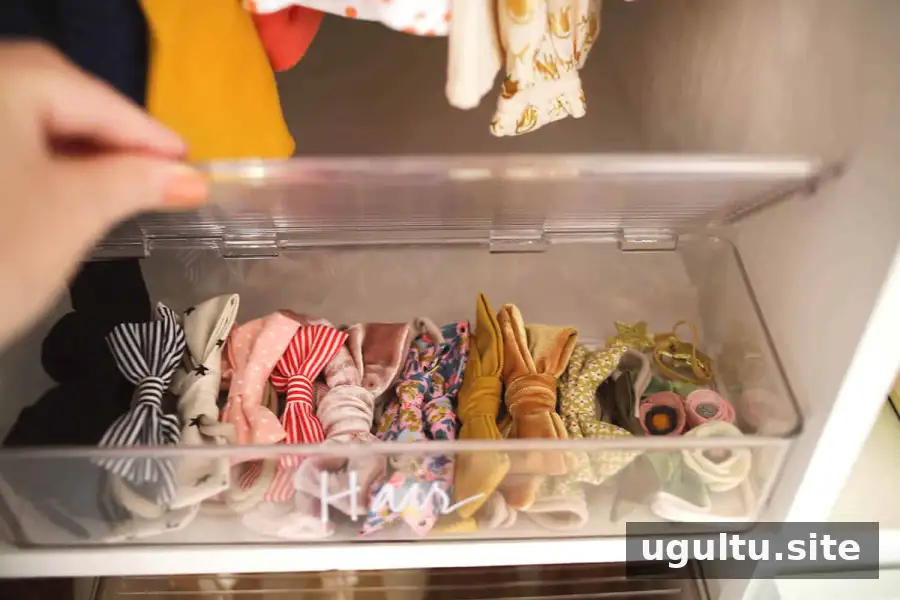
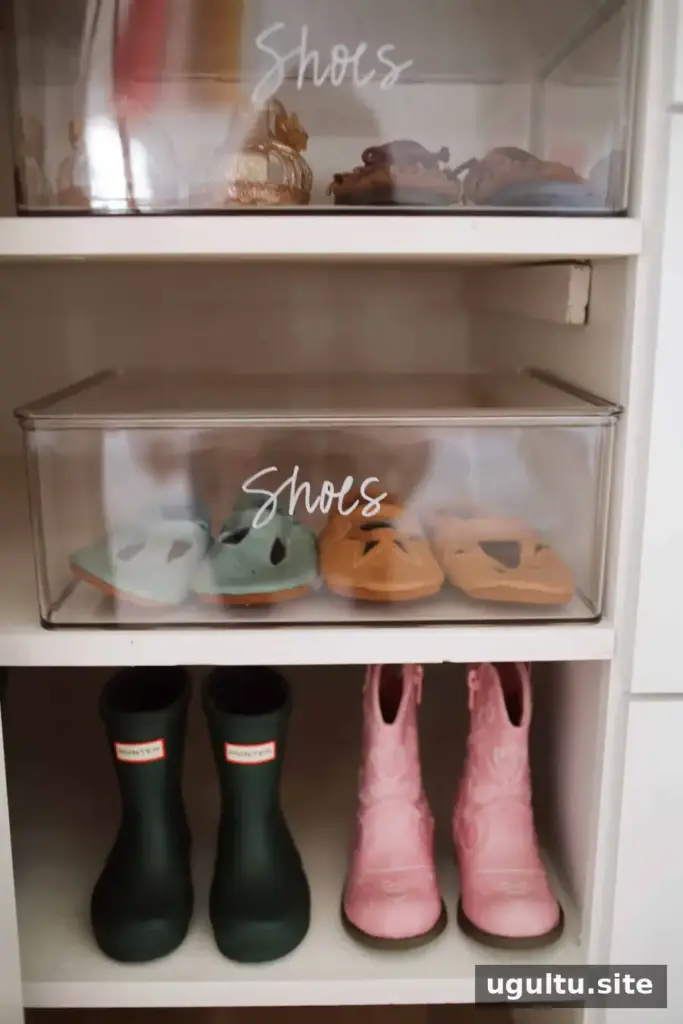
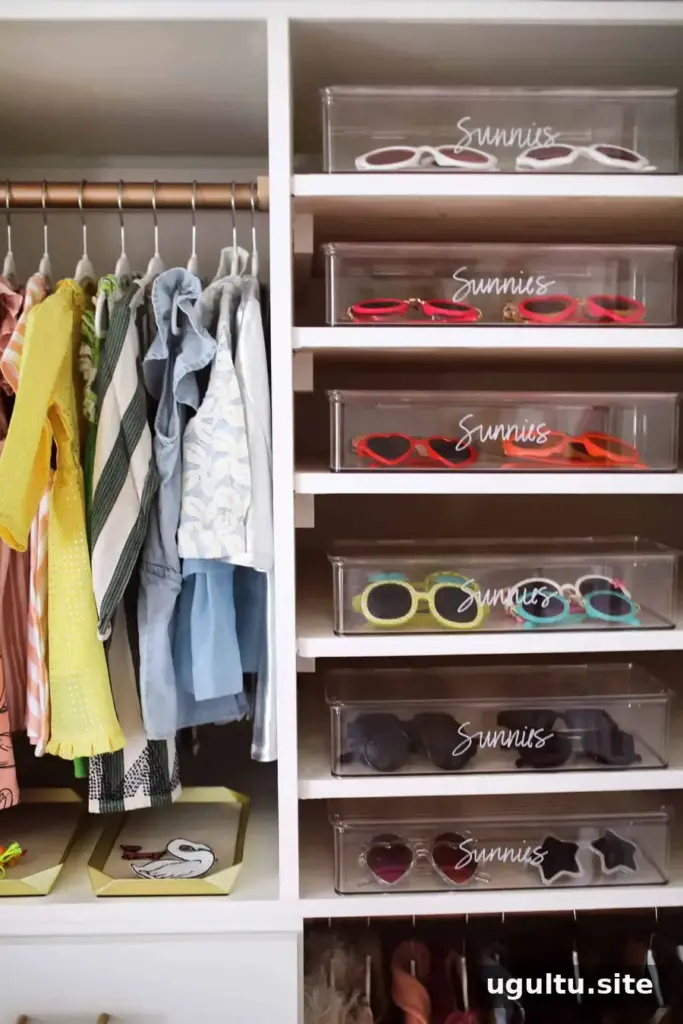
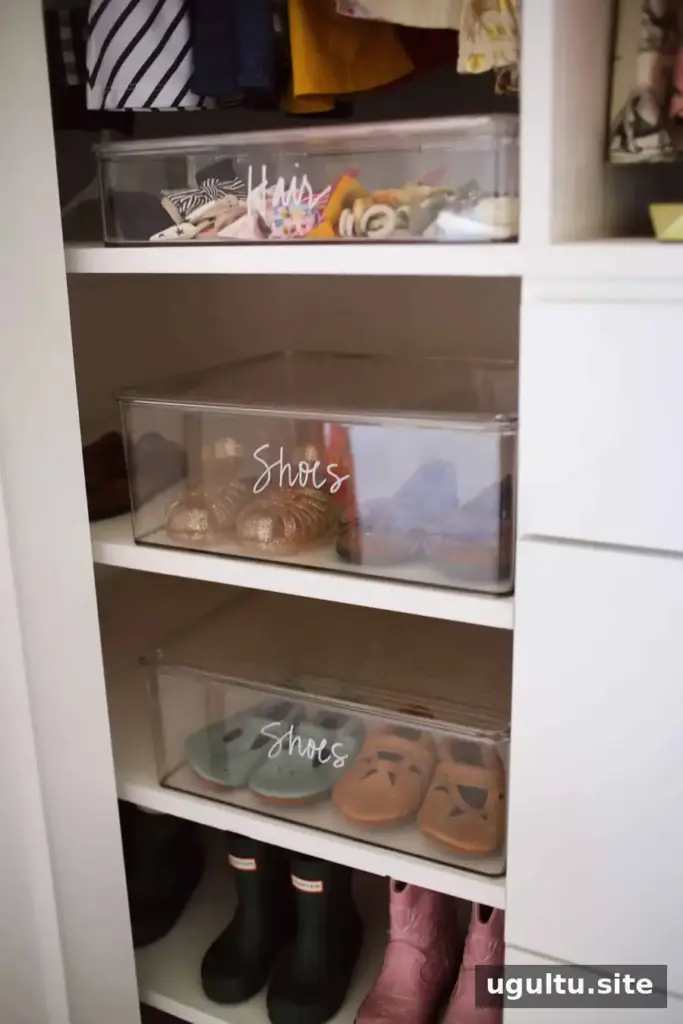
Baskets, bins, and shoe boxes can all help group small items. Choose sizes that fit the available shelves and are likely to remain useful as your child’s belongings change. Before buying containers, measure the shelf depth and height so they can be reached and removed comfortably.
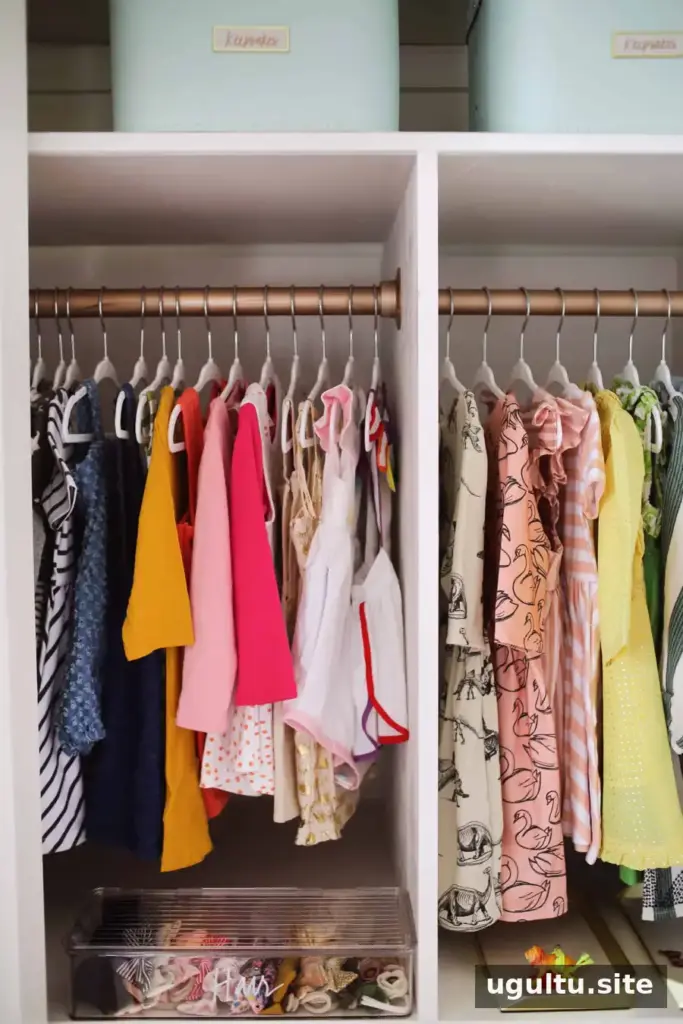
3. Separate clothes by fit
Keep two storage bins available: one for clothing your child has not grown into yet, and another for clothes that no longer fit. This keeps the hanging area from becoming crowded and makes it easier to find the right sizes.
Outgrown items can be kept for another child, donated, or passed along to someone else. If you plan to store them, make sure the clothes are clean and dry before packing them away, and label the bin with the size or season.
Make baby closet organization easy to maintain
A functional closet does not need complicated systems. Start with a layout that suits the space, reserve a container for keepsakes, and separate clothes that are too large or already outgrown. These simple habits make baby closet organization easier to maintain as your child’s wardrobe changes.
Looking for more closet organization ideas? Explore room-by-room approaches to organizing your home.