admin
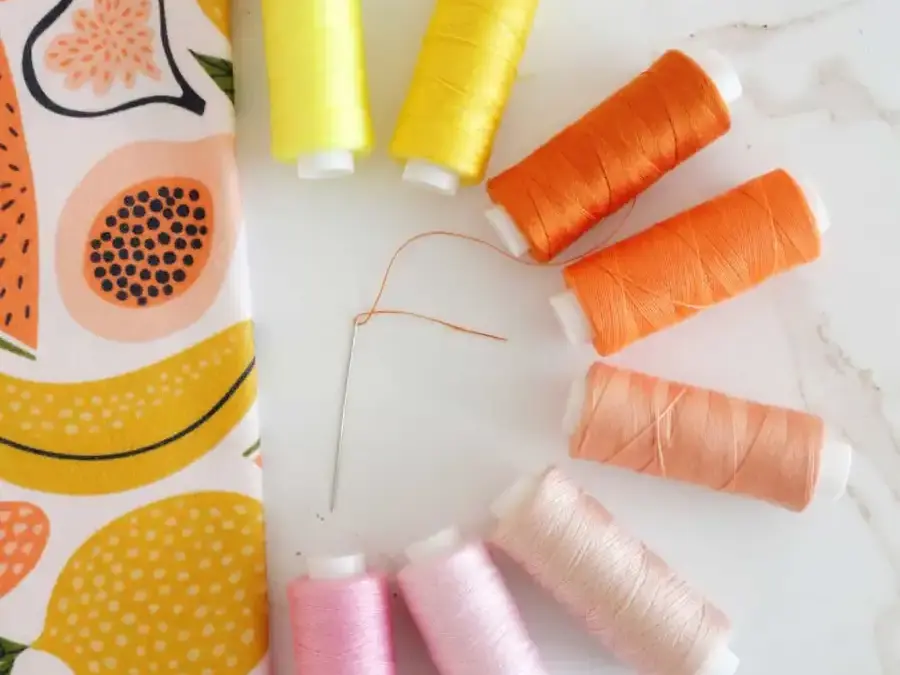
Learning how to thread a needle can make hand-sewing projects easier to start, whether you sew often or only need to mend something occasionally. A frayed thread end or a small needle eye can make the task fiddly, but these four methods offer practical alternatives for different tools and skill levels.
Before you begin, cut the thread end cleanly with sharp scissors. A fresh, tidy end is less likely to split as you guide it through the eye. Choose a method below based on the thread, needle, and tools you have available.
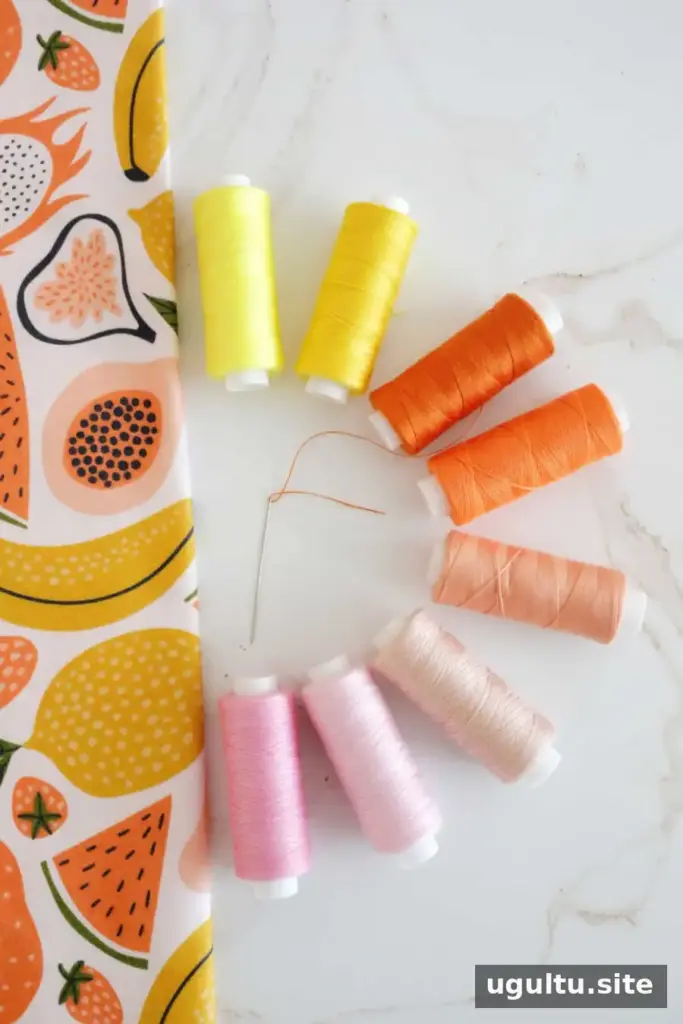
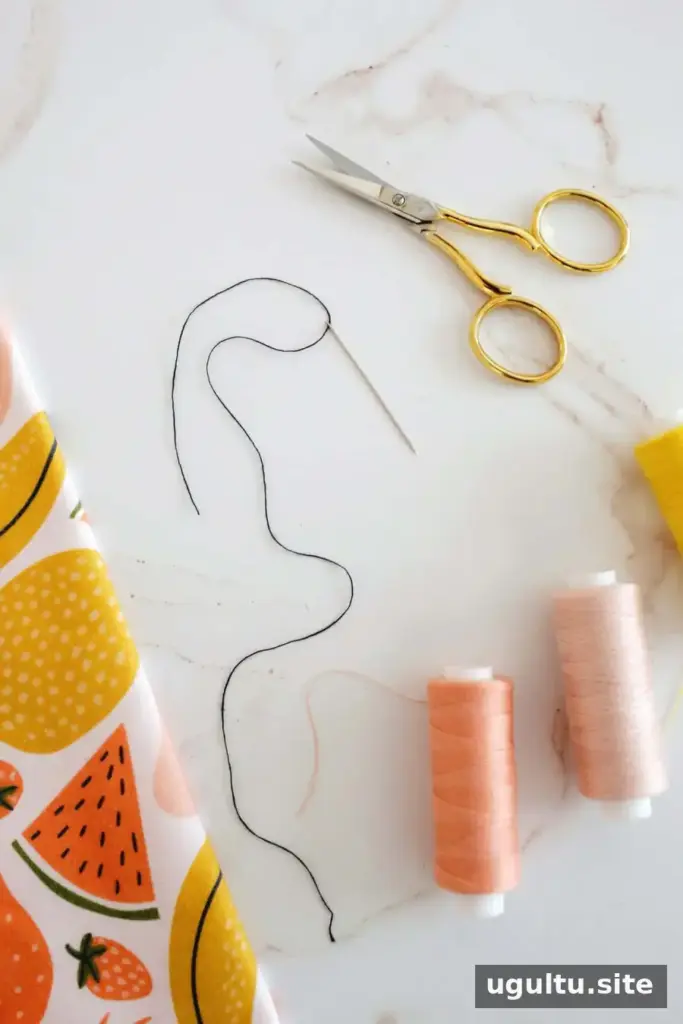
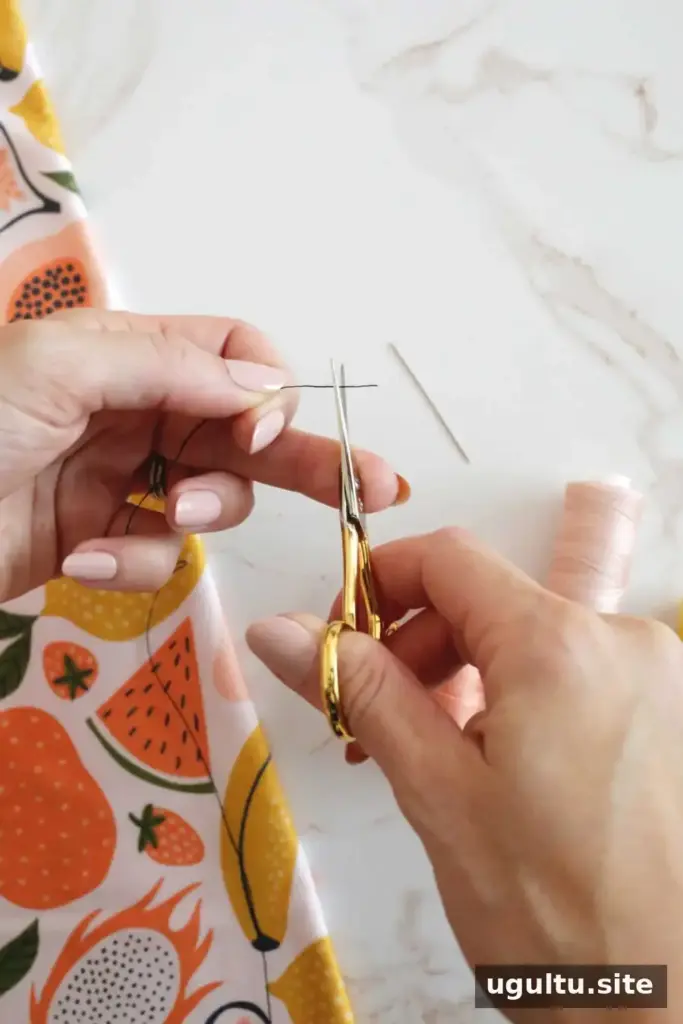
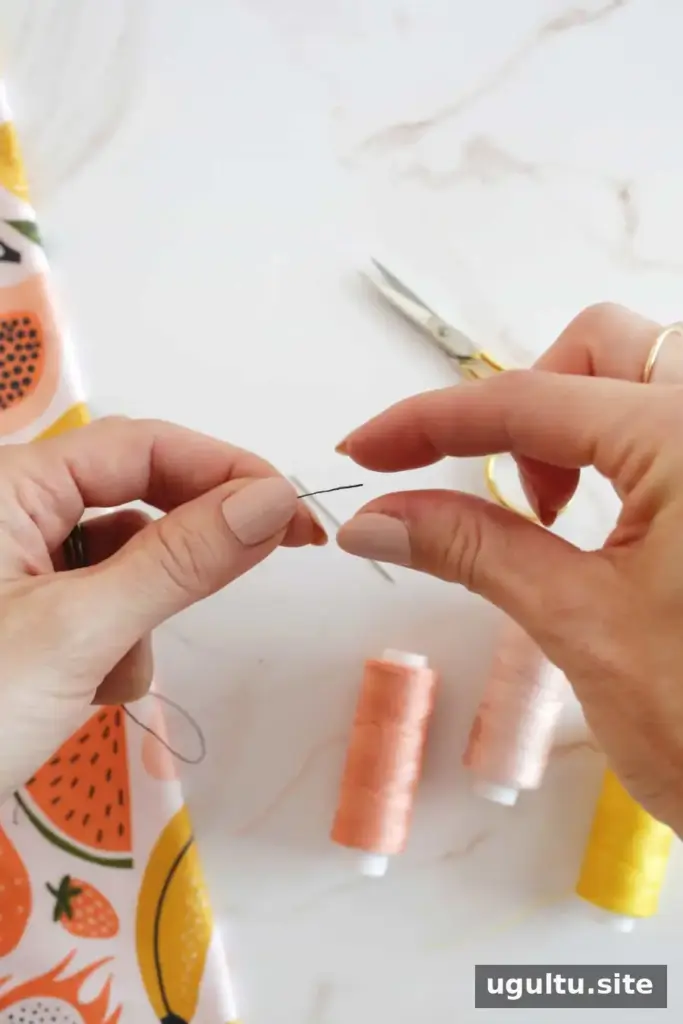
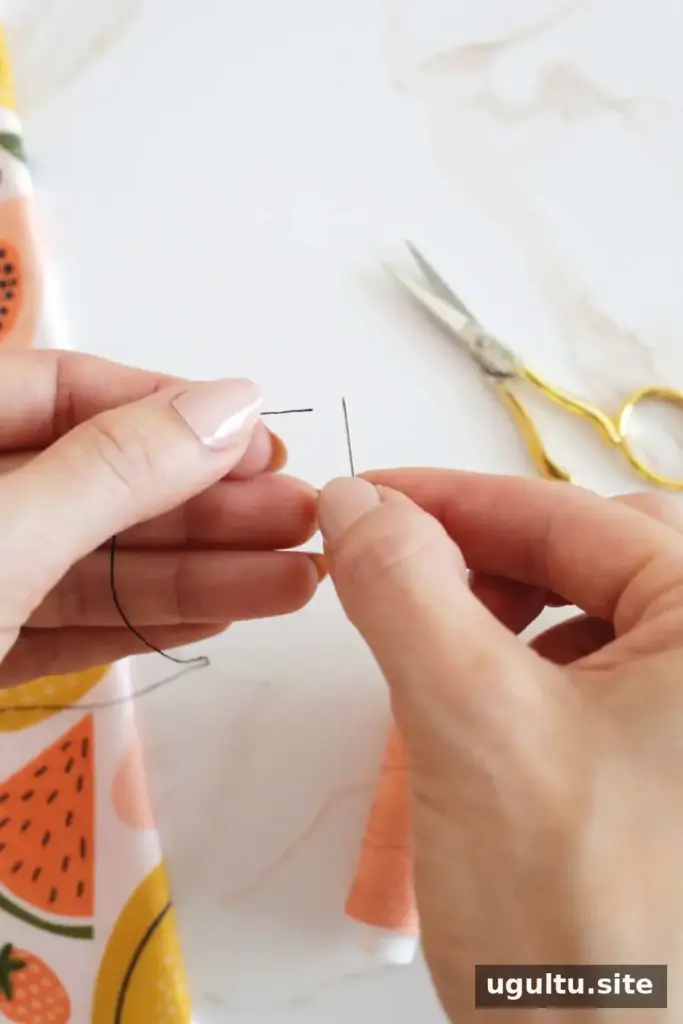
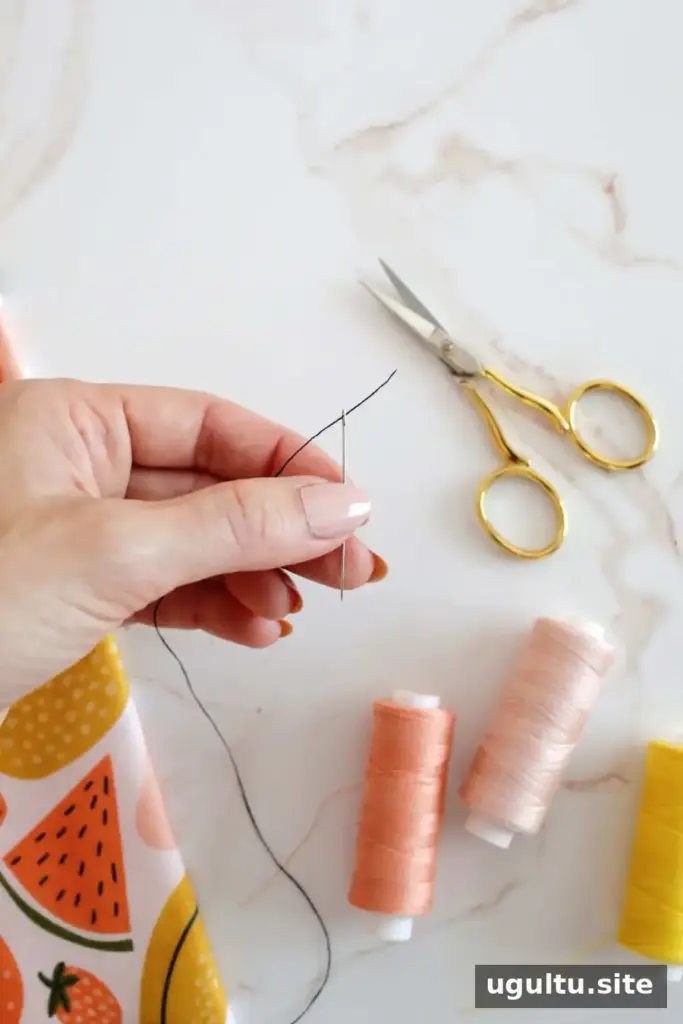
How to Thread a Needle: 4 Easy Methods
1. Dampen the end of the thread
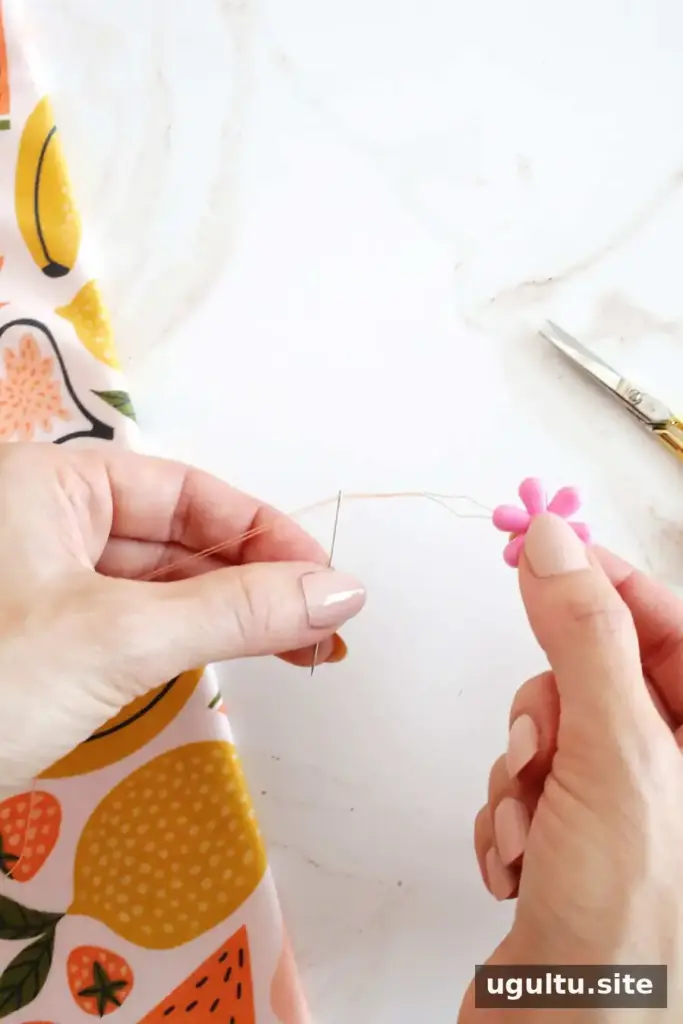
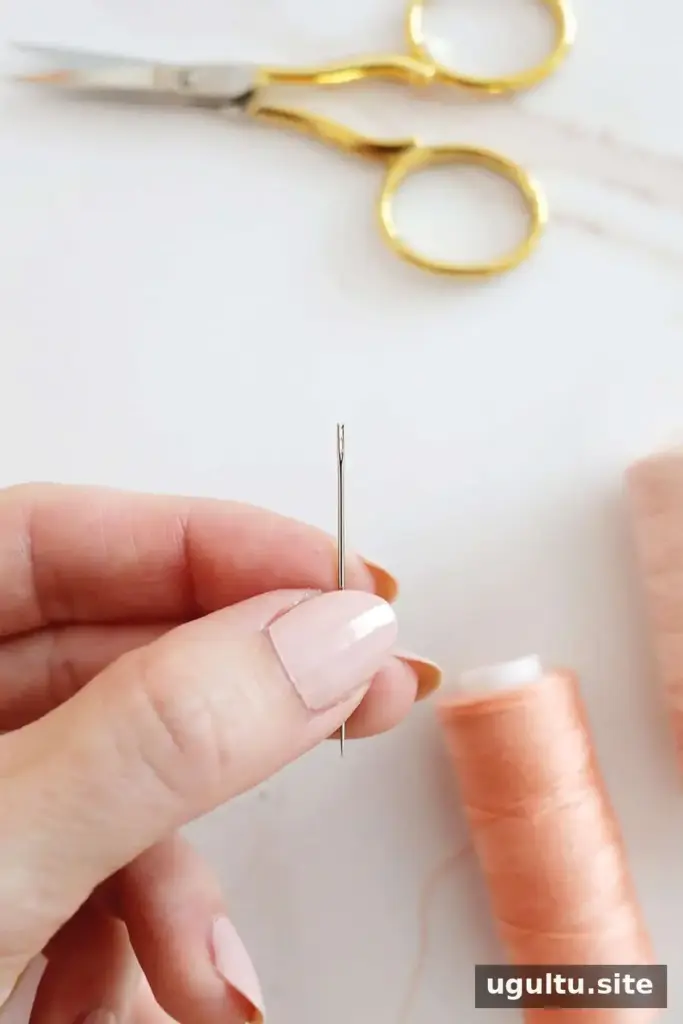
This method requires no special equipment. First, trim away any frayed fibers. Lightly dampen your fingertips with clean water, then pinch the thread end to bring its fibers together. The moisture can help the end stay compact while you guide it through the eye.
Push the tidied end through the needle eye, then pull enough thread through for your sewing task. Tie a knot at the end if your project requires one. Use only a little water; a wet thread can be harder to handle. Clean water is preferable to putting the thread in your mouth.
2. Use a needle threader
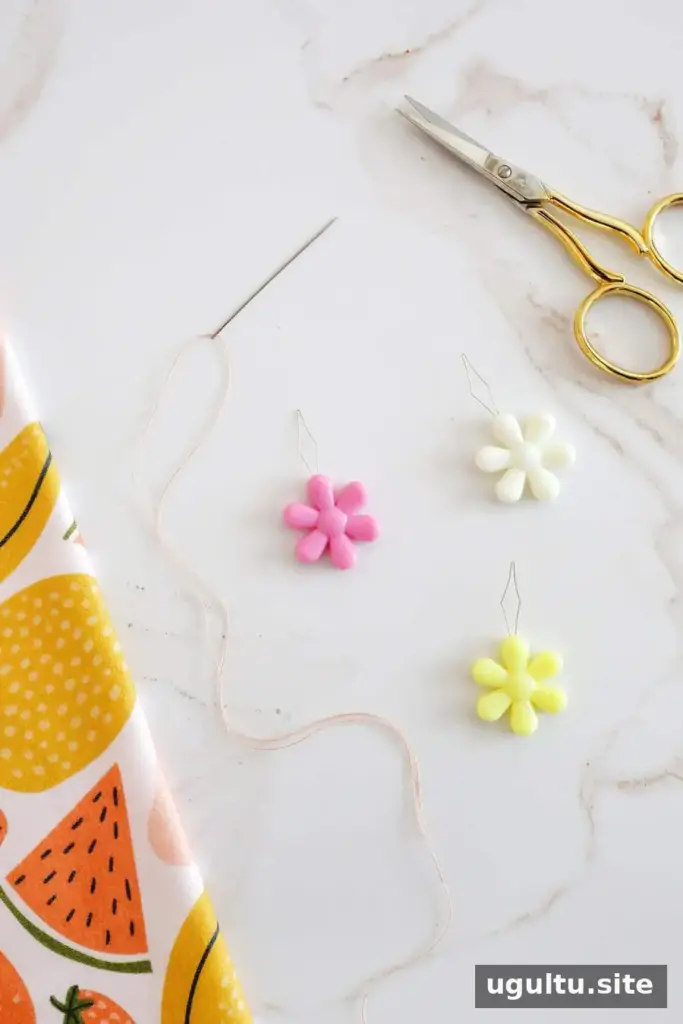
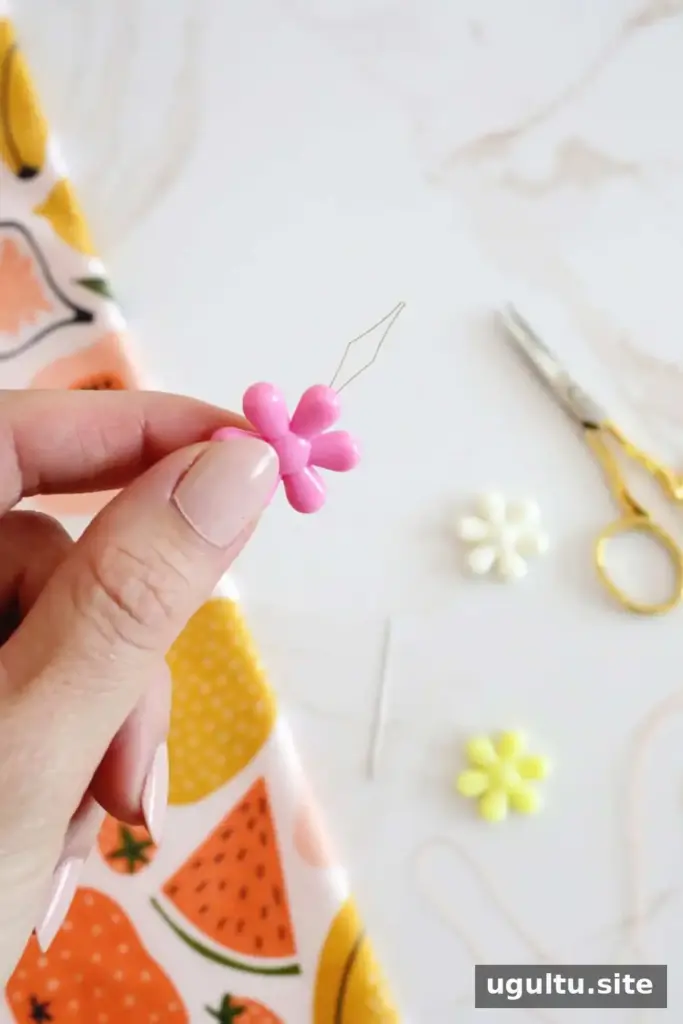
A needle threader is a small tool that can be especially useful when the needle eye is narrow or your thread keeps fraying. Many hand-sewing threaders have a thin wire loop or diamond-shaped section.
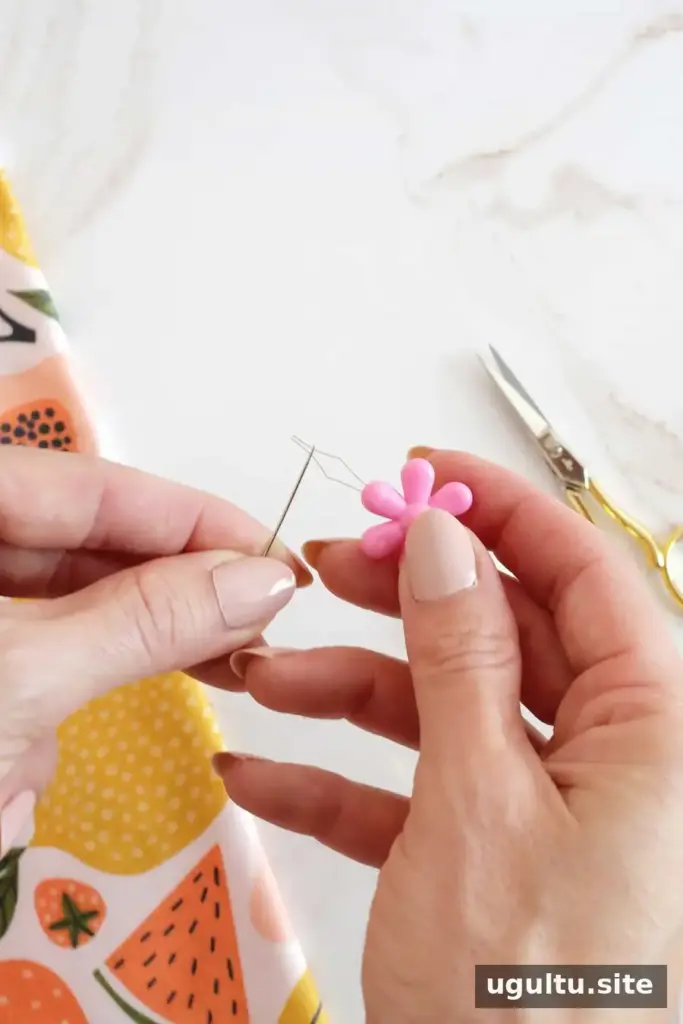
- Push the wire loop through the needle eye.
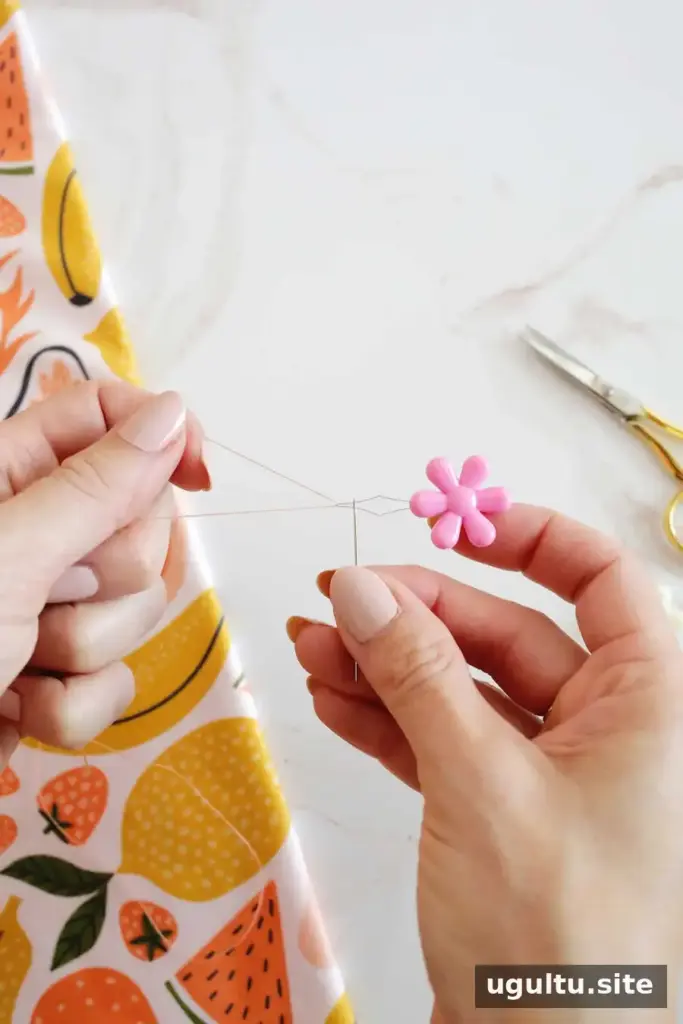
- Pass the thread through the larger loop.
- Carefully pull the threader back through the eye, bringing the thread with it.
- Pull through the desired length and knot the thread if needed.
Threaders come in different designs, so follow the instructions supplied with yours. If you are using one with a sewing machine, check that it is specifically suitable for that machine.
3. Try the fold-and-pinch method
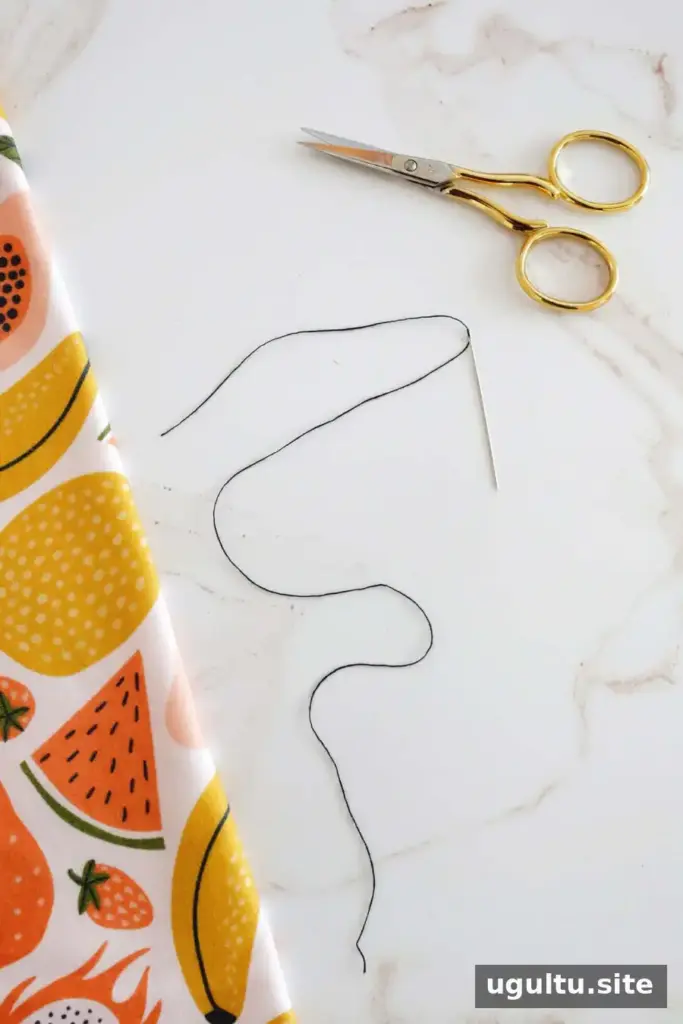
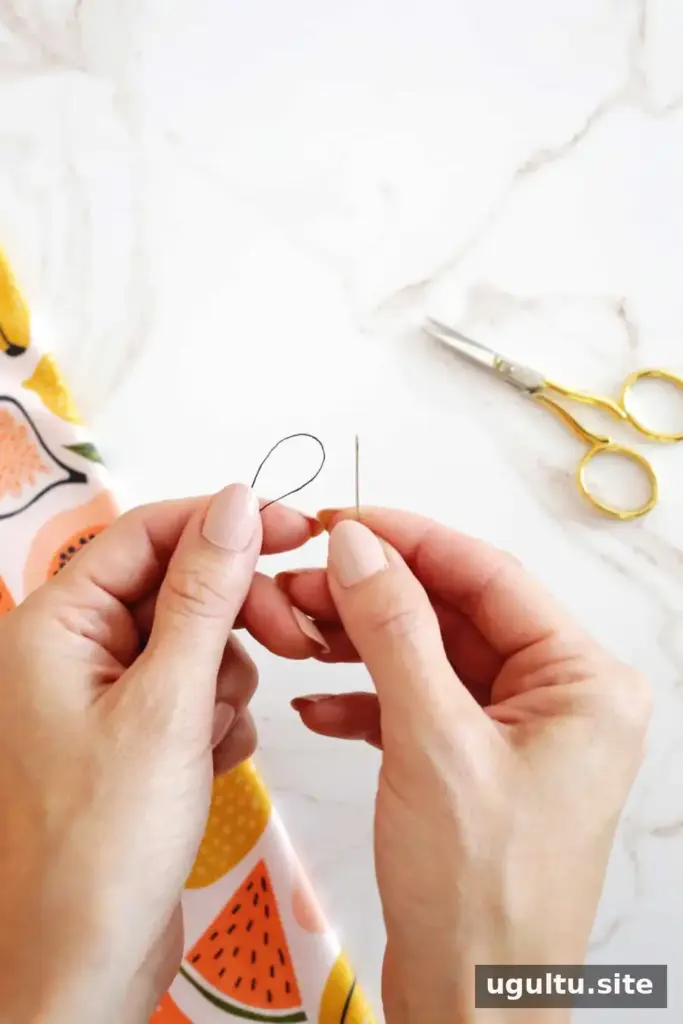
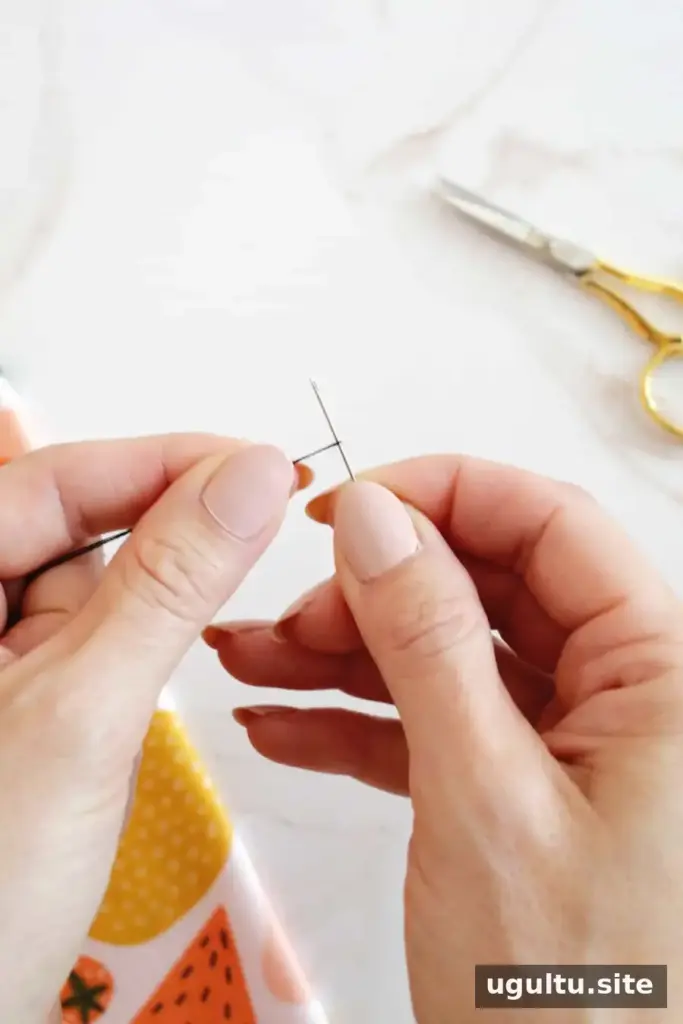
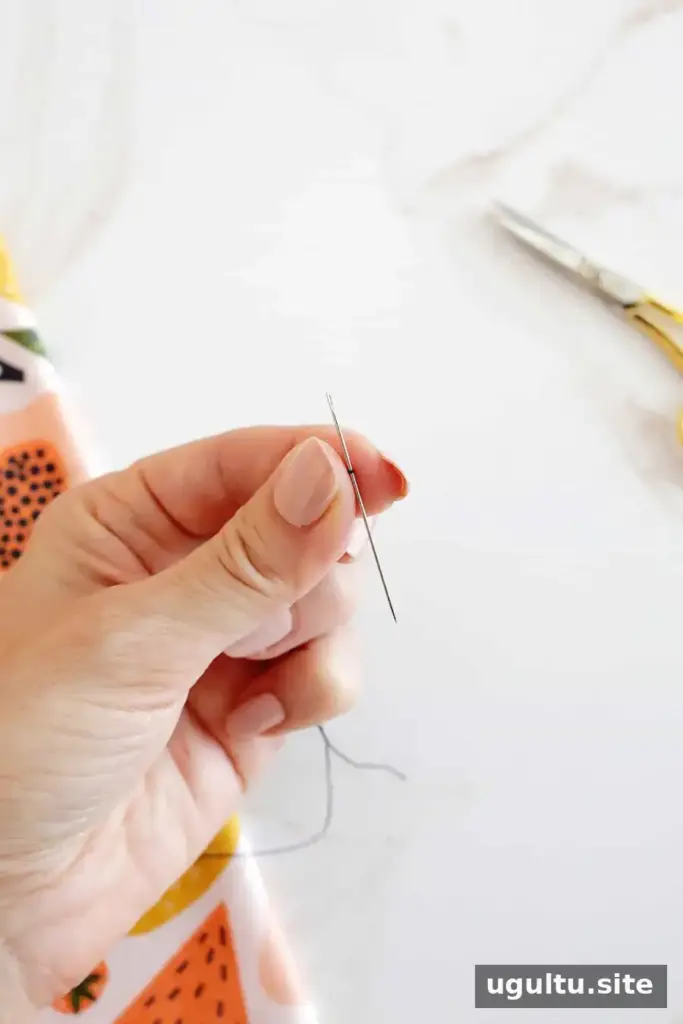
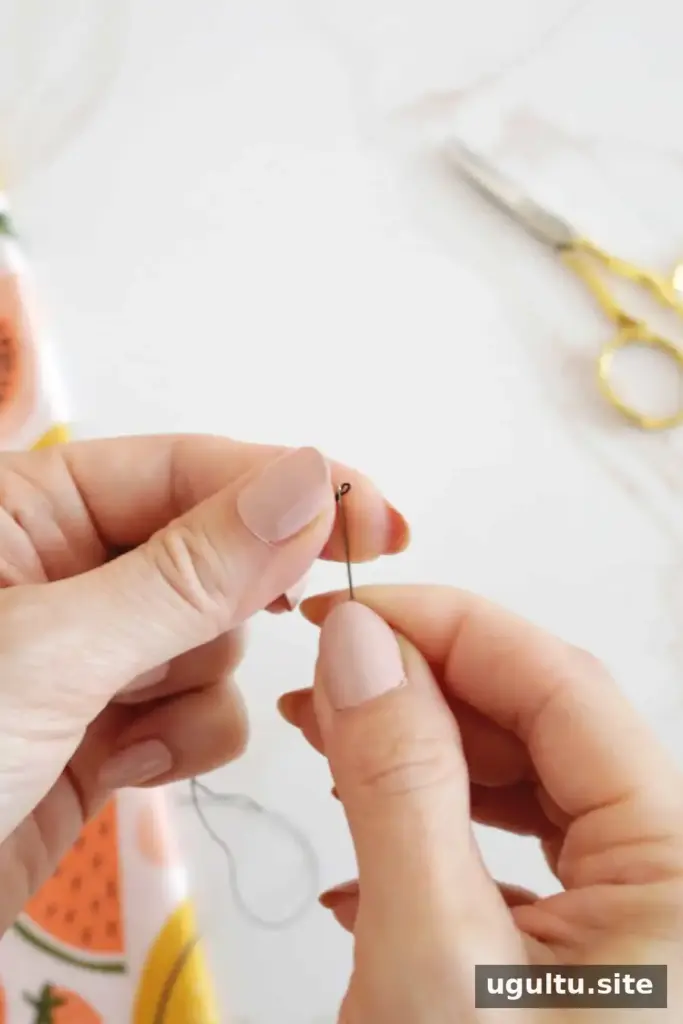
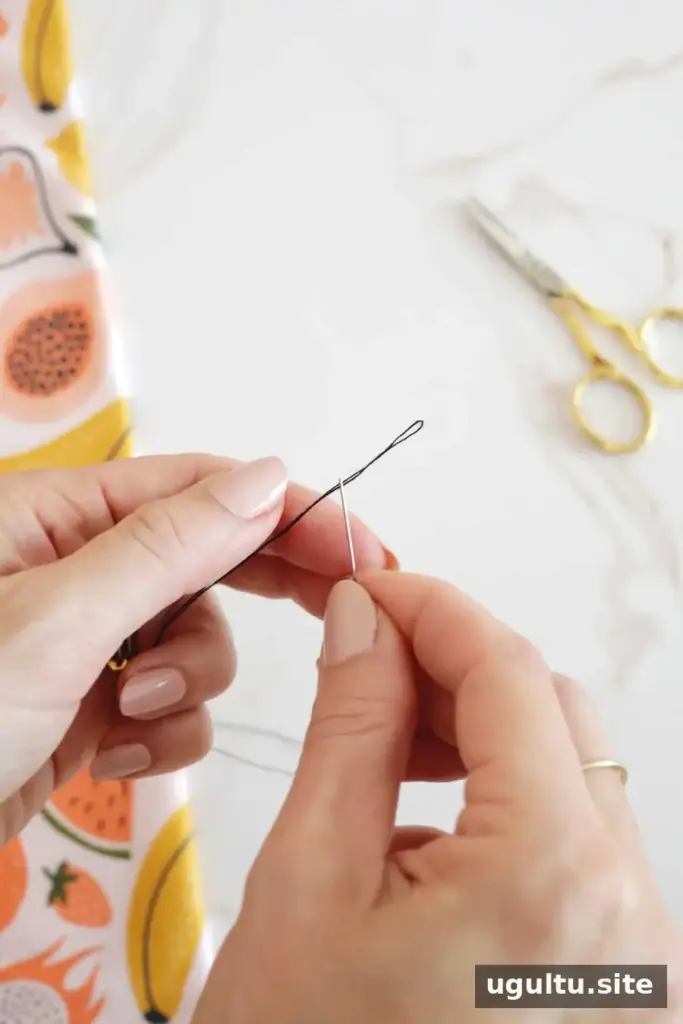
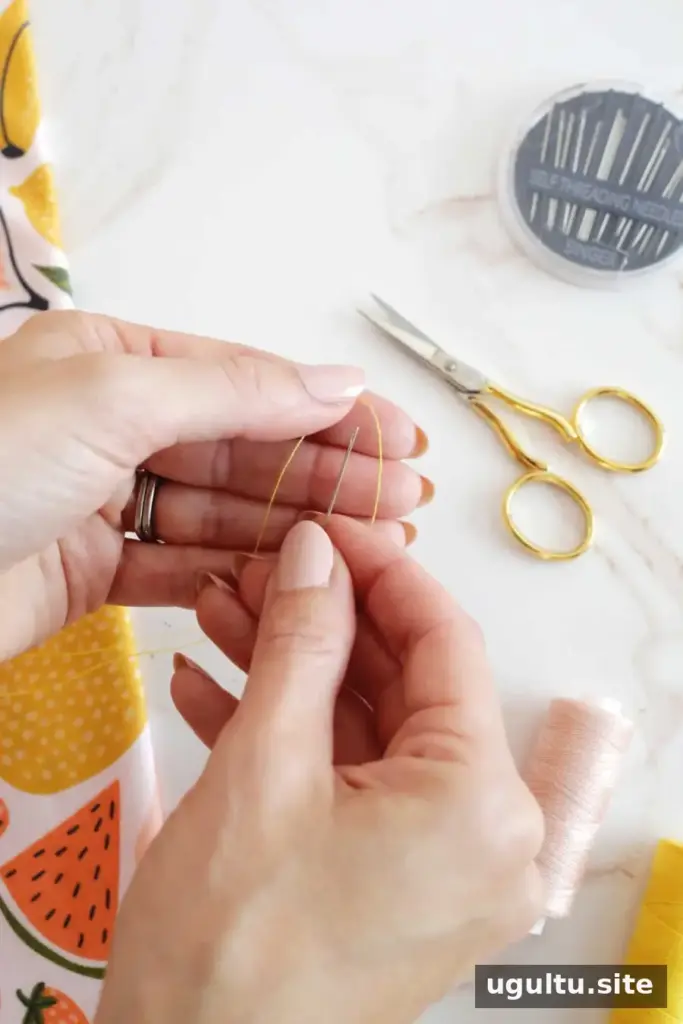
This method uses the needle to guide a small loop of thread through its own eye. Hold the thread across the top of the needle and pinch it firmly between your thumb and forefinger. Draw the needle away while keeping the thread pinched, leaving a small loop between your fingers.
Place the eye over the loop and press the needle down so the loop passes through. Once you can reach it, pull the loop through the eye, then draw out the length of thread you need. This technique may take a little practice, but it does not require an extra tool.
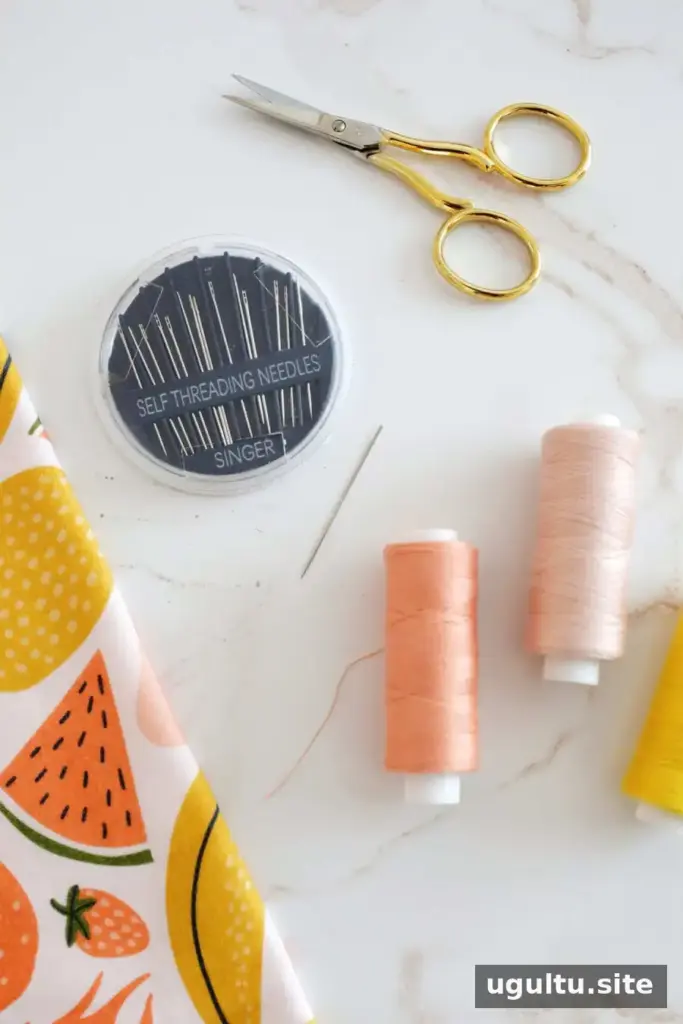
4. Use a self-threading needle
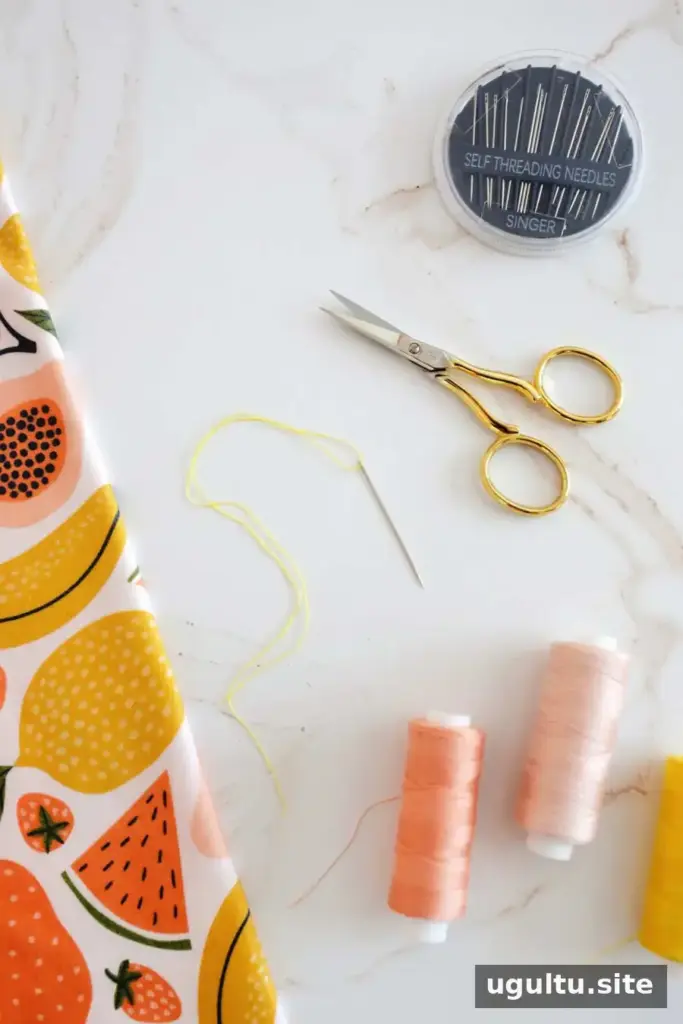
Self-threading needles have a small opening or slot near the top of the eye. To use one, place the thread against the opening and guide it into the slot according to the needle’s design. Check that the thread is fully seated before sewing, since a loose thread may slip out as you work.
This can be a convenient choice for occasional repairs or projects where threading a conventional needle is difficult. Handle the needle carefully and choose a size appropriate for your fabric and thread.
Tips for easier threading
- Trim the thread end at an angle for a narrow point, especially when working with a small eye.
- Use a needle with an eye large enough for your thread, while ensuring the needle is suitable for the fabric.
- If the thread starts to fray, cut off the damaged section and try again rather than forcing it through.
- Pull the thread gently to avoid bending or damaging a delicate needle threader.
Quick project details
Preparation: 2 minutes
Hands-on threading: about 1 minute
Total: about 3 minutes
Supplies and equipment
- Sewing thread
- Sewing needle
- Scissors
- Optional: needle threader or self-threading sewing needle
Getting started with your sewing project
Once the needle is threaded, pull through enough thread to work comfortably and secure the end as your project requires. The best way to learn how to thread a needle is to try the method that suits your materials: dampening can help with a slightly frayed end, while a threader or self-threading needle can be useful for a very small eye. — Laura