
 admin
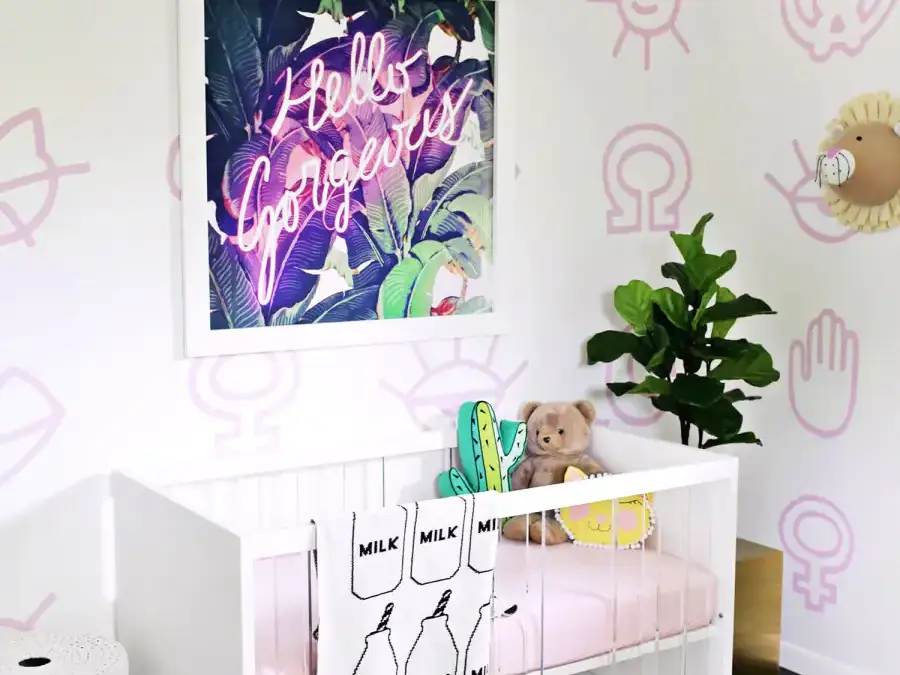
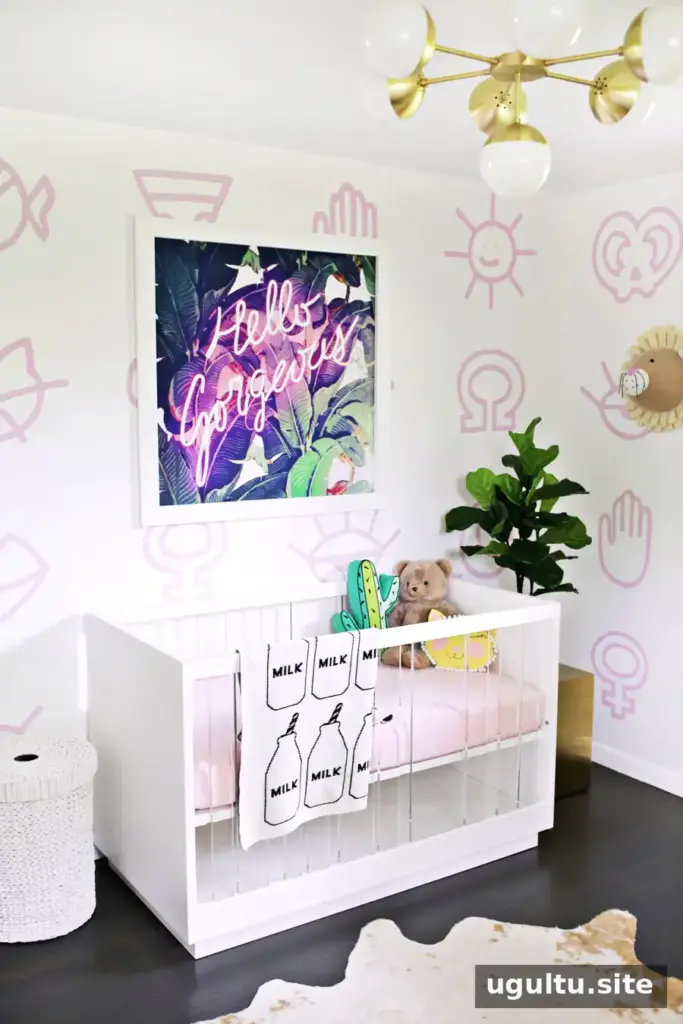
This nursery tour highlights a calm, colorful baby room designed to feel connected to the rest of the home. Soft lavender, pink and green tones create the foundation, with rainbow details adding a playful touch. White, gold and clear acrylic accents help the room feel light, while flexible furniture choices make it easier to adapt as a child grows.
Nursery tour: color and décor ideas
When planning a nursery, choosing a palette that works with the rest of the house can make the room feel cohesive rather than separate. Here, pastel colors are balanced with white and metallic finishes, while whimsical pieces bring in personality without overwhelming the space. A useful approach is to select a few repeating colors and carry them through accessories, textiles and artwork.
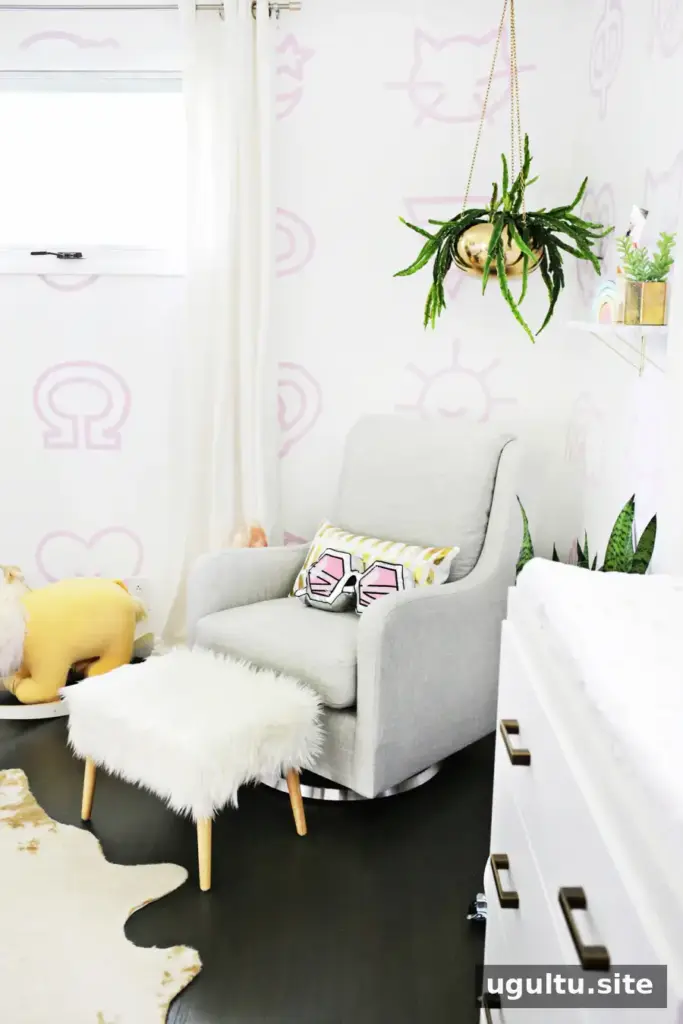
The room combines sleek furniture with playful details. This balance can help a nursery feel welcoming for a baby while still fitting an adult living space. Choose decorative pieces that can move to another room later, and prioritize practical essentials before adding smaller accents.

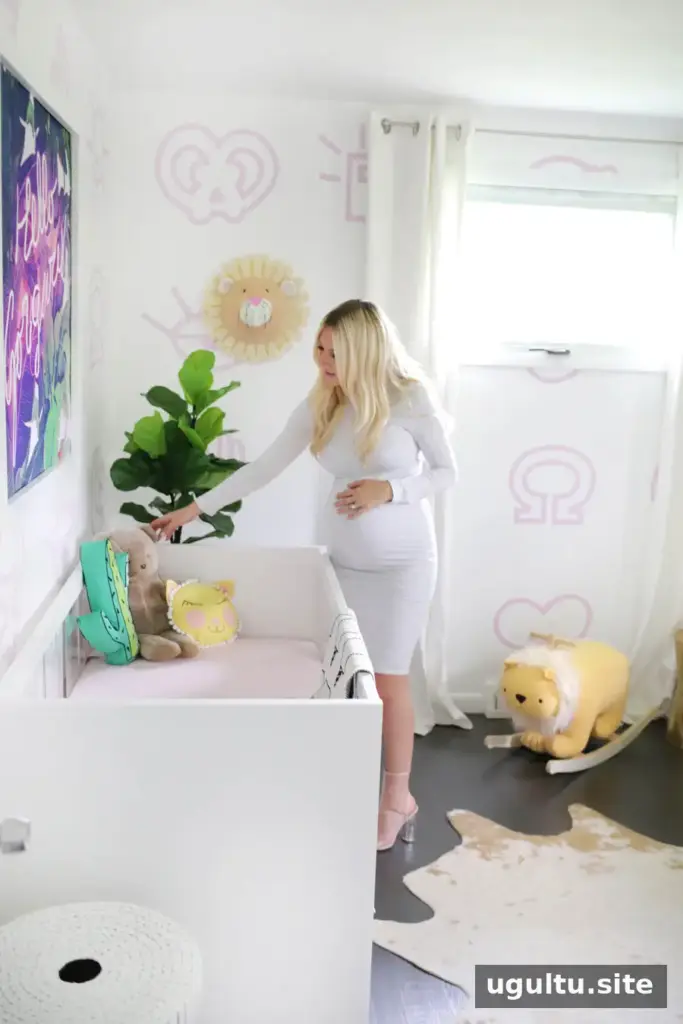
A lion theme appears in a small rocker and a handmade felt lion bust. Repeating a motif in a couple of places gives a room a coordinated look without requiring every item to match. Keep toys intended for later use stored safely until the child is ready for them.
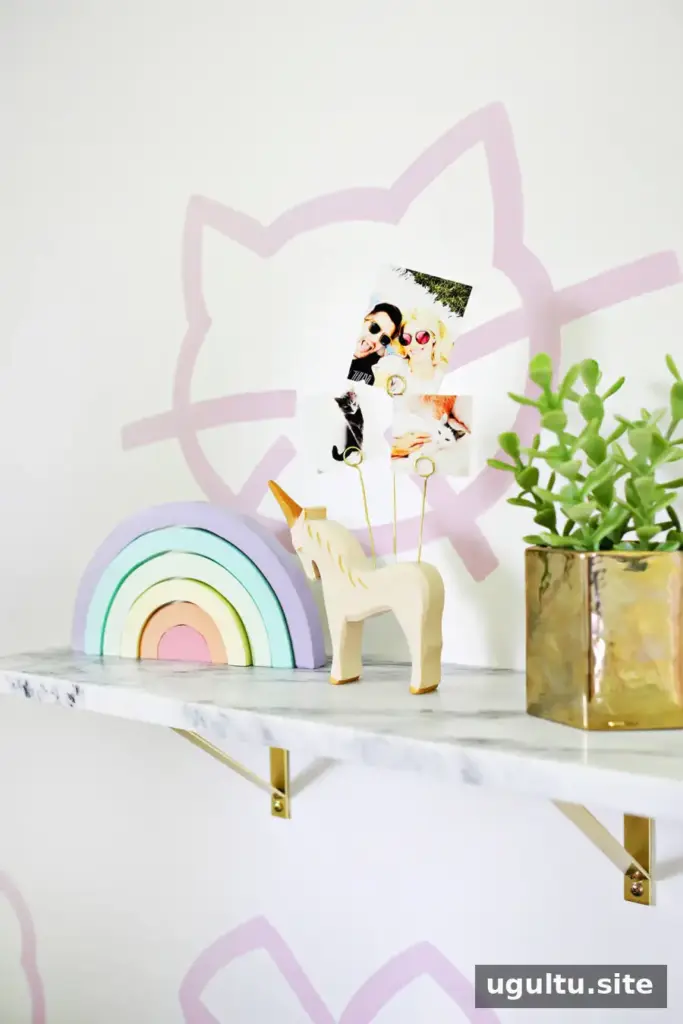
Because the room is compact, a marble shelf provides display space without taking up dresser or counter area. It holds a handmade unicorn photo holder and a wooden pastel rainbow. In a small nursery, use wall shelves for lightweight décor and keep objects securely installed and out of a child’s reach.
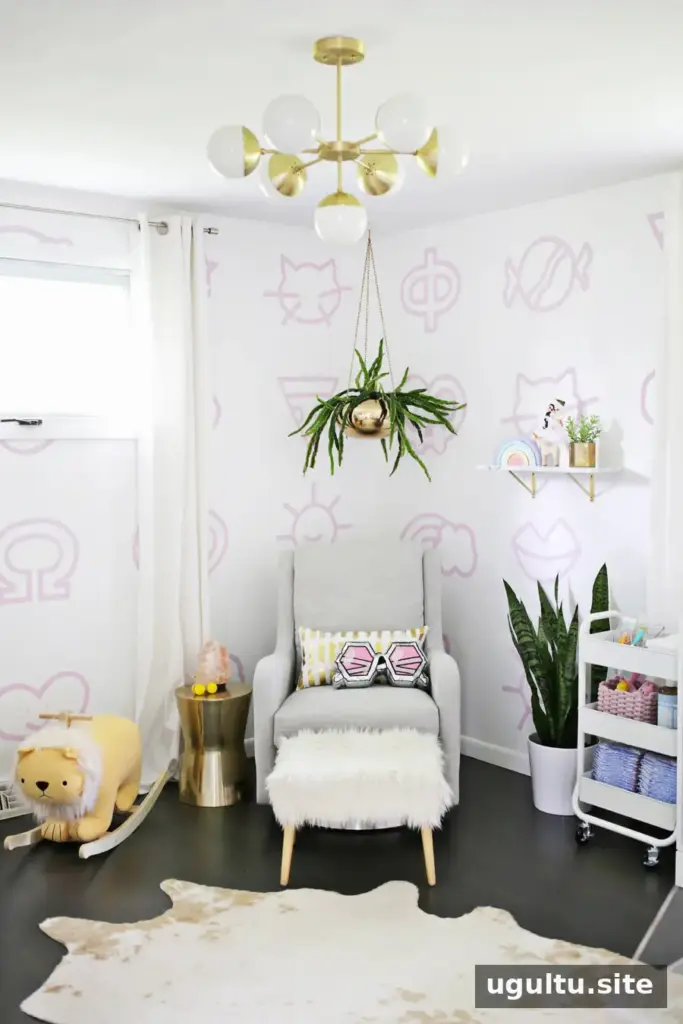
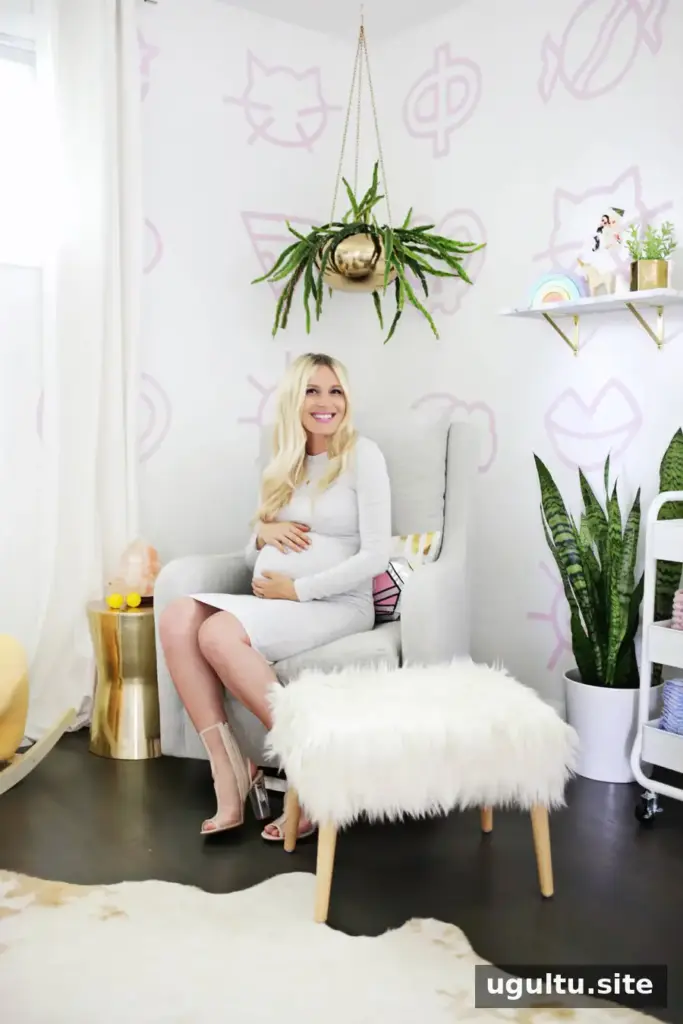
A comfortable glider creates a dedicated spot for feeding and quiet time. A well-sized stool can support a comfortable sitting position, while a decorative pillow adds color to the corner. The gold accents continue through a side table and a hanging planter placed behind the chair. For everyday use, keep frequently needed items within easy reach of the chair.
The stool was refreshed with faux white fur, and a faux cowhide rug adds another warm neutral tone. The hand-painted wallpaper brings a custom pattern into the room. If using a bold wall design, keeping nearby furniture and accessories relatively simple can help the pattern stand out.
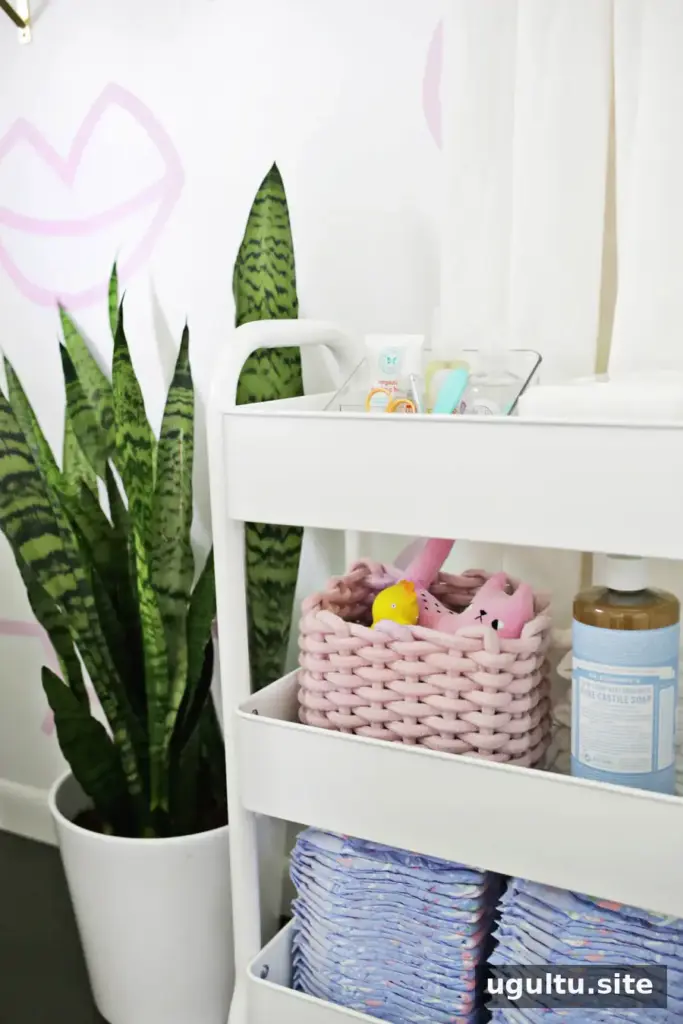
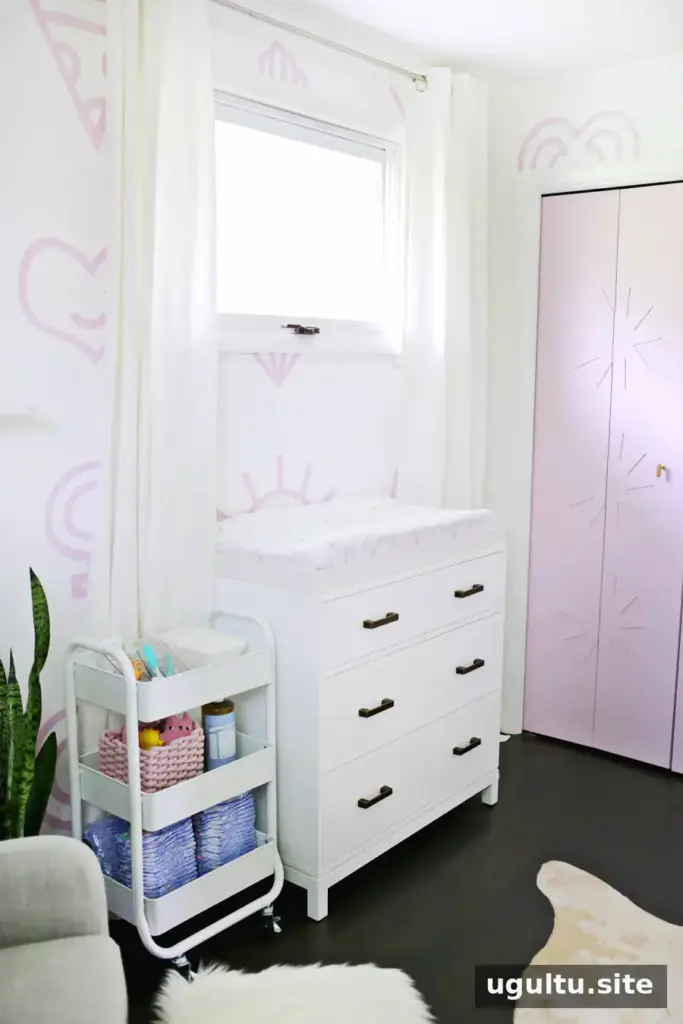
A compact dresser suits the room’s limited floor space. A changing pan sits on top, allowing the dresser to remain useful after the changing stage by removing the topper. The changing pad is GREENGUARD certified, and its cover is organic. Check that changing equipment is compatible with the furniture and follow the manufacturer’s installation and use instructions.
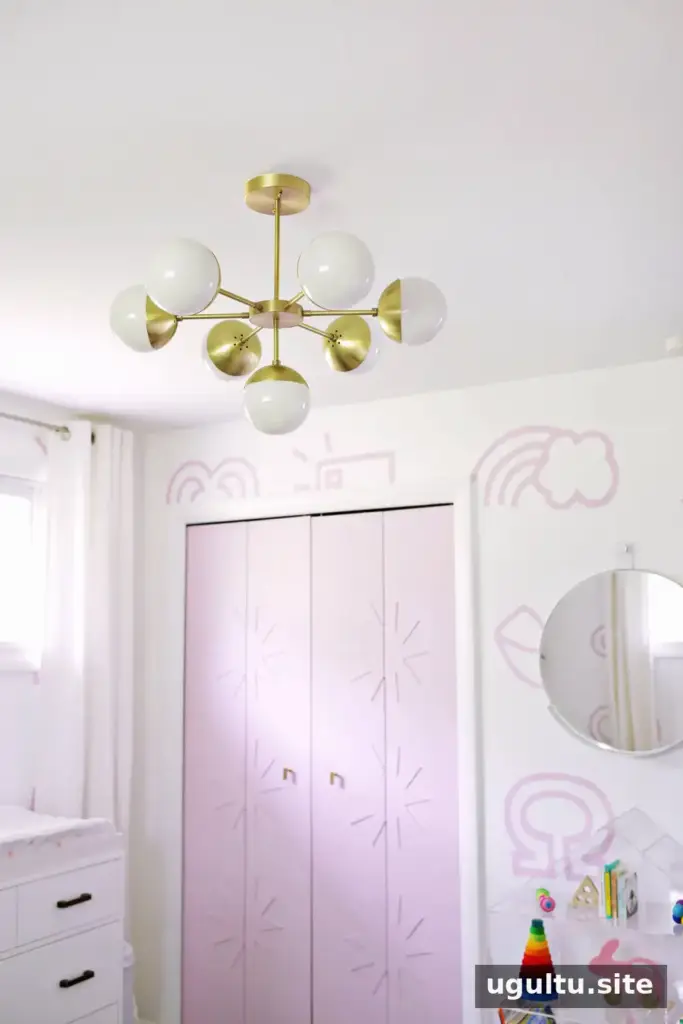
A Perla chandelier adds a decorative focal point overhead. When choosing nursery lighting, consider both the room’s overall brightness and a softer option for nighttime care. Ensure fixtures are installed securely and keep cords well away from the crib and other areas a child can reach.
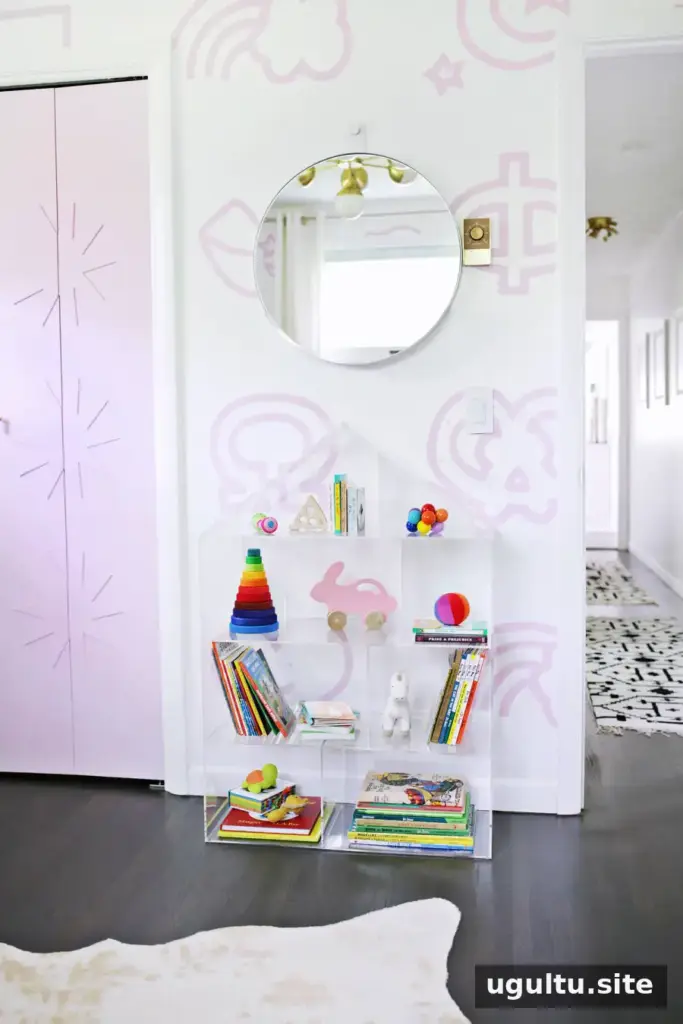
A house-shaped acrylic bookcase makes the growing collection of children’s books easy to organize and display. Open shelving can help caregivers find a story quickly, but bookcases should be anchored according to their instructions to reduce the risk of tipping.
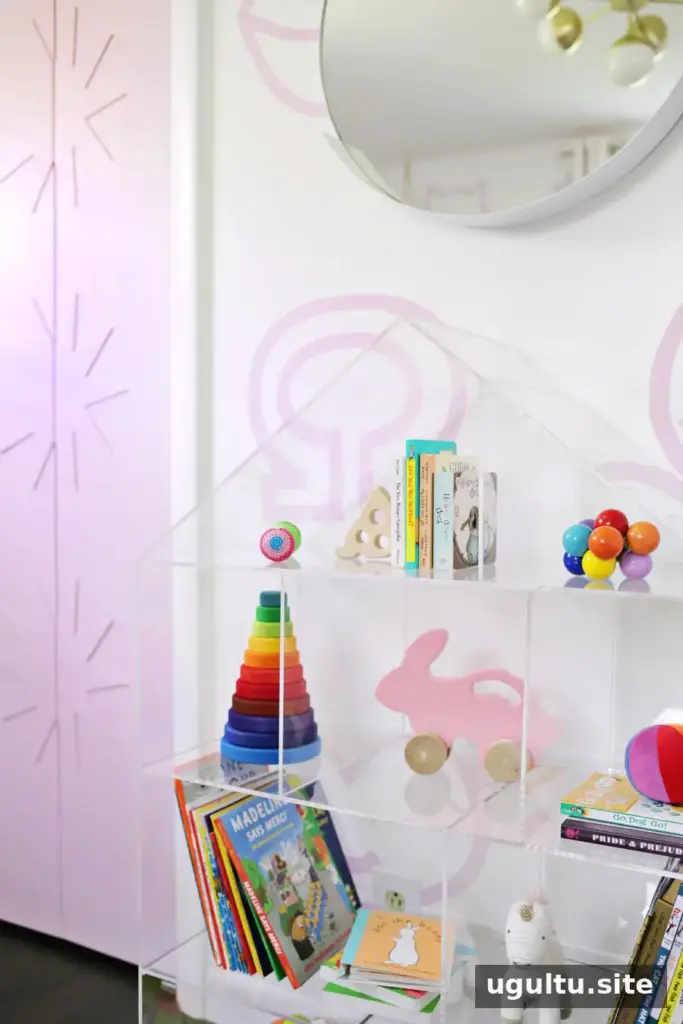
Wooden toys and rainbow-themed pieces add color and texture, including rainbow beads, a rainbow stacker, a wooden pizza teether, a pink bunny, a plush ball, animal bath toys and a miniature unicorn. Choose toys appropriate for the child’s age, and inspect them regularly for loose or damaged parts.
A crib and furniture that can adapt
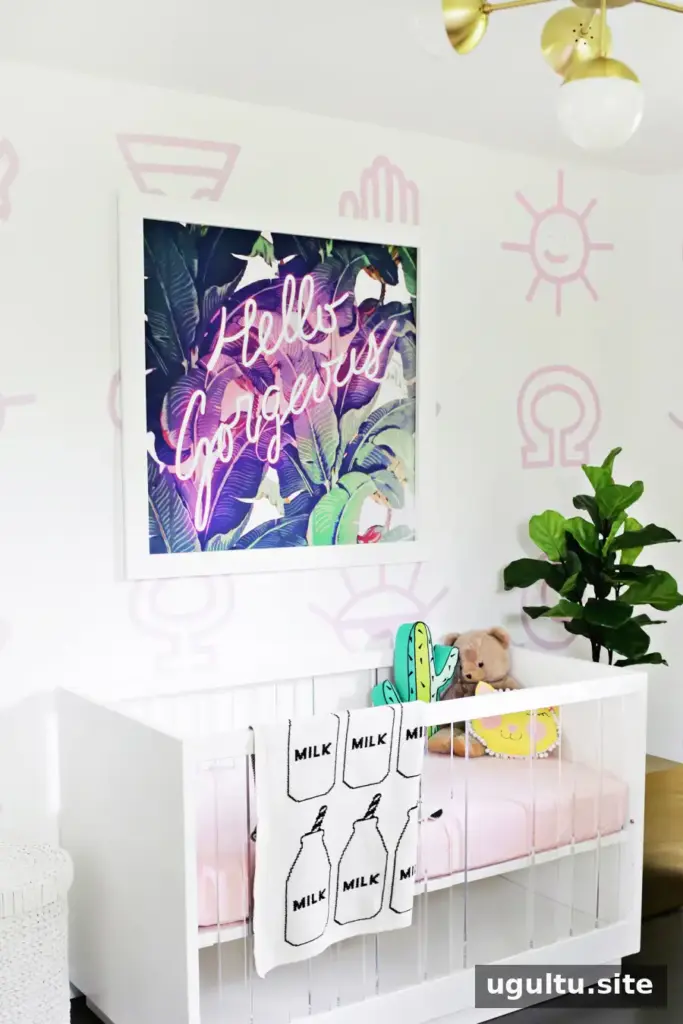
The crib has clear acrylic slats on the front and back, giving the mattress a floating appearance. A toddler rail is available to convert the crib into a bed later. The selected mattress, waterproof pad and sheet set are organic. Before using any crib, check that the mattress fits correctly and follow current safe-sleep guidance. Decorative pillows and soft toys should be removed from the sleep space when an infant is sleeping.
A teddy bear named Pooky, kept since the nursery owner was four, adds a personal touch to the décor. A milk-themed blanket and a simple white hamper complete the room’s textiles and laundry storage. Keep blankets and other loose bedding away from an infant’s sleep area.
Artwork was chosen to complement the wallpaper, including an edited digital print reading “Hello Gorgeous.” The phrase also nods to the film Funny Girl, starring Barbra Streisand. When selecting wall art, consider how its colors and scale work with nearby patterns rather than treating each piece as a separate decision.
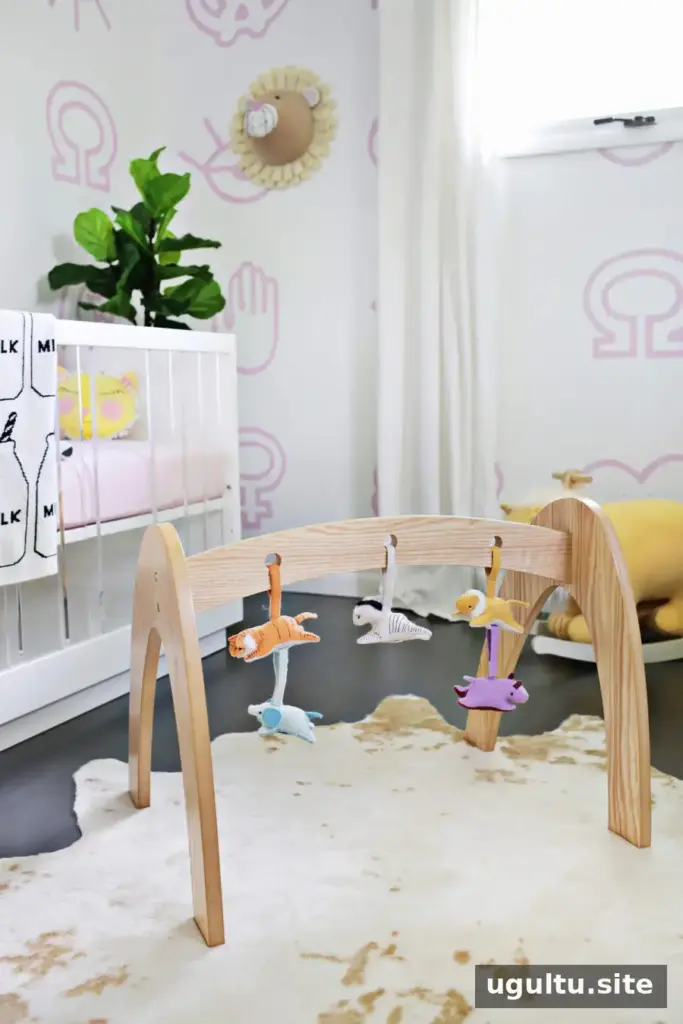
A wooden baby gym adds a simple play feature that also fits the room’s natural materials and soft colors. Use baby equipment only as directed, supervise play, and move it away from the sleep space when it is not in use.
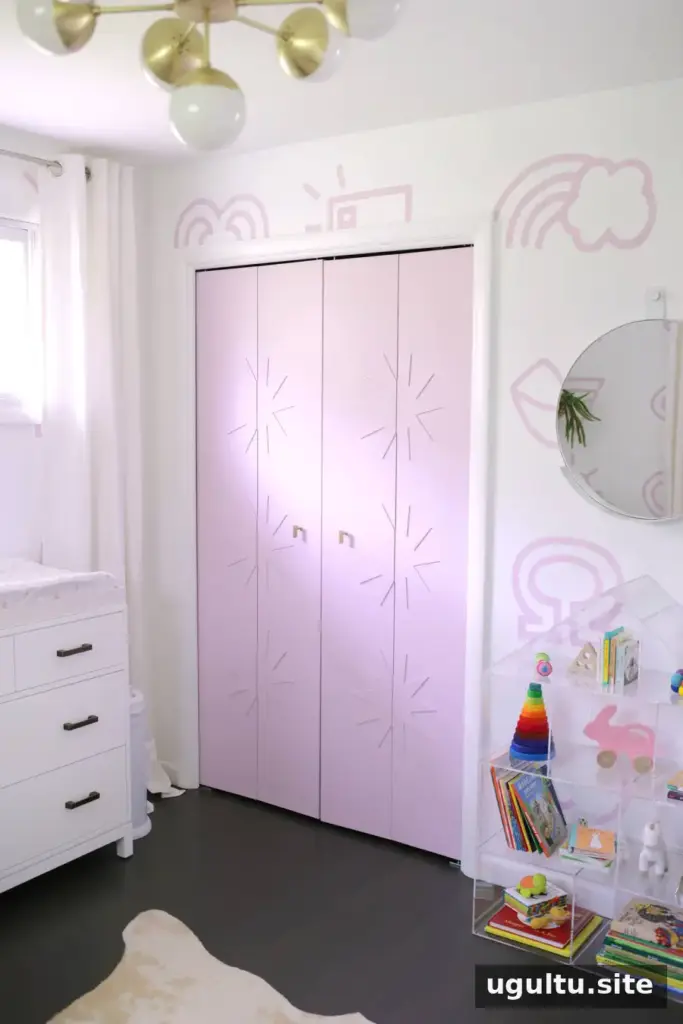
Custom closet doors with star cutouts add character without competing with the nearby wallpaper. A small architectural detail like this can make storage feel intentional while preserving useful floor space.
Planning for a growing baby
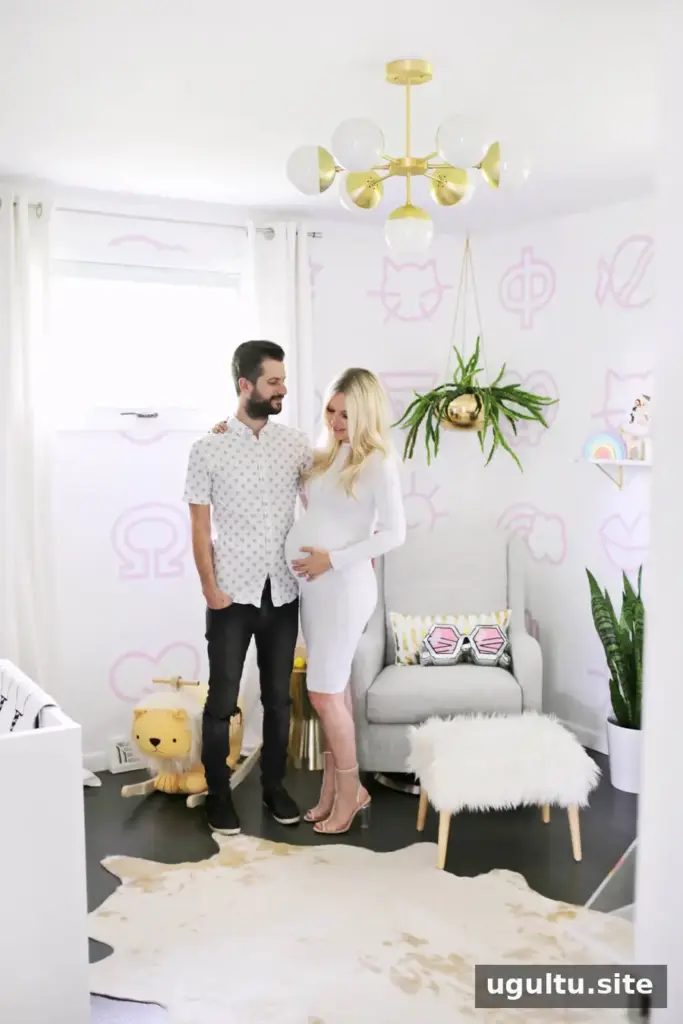
The room’s décor and plants will need to be reconsidered as the baby becomes more mobile. The hanging planter is anchored to the ceiling and positioned behind the chair, but families should still review furniture, cords, plants and small objects as a child’s abilities change. Secure furniture as recommended by its manufacturer and keep anything hazardous or breakable out of reach.
This nursery tour shows how a pastel palette, flexible furniture and carefully chosen storage can create a room that feels both playful and practical. A cohesive design is a good starting point, but safe installation and age-appropriate adjustments are essential as a baby grows.


