
 admin

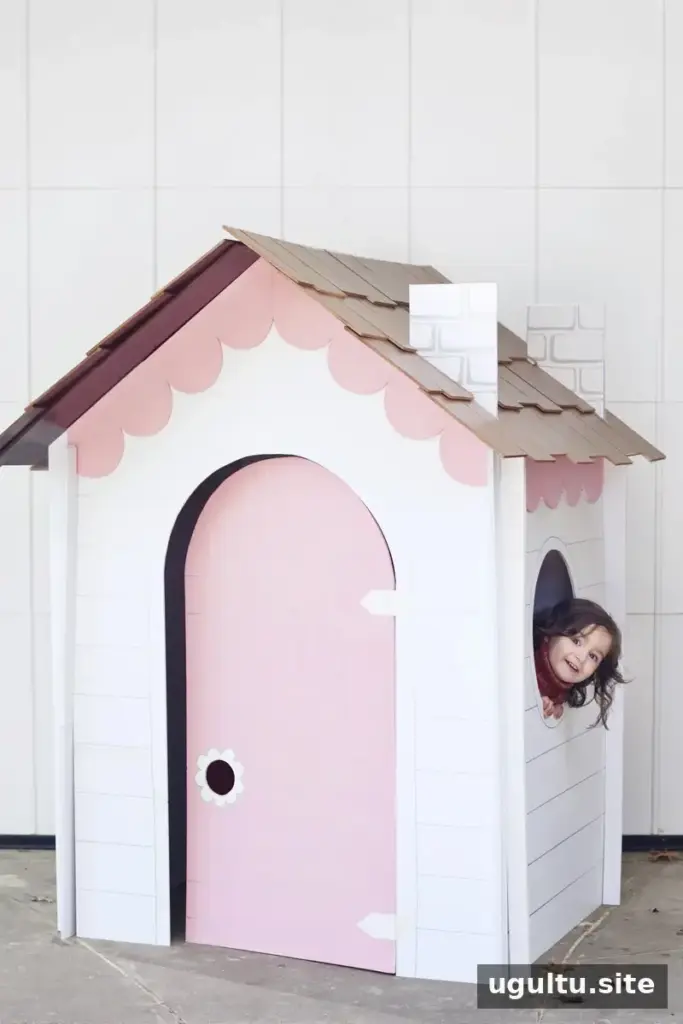
A collapsible playhouse can give children a fun place for imaginative play without taking up permanent space at home. This lightweight foam-board version is designed to come apart for storage and can be decorated to suit a child’s interests. It is a practical project for families who want a simple indoor play structure that can be assembled when needed.
Why make a collapsible playhouse?
Cardboard and other everyday materials often inspire open-ended play. A homemade playhouse can become a hideaway, a pretend shop, or a place to organize toys. Unlike a fixed play structure, this design can be disassembled and stored behind furniture when it is not in use.
Foam board is relatively light and can be cut with a craft knife, making it convenient for a temporary indoor project. It is not as durable as a sturdier material such as masonite, so consider how often the playhouse will be used and whether it needs to withstand outdoor conditions. Foam board is best treated as a lightweight indoor option.

Materials and planning
Before cutting, decide how large the playhouse should be and check that the finished panels will fit in the intended storage space. The original design uses measured panels that slot together, but the layout can be adjusted to suit available cardboard or box pieces. The measurements are shown in the accompanying project image.
- Foam board or suitable cardboard panels
- A craft knife and a safe cutting surface
- A pencil and a T-square for marking straight lines
- Duct tape for reinforcing edges and making a door hinge
- Optional paint and adhesives for decoration
Work on a stable surface and have an adult handle the cutting. A pencil is preferable to a marker for marking panel lines, because pencil marks are less likely to remain visible on the finished house.
How to assemble the playhouse
1. Mark and cut the panels
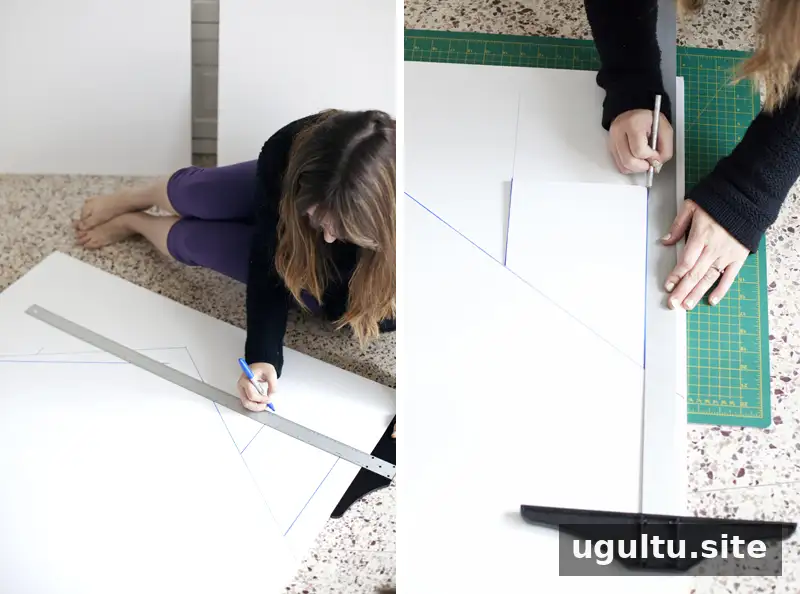
Use a T-square to draw straight lines and mark each panel according to the chosen layout. A T-square helps keep the edges aligned without repeatedly measuring from both sides. Cut slowly with a craft knife, keeping hands clear of the blade and protecting the surface underneath.
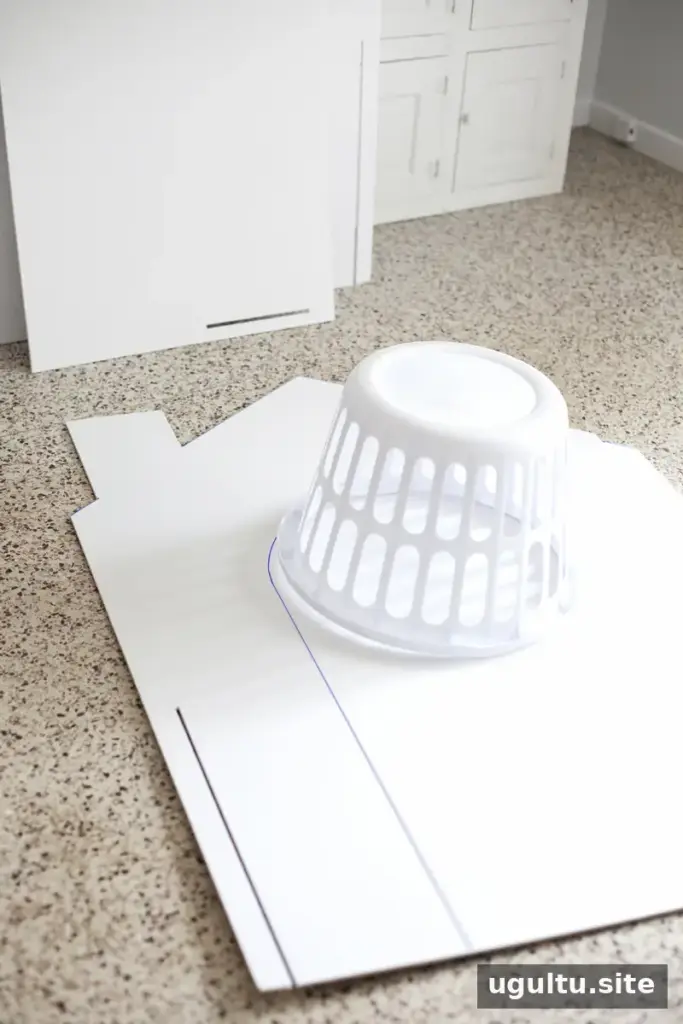
Household objects can serve as guides for rounded features such as a window, an arched doorway, or a doorknob opening. After cutting out the door, trim a little extra material around its edge so it can swing freely instead of catching in the opening.
2. Slot the pieces together
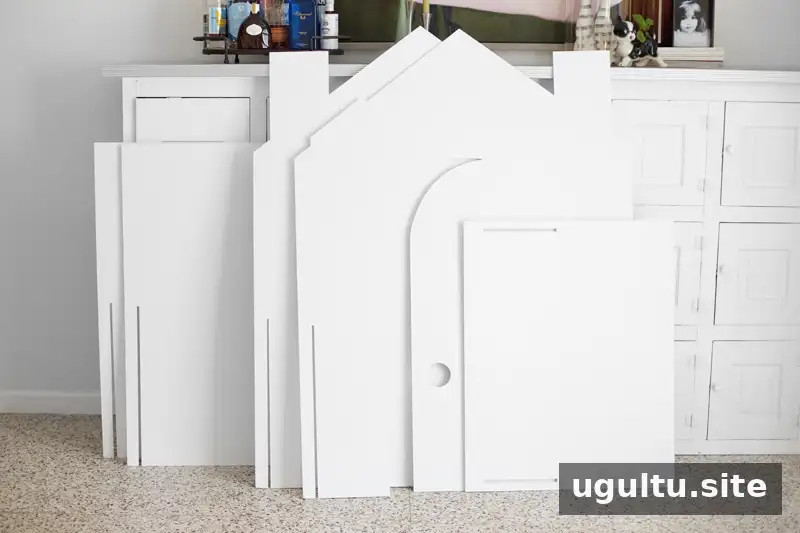
Once the panels are cut, fit the pieces together using the matching slots in the design. It can be easier to ask another adult to steady the side panels while the front or back panel is added. Check that the structure stands securely before inviting a child to play inside.
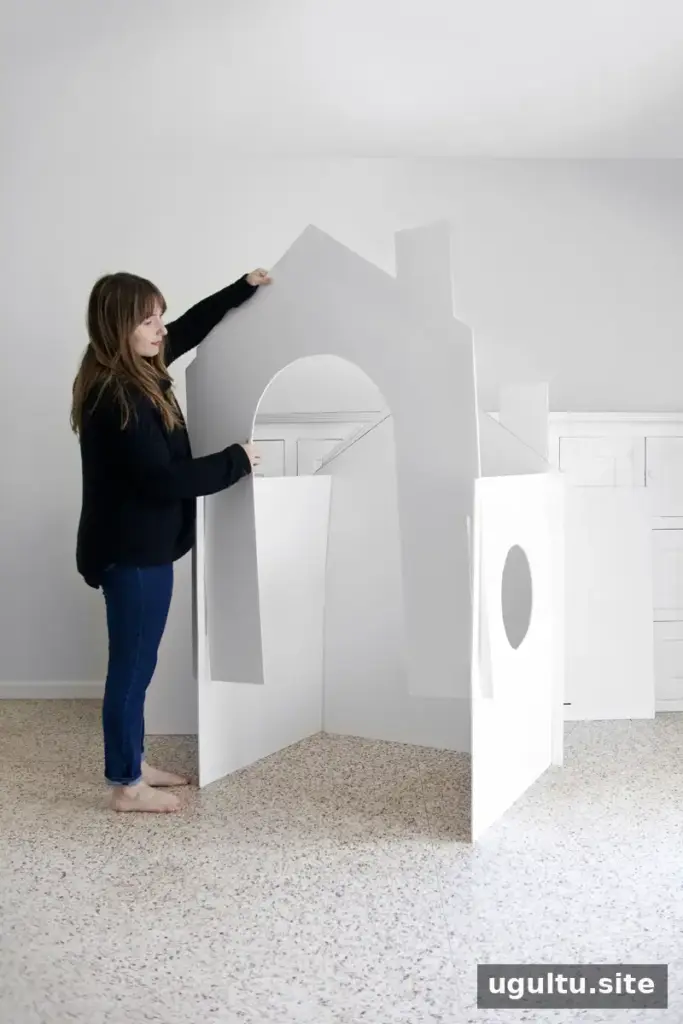
3. Add a flexible door hinge
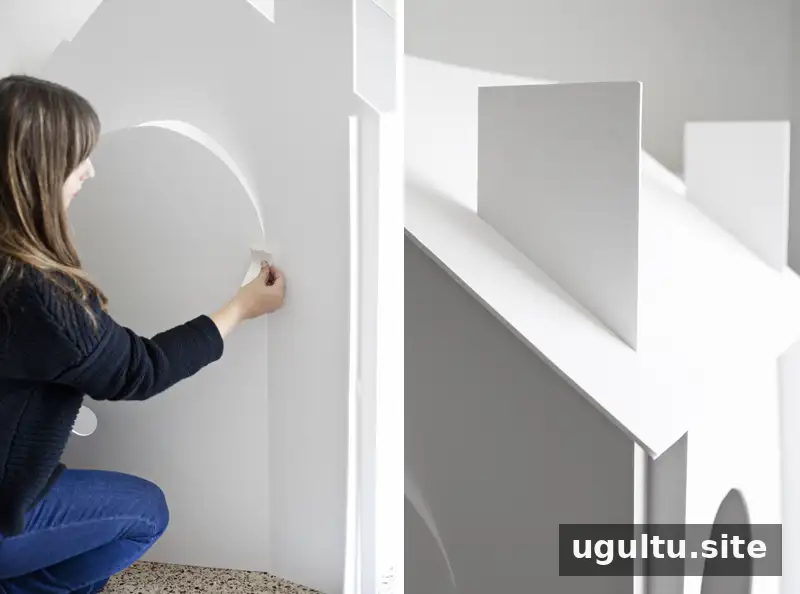
Duct tape can form a simple hinge for the door. Before attaching the hinge, wrap the area where the tape will sit with an extra layer of duct tape. This helps protect the foam board’s outer surface if the door is pulled in the opposite direction during play.
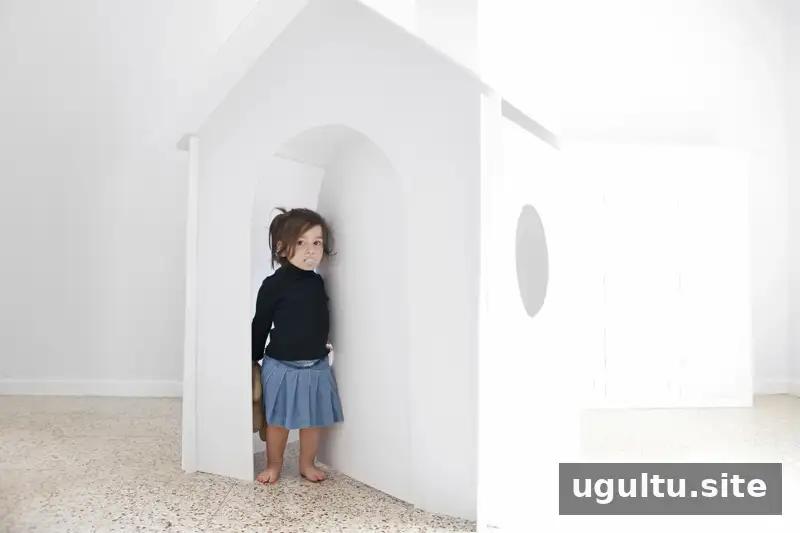
Decorating and playing
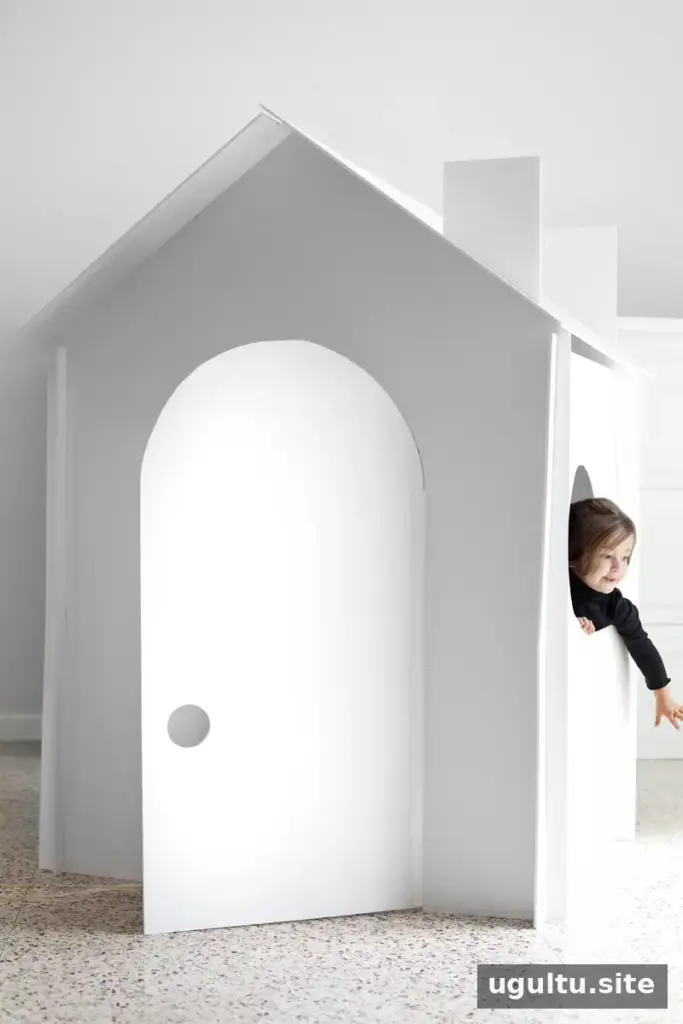
Keep the playhouse plain or personalize it with paint, decorative trim, roof details, and drawn-on accents. A simple surface also gives children room to add their own artwork. If using paint or adhesives, follow the product directions, allow everything to dry fully, and keep materials out of children’s reach during construction.
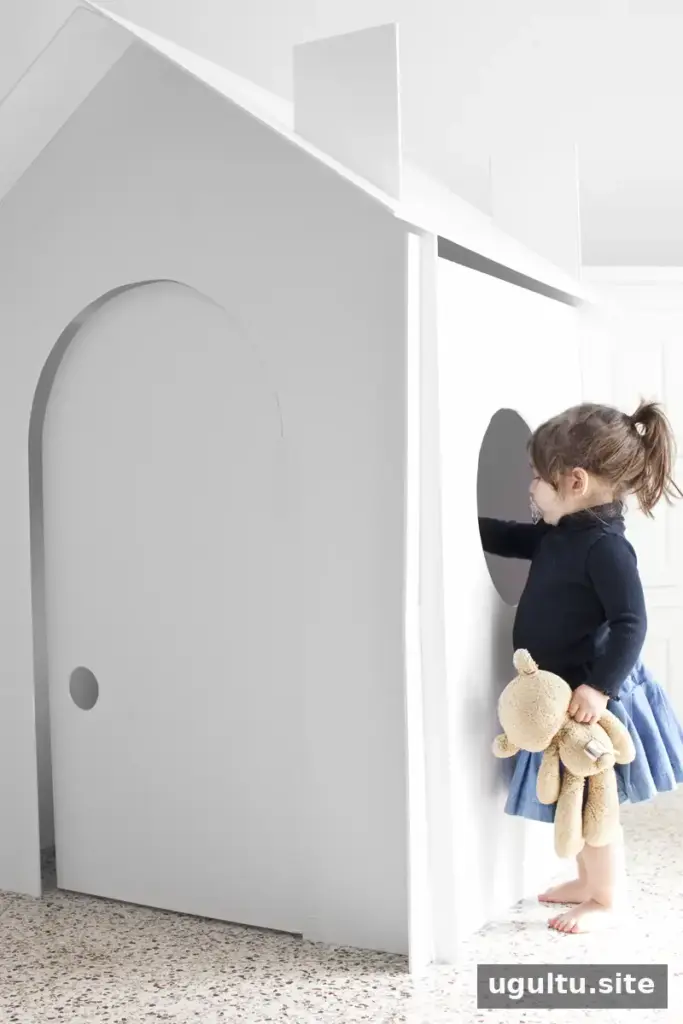
For added details, the project uses spray paint for the decorative trim and door, another spray paint color for roof shingles, hot glue to secure the shingles, and rubber cement for the trim. Choose adhesives and paints suitable for the material, use them in a well-ventilated area, and have an adult apply them.
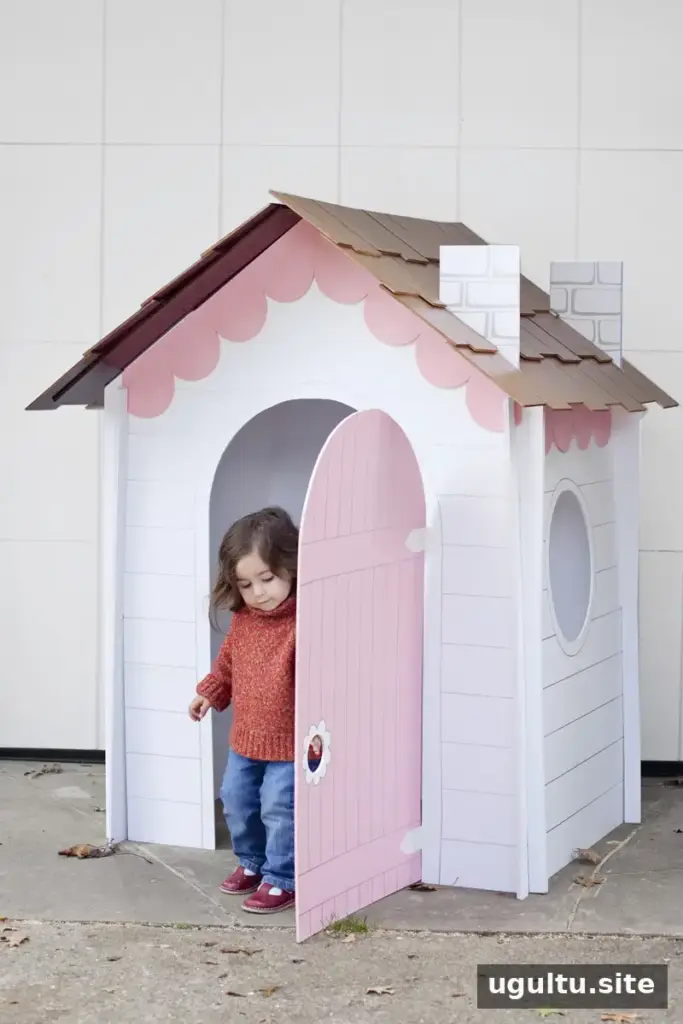
A white foam-board playhouse can be decorated in many ways, from colorful marker drawings to a more detailed painted finish. Keep the structure lightweight and check it regularly for loose tape, torn edges, or unstable panels. With basic care, a collapsible playhouse can offer a flexible space for imaginative indoor play. —Mandi


