
 admin
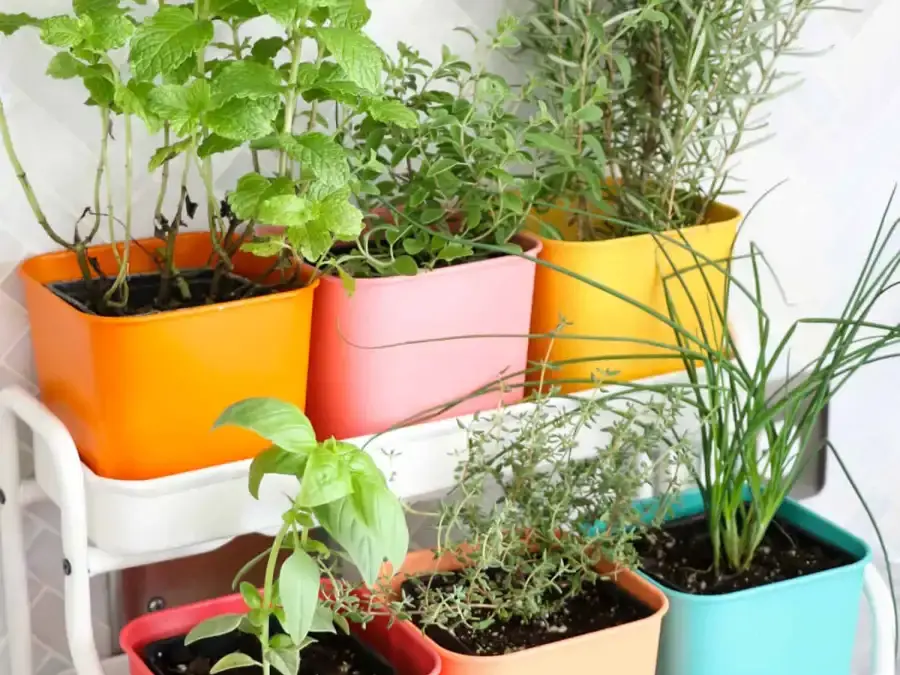
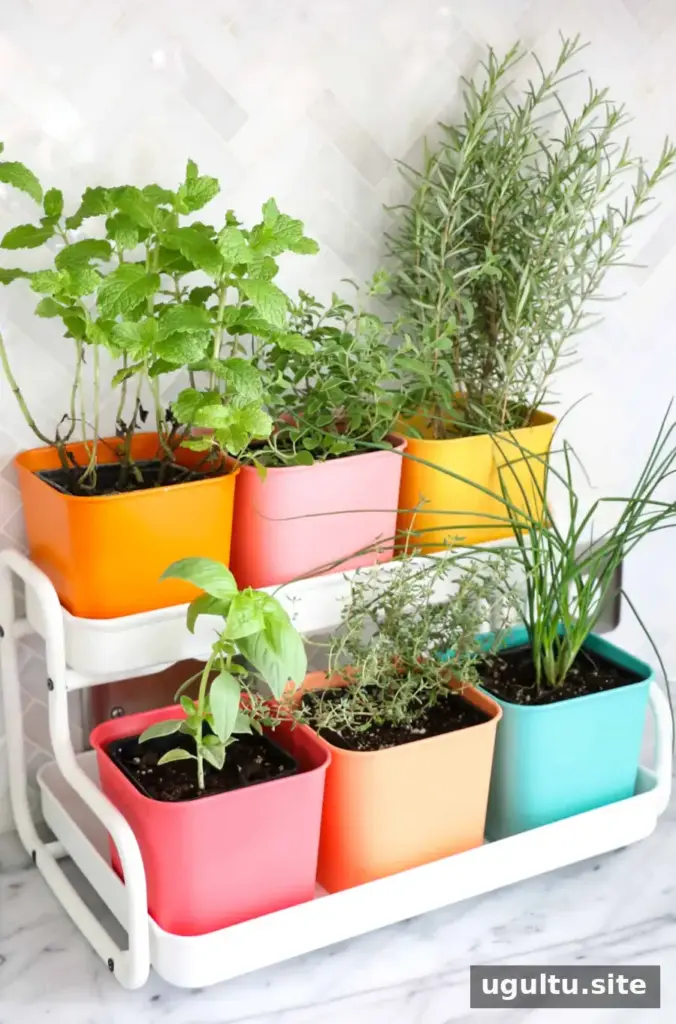
A colorful indoor herb garden keeps fresh ingredients close at hand and adds a bright accent to your kitchen. With a set of plant pots and a stand, spray paint, sealant, potting soil, and a few favorite herbs, you can make a simple display that is both decorative and useful for everyday cooking.
This project uses paint on the outside of the pots, leaving the inside uncoated. Keeping the growing area free of paint helps avoid direct contact between the finish and the soil. Choose colors that suit your space, and check that the pots are appropriate for growing herbs before you begin.
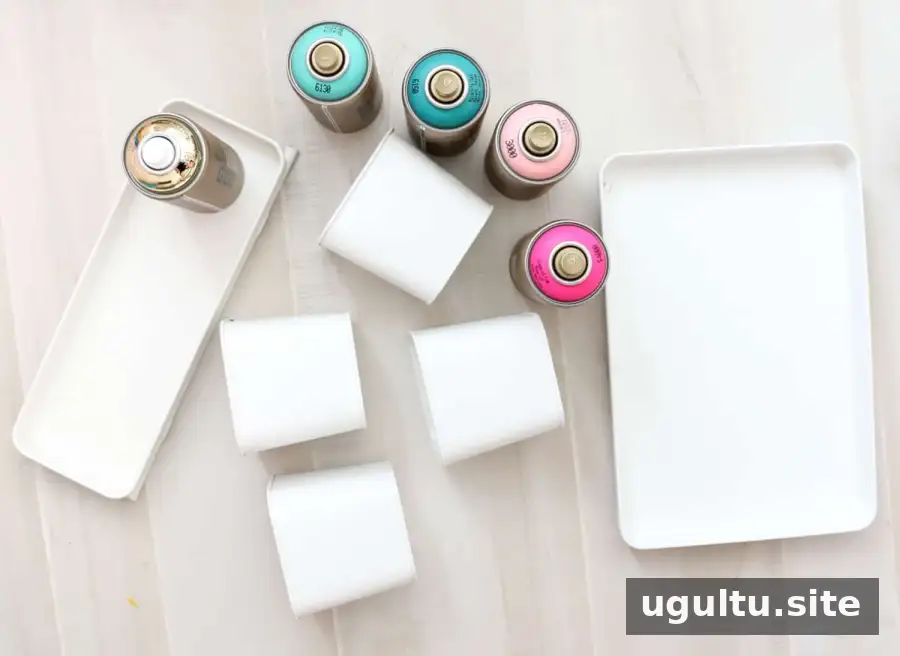
Supplies
- Plant pots with a stand
- Spray paint in your choice of colors
- Spray shellac sealant
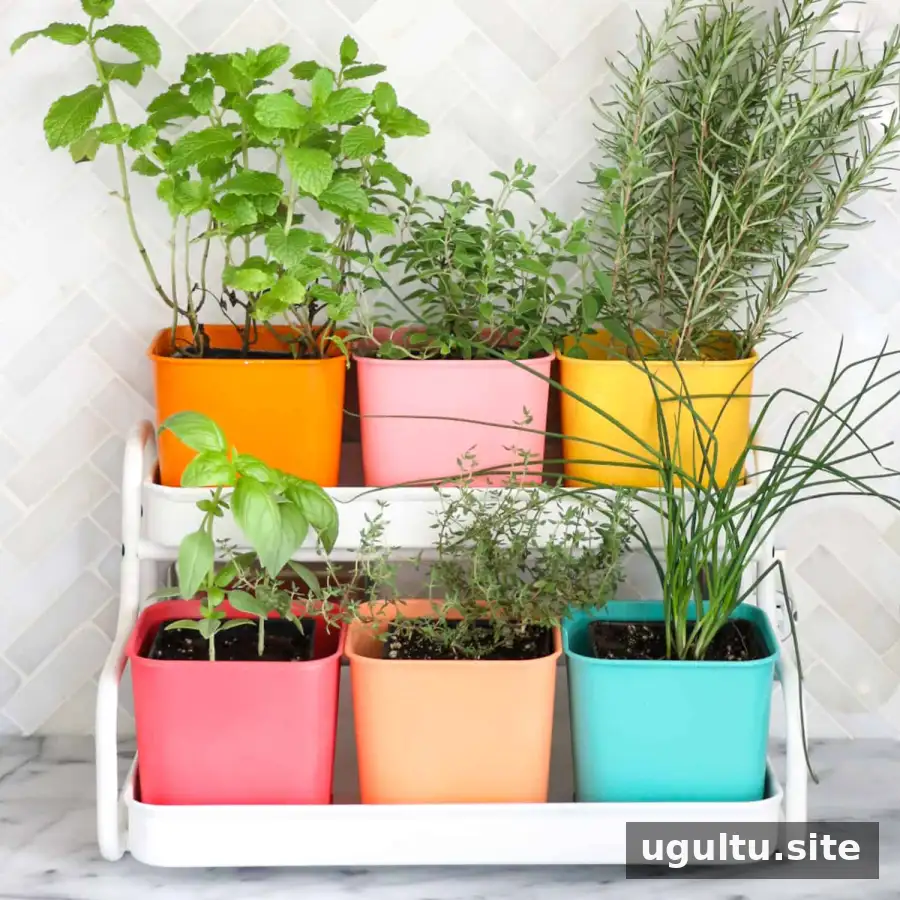
- Herbs and potting soil: this arrangement includes mint, oregano, rosemary, basil, thyme, and chives
How to Make a Colorful Indoor Herb Garden
Step 1: Paint the pots
Apply spray paint to the exterior of each pot, following the product directions for application and drying time. Avoid spraying the inside, where the soil and plant roots will be. If you choose to coat the interior, use a suitable plastic liner as a barrier between the finish and the growing medium. Work in a well-ventilated area and protect the surrounding surface while painting.
Step 2: Seal the finish
Once the paint is dry, apply spray shellac to the outside of the pots. The sealant helps protect the painted surface from chipping and gives it a glossy look. Follow the label for application, ventilation, and curing instructions, and let the finish fully cure before bringing the pots indoors or planting.
Step 3: Assemble and plant
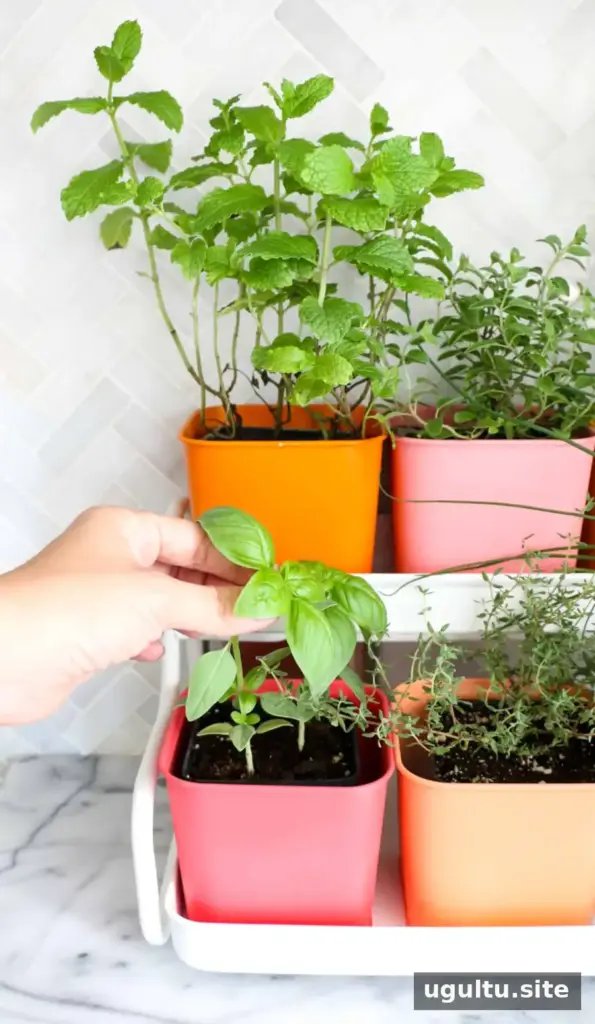
Assemble the stand, then add potting soil and plant the herbs. Check that each pot has suitable drainage; standing water can harm many herbs. If the pots do not have drainage holes, use an appropriate liner or nursery pot that allows excess water to escape. Arrange the herbs so you can reach them easily for watering and harvesting.
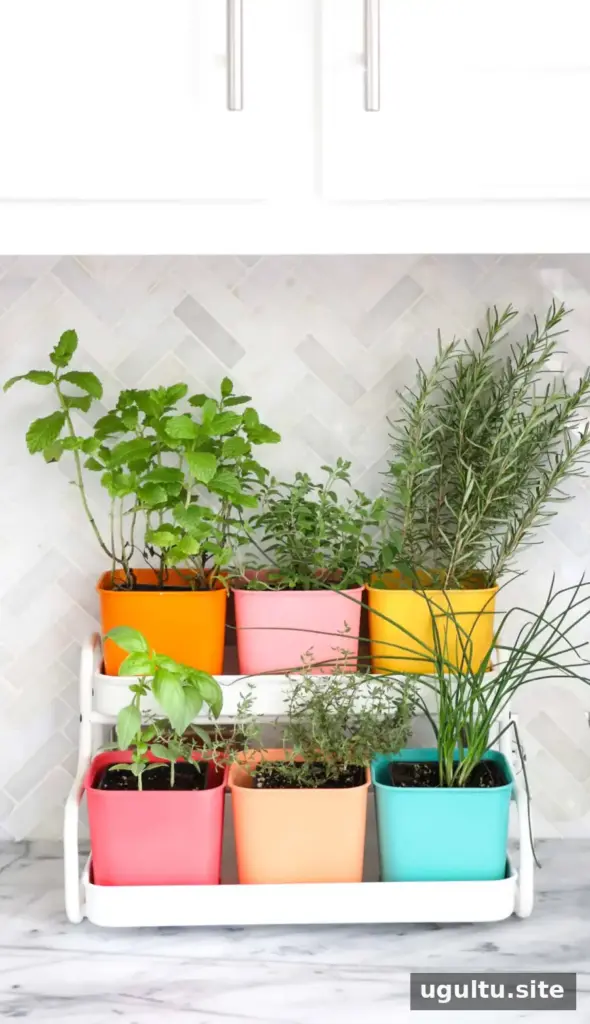
The basic steps are straightforward, but a little planning can make the garden easier to maintain. Place it where the herbs receive the light they need, and check the soil before watering rather than following a rigid schedule. Harvest small amounts as needed, using clean scissors, and avoid removing too much foliage from a plant at once.
Personalize Your Indoor Herb Garden
Choose a coordinated palette for a subtle look or use different colors to make each pot easy to identify. You can also add herb names to the pots after the finish has cured, using a labeling method suitable for the surface. These small choices make the display more practical as well as decorative.
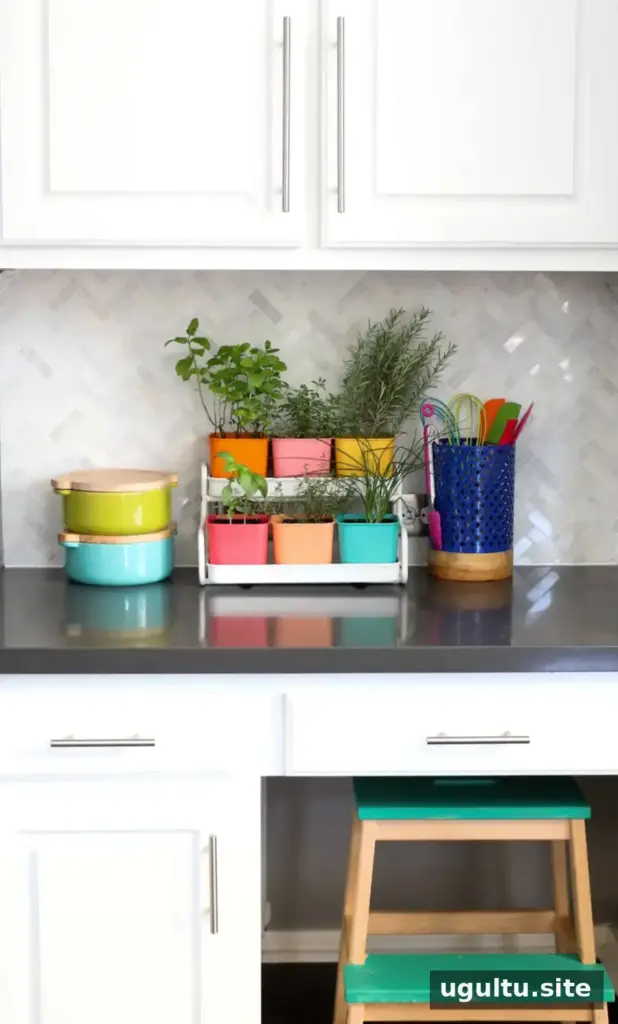
The herbs included here are mint, oregano, rosemary, basil, thyme, and chives. Their individual growing needs can vary, so check care guidance for each plant, especially for light and watering. Keeping the pots labeled can also help you remember which herb you are harvesting.
A colorful indoor herb garden brings fresh herbs within easy reach while making use of vertical space on a kitchen counter. Customize the colors to match your home, keep the pots accessible, and follow the paint and sealant instructions carefully. Kara


