
 admin
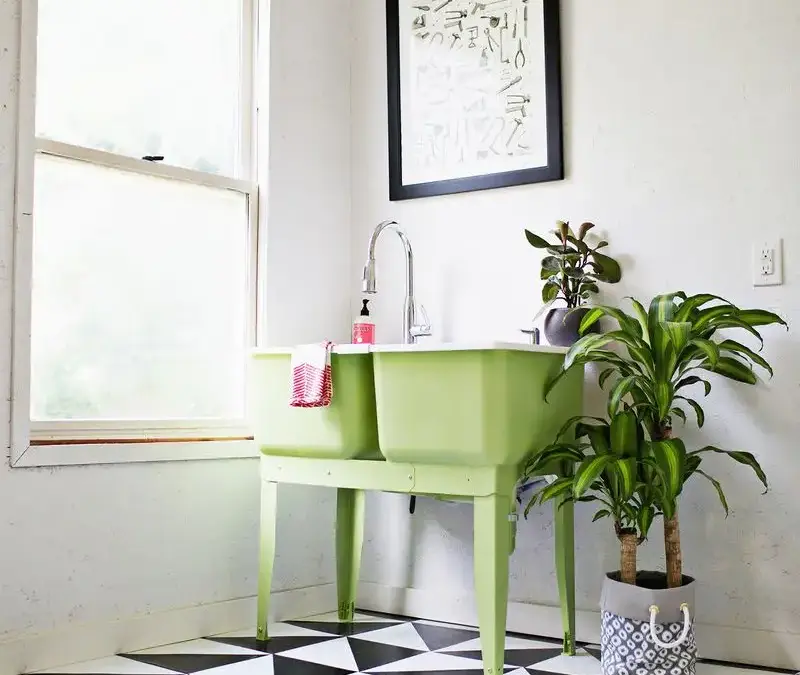
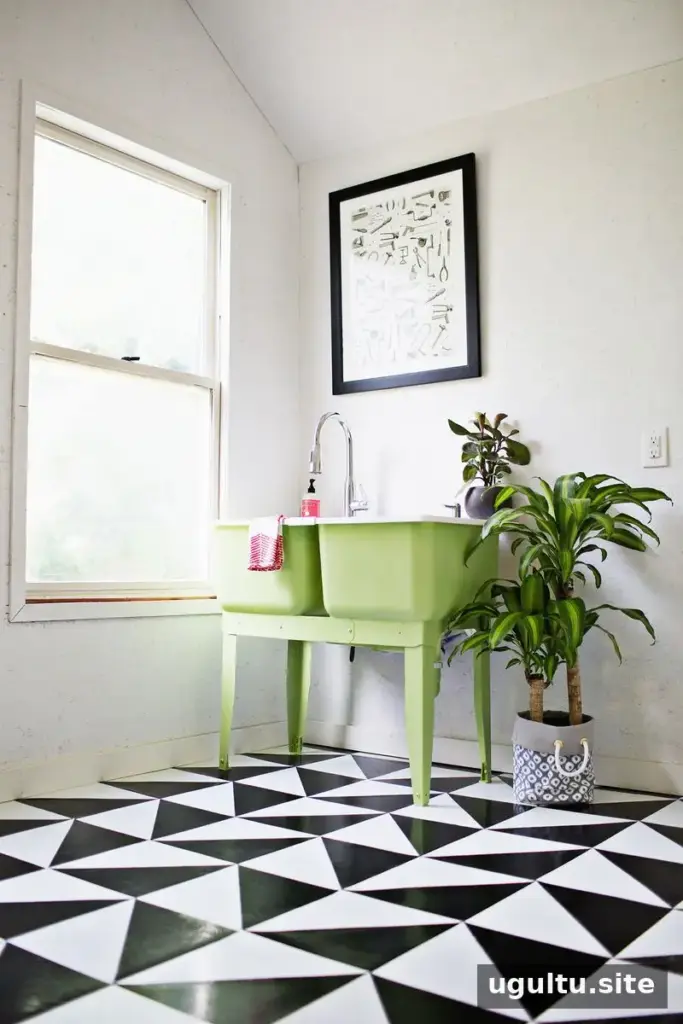
A patterned linoleum tile floor can add character to a small laundry room while covering a plain plywood surface. This project uses cut square tiles to create a geometric design. The tiles used were vinyl, but the basic cutting and layout approach can also be used with linoleum tiles; always check the flooring manufacturer’s instructions for the specific product. Because many tile corners meet in a custom pattern, careful measuring and cutting make a noticeable difference.
Materials and tools for a patterned linoleum tile floor
Gather the following supplies before starting. Confirm that the underlayment and adhesive requirements are compatible with your flooring product.
- Linoleum or vinyl tiles
- Plywood underlayment, if required for the existing floor
- Nails or staples for securing the underlayment
- Polyurethane for the existing subfloor, if appropriate for the installation
Useful tools include a tile-cutting jig, a skill saw, a hammer or nailer/stapler, a ruler, and a utility knife with spare blades. A sharp blade helps make cleaner cuts; handle it carefully and cut on a suitable protective surface.
Prepare the floor before laying tiles
Step one: Prepare the space. The floor needs to be clean, flat, and suitable for tile. In this project, a layer of floor polyurethane was applied over the OSB for added moisture protection, followed by 1/4-inch underlayment. The underlayment provides a smoother surface for the tiles. Do not assume that a coating makes a floor waterproof, and follow the flooring and underlayment manufacturers’ guidance for substrate preparation.

Cut tiles accurately for the pattern
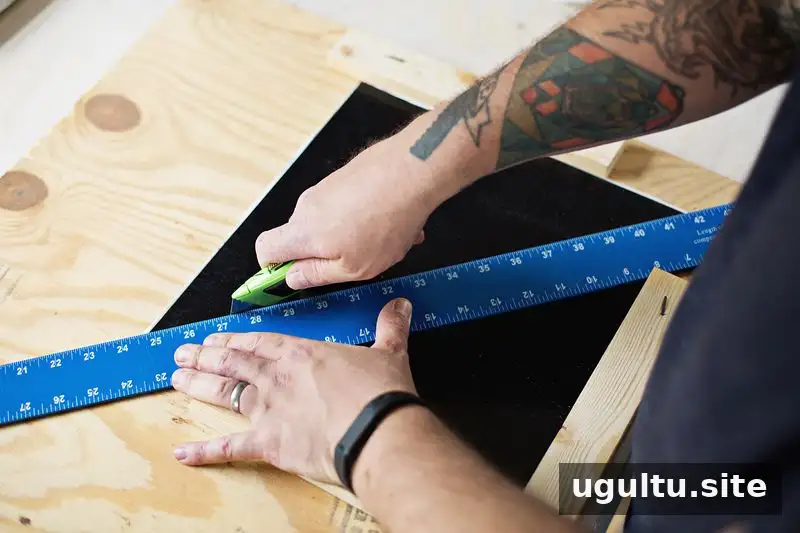
Step two: Modify the tiles. A simple cutting jig can help make repeated cuts more consistent. Place a tile on a scrap board, position a straightedge where the cut needs to be, then attach three narrow strips of wood around the tile to hold it in the same position each time. Test the setup on a spare tile before cutting the rest.
Check the jig periodically as you work. Even small differences between cuts can shift the pattern across the floor, so take time to measure and keep the cuts consistent. Use a sharp utility knife and stay focused, especially when repeating the same motion for many tiles.
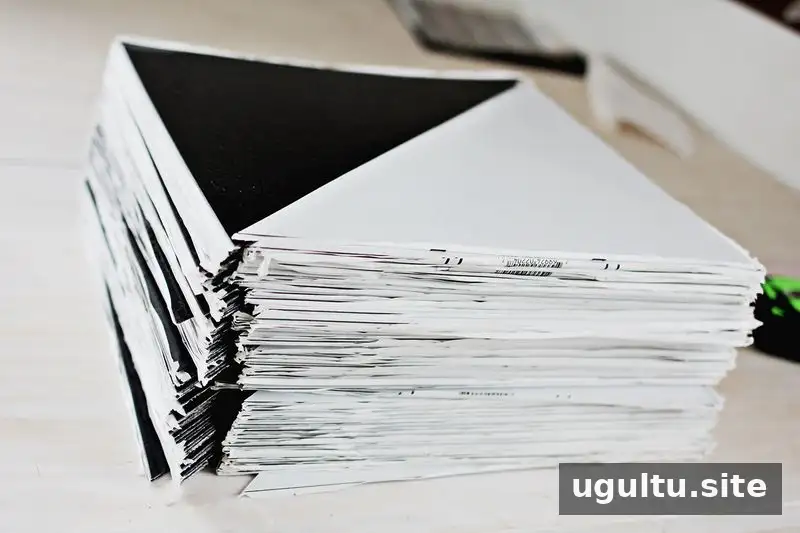
Cutting square tiles into triangles creates many possible layouts. Sketching a few arrangements before installation can help you choose a pattern that suits the room and estimate how the pieces will meet at the edges.




This is the pattern selected for the project:

Lay out and install the patterned linoleum tile floor
Step three: Install the tiles. Sweep or vacuum the surface before beginning so dust and debris do not interfere with placement. Choose a starting line and keep the first rows as straight as possible. Walls may not be perfectly straight, so use a measured reference line rather than relying on the wall alone to guide the pattern.
As the tiles go down, check that the pieces fit closely and that the design remains aligned. If a tile is slightly oversized, mark the adjustment and trim it before removing its backing. At the perimeter, use a straightedge and a scrap piece of wood to help mark and support cuts. Follow the tile product’s installation directions, including any requirements for adhesive or pressure.
What to expect from a cut-tile design
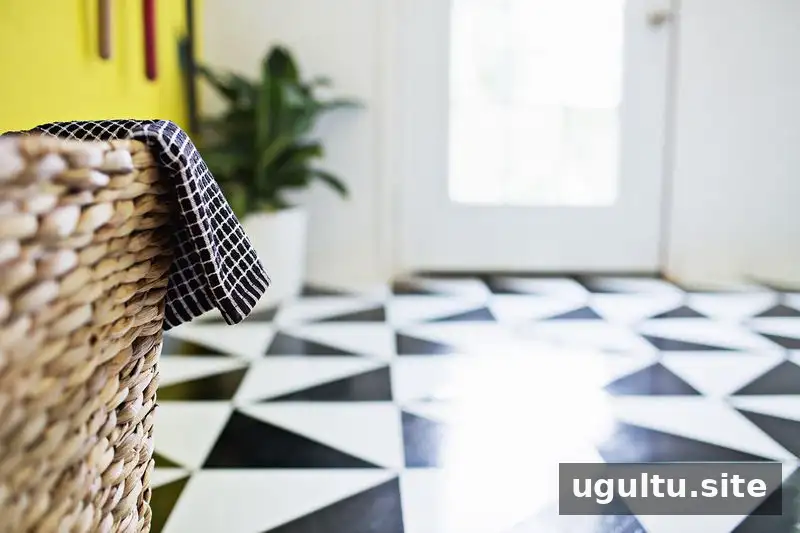
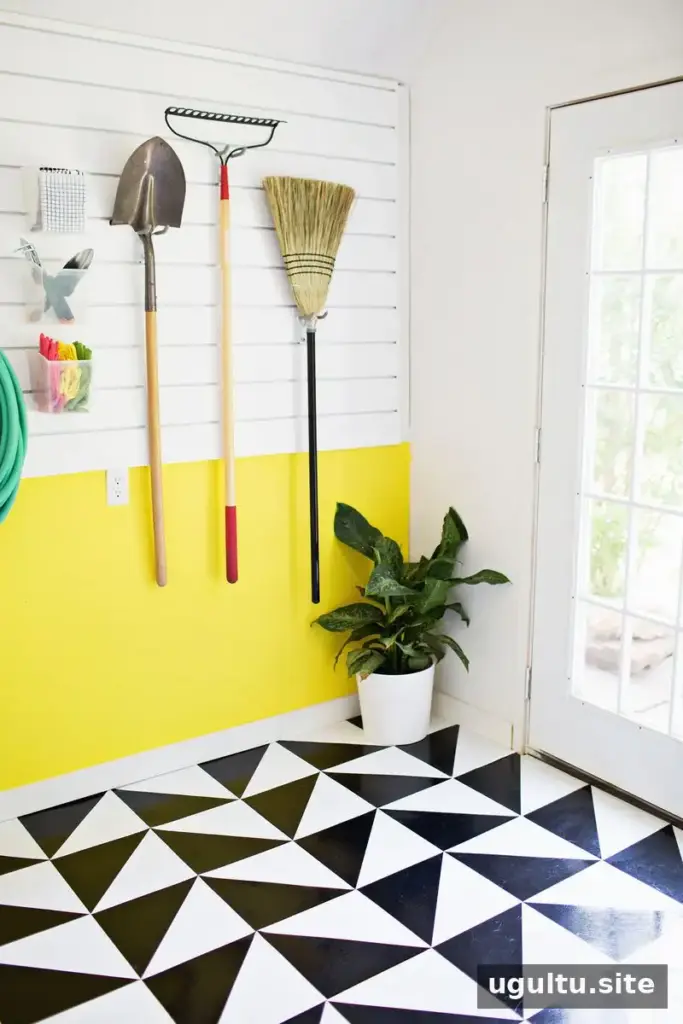
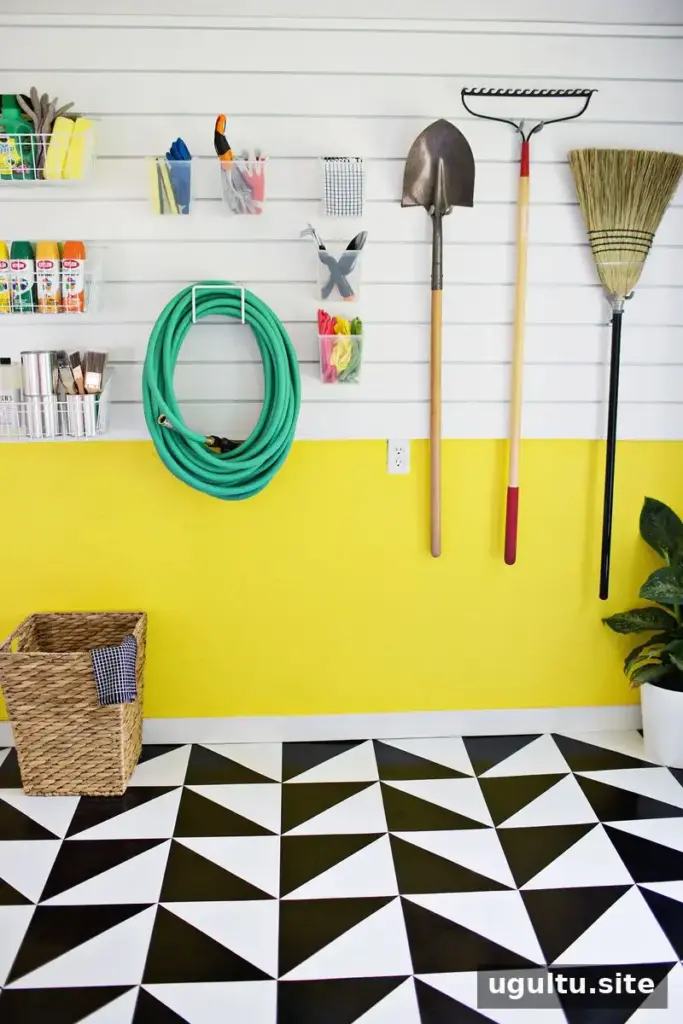
Custom cutting creates more corners and edges than a simple square-tile layout. Even with careful fitting, some corners may lift or chip over time, particularly in a room that sees moisture or regular use. The project floor still looked good after more than a month, although a few small corners had broken off. Inspect the tiles periodically and address loose edges promptly to limit further damage.
Conclusion: Is a patterned linoleum tile floor right for you?
A patterned linoleum tile floor is a creative option for a small, lower-traffic space when the subfloor is properly prepared and the cuts are precise. Plan the design first, test your cutting jig, and work from a reliable reference line. Keep in mind that cut corners may be more vulnerable than full tiles, and choose materials suited to the room’s moisture and traffic levels.
—Josh


