
 admin
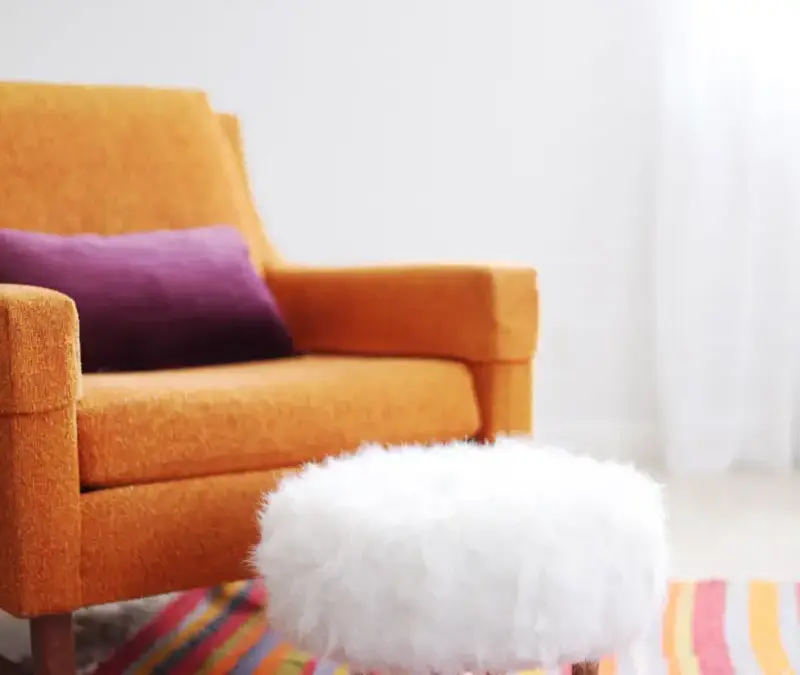
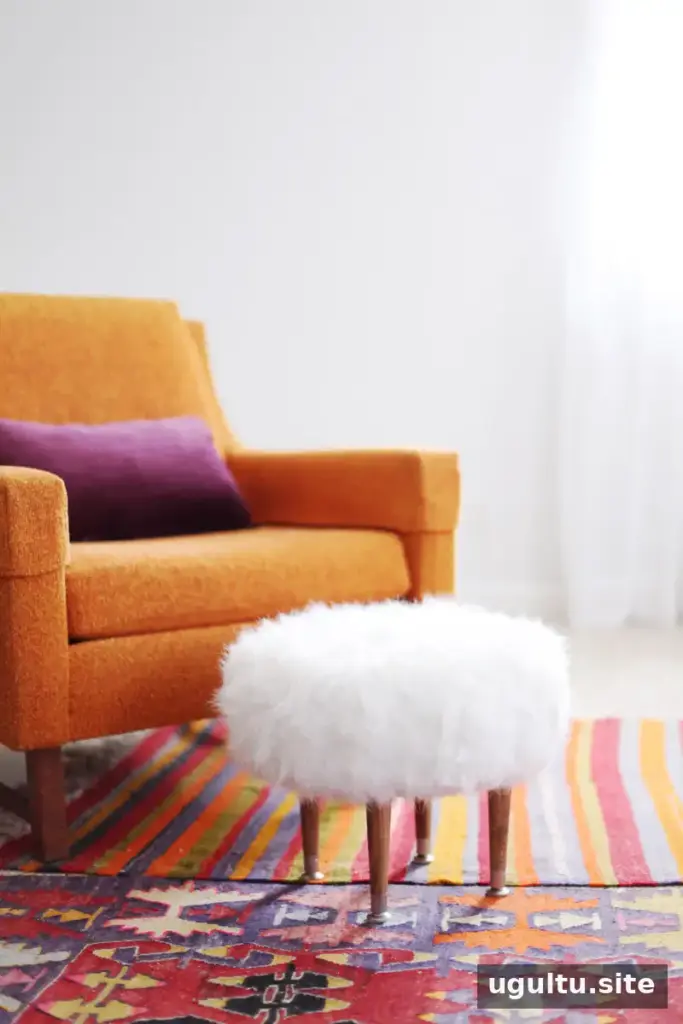
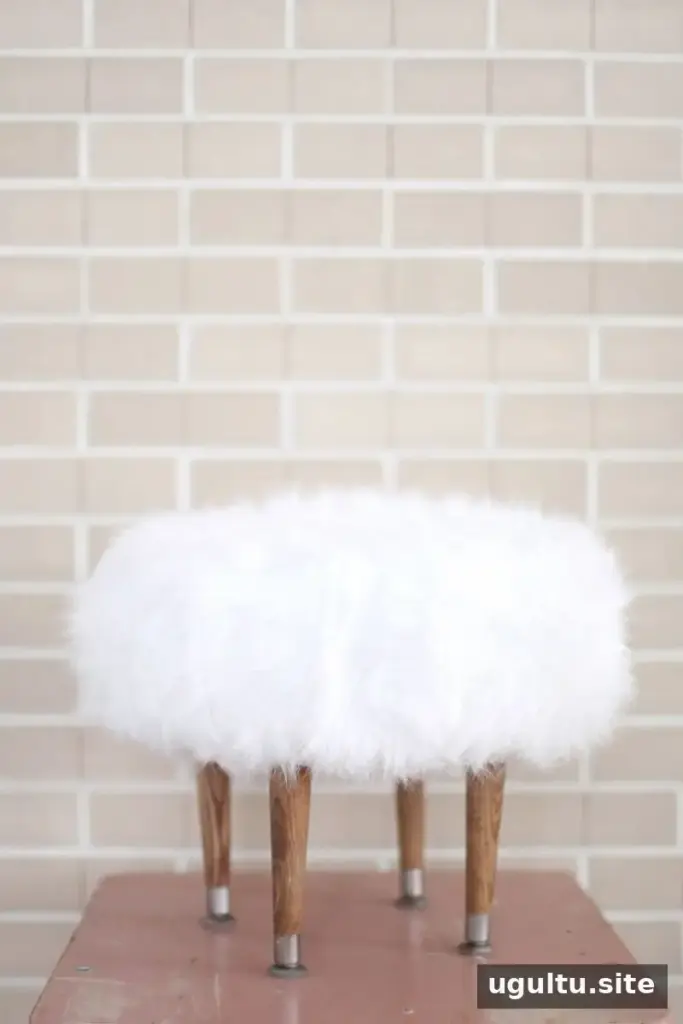
A DIY faux fur footstool is a simple way to add a soft, cozy accent to a living room or bedroom. This round ottoman uses a 15-inch wooden base, two layers of high-density foam, faux fur fabric, and four short legs. Careful stapling and planning the leg positions before covering the base can make assembly easier and help create a neater finish.
— Mandi
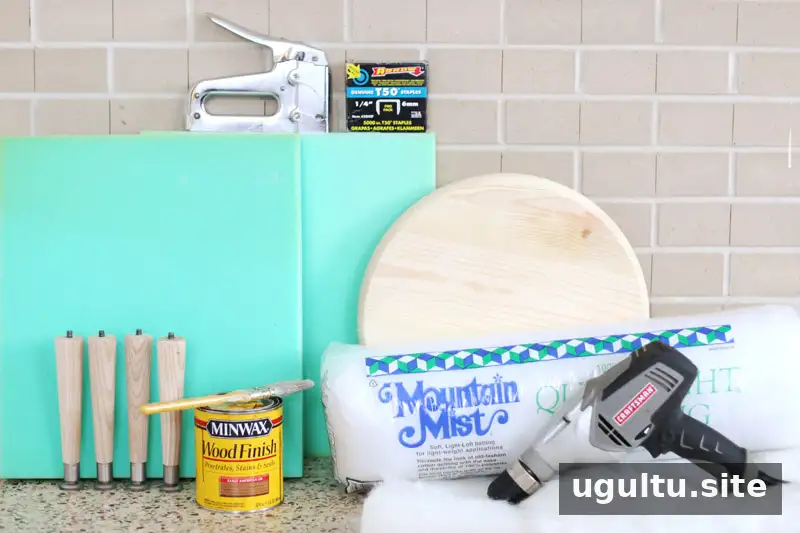
Materials for a DIY Faux Fur Footstool
- One 15-inch round piece of wood
- Two slabs of high-density foam, each 2–3 inches thick; the original project used two 15 × 18-inch pieces
- Batting
- Staple gun and 1/2-inch staples; 1/4-inch staples may be too short
- Four short legs and four leg mounting plates
- Stain and a brush, if the legs need finishing; mineral spirits for brush cleanup
- Drill and a bit slightly smaller than the diameter of the leg screw
- 1/2 yard of faux fur fabric, fabric scissors, and a marker
Optional finishing supplies: a 15-inch round piece of muslin, nailheads, a hammer, rope, and a glue gun. Prepare the mounting plates along with the legs; they help secure the legs to the stool.
How to Make the Footstool
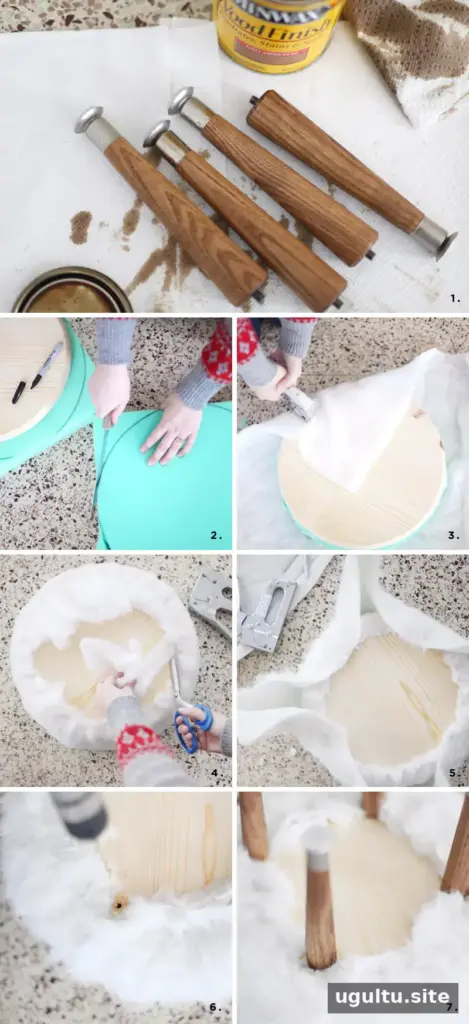
1. Finish the legs and cut the foam
Stain the legs if needed. The original project used one coat of Early American stain, wiped off with a paper towel. Let the stain dry completely before it can touch the fabric. Clean the brush with mineral spirits, following the product’s safety instructions. Solvent-soaked rags can catch fire: let them dry safely before disposal, and keep them away from heat and flames.
Trace the wooden circle onto each foam slab. A large serrated knife can cut the foam, but make several shallow passes along the marked line rather than trying to cut through it at once. The circles should match the 15-inch base; small imperfections will be covered by the batting and fabric.
2. Cover the foam with batting
Stack the foam on the batting and place the wooden circle on top. Pull the batting around the foam and staple it to the underside of the wood near the edge. Keep the batting trim around the perimeter so there is room to attach the legs. Trim away excess batting close to the staples.
3. Attach the faux fur
Place the padded base foam-side-down on the back of the faux fur. The fabric can be cut into a circle, or left as a square until it is attached to avoid cutting away too much. Staple the fabric to the underside, starting with one staple on each of the four sides. Pull the corners inward, then gather and staple the remaining fabric into pleats.
Leave four evenly spaced areas unstapled for the legs if the fabric extends far enough to interfere with installation. Trim excess fabric close to the staples. Keeping the upholstery close to the edge helps prevent bulky fabric from getting in the way of the leg mounts.
4. Drill the holes and attach the legs
At each leg position, remove a 1-inch square of fabric if necessary. Drill a pilot hole slightly smaller than the leg screw, keeping the drill perpendicular to the wooden base so the legs sit straight. Attach the legs using the mounting plates, and tighten them carefully. Legs with longer screw mounts may be easier to secure.
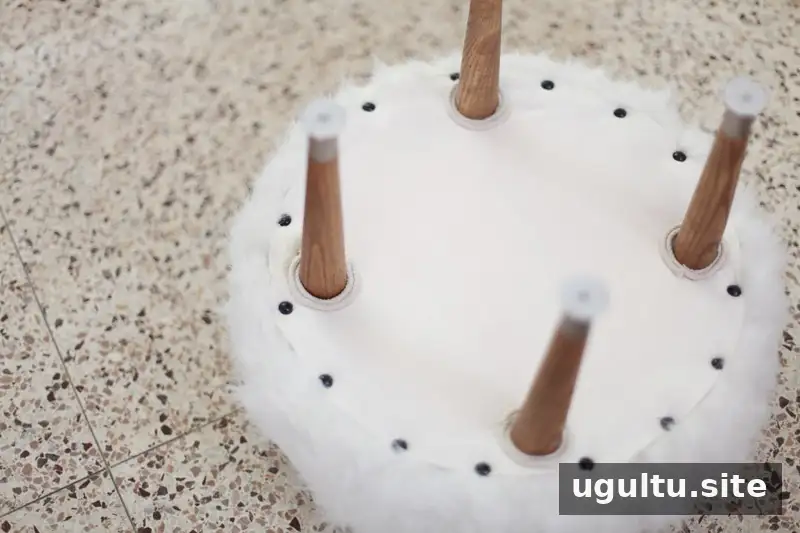
Optional: Finish the Underside
A fabric backing can conceal the staples and give the stool a more polished underside. Trace the base onto the 15-inch muslin, cut out the circle, and place it over the back. Fold under the edge and secure the fabric with nailheads, working on opposite sides first so the backing stays evenly positioned. Keep the leg locations accessible.
Cut four holes in the muslin at evenly spaced points, drill through the wooden base where needed, and reinstall the legs. If a fabric edge around a leg looks untidy, rope can be attached around the leg with hot glue as a decorative cover. Apply glue cautiously and allow it to cool before handling.
Adapting the Footstool for a Nursery
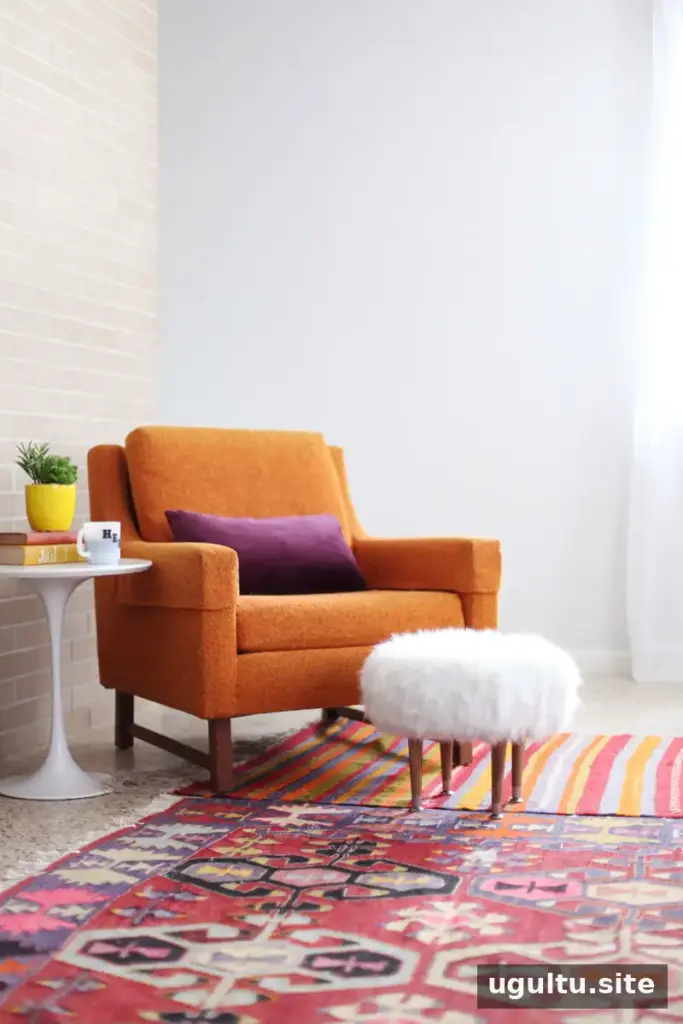
This ottoman can also work as a nursery footstool. For that use, the original project suggests choosing shorter legs and using one layer of foam. Check that the finished stool is stable and appropriate for its intended use, and keep tools, sharp staples, and adhesives away from children during assembly.
Conclusion
This DIY faux fur footstool combines a circular wood base, foam padding, and plush fabric to create a practical home accent. For the best result, plan the leg positions early, staple close to the edge, and consider adding the muslin backing for a cleaner finish.


