admin
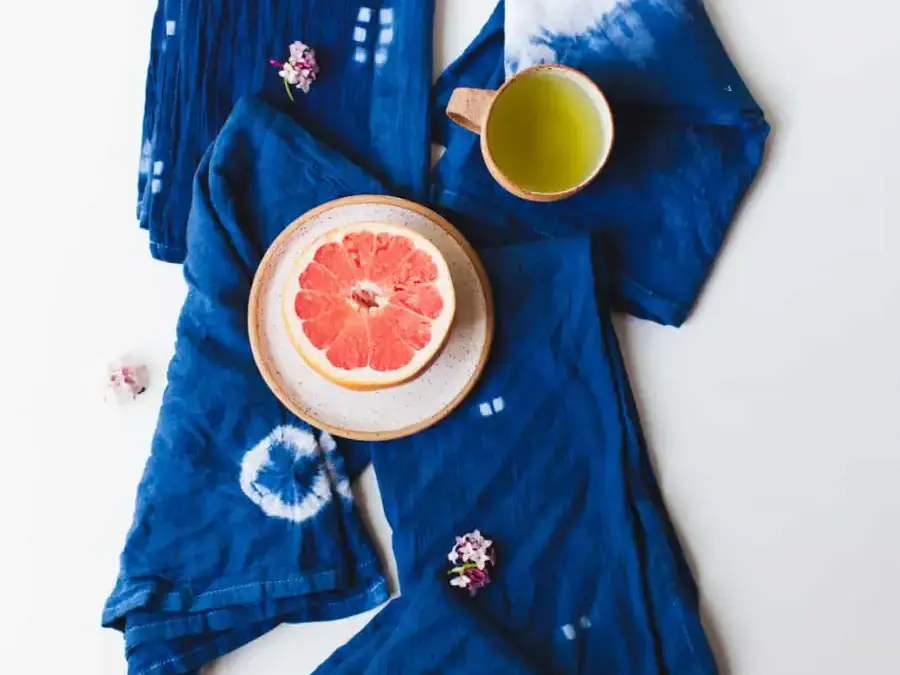
Shibori kitchen towels add rich indigo color and distinctive handmade patterns to a hardworking kitchen. This project uses fabric dye and simple binding methods to create designs on cotton towels. By folding, wrapping, or pinching the fabric before dyeing, you can control which areas stay white and which take on color.

Supplies for Shibori kitchen towels
Gather your materials before mixing the dye. Work in a well-ventilated area and protect nearby surfaces, since indigo can stain clothing, tools, and countertops.
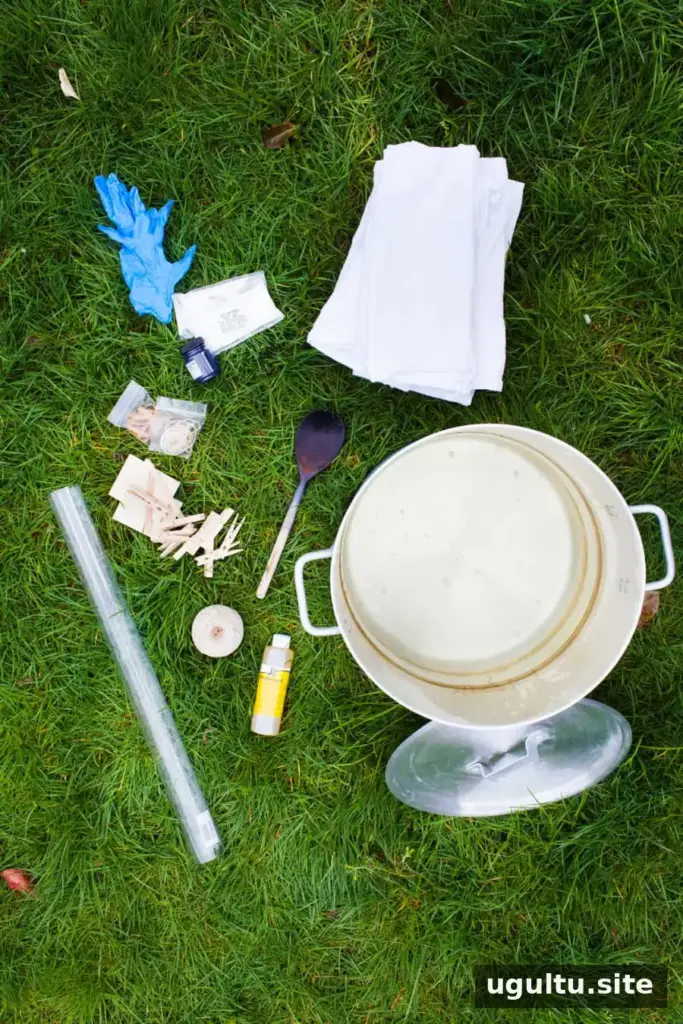
- A shibori dye kit
- A dye vat or 5-gallon bucket
- Gloves
- Cotton towels, washed to remove finishes or chemicals
- A spoon or stick reserved for dyeing; it should not be used for food afterward
- Rubber bands, wood squares, clothespins, or plastic tubing for binding
- Detergent made for washing dyed textiles
- A tarp or plastic sheeting, if you do not have a suitable outdoor work area
Prepare the towels and dye
Fill the vat with warm water and wet the towels so the cotton can absorb dye evenly. Wring out the excess water and set the towels aside. Mix the dye following the kit instructions. Avoid stirring more than directed, and keep the vat covered whenever you are not preparing or using the dye.
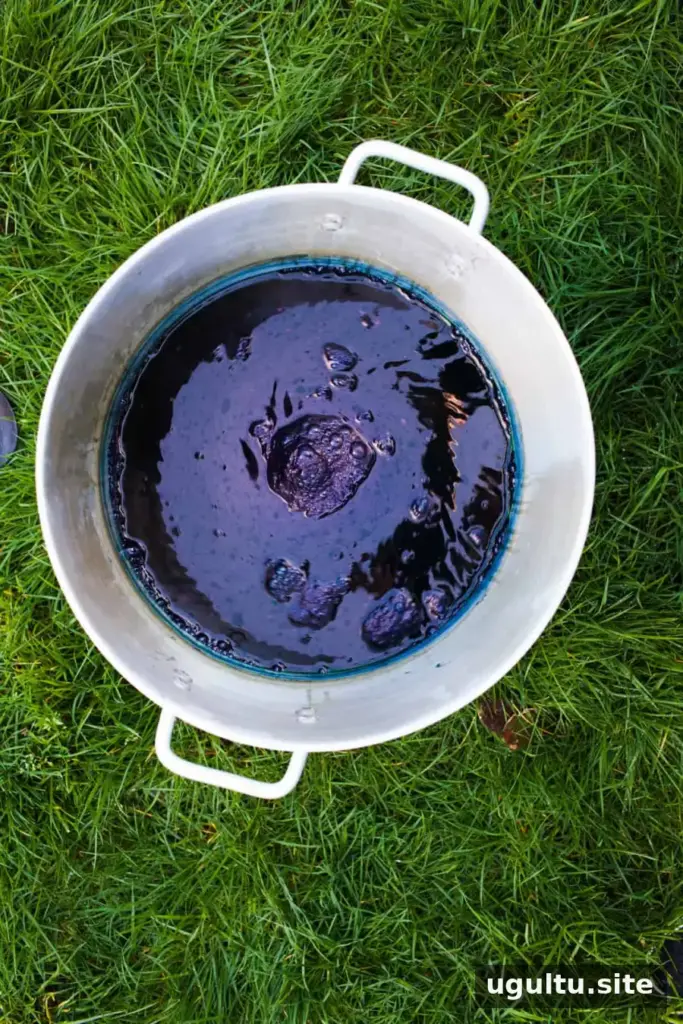
Let the dye sit for 20–30 minutes, or for the time specified in the kit directions. Use that waiting period to bind the towels. The areas exposed to dye will turn blue, while sections tightly covered or compressed against other material will resist the color and remain lighter.
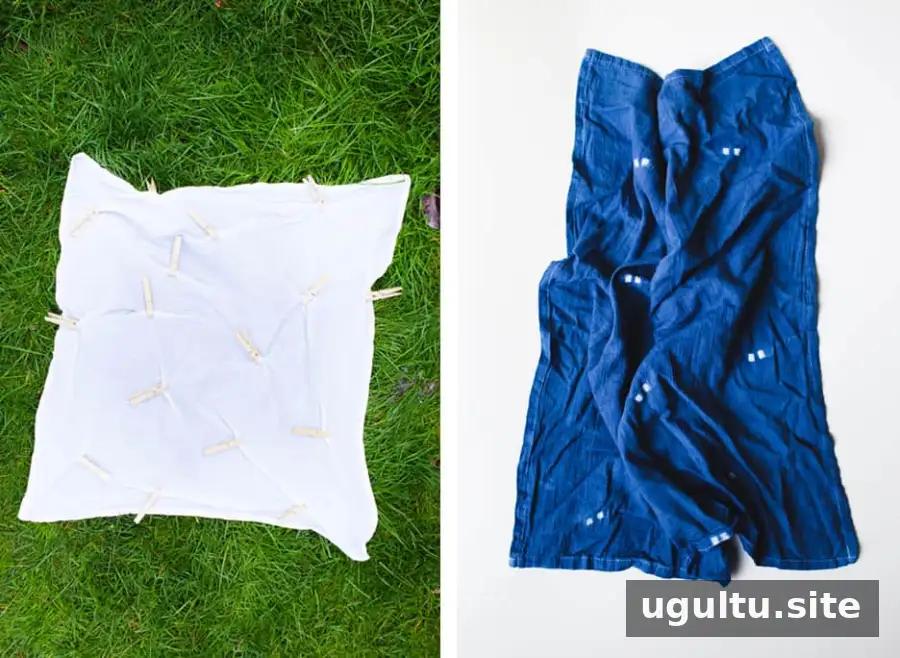
Choose a binding pattern
For small blocks of color, attach clothespins at intervals across a towel. Use new or completely dry pins: moisture can make the edges of the resist less distinct. Try a test towel or a small section first if you want to check how closely spaced pins will affect the pattern.
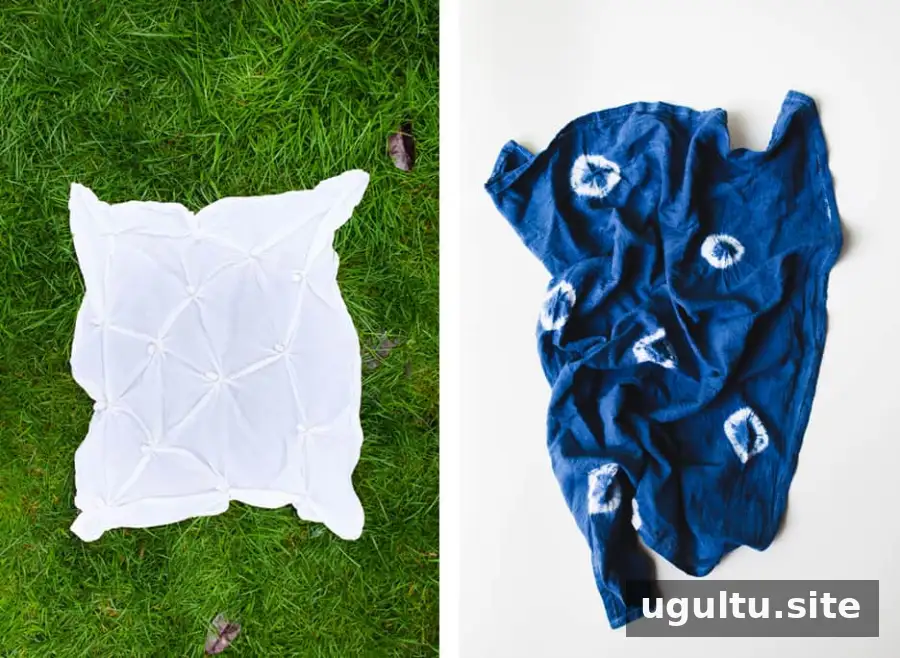
To make irregular rings, pinch sections of fabric and wrap them firmly with thick rubber bands. Tight bindings help limit dye from seeping into areas you want to keep white. Keep the bands secure, but avoid stretching the cotton so much that the towel’s shape is distorted.
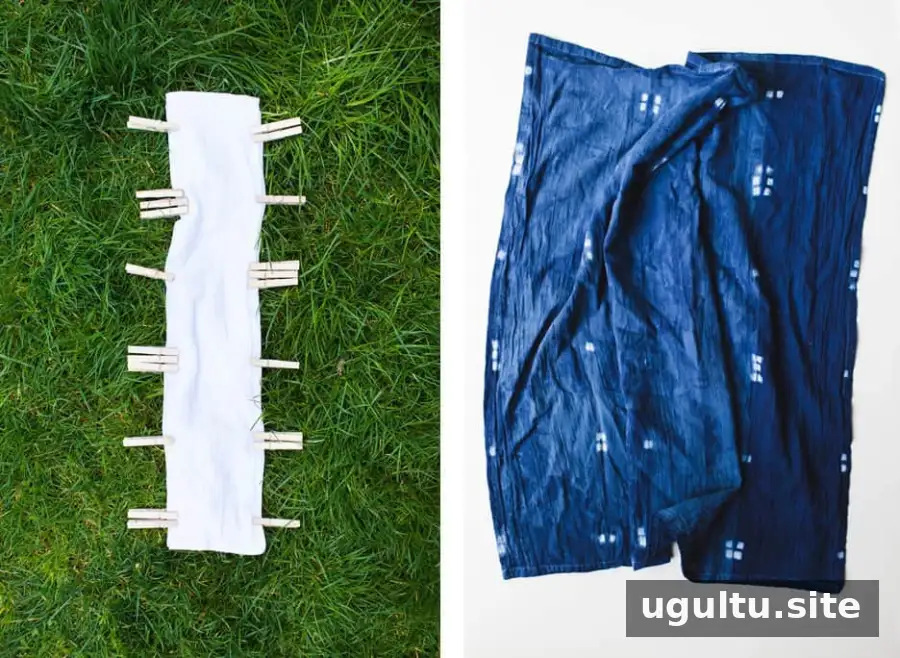
Another option is to fold a towel accordion-style and add groups of clothespins. A narrower accordion fold can create more repeated pattern across the fabric. Dye may reach the outside folds more easily than the inner layers, so allow extra time in the vat if the towel has many folds.
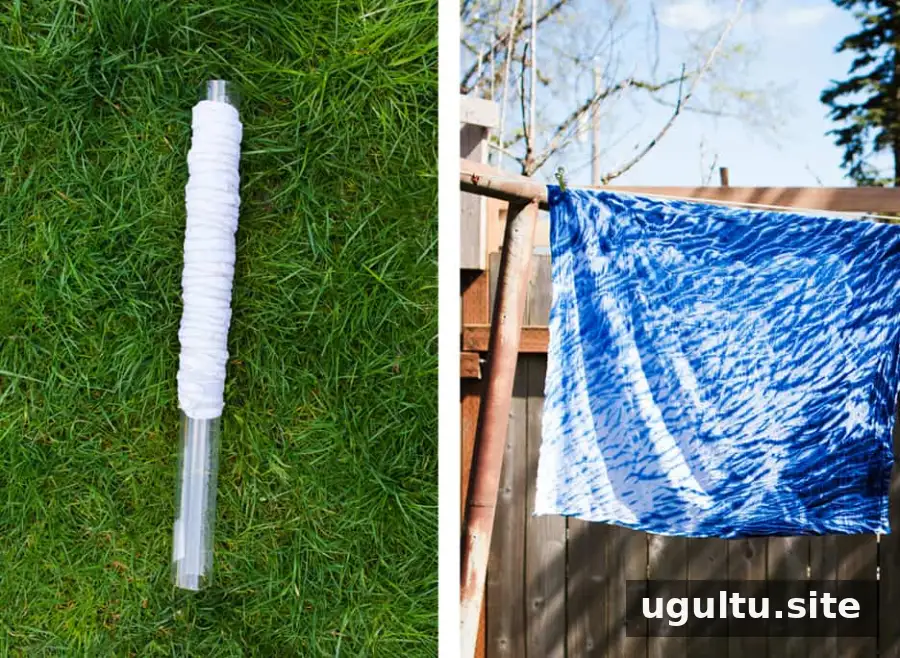
For a diagonal design, wrap the towel around a length of plastic tubing and bind it tightly with string. The finished pattern can vary depending on the spacing and tension of the string, so treat this method as an opportunity to experiment.
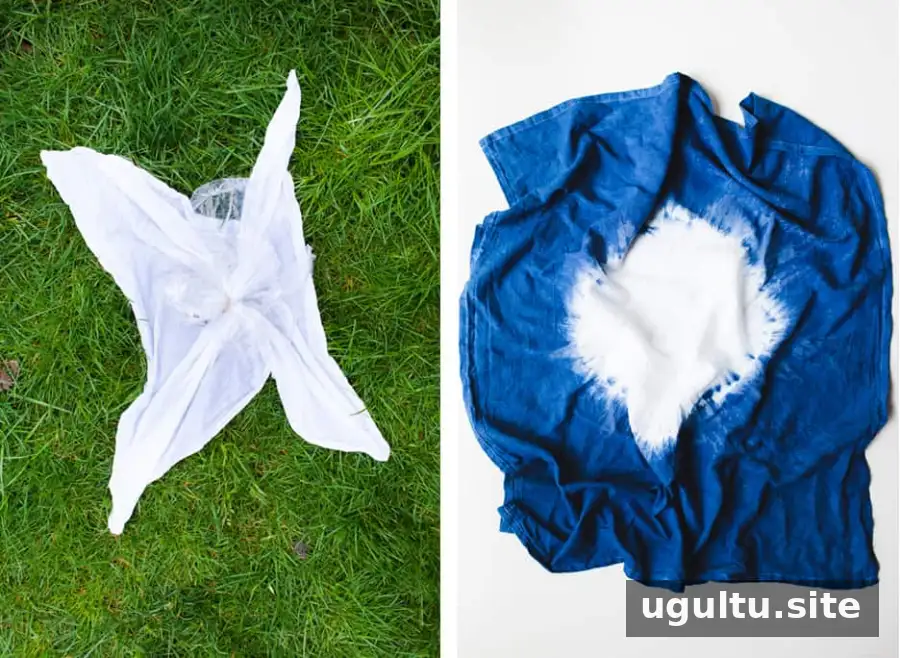
You can also place a piece of plastic packaging over a section of fabric and secure it tightly with rubber bands. The covered area resists the dye and can form a bold circular shape. Make sure the plastic is held firmly in place before dipping.
Dye, oxidize, and rinse
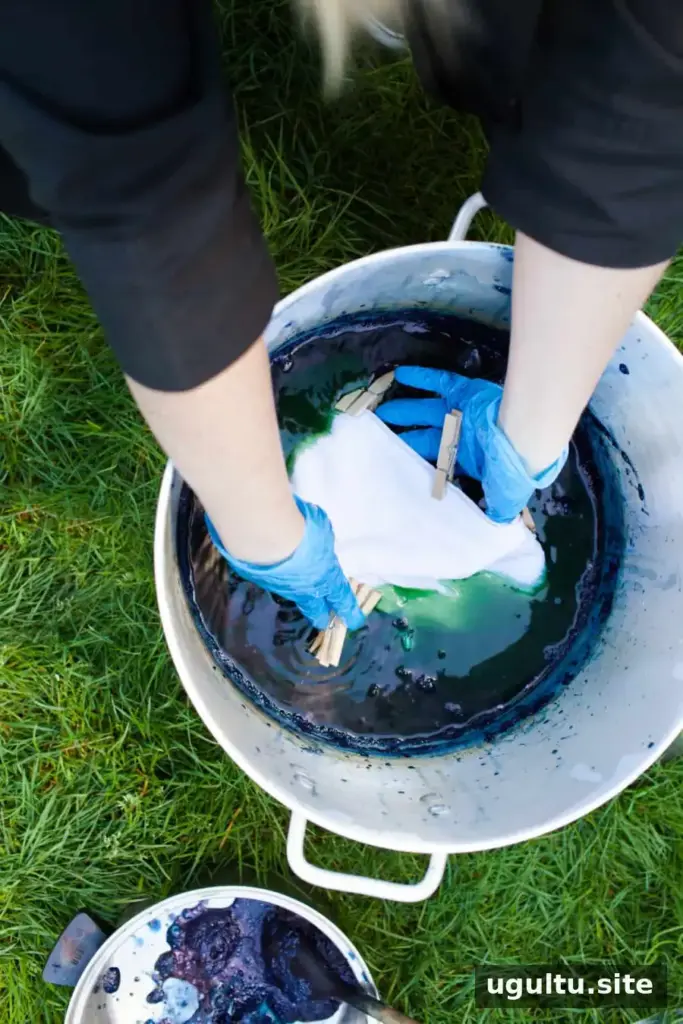
When the dye is ready, lower the bound towels into the vat. If they float, use a gloved hand to keep them submerged for 2–4 minutes. Squeeze out excess dye when removing them, then place the towels on a tarp or suitable outdoor surface. Indigo may look green at first; as it reacts with oxygen, it develops into a deeper blue. Leave the towels to oxidize for at least 20 minutes before unbinding them or dipping them again.
Wet fabric can look much darker than it will once dry. For a deeper blue, repeat the dyeing process a second or third time, allowing at least 20 minutes of oxidation between dips. When you are satisfied with the color, remove the bindings and hang the towels or lay them flat until completely dry.

Rinse the towels in cold water, then wash them with detergent intended for dyed textiles according to its directions. This helps remove excess dye and reduce color transfer when the towels get wet. Follow the dye kit’s care instructions as well, since products may have different requirements.
Enjoy your finished Shibori kitchen towels
Shibori kitchen towels bring a deep indigo accent to the kitchen, and their varied patterns make each piece distinctive. For future projects, note which folds and bindings produced the clearest results, and keep dye tools separate from kitchen utensils. With careful rinsing and washing, your finished towels are ready for everyday use. — Kayleigh