
 admin
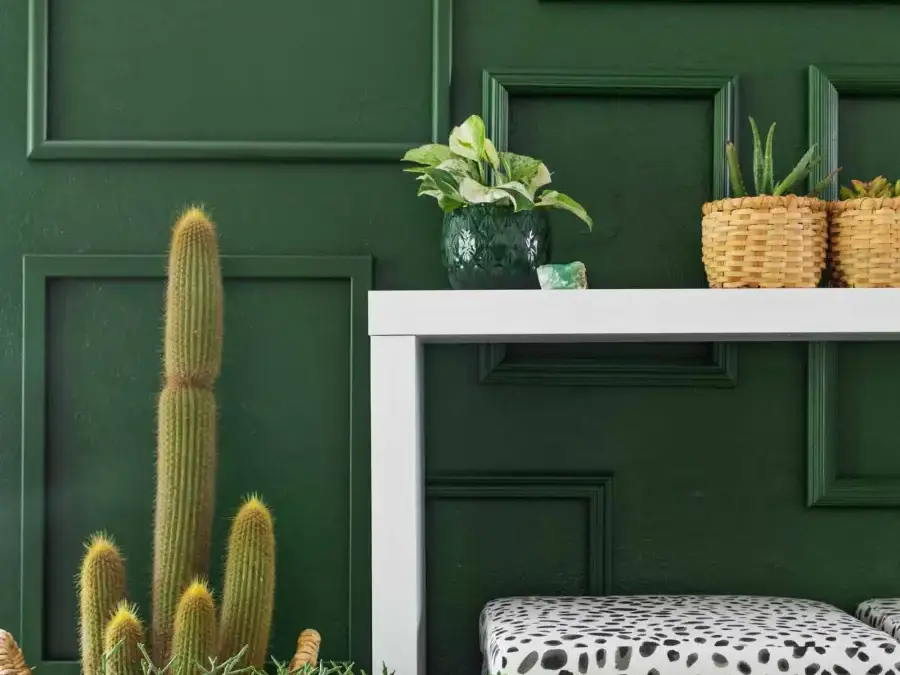
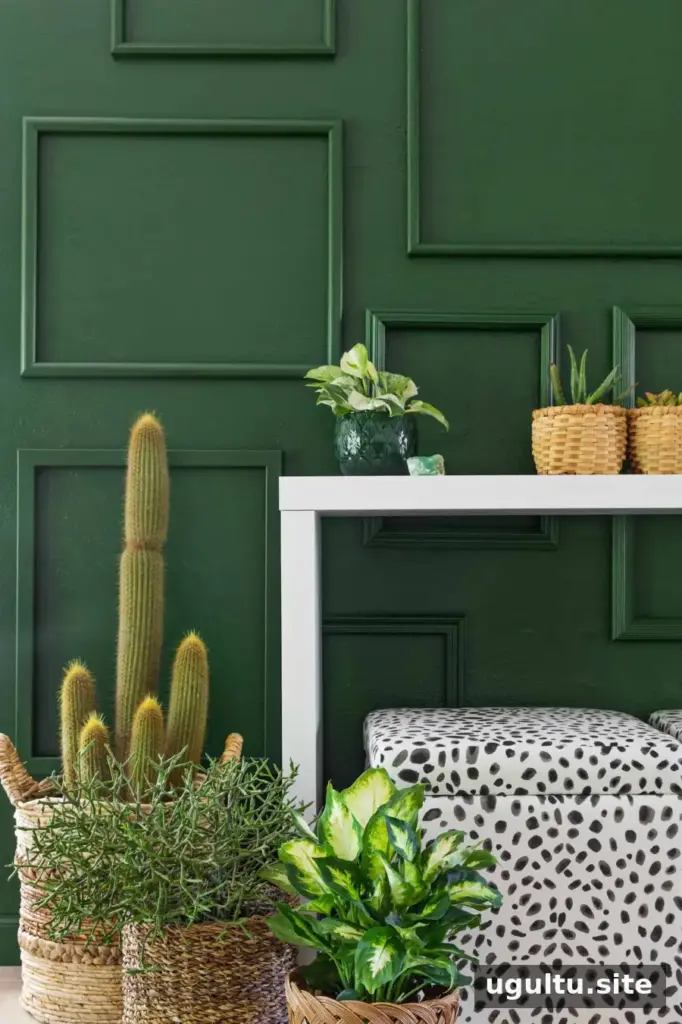
A living room accent wall can add color and character without making the entire space feel busy. This project pairs a deep green painted wall with a collection of picture frames, creating a textured backdrop that complements the room’s white walls and movie-screen setup.
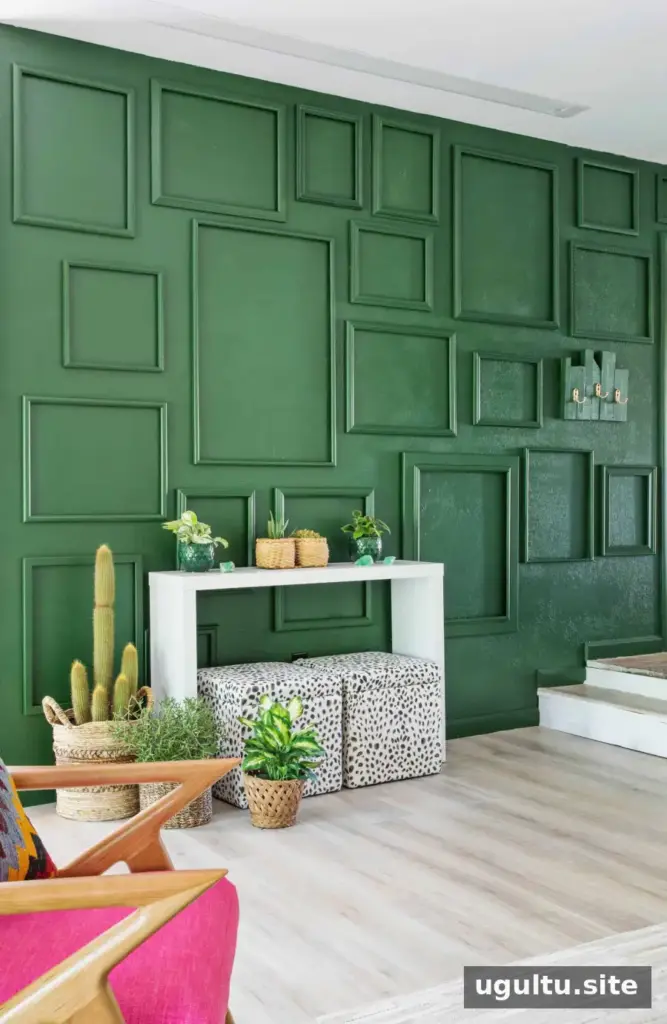
The design was inspired by a blue-toned framed wall, but the goal here was to choose a look that felt interesting without taking over the room. Like a patterned rug, an accent wall can bring visual texture while still allowing furniture and other decor to share attention. A useful tip when planning a feature wall is to consider how its color and pattern will work with the rest of the room.
Choosing a Color for a Living Room Accent Wall
The color decision came down to a darker, cool-toned shade rather than black, gray, or a warm red or orange. Teal and dark green were the final options, and green was selected after a poll helped settle the choice. The paint color used was Chard.
If you are deciding between similar shades, try samples in the room before committing. Daylight, lamps, and nearby furnishings can affect how a color appears. Consider the existing wall color and the mood you want to create, too: a darker shade can provide contrast against white walls and make the feature wall stand out.
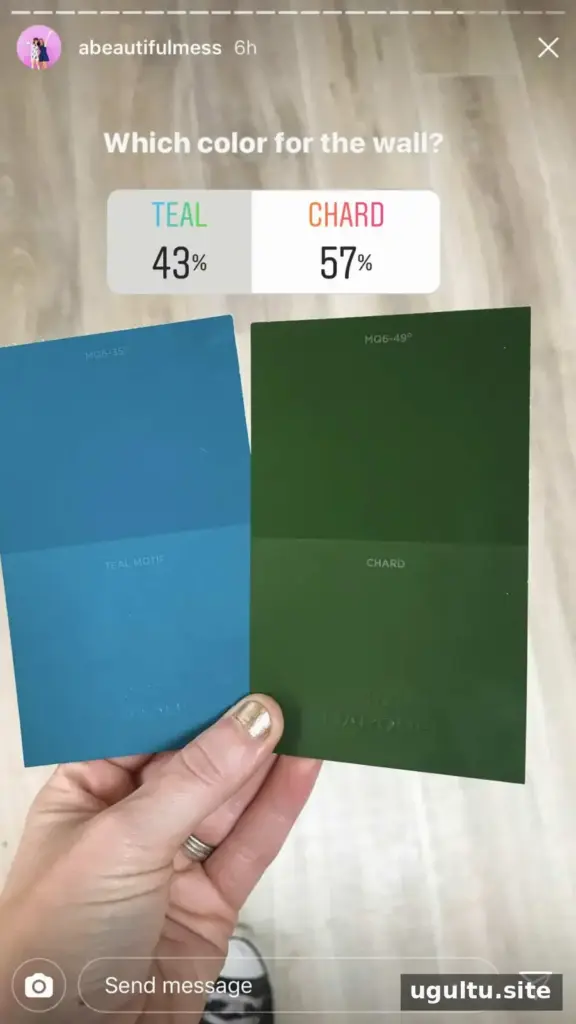
Once the green was chosen, the project could move forward. Making the color decision before buying supplies helps keep a DIY project focused and avoids purchasing materials for a design that may change.
How the Framed Accent Wall Was Made
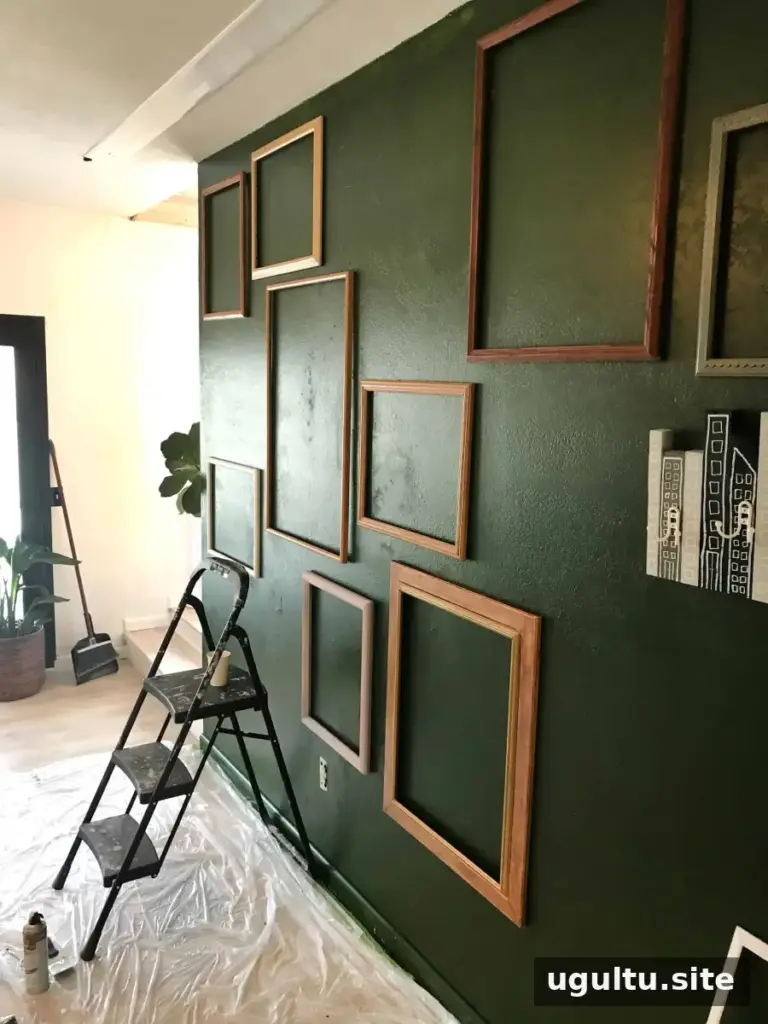
A collection of secondhand picture frames kept the cost manageable. Because the wall was long, many frames were needed, but the frames cost a little over $100 in total. The main supplies were frames, nails, and paint.
- Paint the wall. The existing wall was white, so it was given two coats of green paint without a primer coat.
- Prepare the frames. Clean them and remove the glass and hardware before painting.
- Hang the frames, then paint them to match the wall. In this project, each frame received two coats, whether or not it had been primed.
- After the paint dries, inspect the frames from different angles and touch up any areas that remain visible.
Painting frames after hanging them worked well here because there were too many to conveniently lay out indoors. Painting them before installation is another option if you have enough protected space. Whichever approach you choose, protect nearby floors and furnishings, and allow paint to dry before adding or replacing frame hardware.
Styling the Finished Wall
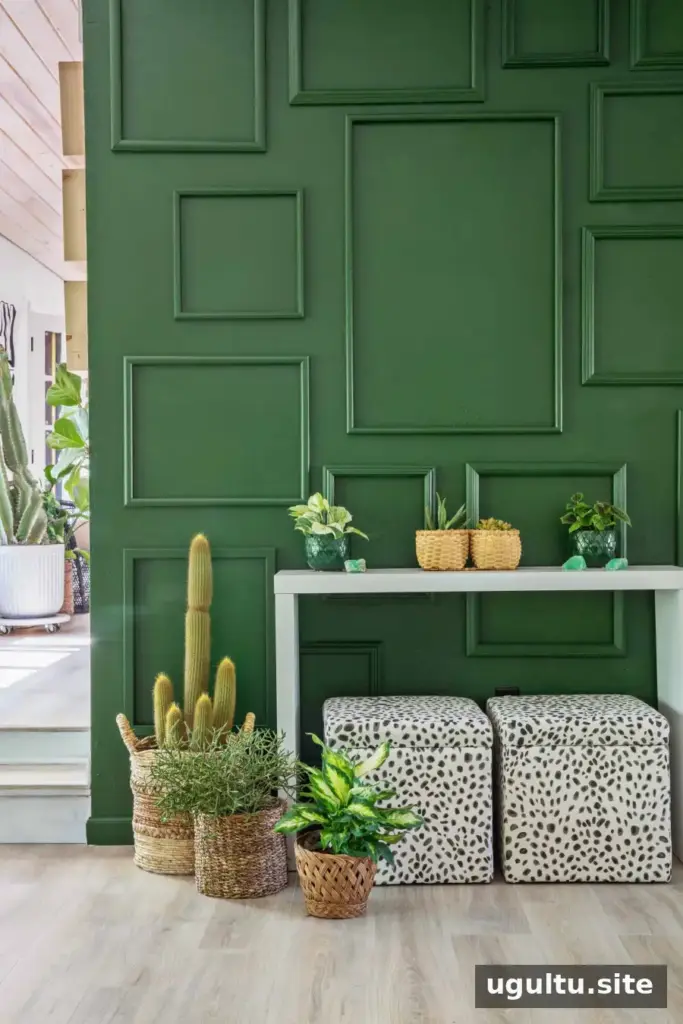
A small table, plants, and two ottomans completed the area. The ottomans provide storage for throw blankets and can be used as extra seating during movie nights. When styling a feature wall, keep practical needs in mind as well as appearance: storage and flexible seating can make the finished space more useful.
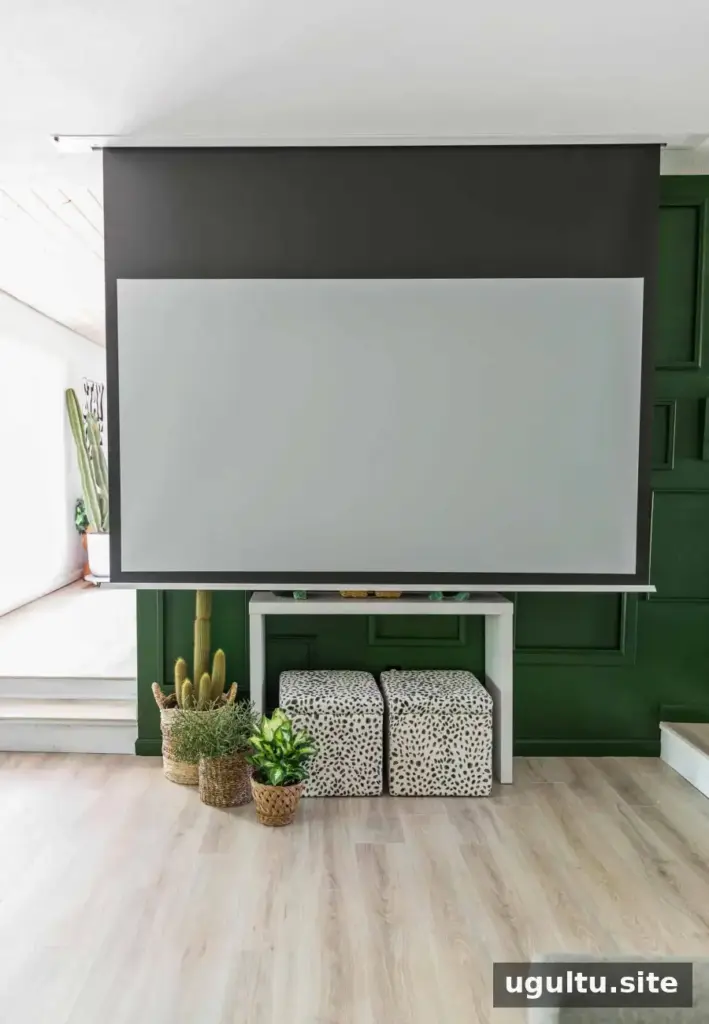
A retractable screen lowers in front of the wall using a remote. When the screen is raised, the painted frames remain visible; when it is lowered, the wall serves as the backdrop for movie viewing. If a screen or large piece of furniture will cover part of your accent wall, plan the frame layout around its position so the arrangement works in both configurations.
Final Thoughts on This Living Room Accent Wall
This living room accent wall shows how paint and secondhand frames can transform a long, plain wall into a distinctive focal point. A deep green shade, a considered frame arrangement, and useful furnishings make the space feel finished without relying on an overly complicated design. For a similar update, choose a color that suits your room, look for affordable frames, and plan the layout before you start painting.
— Emma


