
 admin
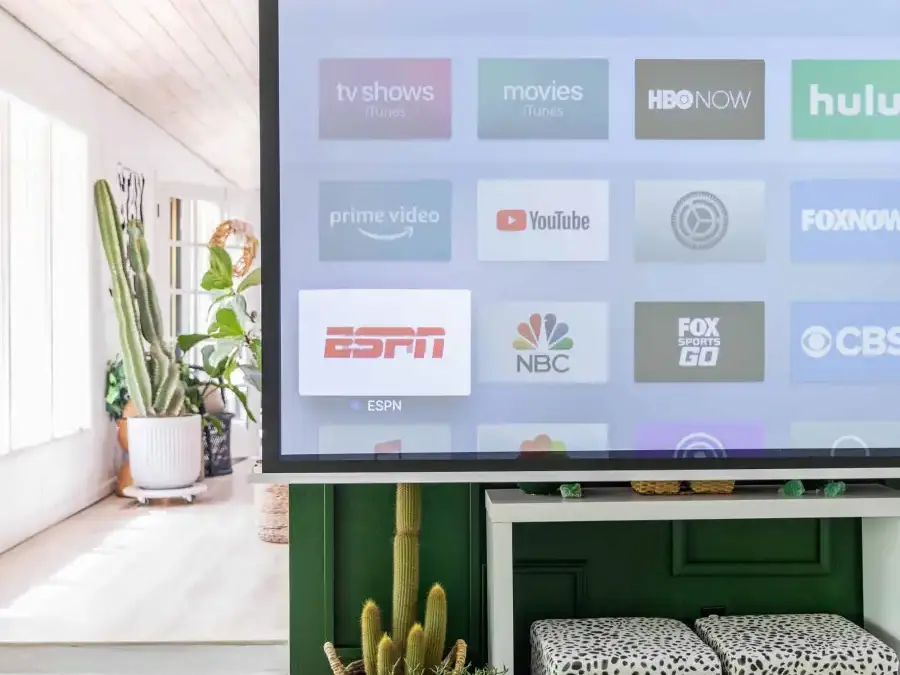
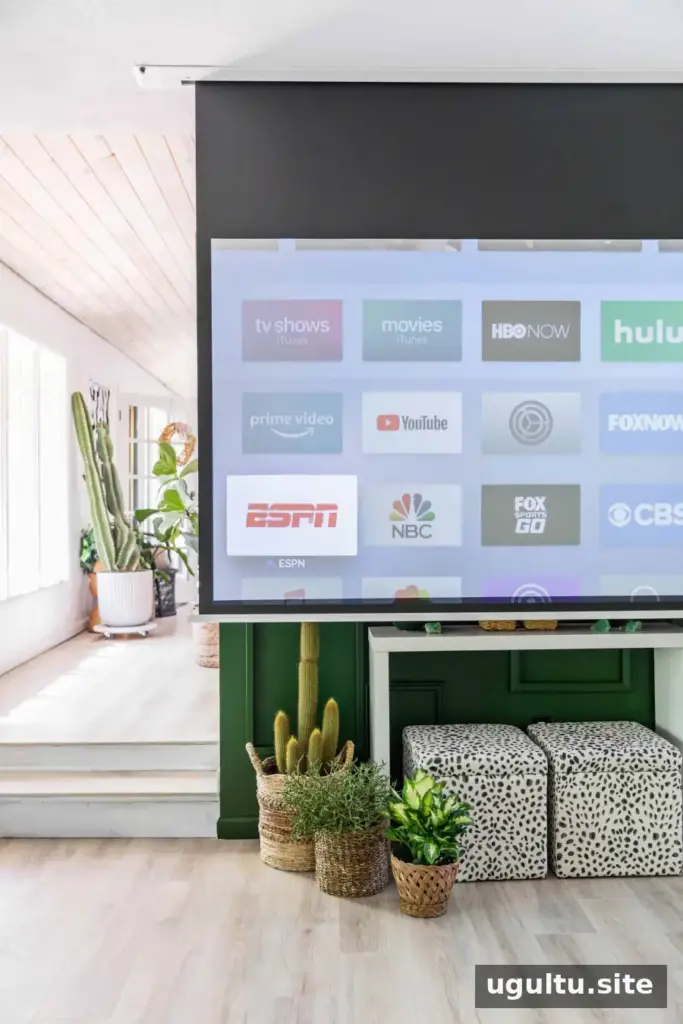
A home movie theater setup can create a dedicated-feeling space for films and shows without keeping a television on display all the time. This living room setup uses a projector and a retractable screen, with the projector positioned on a shelf. The arrangement suits occasional, intentional viewing and keeps the room looking uncluttered when the screen is not in use.
Why choose a projector for a home movie theater setup?
A projector can produce a large image while allowing the screen to disappear when viewing is over. In this room, the screen rolls up into the ceiling and the projector is discreetly placed on a shelf. The result is a living space that can shift into a movie-watching area when needed.
Room brightness affects the viewing experience. The photos were taken on a bright day with the curtains open, so the projected image appears less clear than it does in a darker room. For a more comfortable picture, close the curtains and reduce other light sources while watching.
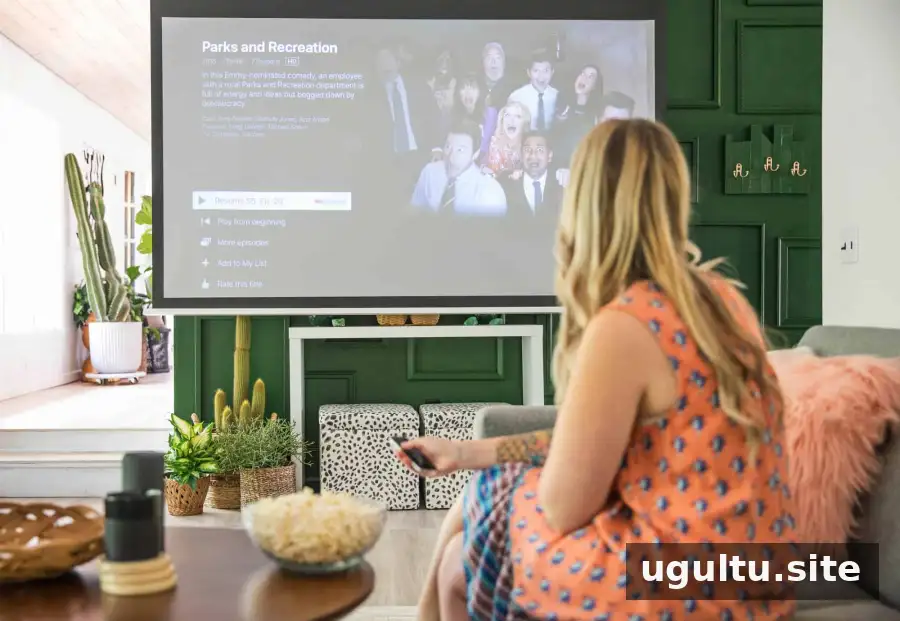
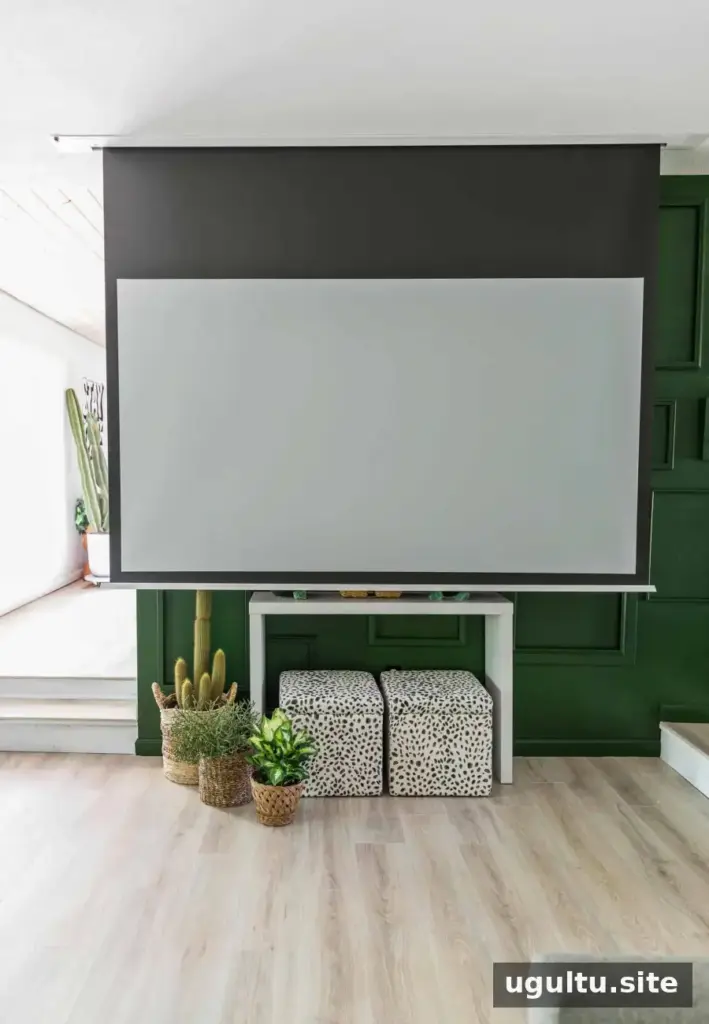
A retractable screen is one way to keep the equipment out of sight, but it is not essential. A projector can also display an image on a plain white wall. That can be a practical option if you are comfortable keeping one wall clear and want to avoid installing a screen.
Equipment and viewing options
The setup described here includes a projector, a Silver Ticket screen, a UE Boom 2 speaker, and Apple TV. Films and shows are watched through streaming services, with some titles rented or purchased digitally. The right combination depends on what you watch, so consider your regular viewing habits before paying for multiple subscriptions.
A projector may include a built-in speaker, but its sound may not be sufficient for a room. In this case, the projector’s fan makes its built-in audio harder to hear. An external speaker provides a simple alternative; a more elaborate sound system is another option if you want a fuller movie experience.
Projector placement, installation, and lighting
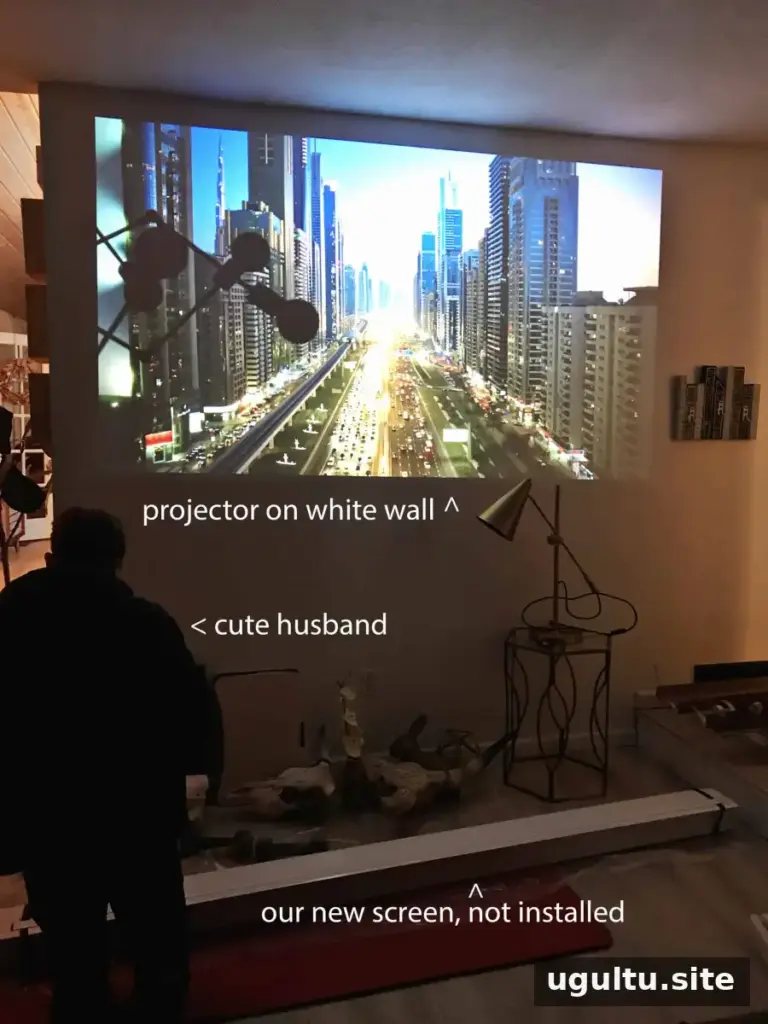
The screen was professionally installed because the work involved cutting into the ceiling and positioning the screen precisely. Projector setup can be more straightforward, especially when the unit has adjustable legs to help align the image. Before installation, measure the viewing area and check that the projector’s position will produce an image at the intended height.
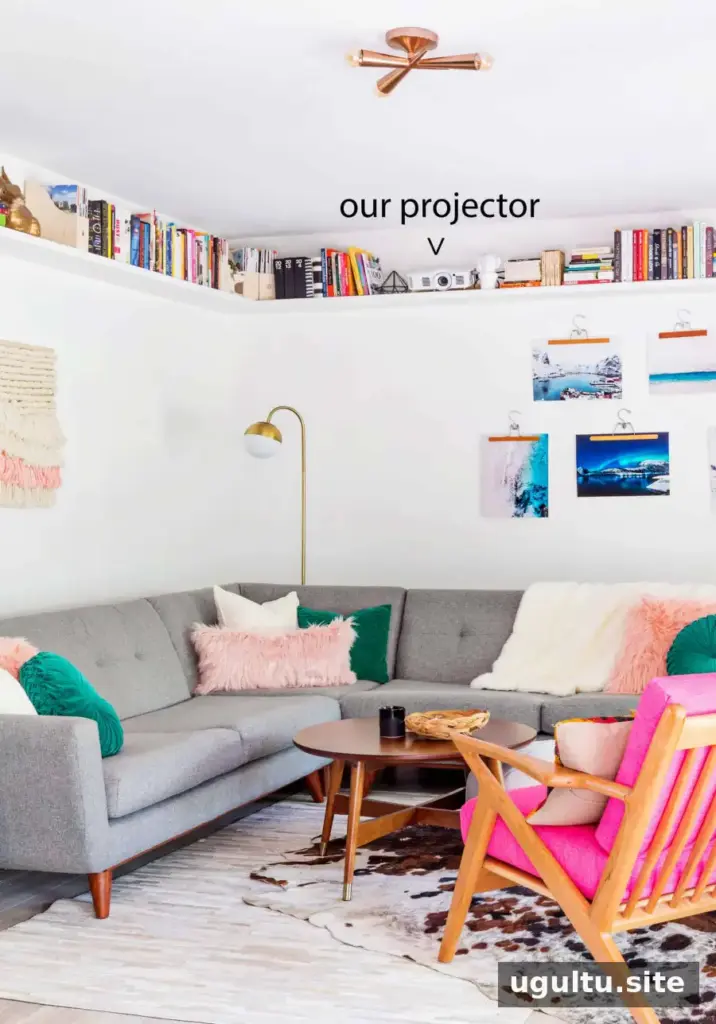
The projector sits on a floating shelf opposite the screen. Its position required angling the image downward so the screen would be comfortable to watch from the sofa. Adjustable legs helped with this alignment.
One planning consideration is ceiling lighting. A low-hanging fixture in the middle of the room may obstruct the projected image. The room’s previous chandelier was replaced with a fixture closer to the ceiling. If you are planning a similar setup, check the projection path before choosing or installing a light.
Remotes and everyday convenience
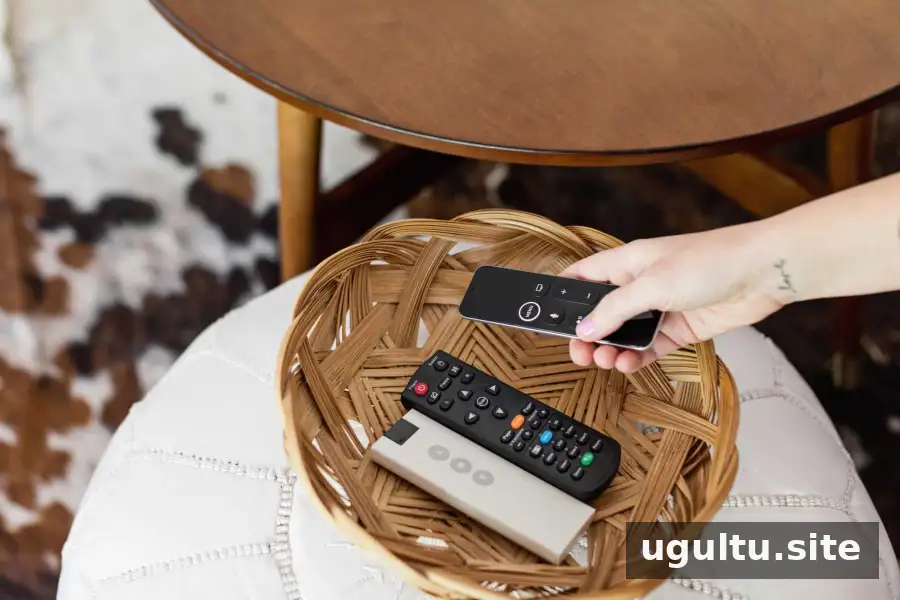
This arrangement uses separate remotes for the screen, projector, and streaming device. Multiple controls can be a minor inconvenience, particularly if they are easy to misplace. Keeping them together in a small basket near the seating area makes them easier to find and return after use.
Sound considerations

The projector’s built-in audio is not especially clear in this setup, partly because the fan runs while the projector is on. An external speaker placed near the seating area is a straightforward improvement. The existing portable speaker is easy to operate and provides suitable sound for casual viewing, although it does not create the same effect as a surround-sound system.
Is this home movie theater setup right for you?
This home movie theater setup prioritizes a large picture and a tidy room, with a retractable screen and discreet projector placement. Its main trade-offs are the need to manage several remotes, plan lighting around the projection area, and add a separate speaker for clearer sound. Before choosing equipment, consider your room’s brightness, available mounting locations, preferred screen size, and typical viewing habits. These details can help you decide whether a projector and screen will work better for your home than a conventional television.
Article by Emma.


