
 admin
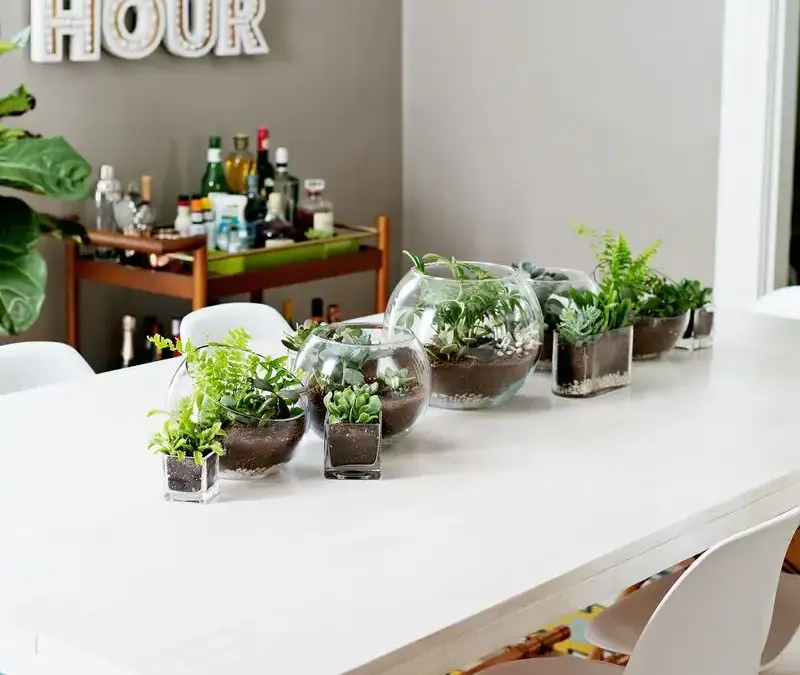
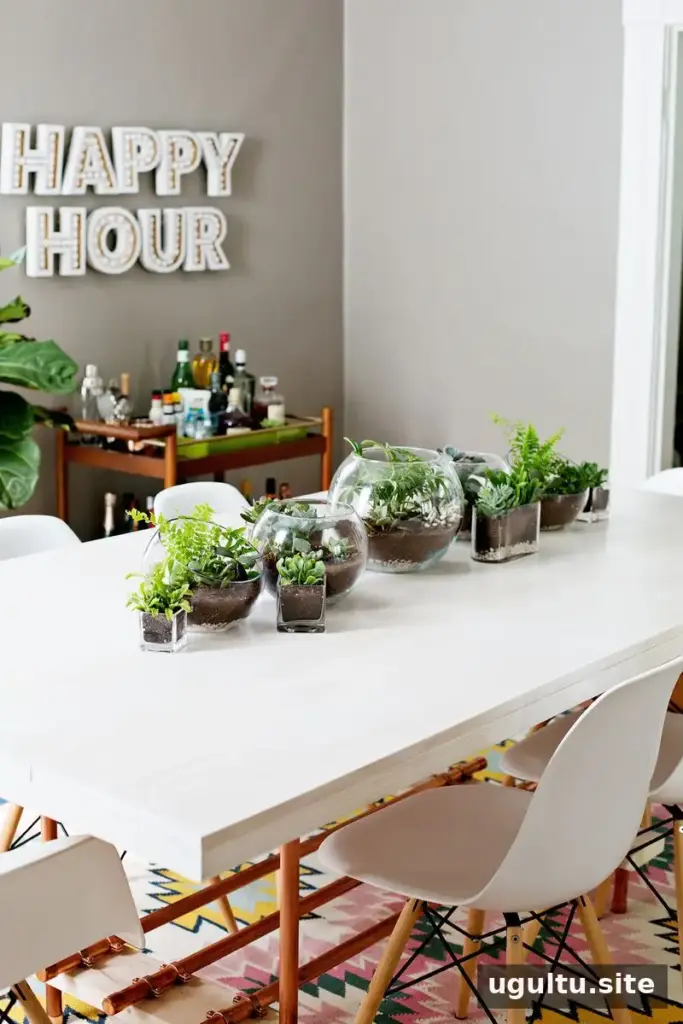
A terrarium table runner brings greenery to the dining area in a way that works for both everyday use and special gatherings. Instead of using one long decoration, arrange several planted glass containers down the center of the table. Varying their shapes and sizes creates a relaxed, layered display that can also serve as a dinner-party centerpiece.
Supplies:
- Glass terrariums and open glass containers
- Small indoor plant pebbles
- Indoor plant soil
- Small indoor plants suited to the light and care conditions in your home
How to Make a Terrarium Table Runner
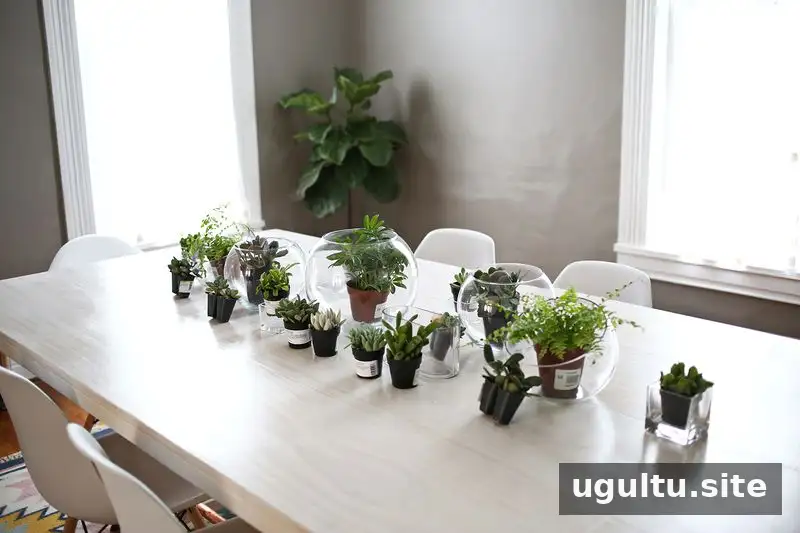
Choose several glass containers in different shapes and sizes. You can mix classic terrarium forms, such as fishbowl-style vessels, with containers that have wider, open tops. Before adding soil, set the empty vessels along the table and place each plant in or beside its intended container. This lets you adjust the arrangement and balance the heights and shapes before planting.
For a varied look, combine plants with different forms, such as succulents, small ferns, and scheffleras. Check that the plants have compatible light and watering needs before grouping them. This makes it easier to care for the display and helps avoid placing plants with very different requirements side by side.
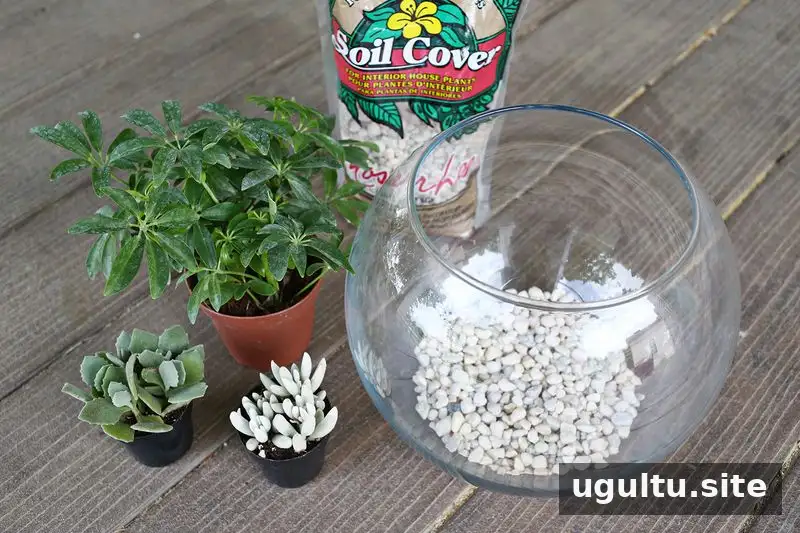
Add Pebbles and Plant the Containers
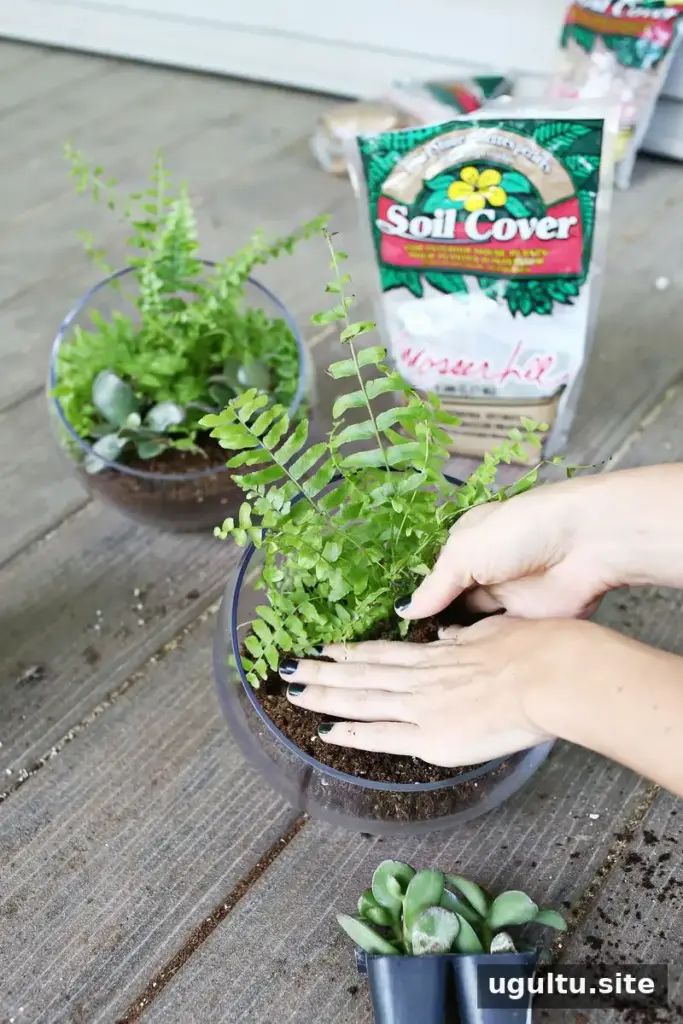
Place an inch or two of small pebbles at the bottom of each container, then add soil and position the plants. Many glass terrariums do not have drainage holes, so the pebble layer should not be treated as a substitute for drainage. Use water sparingly: excess moisture can collect at the bottom of a closed or non-draining vessel and may damage plant roots.
Use soil suited to the plants you choose, and avoid packing it tightly around their roots. Leave enough room at the top of each container to water carefully without spilling soil or water onto the table. If you are mixing plant types, use their care requirements to guide how much and how often you water.
Arrange and Care for Your Table Display
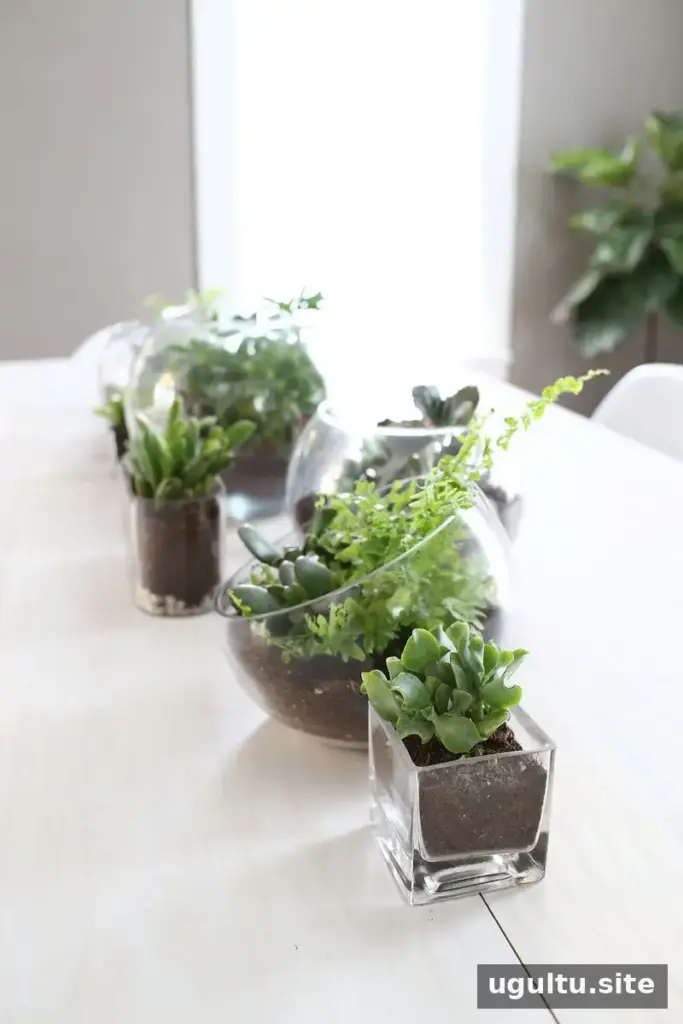
After planting, return the containers to the arrangement you planned earlier. Leave enough space between them for place settings and serving dishes, especially if the table runner will stay out during meals. A tray or protective mat beneath the display can help protect the table from scratches and stray water.
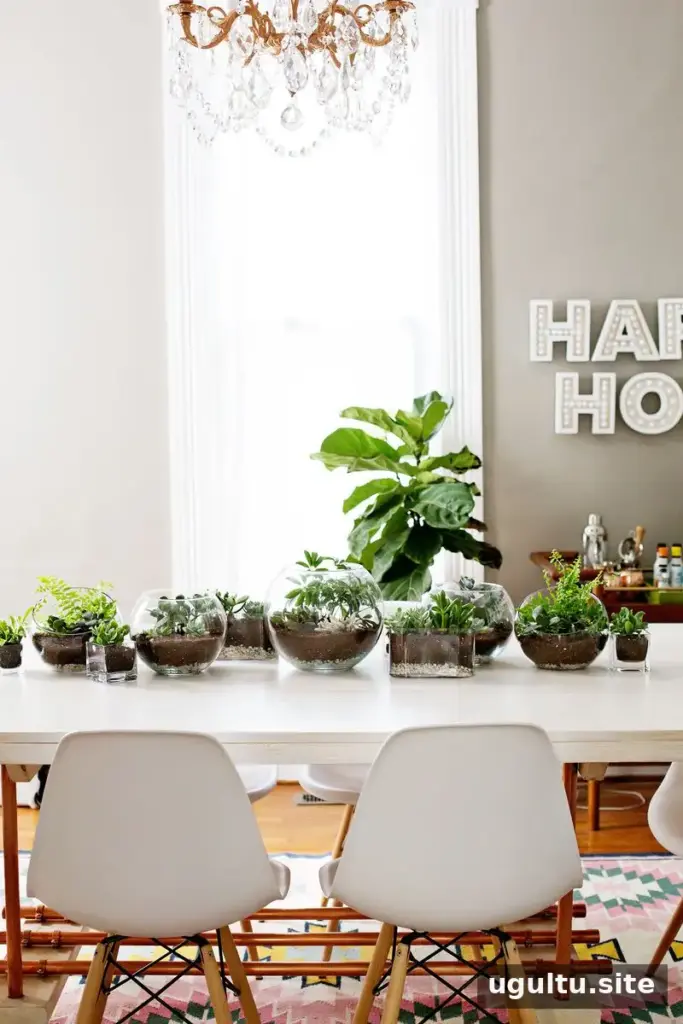
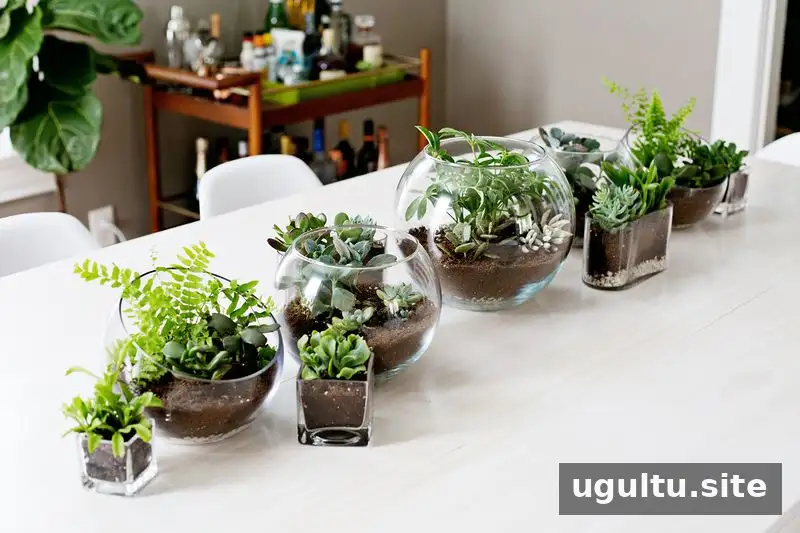
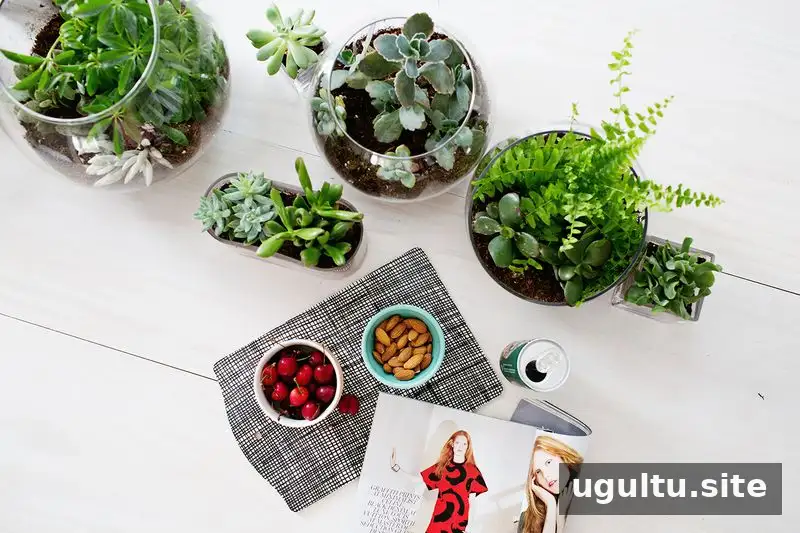
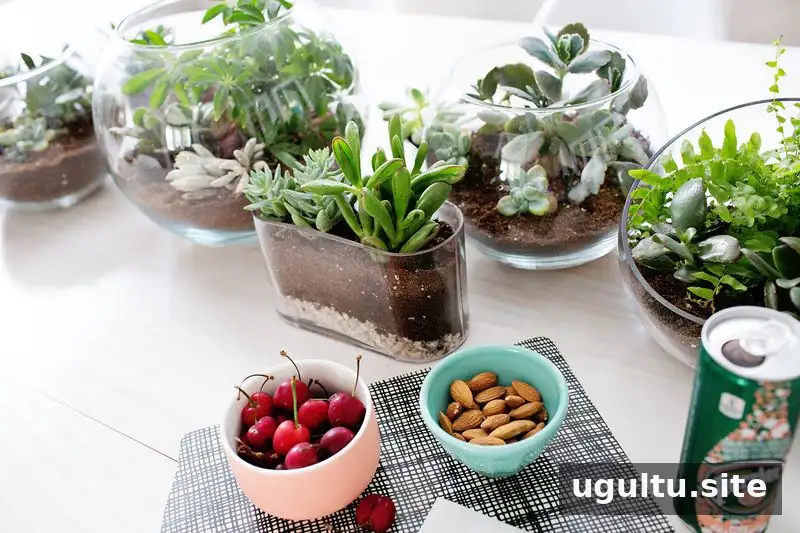
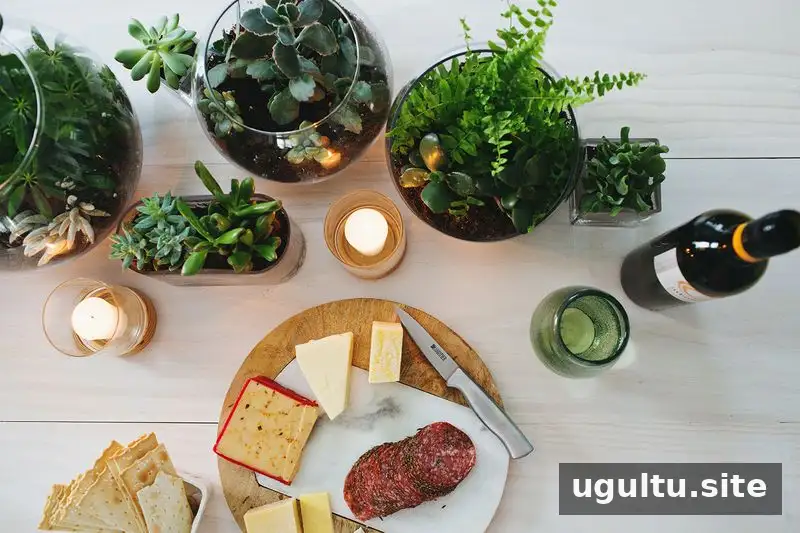
Plants add natural color and texture to a room, while a group of terrariums can feel casual enough for daily display and polished enough for a gathering. Place the containers where they receive the appropriate light, and check the soil regularly rather than watering on a fixed schedule. A carefully arranged terrarium table runner is a flexible centerpiece that can be adjusted to suit your table and the plants you grow.
— Laura


