
 admin
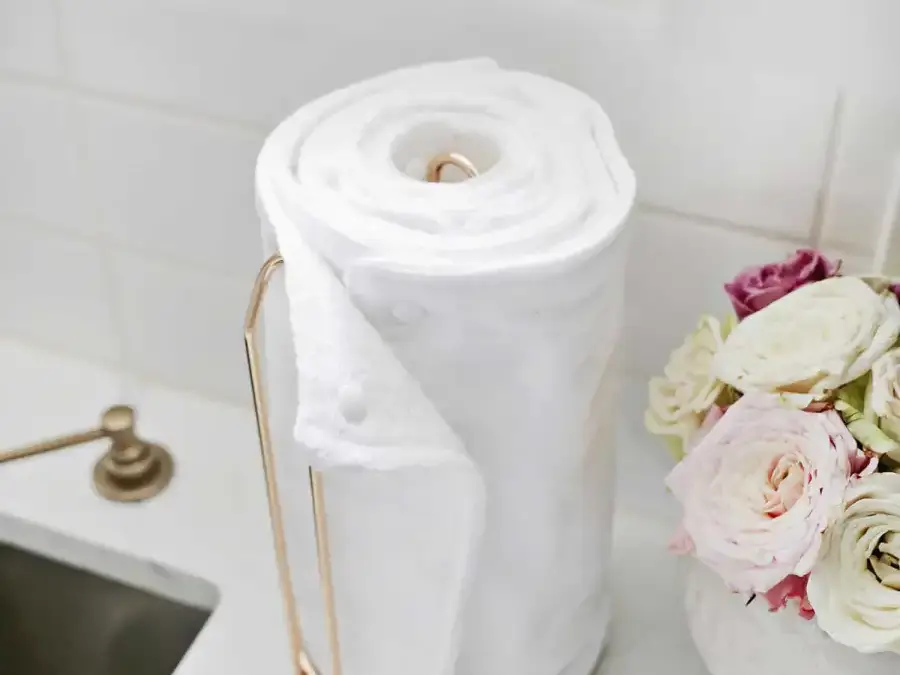
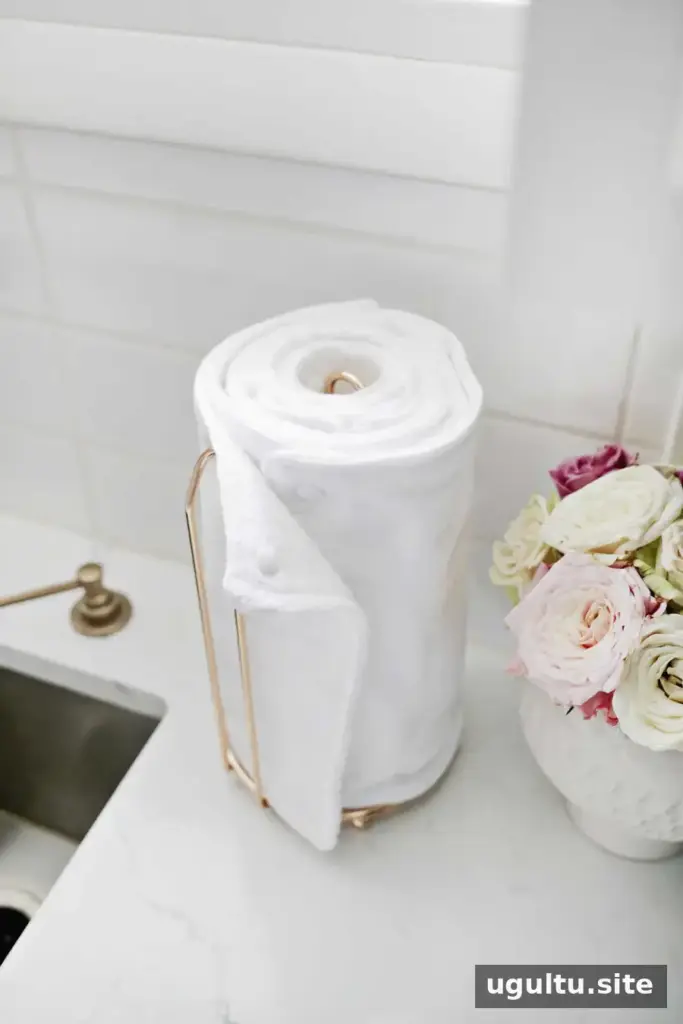
DIY unpaper towels offer a reusable alternative to disposable paper towels for everyday kitchen spills, drying, and cleanup. This sewing project uses cotton terrycloth and flannel to make 12 cloth squares that snap together and wrap around a holder. Once a towel is used, wash it and add it back to the roll when it is clean and dry.
Reusable cloths can be handy for ordinary kitchen jobs, while keeping separate, more heavily soiled rags for messier tasks. The finished towels are designed to stay together as a roll on a counter or existing towel holder, so they remain easy to reach.
DIY Unpaper Towels: Supplies and Preparation
Prewash both fabrics before cutting. This allows any initial shrinkage to happen before the towels are sewn. Use a ruler and rotary cutter for neat edges, and prepare a square template to make cutting the pieces quicker and more consistent.
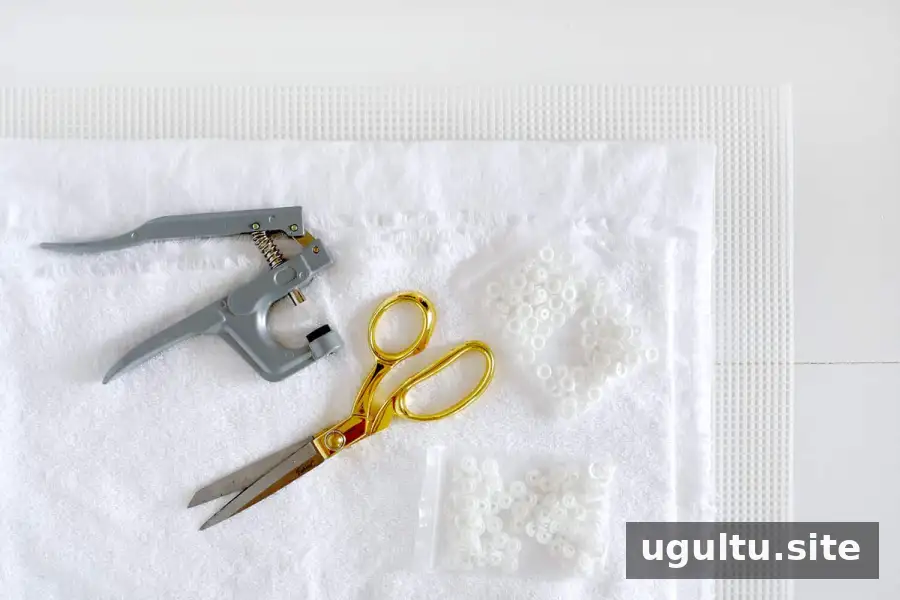
Supplies:
- 2 yards of cotton terrycloth fabric
- 2 yards of cotton flannel
- Straight pins
- Sewing machine
- Mesh canvas sheet
- Snaps and snap setter
- Rotary cutter, cutting mat, and ruler
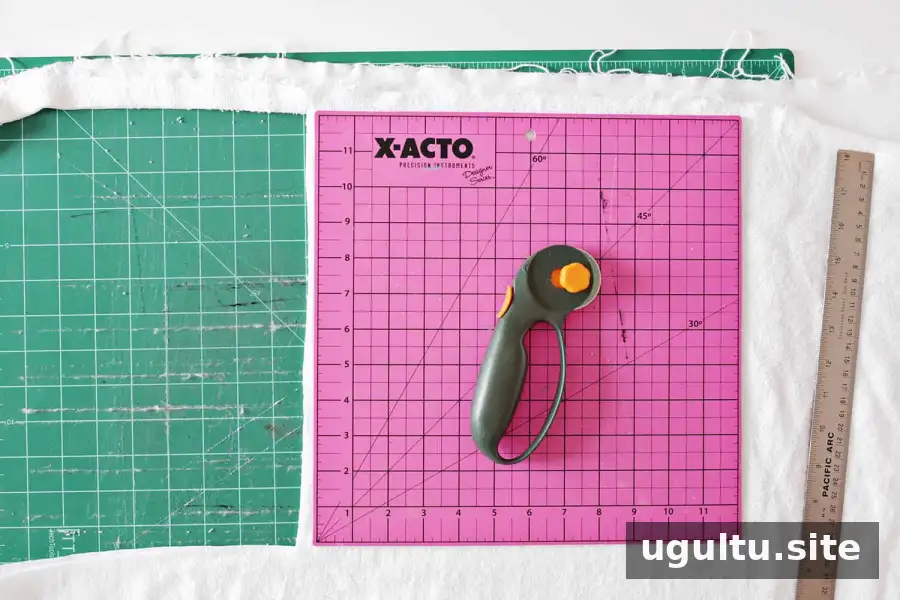
Wash the terrycloth and flannel in hot water, then dry them. Lay the fabrics together on a cutting mat, smoothing out wrinkles so both layers lie flat. Cut 12 squares measuring 12 inches by 12 inches through both layers. A small cutting mat or cardboard square can serve as a reusable template. Take care to keep the fabric aligned as you cut each piece.
Sew the Reusable Cloth Towels
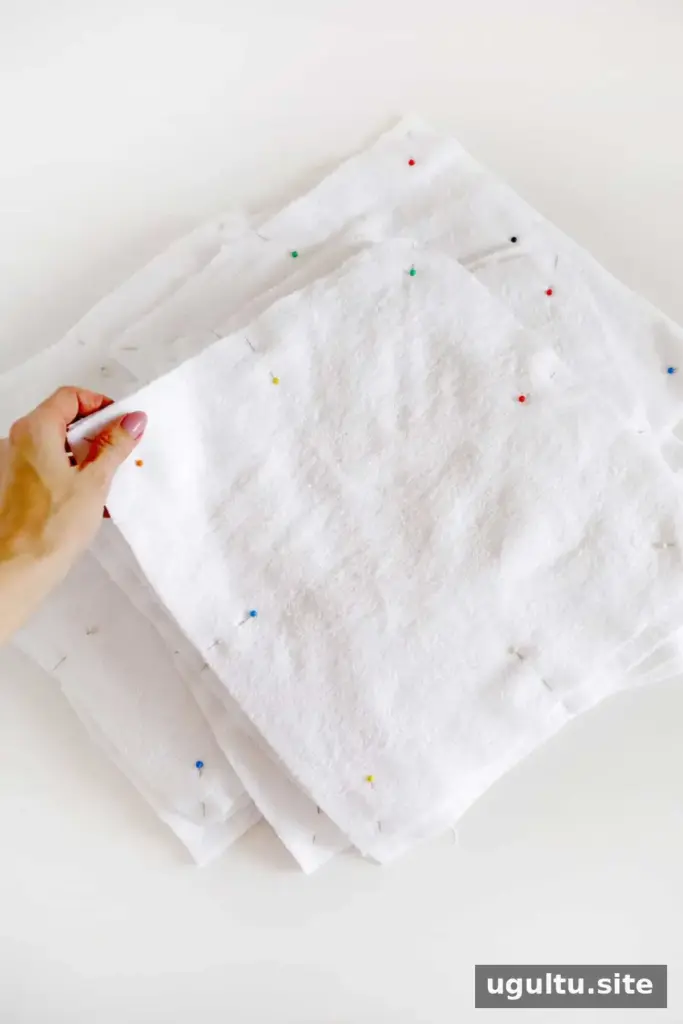
Pin each pair of fabric squares together with the sides you want on the outside facing inward. Sewing the squares with the layers aligned helps prevent uneven edges.
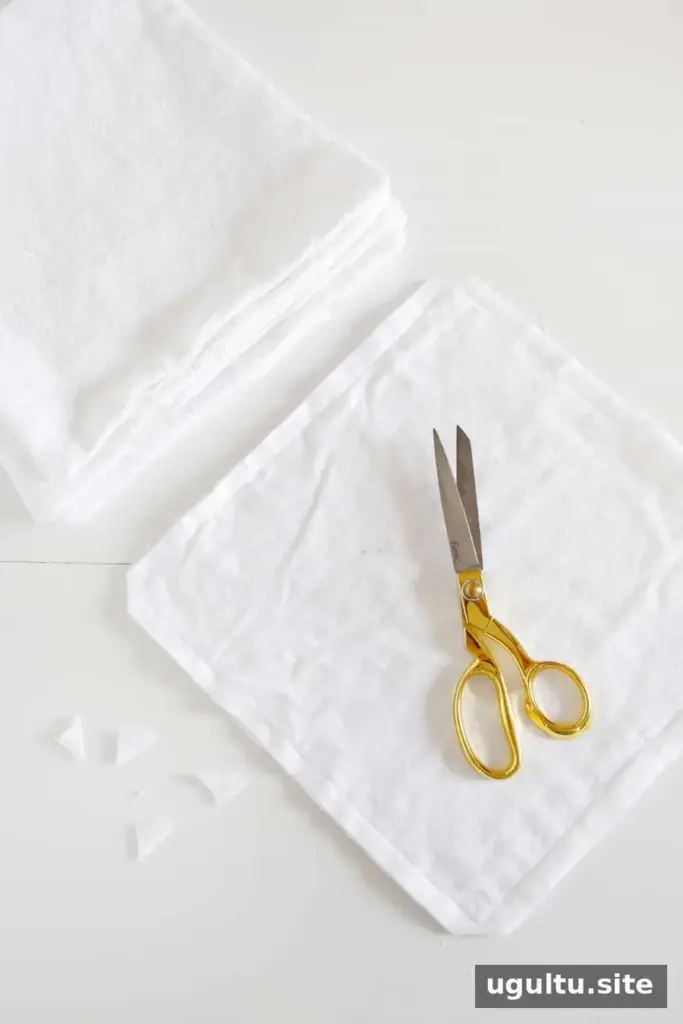
Sew around each square using a 1/2-inch seam allowance, leaving a 3-inch opening on one side. Trim the corners without cutting through the stitching, then turn each square right side out through the opening. Gently push the corners into shape. Press the seams with an iron if desired, or smooth them by hand.
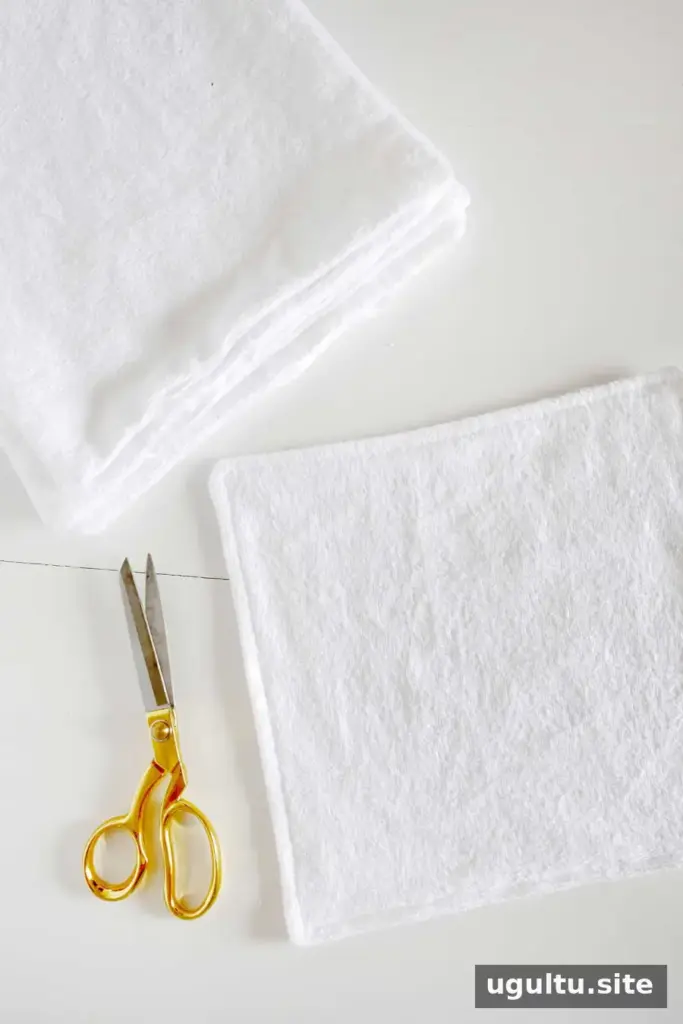
Fold the fabric at each opening inward so the edges line up with the rest of the towel. Sew around the entire square again, using a 1/4-inch seam allowance. This closes the opening and helps the towel lie flat. Check that the folded edges are caught in the stitching.
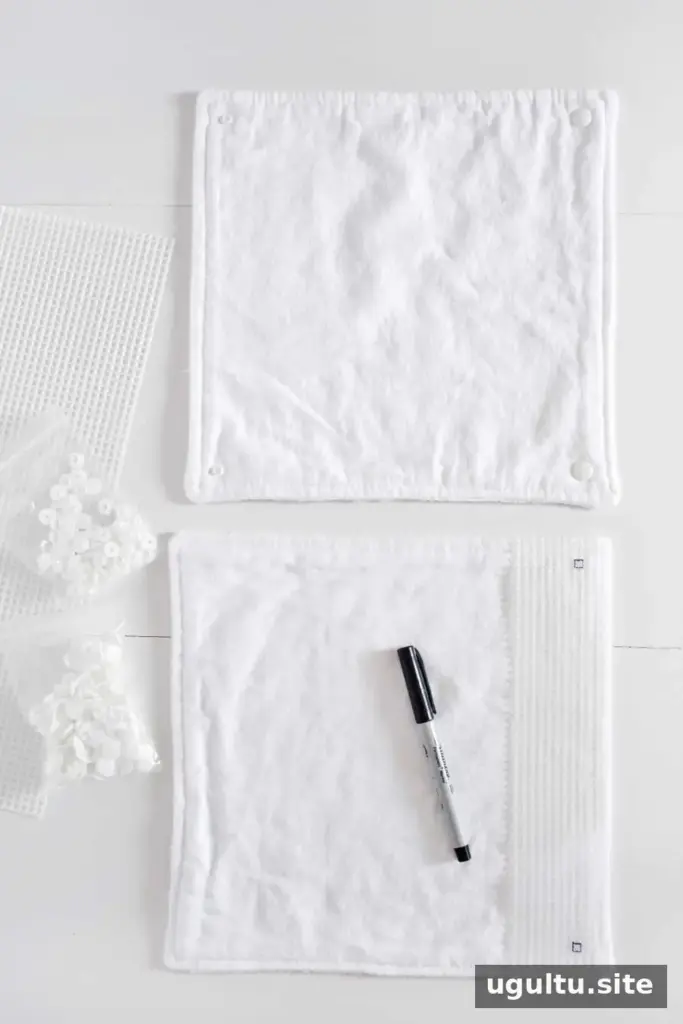
Add Snaps to Connect the Towels
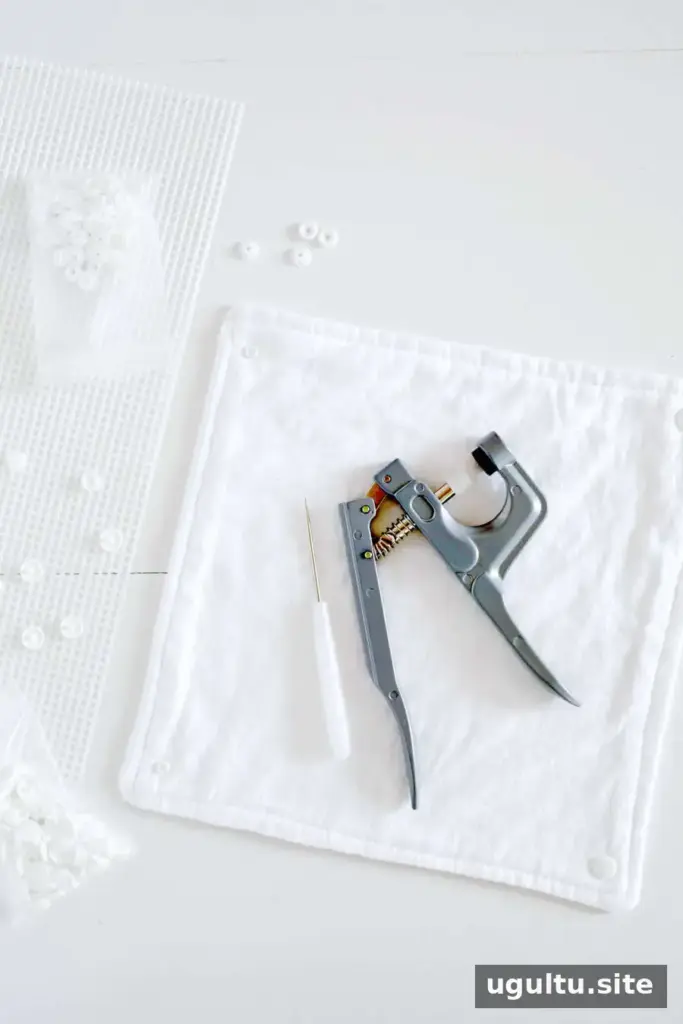
Arrange each towel with the flannel side facing up. On the right side, attach two socket snaps facing down; on the left side, attach two stud snaps facing up. The stud is the raised part, while the socket is the receiving part. Keep the placement consistent across all 12 towels so the snaps will connect in sequence.
A piece of mesh canvas cut to the height of a towel can work as a simple placement guide. Mark the positions for the snaps on the guide, keeping them the same distance from the edges, then use it to mark each towel. Apply four snaps to every square, following the same orientation each time.
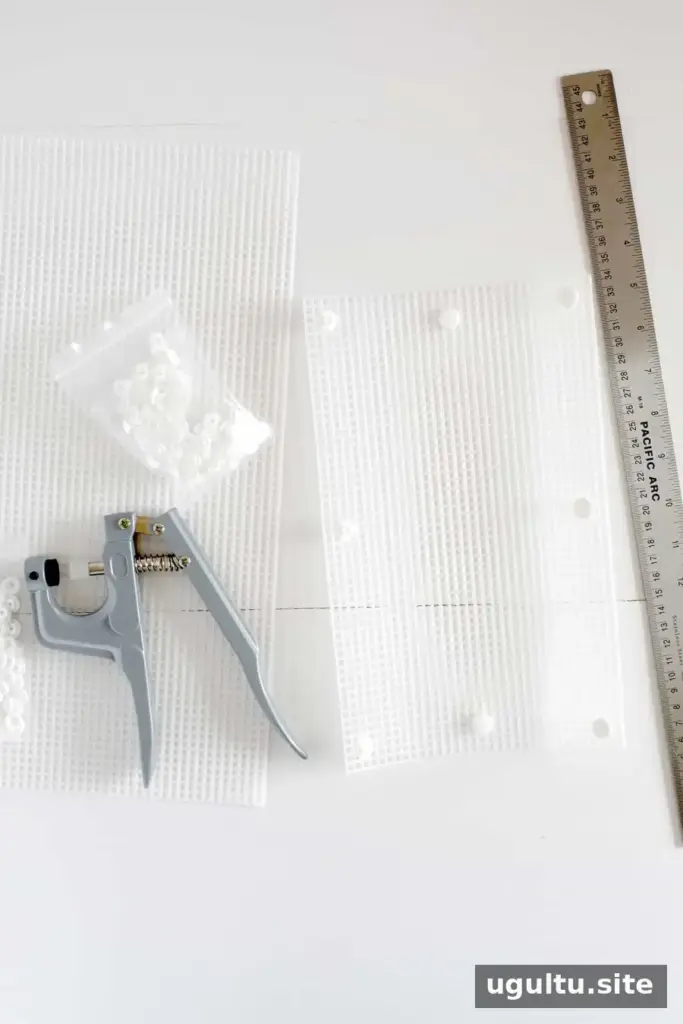
Make the Roll Holder
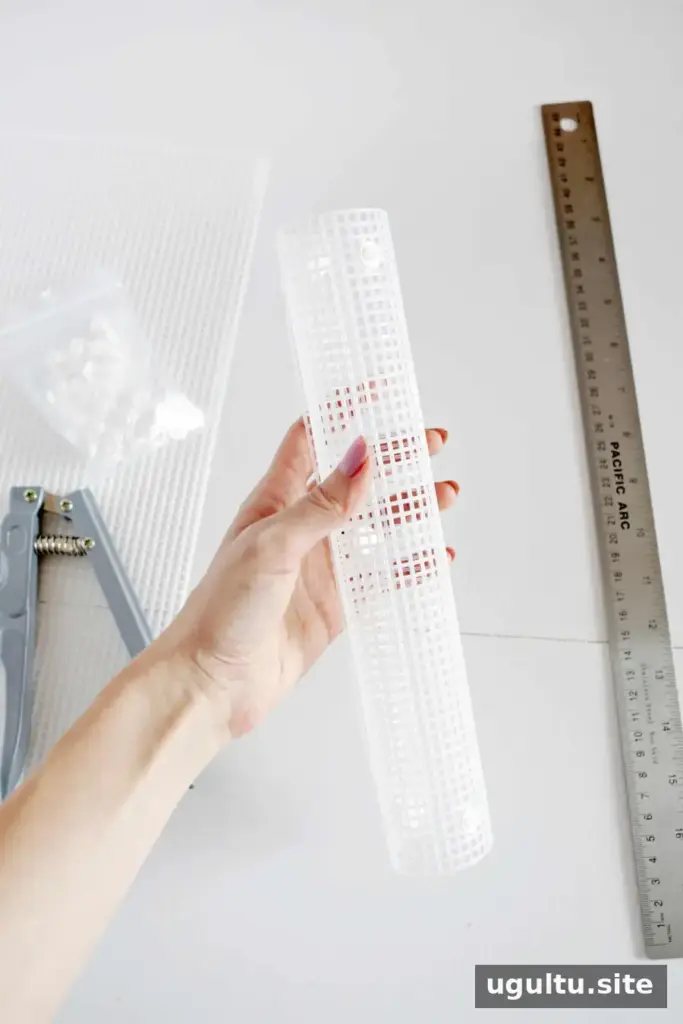
Cut a piece of mesh canvas 6 1/2 inches wide and about 11 inches tall, matching the towel height. To form the holder into a roll, attach three snaps on each end. Orient the stud and socket snaps in opposite directions so the ends overlap by about 3/4 inch when fastened.
Clips can help keep the canvas in a rolled shape while you mark snap positions. After attaching the end snaps, add two outward-facing stud snaps in the middle of the canvas. Space them to match the snap placement on the towels; the same mesh guide can help with this measurement.
Tip: If the mesh canvas is too thick, the snaps may not hold securely and can be difficult to undo. Try a lighter-weight canvas if this happens. Another option is to attach two matching snaps to a leftover cardboard paper-towel tube and use it as the holder.
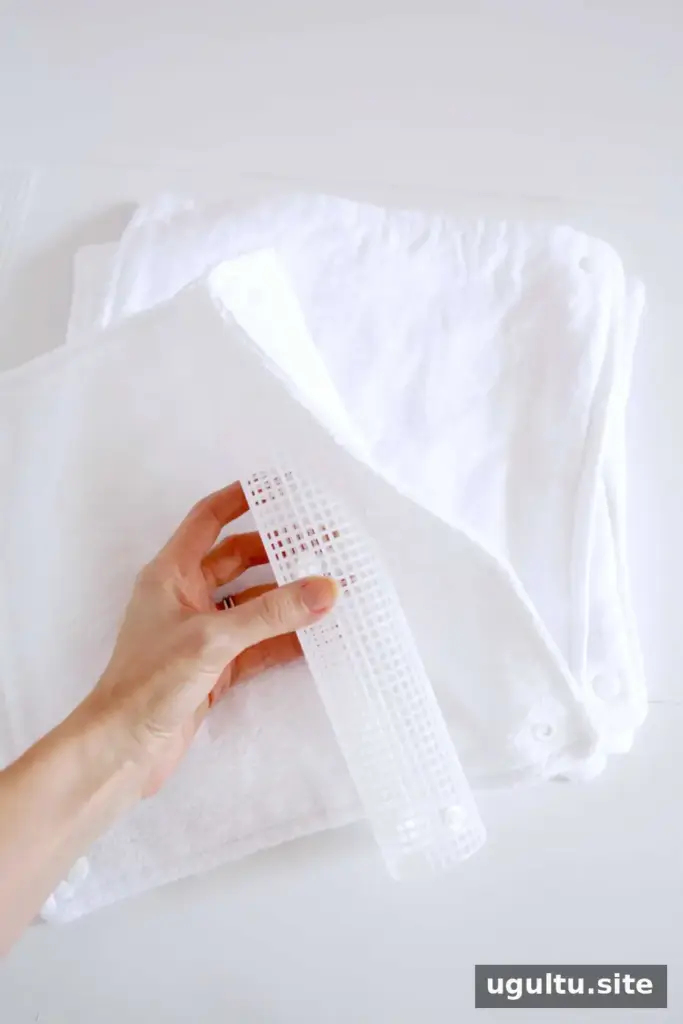
Fasten the holder into a roll, then attach the towels one by one until the full stack is assembled.
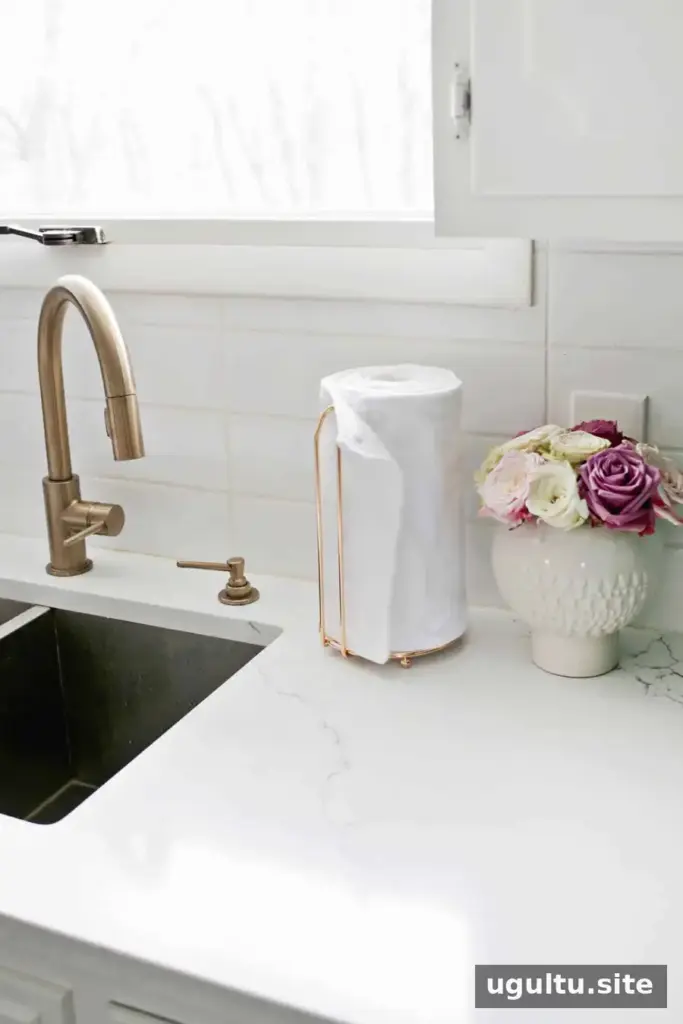
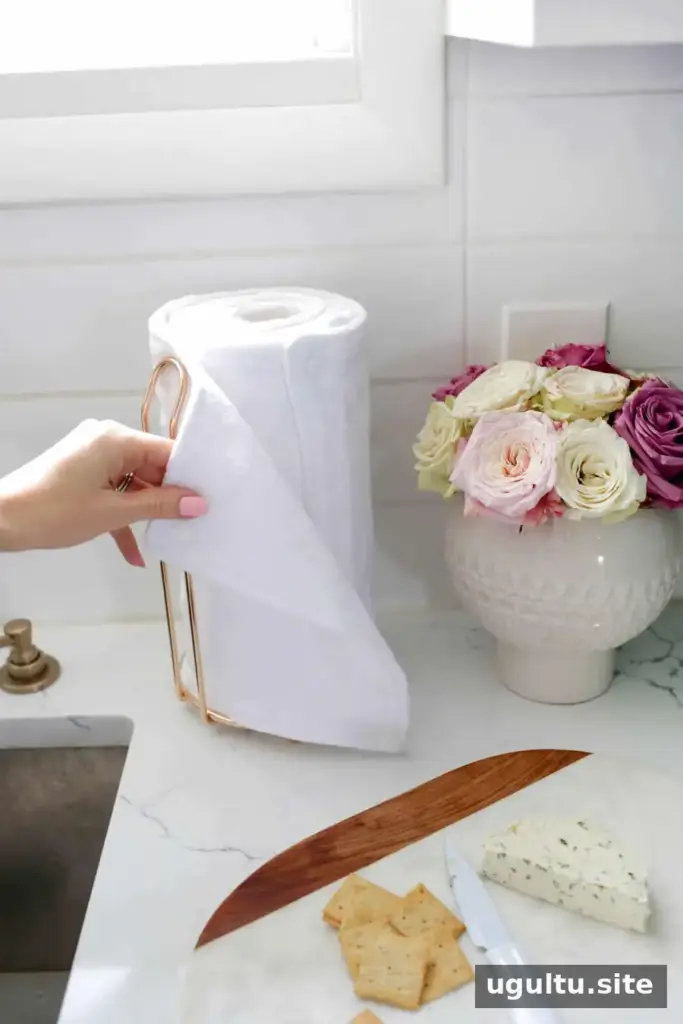
Use and Care for DIY Unpaper Towels
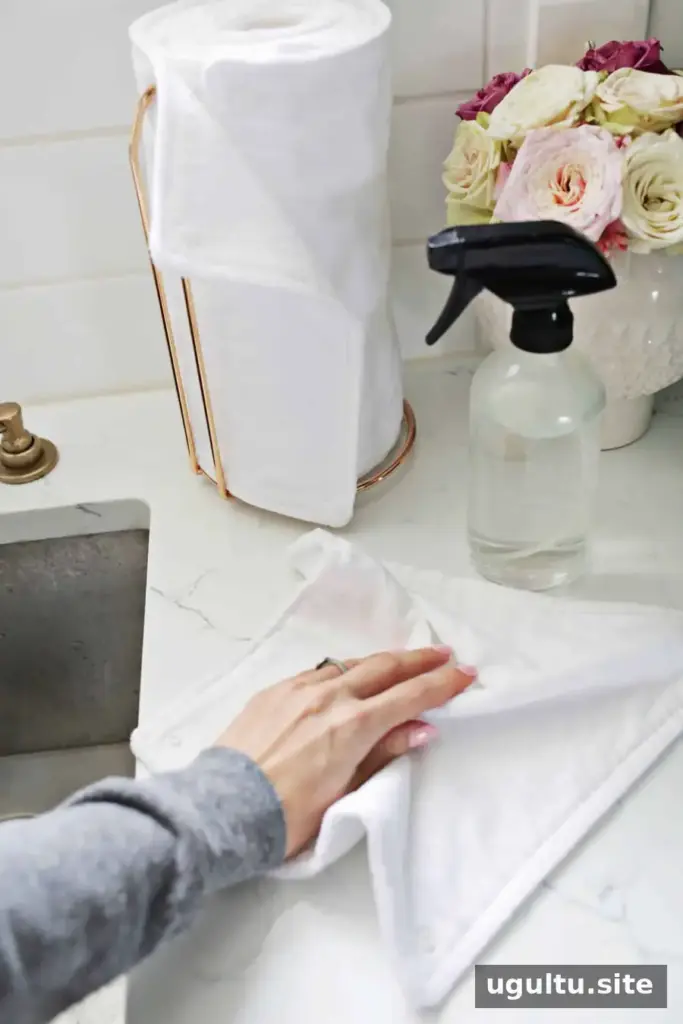
Keep the finished roll on the counter or place it on a paper-towel holder. Because cloth towels can be heavier than disposable ones, a holder that keeps the roll from unwinding may be useful. If you would rather skip the sewing, you can start with ready-made cloth towels and follow the steps for adding snaps and making the holder.
Store used towels in a laundry container until you have a suitable load. Hot water may be appropriate for some laundry, but it can contribute to shrinkage depending on the fabric. If that is a concern, try washing in warm water and check that it cleans the towels adequately. Follow the care instructions for the fabrics you choose.
To make laundry more efficient, wash the towels with other items that can use the same water temperature. Air-drying on a rack or outdoors is another option. Keep a second set if you want a clean roll available while the first batch is being washed.
Cloth towels can be rinsed or reused for additional suitable tasks before washing, but separate them when they are dirty or have been used for different kinds of messes. Fabric and washing choices affect the resources used, so the environmental impact will vary; these towels provide a way to reduce reliance on disposable paper towels when they are reused regularly.
Project by Laura.
Conclusion
With two layers of cotton fabric, basic sewing, and correctly placed snaps, DIY unpaper towels can become a convenient reusable kitchen roll. Prewash the fabric, keep snap placement consistent, and wash used towels with compatible laundry. These simple steps help keep the set practical for everyday use.


