
 admin
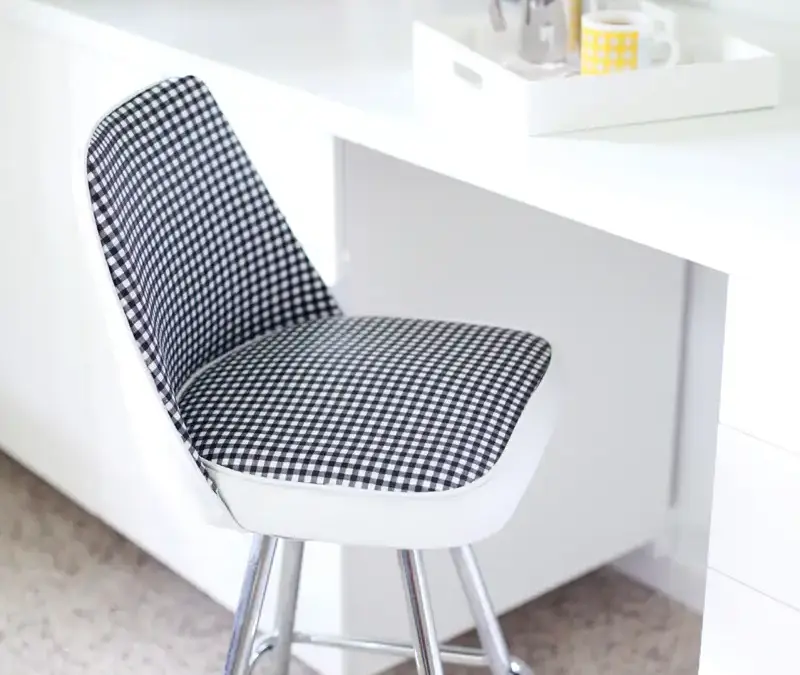

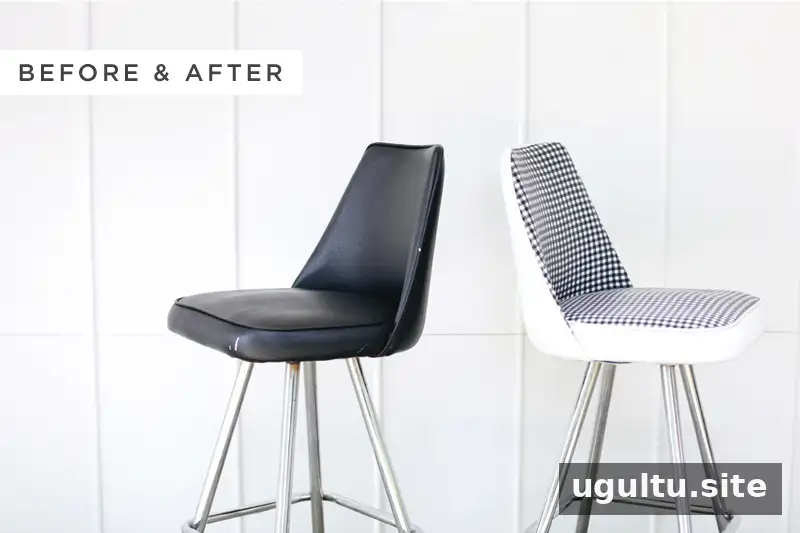
A vinyl chair makeover can give dated stools or chairs a fresh look with spray paint and patterned fabric. This project combines a new color on the chair frame with a gingham-style fabric accent on the seat and back. It involves straightforward steps, but patience is important: paint may need time to stop feeling tacky before you add more coats or continue with the fabric.
Supplies for a Vinyl Chair Makeover
Gather the materials before starting so the chair can be cleaned, painted, and covered without interruptions. Choose lightweight fabric that can lie smoothly against the chair’s seat and back.
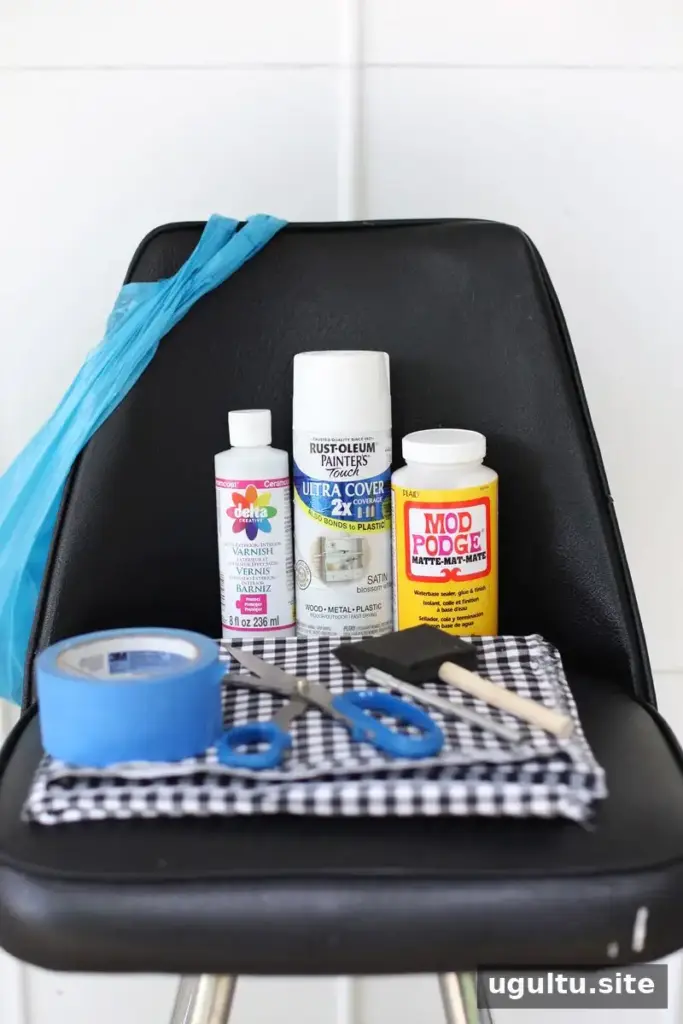
- A vinyl chair
- Lightweight fabric
- Spray paint formulated for plastic
- Mod Podge, preferably an indoor/outdoor variety
- Varnish, if using regular Mod Podge
- A paintbrush or foam brush
- Fabric scissors
- Painter’s tape
- Plastic bags or another covering for the chair legs
How to Complete the Vinyl Chair Makeover
1. Clean and protect the chair
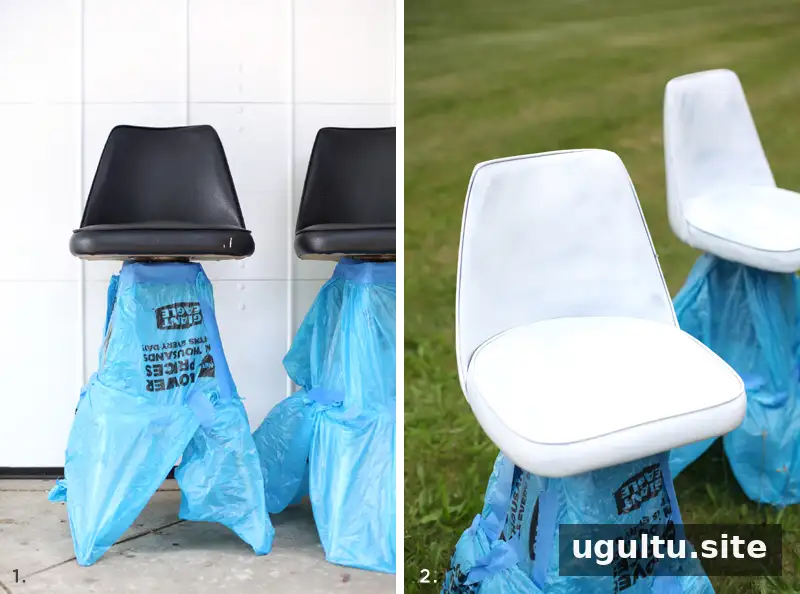
Clean the chair thoroughly before painting. Cover its legs with painter’s tape and plastic bags to keep overspray off areas that should remain unpainted. Make sure the chair is dry before applying paint.
2. Apply plastic-safe spray paint
Use spray paint designed to bond to plastic, applying several light coats rather than one heavy coat. In this project, two coats were applied first, followed by a one-week wait. Once the paint was no longer tacky on the eighth day, two additional coats were added. Drying and curing times can vary, so follow the paint manufacturer’s directions and check that the surface is dry before moving on.
3. Cut the fabric to fit
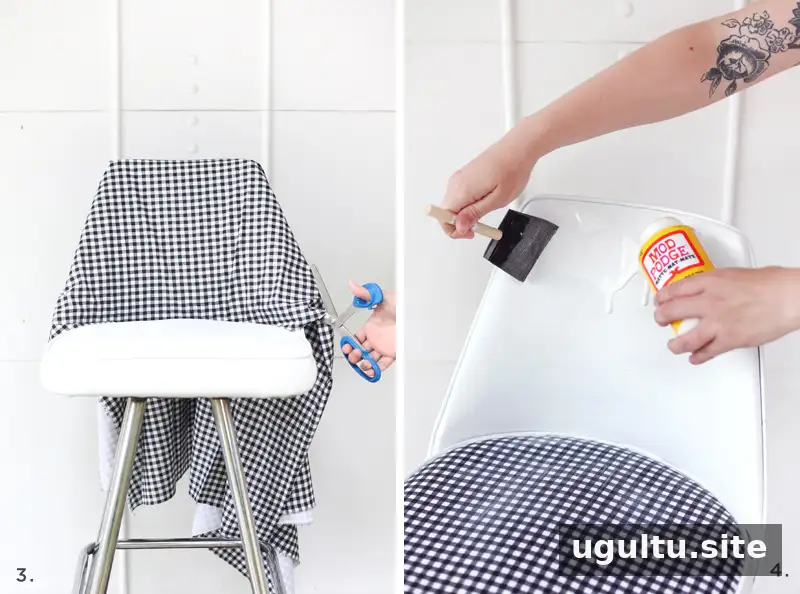
Cut pieces of fabric for the chair’s back and seat. If the fabric has a check, stripe, or other directional pattern, align its lines with the chair so the finished design looks intentional. Leave enough fabric to tuck neatly along the edges.
4. Attach the fabric
Brush a generous layer of Mod Podge over the seat and back, then press the fabric onto the coated areas. Smooth it by hand to remove wrinkles and help it make contact with the surface.
5. Trim and tuck the edges
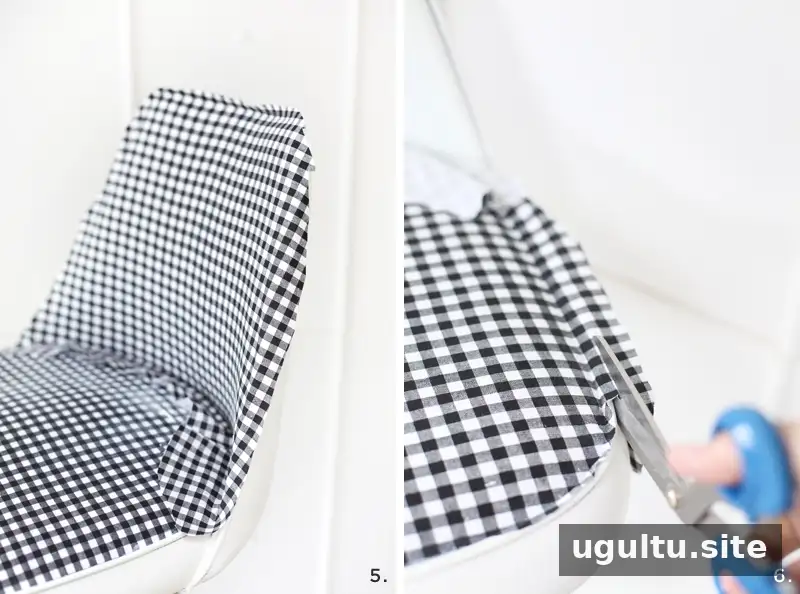
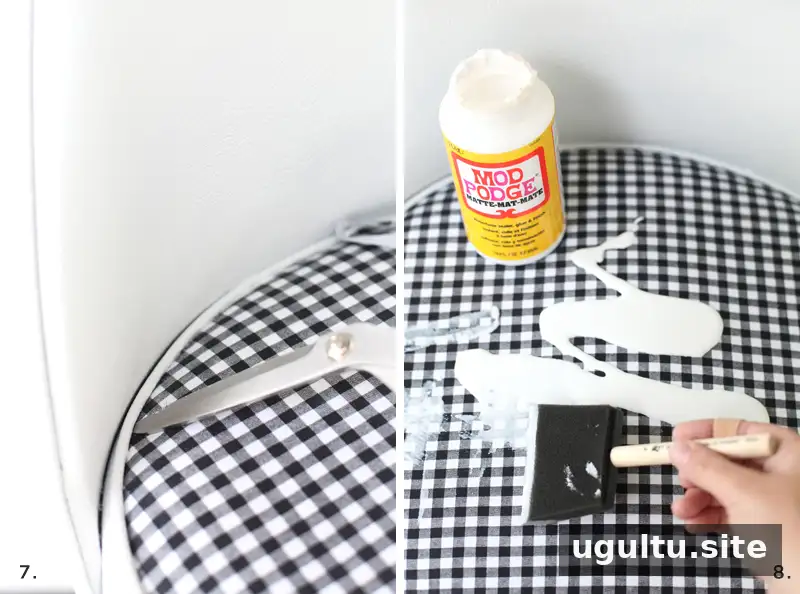
Carefully trim excess fabric along the chair’s piping or seam. Avoid cutting too close; where piping is present, leave a small overlap that can be tucked in. Use the curved end of scissors or a fingernail to push the extra fabric beneath the piping. Avoid using sharp scissor tips for this step.
6. Seal the fabric
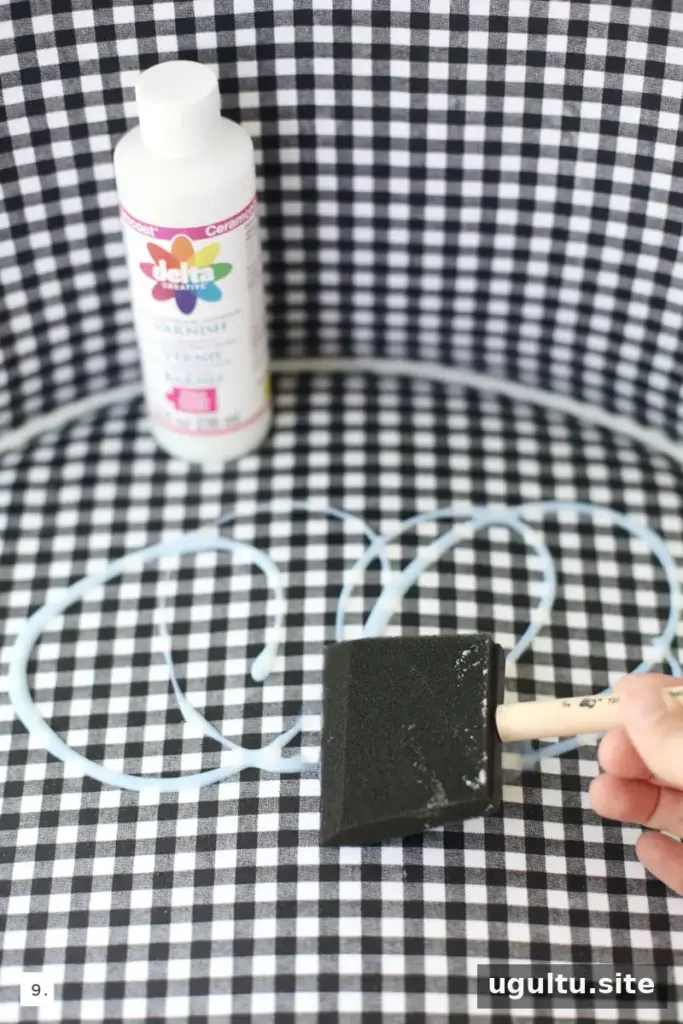
Brush Mod Podge over the fabric to finish adhering it. If you used regular Mod Podge, protect the fabric from moisture with varnish after the Mod Podge has dried. Outdoor-safe Mod Podge was the preferred option for this project. If applying oil-based varnish, a foam brush may not be suitable; check the varnish instructions and use an appropriate applicator.

Finishing and Care
Once the adhesive and any varnish have dried, the finished chair can be wiped with a damp cloth, as described for this project. Avoid soaking the fabric or using the chair before the coatings are fully dry. A small test on an inconspicuous area can also help confirm that the products work with the chair’s surface.
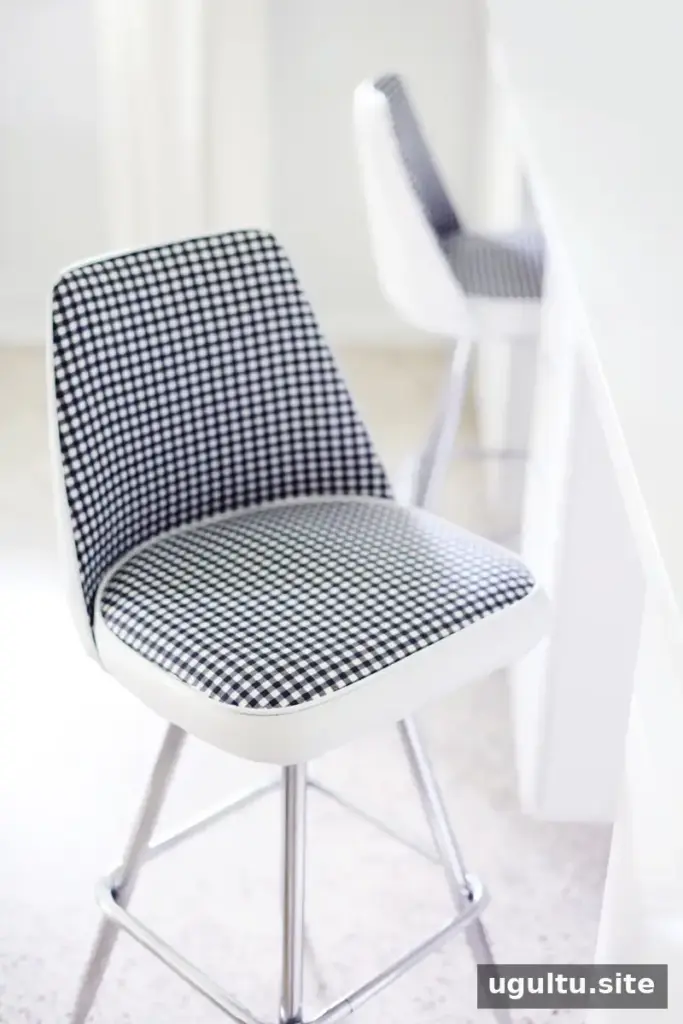
This vinyl chair makeover shows how paint and fabric can refresh an older chair without replacing it. For the best result, use paint made for plastic, allow ample drying time, and take care when trimming and tucking the fabric. –Mandi


